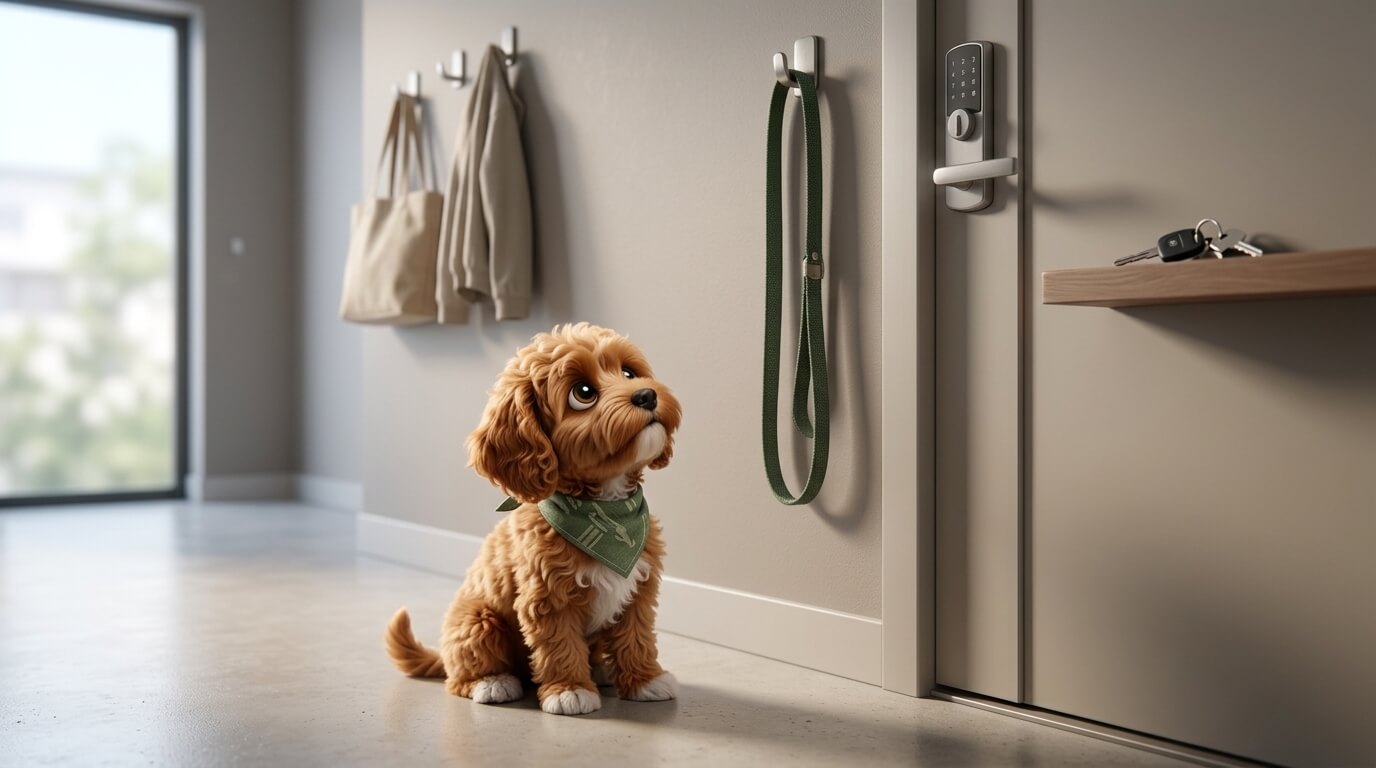
Should I get a dog in an apartment? If you are asking while picturing weekend walks and a dog asleep beside the sofa, pause for one ordinary weekday. The useful question is not whether a dog would make your apartment feel happier. It is whether your real schedule, lease, budget, building, and patience can support that dog on a wet Tuesday when work runs late.
Apartment living itself is not the problem. Plenty of dogs thrive in studios, rentals, and high-rises. The difference is that small housing gives everyday mistakes a louder consequence: a missed potty break becomes an elevator emergency, hallway barking reaches several neighbors, and a poor breed or temperament match cannot simply be sent into the yard.
That does not mean you need a perfect life. You do need a workable one. This guide uses seven honest checks: lease, time, money, potty logistics, noise, dog fit, and emotional readiness. A few weak areas can often be fixed before adoption. A lease ban, no care plan, or a budget with no emergency margin should stop the process for now.
Should I Get a Dog in an Apartment? Quick Answer
You should get a dog in an apartment only if your lease clearly allows the dog, your budget can absorb routine and unexpected care, and your normal week has room for potty trips, exercise, training, rest, and gradual alone-time practice. The dog also needs to fit the building: size rules, stairs or elevators, hallway traffic, and shared-wall noise all matter. If the plan works only when nothing goes wrong, wait and strengthen it first.
A practical rule: do not adopt based on your best day. Decide based on the day when it is raining, you slept badly, the elevator is slow, and your last meeting runs over. If the dog still has a calm, legal, affordable care plan on that day, your answer is becoming more reliable.
| Question | Green Flag | Red Flag |
|---|---|---|
| Lease | Written dog approval is clear | You plan to hide the dog |
| Time | You can handle walks, training, and care | You are gone all day with no support |
| Money | You can afford rent fees, vet care, and emergencies | You are already stretched thin |
| Noise | You have a barking prevention plan | Thin walls and no training plan |
| Dog fit | You choose for temperament and building fit | You choose only by looks |
Table of Contents
1. Lease Check
Before asking whether you personally want a dog, ask whether your housing allows one. Read the lease, pet addendum, building rules, and any written pet policy. Look for pet rent, pet deposits, non-refundable fees, breed restrictions, weight limits, number-of-pet limits, vaccination requirements, waste rules, and noise clauses.
If your lease does not allow dogs, do not assume you can quietly make it work. Housing stress is not fair to you or the dog. If the lease allows dogs but has limits, choose within those limits.
For a deeper lease-focused plan, use the renters guide to getting a dog before adoption.
2. Time Check
Dogs need daily time. Not just affection, but actual care: potty trips, walks, feeding, training, grooming, vet visits, cleanup, enrichment, and supervision. Puppies need even more. Newly adopted dogs often need a transition period before they can handle normal workdays.
Ask what a weekday looks like. Can you take the dog out in the morning? What happens midday? What happens if you work late? Who helps during illness, travel, bad weather, or emergencies?
If the dog will be alone often, read how long can you leave a dog alone in an apartment before assuming the dog can manage your schedule.
3. Money Check
Apartment dogs cost more than food and toys. Renters may also pay pet rent, deposits, fees, cleaning costs, dog walkers, daycare, training, grooming, flea and tick prevention, emergency vet care, and damage repair.
Make a monthly and emergency budget. If one unexpected vet bill would create a crisis, wait and build a buffer. A dog should not push you into constant financial panic.
Also think about breed-specific costs. Some dogs need professional grooming. Some are prone to health problems. Some need more training support. The cheapest adoption fee is not always the cheapest dog to responsibly own.
4. Potty Logistics Check
In an apartment, potty breaks are logistics. A house dog may walk to a back door. An apartment dog may need leash, shoes, keys, elevator, hallway, lobby, sidewalk, weather, and cleanup bags.
This matters most for puppies, seniors, tiny dogs, dogs with medical needs, and high-floor apartments. Before getting a dog, time the route from your unit to the potty area. Is it realistic at 6 a.m., midnight, during rain, and when you are sick?
If you are choosing a puppy or newly adopted dog, read how to potty train a dog in an apartment before adoption day.
5. Noise and Neighbor Check
Barking is not just annoying in apartments. It can create complaints, lease stress, and tension with neighbors. Some dogs bark at hallway sounds, windows, other dogs, elevators, guests, boredom, or being left alone.
You do not need a silent dog. You do need a plan. Can you place the dog away from the door? Can you add enrichment before barking windows? Can you train calmly? Can you handle separation distress if it appears?
If thin walls or hallway noise are major concerns, keep the stop dog barking in apartment guide ready from day one.
6. Dog Fit Check
The best apartment dog is not always the smallest dog. A small, vocal, high-drive dog can be harder than a calm larger dog who is allowed by the lease. Choose based on temperament, energy, barking risk, health, grooming, size rules, and your schedule.
Adult dogs can be easier for apartment owners because their size and personality are more visible. Puppies are more flexible in some ways but require far more time, potty trips, and supervision.
Use the best apartment dogs guide for broad breed and lifestyle fit, or the best dog breeds for small apartments guide if your space is especially small.
7. Guilt Check
Many people want a dog because they love dogs, feel lonely, or imagine a better daily routine. Those reasons are human and understandable. But guilt is a weak foundation for dog ownership.
Do not get a dog because you feel behind in life, want to rescue something immediately, or think a dog will force you to become a different person overnight. Dogs add joy, but they also add repetition, mess, cost, and responsibility.
A better question is: can you give a dog a stable life with the routine you actually have, not the fantasy routine you hope to become?
Green Flags That You Are Ready
- Your lease clearly allows the type of dog you want.
- You have a realistic monthly and emergency budget.
- You understand potty logistics in your building.
- You have a plan for workdays and alone time.
- You are willing to train and manage barking early.
- You are choosing a dog based on fit, not only looks.
- You have basic supplies and dog-proofing ready.
If you are mostly green flags, start preparing the home with the new dog owner checklist.
Red Flags That You Should Wait
- Your lease does not allow dogs or you do not have written approval.
- You cannot afford pet fees, vet care, or emergencies.
- You are gone too long with no dog care plan.
- You want a puppy but cannot handle frequent potty trips.
- You are choosing a dog that violates building rules.
- You are hoping the dog will fix loneliness without changing your routine.
- You plan to handle barking, chewing, and accidents later.
Waiting can be responsible. Use the waiting period to save money, move to a dog-friendly building, arrange support, or learn more about apartment dog care.

Try a Bad-Weather Tuesday Before You Adopt
Do this test on a workday, not on a free weekend. Set an alarm early enough for a real potty trip and walk before work. Put a midday break on the calendar. Go outside again after work, then once more before bed. If you live above the ground floor, carry your keys, leash, bags, and shoes every time and use the actual elevator or stair route.
Now make the day inconvenient on purpose. Imagine steady rain, a delayed train, a sick day, or a meeting that runs 45 minutes late. Who gives the midday break? Where does a muddy dog wait while you wipe paws? What happens if the elevator is out? Which neighbor, walker, sitter, or friend can enter the building if you cannot get home?
Walk through the apartment at dog height. Check cords beside the sofa, food near the counter edge, trash access, balcony gaps, houseplants, rugs, shoes, and the view from the main window. Then sit quietly for ten minutes and listen: hallway doors, delivery carts, children, other dogs, plumbing, and elevator chimes are the sounds your future dog may react to.
- Morning: Can you provide an unhurried potty trip before your first obligation?
- Midday: Is there a named person or paid option when the dog cannot wait?
- Evening: Can you still walk, feed, train, and clean up when you are tired?
- Night: Can you handle a late potty trip without skipping it or resenting the dog?
- Disruption: What is the backup plan for illness, travel, overtime, or an elevator outage?
The exercise is not meant to prove you would be a bad owner. It shows where enthusiasm is currently doing the work of a plan. If one simulated day exposes two or three weak points, fix them before adoption and repeat the test.
The Apartment Dog Budget Reality
Money is not the warmest part of dog ownership, but it is one of the kindest things to think through early. Dogs need care whether the month is convenient or not. Apartment owners may also pay housing-related costs that homeowners do not.
| Cost Category | Examples | Why It Matters |
|---|---|---|
| Housing | Pet rent, deposit, non-refundable fee | Affects monthly budget and move-in cost |
| Health | Vet visits, vaccines, prevention, emergencies | Cannot be skipped responsibly |
| Daily care | Food, bags, grooming, cleaning supplies | Repeats every month |
| Support | Walker, sitter, daycare, trainer | May be necessary for workdays |
If the budget only works when nothing goes wrong, you are not ready yet. That does not mean never. It means build a buffer before you add a dependent animal to your life.
Apartment Dog Ownership Scenarios
You Work From Home
Working from home helps, but it does not automatically solve dog care. Some dogs bark during meetings, demand attention, or struggle to be alone later because the owner is always present. You still need boundaries, enrichment, and alone-time practice.
You Work Outside the Home
This can work best with an adult dog who can gradually build alone-time tolerance and with help when needed. Puppies, anxious dogs, and dogs with medical needs may not fit a full workday without support.
You Live Alone
Living alone with a dog can be wonderful, but backup matters. Who walks the dog if you are sick? Who helps if your workday changes? Who can enter your apartment in an emergency?
You Have Roommates
Roommates need clear agreement. Who pays? Who walks? Who handles noise complaints? Are they comfortable with the dog in shared spaces? A dog should not become an unspoken burden on everyone else.
Puppy, Adult Dog, or Senior Dog?
Puppy
A puppy gives you a chance to shape habits early, but apartment puppy life is demanding. Expect frequent potty trips, chewing, night waking, socialization, training, and supervision. Puppies are often not ideal for owners with long workdays and no support.
Adult Dog
An adult dog may be the best apartment choice for many first-time owners because size, energy, and temperament are easier to evaluate. Foster-based rescues can sometimes tell you whether the dog barks, settles, or handles alone time.
Senior Dog
A senior dog may be calmer and deeply rewarding, but may need more vet care, softer exercise, and more frequent potty trips. Stairs, elevators, and medical budget matter.
Questions to Ask a Rescue, Shelter, or Breeder
The right questions can prevent a mismatch. Ask practical apartment questions, not only personality questions.
- Has the dog lived in an apartment or foster home?
- How does the dog respond to hallway sounds, doorbells, and neighbors?
- Can the dog be left alone? For how long, and how was that tested?
- Is the dog house-trained? What is the current potty schedule?
- How much exercise does the dog need to settle indoors?
- Does the dog bark at other dogs, strangers, windows, or noises?
- How does the dog handle stairs, elevators, crates, grooming, and car rides?
- Has the dog shown resource guarding, separation distress, or bite history?
Listen for specific answers. “He is sweet” is not enough. You need to know how the dog lives day to day.
First Week If You Do Get a Dog
Keep the first week simple. Do not host a welcome party. Do not test long absences. Do not give the dog full apartment freedom immediately. Build the routine: potty route, feeding spot, rest area, leash station, sleep, and short alone-time practice.
If your dog is moving into a new building with you, use the moving to apartment with dog guide to reduce transition stress.
If the Answer Is No for Now
If your honest answer is no, that is not failure. It may be the most responsible answer today. You can still move toward dog ownership.
Use the waiting period well. Save a dog emergency fund. Move to a dog-friendly apartment. Volunteer with dogs. Foster if your housing allows it and you have support. Learn basic training. Build a walking routine before you need one. Research breeds and adult rescue options.
Waiting also gives you time to separate the fantasy from the real routine. If you still want the dog after doing the boring preparation, you will be a better owner when the time comes.
If the Answer Is Yes
If the answer is yes, do not rush to bring home the first dog you like. First, confirm the lease. Second, prepare the apartment. Third, choose the dog based on real fit. Fourth, plan the first week. Fifth, line up help before you need it.
A good yes feels calm, not frantic. You should still feel excited, but the basics should be handled.
The No-Yard Myth
A yard is useful, but it is not a complete dog-care plan. Many yard dogs are bored because nobody walks, trains, or plays with them. Many apartment dogs are fulfilled because their owners provide daily walks, sniffing, enrichment, and structure.
The real question is not “Do I have a yard?” It is “Can I provide the dog’s needs every day without relying on a yard to do the work for me?” If yes, apartment life can work.
Apartment Dog Compatibility Score
Use this simple score before you adopt. Give yourself 0, 1, or 2 points for each line. A 2 means the area is handled. A 1 means it is partly handled. A 0 means it is not handled yet.
| Area | Question | Score |
|---|---|---|
| Lease | Do you have written permission for the dog you want? | 0-2 |
| Schedule | Can your weekday support potty, walks, and alone time? | 0-2 |
| Budget | Can you handle routine and emergency costs? | 0-2 |
| Building | Can the dog handle stairs, elevators, hallways, and noise? | 0-2 |
| Training | Are you willing to train calmly and consistently? | 0-2 |
| Backup | Do you have help for sickness, travel, or long days? | 0-2 |
If you score 10 to 12, you may be close to ready. If you score 6 to 9, fix the weak spots first. If you score below 6, waiting is probably kinder for now.
Long-Term Lifestyle Check
Do not only ask whether you can handle the first week. Ask whether the dog fits the next several years. Are you planning to move soon? Change jobs? Travel more? Go back to school? Start a family? Move to a stricter building?
No one can predict life perfectly, but dogs are long-term commitments. A dog who fits your current apartment but not your likely next step may create a hard decision later. Choose with some margin.
Also think about your energy after ordinary days. Many people imagine walking a dog on a sunny Saturday. Real dog ownership includes dark winter mornings, stomach upset at midnight, muddy paws, barking surprises, and vet appointments during busy weeks.
If that still sounds worth it, you may be ready in the way that matters: not because it is always easy, but because you are prepared for the repetitive parts too.
Your Final Yes/No Filter
Use this final filter when you feel emotionally ready but still unsure. If your answer is yes to most of these, you can move into preparation. If your answer is no to several, slow down.
- Can I legally and openly keep this dog in my apartment?
- Can I afford the dog even during an inconvenient month?
- Can I provide potty breaks without constant stress?
- Can I handle barking, chewing, and training without resentment?
- Can I choose the right dog, not just the dog I pictured?
- Can I arrange help when my schedule breaks?
- Can I commit to boring daily care after the excitement fades?
If the answer is yes, start slowly and prepare well. If the answer is no, choose a concrete next step instead of staying vague: save money, talk to your landlord, research adult dogs, or build a walking schedule for one month. Clarity is kinder than impulse.
If you are still split down the middle, wait 30 days and act like a dog is coming. Wake up for morning walks, price real costs, organize your apartment, and solve lease questions. If you still want the dog after practicing the routine, your yes is probably more grounded.
Also ask one trusted person to challenge your plan. A friend, trainer, foster coordinator, or experienced dog owner may notice gaps you are too excited to see. Good feedback before adoption is much easier than crisis advice afterward.

FAQ
Should I get a dog in an apartment if I work full-time?
Maybe, but only with a plan. Many adult dogs can handle some alone time after gradual training, but puppies and anxious dogs need more support. Consider walkers, sitters, daycare, lunch visits, or flexible work during the transition.
Is it cruel to have a dog in an apartment?
No, apartment life is not automatically cruel. A dog can thrive in an apartment with walks, enrichment, training, rest, veterinary care, and a good owner routine. A yard does not replace daily care.
What is the biggest problem with getting a dog in an apartment?
The biggest problems are usually lease mismatch, barking, potty logistics, long alone time, and choosing a dog whose energy or temperament does not fit the building.
Should first-time owners get puppies in apartments?
Some can, but puppies are hard in apartments because of potty frequency, chewing, noise, and supervision. Many first-time apartment owners do better with a well-matched adult dog.
Can a dog be happy without a yard?
Yes. Dogs can be happy without yards when they receive appropriate walks, sniffing, exercise, play, enrichment, training, and rest. Many yard dogs are still bored if nobody engages with them.
What should I buy before getting a dog in an apartment?
Start with the essentials: leash, harness or collar, ID tag, food and water bowls, bed, crate or pen if appropriate, cleaning supplies, poop bags, safe chews, grooming basics, and a plan for potty accidents and noise.
Make a Calm Decision, Not a Fast One
Write down your answer to each of the seven checks instead of keeping the decision in your head. Mark each one ready, needs a plan, or stop for now. A calm yes usually comes with written lease approval, a believable weekday routine, an emergency buffer, a backup caregiver, and a dog profile that fits the building. A rushed yes usually depends on hope.
The best answer to “should I get a dog in an apartment?” is not yes or no for everyone. It is yes when the dog, home, lease, schedule, and budget fit the real life you can offer. A thoughtful pause now can prevent a rushed adoption, a stressed dog, and a housing problem later. That is responsible ownership, even before the dog arrives.