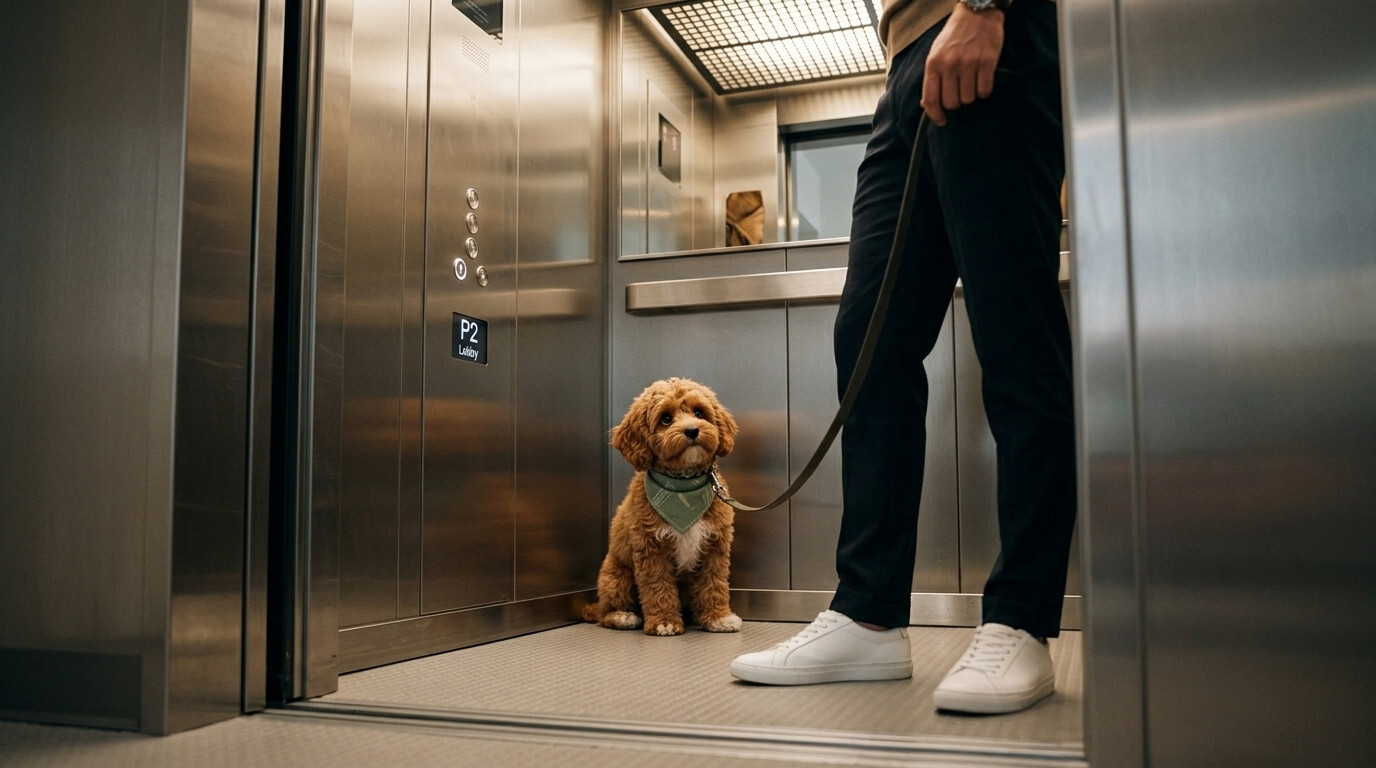
Dog elevator training is one of the most overlooked parts of apartment dog life. A dog may walk beautifully outside, sit at home, and sleep quietly on the sofa, but still fall apart in the elevator because the space is tight, the doors move suddenly, strangers appear close, and other dogs can enter before anyone has time to think.
In a high-rise, elevator manners are not just about being polite. They protect your dog, your neighbors, delivery workers, children, older residents, and other pets. A dog who rushes through the doors, lunges at another dog, barks in the corner, or refuses to step inside can turn every walk into a stressful event.
This guide gives you a practical 7-step dog elevator training plan for apartment and condo buildings. It covers waiting at the door, entering calmly, choosing a safe position, riding quietly, exiting under control, handling crowded elevators, and knowing when the problem has become fear or reactivity that needs a more specific plan.
Dog Elevator Training: Quick Answer
For dog elevator training, teach your dog to stop several feet from the elevator doors, wait on cue, enter only after you check the space, move to one side, stay close during the ride, and exit only when released. Practice first when the building is quiet, reward calm behavior, and avoid forcing a scared or reactive dog into crowded rides.
| Elevator Moment | Goal Behavior | Training Cue |
|---|---|---|
| Waiting for the elevator | Dog stands or sits away from the door | Wait |
| Doors open | Dog does not rush forward | Stay close |
| Entering | Dog follows you in calmly | Let’s go |
| Riding | Dog stays beside you and faces away from triggers | With me |
| Exiting | Dog waits until released | Okay |
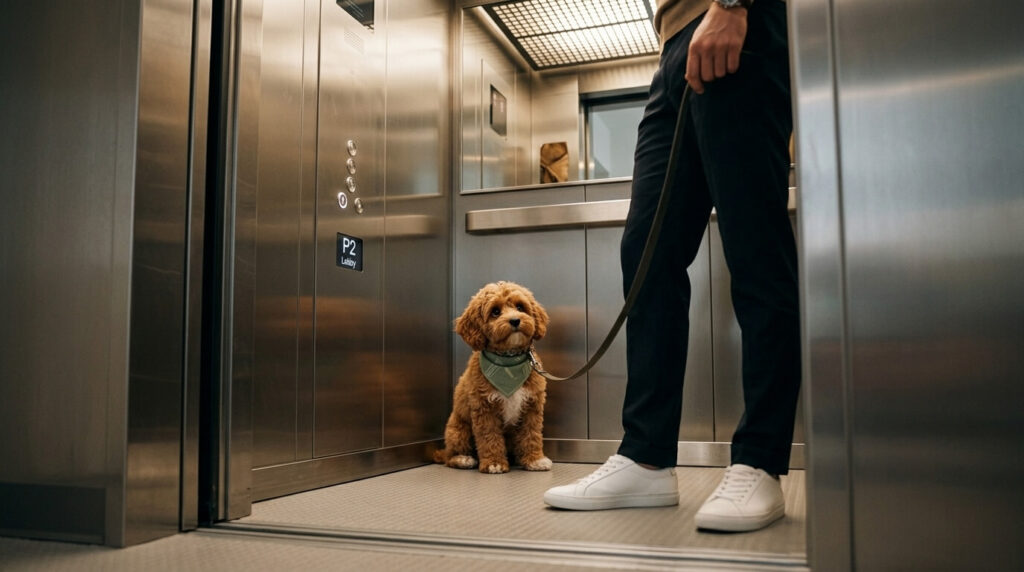
Table of Contents
Why Elevators Are Hard for Apartment Dogs
Elevators create a strange training environment. The space is small, the floor moves, doors open and close, mirrors or metal walls can distort reflections, and people stand much closer than they would on a normal sidewalk. For a dog, that can feel intense even if the ride lasts only 30 seconds.
Some dogs are excited because the elevator predicts a walk. Some are worried because the floor shifts. Some are frustrated because another dog is only two feet away. Some are confused because people enter from behind or reach toward them without asking. Dog elevator training works best when you understand which problem you are solving.
The Three Common Elevator Problems
Excitement: The dog pulls, rushes, jumps, sniffs people, or tries to exit first because the elevator means outdoor time.
Fear: The dog freezes, lowers their body, refuses to enter, trembles, pants, or tries to escape the elevator.
Reactivity: The dog barks, lunges, growls, or fixates when another dog or person appears in the doorway.
This page focuses on general elevator manners and basic high-rise etiquette. If your dog lunges at the doors or reacts strongly to dogs appearing suddenly, that deserves a separate reactivity plan. If your dog is deeply afraid of elevators, use a slower desensitization plan instead of pushing through.
Before You Start: Safety Rules for Elevator Training
Keep training sessions short and low-pressure. Use a standard leash, not a long retractable leash. Stand between your dog and the door when possible. Keep the leash short enough that your dog cannot rush into the opening, but loose enough that you are not constantly pulling.
If your dog has a bite history, intense reactivity, severe fear, or a pattern of explosive lunging, work with a qualified trainer or behavior professional. Elevators are too tight for trial-and-error training when safety is already a concern.
Choose Quiet Practice Times
Do the first sessions when the building is quiet: mid-morning, mid-afternoon, or late evening if safe. Avoid rush hour, package delivery times, school pickup times, and busy dog-walking windows. You want repetitions where your dog can succeed, not a surprise test with three neighbors and a reactive dog.
Use High-Value Rewards
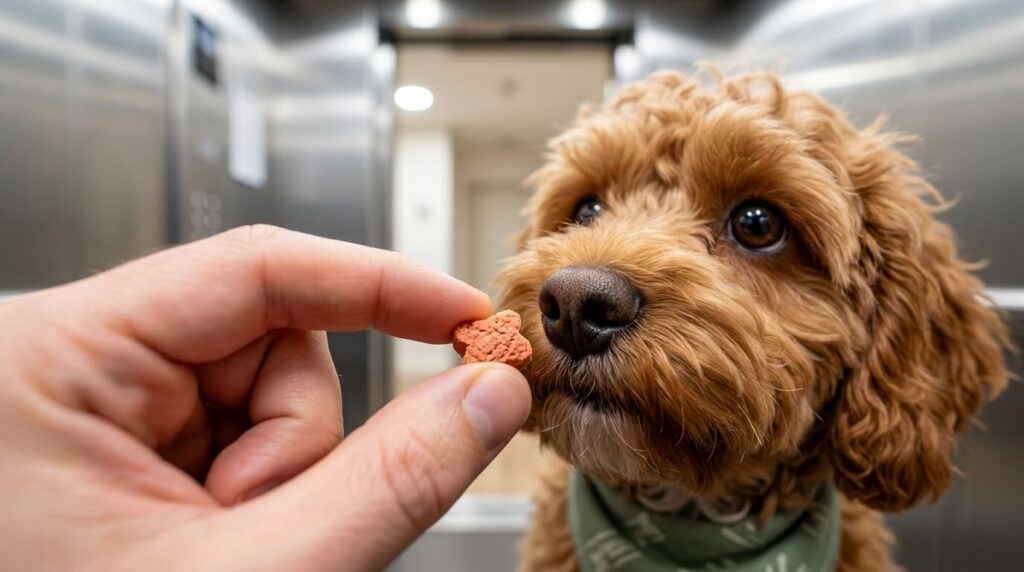
Use small, soft treats your dog can eat quickly. Reward calm check-ins, waiting, entering slowly, standing beside you, and exiting under control. If your dog is too stressed to eat, the elevator may be too difficult right now and you should move farther away or simplify the exercise.
The 7-Step Dog Elevator Training Plan
1. Build a Door Buffer Before Pressing the Button
Most elevator problems begin before the elevator arrives. The dog stands nose-to-door, the doors open, and suddenly there is a person, cart, child, or dog right in front of them. That surprise creates pulling, barking, jumping, or fear.
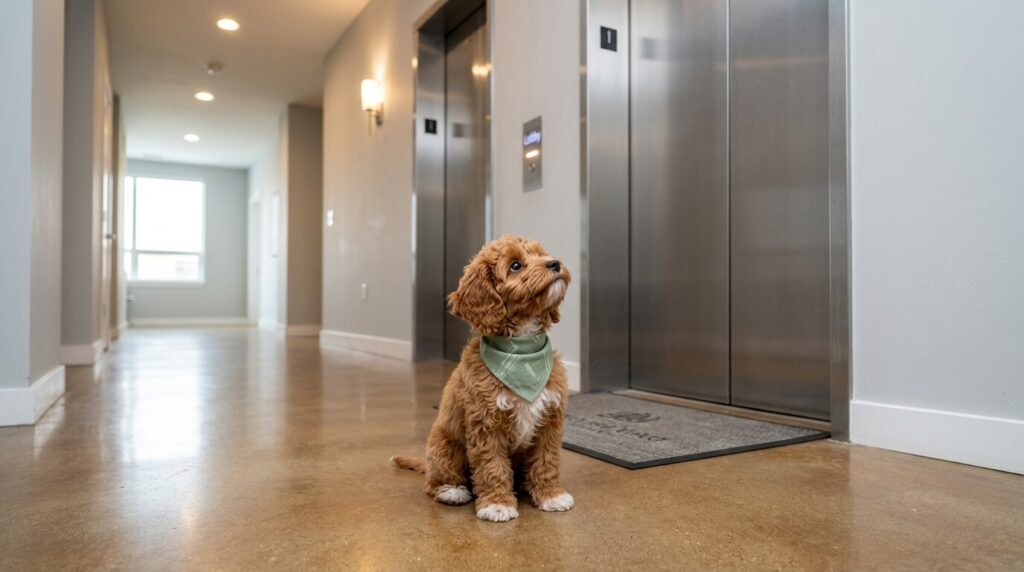
Teach your dog to wait several feet back from the elevator doors. Pick a position near the side wall if your building layout allows it. Say “wait,” reward the dog for standing or sitting calmly, then press the button. Your goal is simple: the dog should learn that the elevator door opening does not mean launching forward.
At first, practice without taking a ride. Walk to the elevator, stop at your waiting spot, reward calm behavior, then walk away. Repeat until your dog can wait without bouncing, whining, or pulling toward the doors.
2. Teach Door-Open Patience
The hardest moment is when the doors open. Your dog needs to pause long enough for you to check what is inside. This is essential dog elevator etiquette because someone may be exiting with a dog, stroller, walker, bicycle, or heavy package.
Stand with your dog slightly behind your leg. When the doors open, quietly say “wait.” Look inside first. If the elevator is empty, mark and reward your dog before entering. If someone is exiting, step back and give them space. If another dog is inside and your dog is not ready for that, skip the ride and wait for the next elevator.
Do not let your dog rehearse pushing into the elevator as people are leaving. That single habit causes many high-rise conflicts.
3. Enter on Cue, Not on Impulse
Once your dog can wait while the doors open, teach a clear entry cue such as “let’s go.” Step in first, guide your dog beside you, and reward after the dog enters calmly. The cue tells your dog that movement happens through you, not through excitement.
If your dog rushes, circle out and try again when the elevator is empty. Keep the correction boring. You are not punishing the dog; you are teaching that calm entry opens the path and rushing resets the exercise.
For small dogs, avoid carrying them every time unless there is a safety reason. Carrying can be useful in crowded situations, but a dog who never practices walking in calmly may stay confused or overexcited.
4. Choose a Safe Elevator Position
Inside the elevator, move your dog to one side or a back corner, depending on the layout. Keep your body between your dog and the doors when possible. This reduces direct face-to-face greetings when people enter.
For dogs who stare at the door, ask for a simple “with me” or “touch” cue and reward them for turning toward you. For dogs who sniff strangers, shorten the leash and reward staying near your leg. For dogs who bark, increase distance from the door when possible and practice at quieter times.
The goal is not a perfect obedience performance. The goal is a dog who stays connected to you and does not make other riders responsible for managing the situation.
5. Practice Calm Riding Without Social Greetings
Many elevator problems happen because owners allow greetings in a space too tight for polite dog behavior. A dog may be friendly, but the other person may be afraid, allergic, carrying food, or handling their own nervous dog. In elevators, neutral is better than social.
Teach your dog that elevator rides are not meet-and-greet events. Reward looking at you, standing beside you, or calmly facing the wall. If someone asks to pet your dog, it is fine to say, “Not in the elevator, thank you.” That protects your dog from pressure and keeps the ride predictable.
If another dog enters, increase distance as much as the space allows, shorten your leash, and keep your dog oriented toward you. If your dog cannot stay calm around dogs in elevators, wait for empty rides while you work on the underlying issue.
6. Exit With Control
Exiting is exciting because the dog knows the walk is close. It can also be dangerous. Dogs may rush into a lobby, collide with someone outside the doors, or pull toward another dog waiting in the hall.
Before the doors open, ask for “wait” or “with me.” Let people outside step back if needed. Then release your dog with a clear cue. Walk out together rather than letting the dog drag you out first.
Practice this even when nobody is around. Habits built in quiet moments are what help you when the lobby is busy.
7. Add Real-Life Difficulty Slowly
After your dog can handle empty elevator rides, add difficulty gradually. Practice with a trusted friend entering. Practice with a shopping bag. Practice at a slightly busier time. Practice waiting for the next elevator instead of taking the first one.
Do not jump from empty rides to peak-hour chaos. A good dog elevator training plan should feel almost too easy at first. The easier repetitions build the behavior you need before the building tests it.
Dog Elevator Etiquette for High-Rise Owners
Training your dog is only half of elevator etiquette. The other half is making good decisions as the human. In shared buildings, responsible dog owners reduce friction before it starts.
- Stand back from the elevator doors.
- Let people exit before you enter.
- Keep your dog close rather than at the end of the leash.
- Ask before allowing any greeting.
- Skip crowded elevators if your dog is not ready.
- Do not block the door while training.
- Clean up accidents immediately and report building messes if needed.
This kind of etiquette makes your dog look safer and makes you look like a thoughtful neighbor. That matters in apartment buildings where one bad interaction can affect how management views dog owners.
If Your Dog Is Scared of Elevators
A scared dog needs a slower plan than a merely excited dog. Fear signs include freezing, trembling, crouching, refusing food, trying to back away, panting heavily, or scrambling toward the exit. Do not drag a scared dog into the elevator to “get it over with.” That can make the elevator feel even more dangerous.
Start at the distance where your dog can notice the elevator area and still take food. Reward calm looking, then leave. Later, practice standing near the doors. Then hearing the elevator. Then watching doors open. Then stepping in and stepping out without riding. Then one floor. This is the slow path, but it is often the path that works.
If your dog has panic-level fear, talk with a veterinarian or behavior professional. Some dogs need a coordinated plan that includes behavior modification, environmental management, and medical support.
If Your Dog Lunges at Elevator Doors
Lunging at elevator doors is a different problem from basic manners. It may come from frustration, excitement, fear, guarding, or surprise when another dog appears. The tight space makes the behavior risky because there is almost no room to create distance.
For now, increase your door buffer. Wait farther back. Keep your dog behind your leg. Reward looking at you when the doors open. Skip elevators with dogs inside. If lunging is intense or escalating, treat it as a reactivity issue rather than a simple etiquette problem.
The key boundary for this page is simple: basic dog elevator training teaches calm routines. Door lunging needs a more specific trigger plan.
Apartment Elevator Training Schedule
Use short sessions. Three minutes of clean practice is better than 20 minutes of frustration. Here is a simple one-week schedule for a dog who is excited but not severely fearful or reactive.
| Day | Goal | Stop When |
|---|---|---|
| Day 1 | Stand calmly 6 feet from elevator doors | Dog checks in and takes treats |
| Day 2 | Wait while doors open and close | Dog does not rush forward |
| Day 3 | Enter empty elevator and exit immediately | Dog follows without pulling |
| Day 4 | Ride one floor at quiet time | Dog stays near your leg |
| Day 5 | Practice controlled exits | Dog waits for release cue |
| Day 6 | Add mild distractions | Dog can still respond to cues |
| Day 7 | Use the routine during a normal walk | Dog completes the ride calmly |
Common Dog Elevator Training Mistakes
Mistake 1: Standing Too Close to the Doors
If your dog is nose-to-door, you have no reaction time. Create distance before the doors open. That one change prevents many rushing and lunging incidents.
Mistake 2: Letting Every Ride Become a Greeting
Elevators are poor greeting spaces. Keep rides neutral. Your dog does not need to meet every neighbor to be friendly.
Mistake 3: Practicing Only When You Are in a Hurry
If training only happens during real potty emergencies or workday rushes, you will be tense and your dog will be overexcited. Schedule quiet practice on purpose.
Mistake 4: Pulling a Scared Dog Inside
Forcing a scared dog can make the elevator more frightening. Use distance, short exposure, and rewards. Severe fear deserves professional help.
Mistake 5: Ignoring the Other Dog
Your dog may be friendly, but the dog inside the elevator may not be. If another dog is already in a tight elevator, it is often smarter to wait for the next one.
Elevator Training by Apartment Situation
Dog elevator training changes depending on your building. A quiet four-story apartment with one slow elevator is different from a busy downtown high-rise with residents, cleaners, delivery workers, visitors, strollers, and dogs moving through the lobby all day. Use the same basic skills, but adjust the difficulty to your real environment.
If You Live on a High Floor
High-floor owners have fewer options when something goes wrong. You may not want to take the stairs from the twentieth floor, and a potty emergency can make waiting for another elevator feel stressful. That is why high-floor dogs need the door buffer and exit cue early.
Practice when your dog does not urgently need to potty. If every elevator ride happens when the dog is desperate, the dog learns that rushing is part of the routine. Add one or two quiet training rides each week where you are not going outside for a bathroom break. Ride down one floor, reward calm behavior, ride back, and end the session.
If Your Lobby Is Busy
Busy lobbies create two problems: surprise and crowding. Your dog may step out of the elevator and immediately face another dog, a delivery cart, or a group of people. Before exiting, listen and look. If the lobby is crowded and your dog is not ready, wait inside for the doors to close or ask people for a second to clear the doorway.
Teach your dog that the elevator door opening is not an automatic release. This matters more in busy lobbies than in quiet buildings. A dog who waits for your cue gives you time to scan the space before stepping into trouble.
If You Have a Small Dog
Small dogs are often picked up in elevators, and sometimes that is the safest choice. But carrying should not be the only skill. A small dog who barks from your arms, stiffens at eye level with strangers, or snaps when people reach in still needs training.
Practice both options. Teach your dog to walk in calmly when the elevator is empty. Also teach a calm carry position for crowded situations. If your dog is more reactive in your arms, turn your body away from triggers and reward quiet behavior after the doors close.
If You Have a Large Dog
Large dogs need space management. Even a friendly large dog can intimidate neighbors in a tight elevator. Keep your dog close, avoid letting the dog stand across the doorway, and position your body between your dog and other riders.
Large dogs also need careful exit control. A sudden pull can knock into a child, older resident, or person carrying groceries. Practice the exit cue until it is boring. The dog should learn that doors opening means pause first, move second.
If Your Dog Is New to the Building
Newly adopted dogs and dogs who just moved apartments may not show their full elevator behavior on day one. Some are quiet at first because they are overwhelmed. Others become more reactive after they learn the building patterns. For the first two weeks, treat every elevator ride as training, not as proof that the dog is already fine.
Use predictable routes, avoid unnecessary greetings, and keep walks calm. If your dog has just moved with you, pair elevator work with the broader moving to apartment with dog routine so the dog is not learning everything at once.
What to Do During Awkward Elevator Moments
Even with good dog elevator training, awkward moments happen. The goal is not perfection. The goal is to recover quickly without making the next ride worse.
Someone Reaches for Your Dog
Step slightly between your dog and the person and say, “Please give us space.” Keep your voice calm and reward your dog for staying close. You do not need to explain your training plan in the elevator. A short, polite boundary is enough.
Another Dog Rushes In
Shorten your leash, turn your dog toward you, and create as much distance as possible. If your dog is not comfortable, exit if it is safe or wait for the next ride next time. Do not scold your dog for reacting when the setup was too hard.
Your Dog Barks Once
A single bark is information, not a disaster. Ask for a simple cue your dog knows, such as “touch” or “with me,” reward the response, and finish the ride calmly. Later, ask what caused the bark: the door sound, a person, a dog, a reflection, or excitement about going outside.
Your Dog Freezes
Do not drag. Step back if possible, give the dog a moment, and make the next repetition easier. If freezing repeats, stop using the elevator for training and build comfort near the elevator area first. Fear work succeeds when the dog still has enough confidence to choose movement.
The Elevator Is Too Crowded
Skip it. Waiting for the next elevator is not failure. It is good handling. Your dog learns from the rides you choose and the rides you avoid.
FAQ
How do I train my dog to use an elevator?
Start by teaching your dog to wait away from the elevator doors. Reward calm behavior while the doors open, enter only on cue, stand to one side during the ride, and exit only when released. Practice first when the building is quiet.
Why is my dog scared of elevators?
Elevators can scare dogs because of moving floors, closing doors, echoes, tight spaces, reflections, and strangers standing close. Some dogs also had a bad experience in an elevator or hallway. Use slow exposure and rewards instead of forcing the dog inside.
Should I let my dog greet people in the elevator?
Usually no. Elevator greetings are cramped and unpredictable. It is safer to keep your dog close, reward calm behavior, and allow greetings only outside the elevator when there is enough space and both sides agree.
What should I do if another dog is in the elevator?
If your dog is calm around other dogs, move to the side and keep your dog close. If your dog is reactive, fearful, or overexcited, wait for the next elevator. Skipping one ride is better than creating a bad rehearsal.
Can puppies learn elevator etiquette?
Yes. Puppies can learn to wait, enter calmly, and exit on cue. Keep sessions short and positive. Be patient with potty urgency, because young puppies may not be able to wait long during house training.
Do small dogs need elevator training?
Yes. Small dogs still bark, rush doors, panic, or snap if they feel trapped. Carrying can help in some crowded situations, but small dogs benefit from learning calm elevator routines too.
Next Step
Start with the door buffer today. On your next quiet walk, stop several feet from the elevator, ask your dog to wait, reward calm attention, and let the doors open without rushing. That single habit makes every later step easier.
If your dog mainly struggles with fear, slow down and work below the fear threshold. If your dog lunges or barks explosively when the doors open, treat that as a reactivity issue and avoid crowded rides while you build a safer plan. For everyday high-rise manners, consistent dog elevator training can turn the elevator from a daily stress point into a predictable routine.