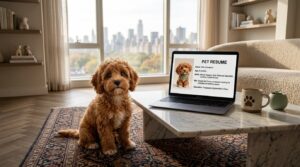
How long can you leave a dog alone in an apartment? For most healthy adult dogs, a realistic safe range is about 4 to 6 hours on a normal day. Some calm, well-trained adult dogs can handle 7 to 8 hours with the right routine, but puppies, senior dogs, newly adopted dogs, anxious dogs, and dogs with medical needs usually need much shorter intervals.
Apartment alone time is not only a bladder question. Your dog also needs to stay calm, safe, quiet enough for shared walls, and comfortable until you return. A dog who can physically hold urine for eight hours may still panic, bark, scratch the door, pace, or disturb neighbors after twenty minutes.
This guide gives you practical alone-time limits by age, a workday decision plan, a safe-zone checklist, crate cautions, pet camera signs to watch, and a simple way to test whether your dog is actually okay when left alone.
How Long Can You Leave a Dog Alone in an Apartment? Quick Answer
| Dog | Typical Alone-Time Limit | Apartment Notes |
|---|---|---|
| Young puppy under 6 months | Usually 1 to 3 hours | Needs frequent potty breaks, supervision, and gradual training. |
| Adolescent dog | About 3 to 5 hours | Often needs exercise and enrichment before being left alone. |
| Healthy adult dog | About 4 to 6 hours | Some can handle longer if calm, trained, and given a midday plan. |
| Calm adult dog with support | Up to 7 to 8 hours for some dogs | Best with a dog walker, lunch break, pet camera, or reliable routine. |
| Senior dog | Often 2 to 5 hours | May need more potty breaks, softer bedding, and medical monitoring. |
| Anxious or newly adopted dog | Start with minutes, not hours | Build tolerance slowly and avoid forcing long absences. |
These are guidelines, not promises. The final answer is your dog’s behavior. If your dog sleeps, drinks normally, uses enrichment, and stays relaxed, you may have more flexibility. If your dog barks, paces, drools, scratches exits, destroys things, or ignores food, the current alone-time plan is too much.
Table of Contents
The Apartment Difference: Alone Time Has Neighbors
Leaving a dog alone in a house and leaving a dog alone in an apartment are not the same problem. In a house, a barking episode may annoy only you. In an apartment, the same episode can reach the neighbor below, the shared hallway, the property manager, and eventually your lease file.
Apartment dogs also hear more triggers. Elevators, delivery carts, footsteps, hallway voices, doors closing, other dogs, and maintenance workers can all happen while you are gone. Your dog may not be reacting to being alone only. They may be reacting to the building continuing without you.
That is why the goal is not just “my dog did not pee.” The goal is: my dog remained comfortable, quiet enough, and safe in a small shared environment.
Bladder Control vs. Emotional Tolerance
Many owners make the mistake of using bladder control as the only measure. Yes, potty needs matter. Puppies and seniors often need more frequent breaks. But emotional tolerance matters just as much.
A dog can have an empty bladder and still experience distress. Another dog can technically hold it but become so bored that they chew baseboards, raid trash, or bark at every hallway sound. In apartments, both outcomes create problems.
Use two questions instead of one:
- Can my dog physically wait until I return?
- Can my dog emotionally stay calm and safe until I return?
If either answer is no, shorten the alone-time window and add support.
Safe Alone-Time Limits by Age
Puppies
Puppies should not be expected to handle a full workday alone. Their bladder control is limited, their chewing needs are high, and they are still learning that being alone is normal. If your puppy is under 6 months, plan for short absences, frequent potty breaks, and a safe confinement setup.
If you work away from home, use a dog walker, trusted neighbor, lunch break, daycare, or indoor potty backup. Do not wait for accidents and destruction to prove the schedule was too long.
Adult Dogs
Many healthy adult dogs can manage 4 to 6 hours alone in an apartment if their needs are met first. That means a real potty break, some movement, water, a safe resting area, and a predictable leaving routine.
Some adult dogs can handle 7 to 8 hours, but I would not make that the default without evidence. Use video for a few days. If your dog settles quickly and sleeps most of the time, your plan may be working. If your dog paces for hours, barks, or stares at the door, the schedule needs help.
Senior Dogs
Senior dogs often need shorter windows. They may drink more, urinate more often, sleep more deeply, move more slowly, or have joint pain that makes getting comfortable harder. If your senior dog starts having accidents after years of being reliable, do not assume stubbornness. Ask your veterinarian about medical causes.
When 8 Hours Is Too Long
Eight hours is too long if your dog cannot stay physically comfortable, emotionally calm, and safe. It is also too long if your dog has no realistic potty option, is crated the entire time without proper conditioning, or shows distress on camera.
Warning signs include:
- Repeated barking or howling after you leave
- Pacing that lasts more than a few minutes
- Drooling, trembling, or panting when the room is not hot
- Scratching at doors, windows, or crate bars
- Trying to escape the crate or safe zone
- Urinating or defecating only when left alone
- Ignoring favorite food or chews after you leave
- Destructive behavior focused near exits
If you see these signs, the answer is not “try a longer chew.” Your dog may need a slower training plan, a professional trainer, a veterinarian, or a certified behavior professional.
Workday Options for Apartment Dog Owners
If your workday is longer than your dog’s comfort window, build a support plan instead of hoping your dog adapts. The best option depends on your dog’s age, personality, potty habits, and building rules.
| Problem | Better Workday Option | Best For |
|---|---|---|
| Puppy cannot hold it | Midday walker, lunch break, or indoor potty station | Puppies and newly house-trained dogs |
| Dog gets bored | Food puzzle, chew rotation, pre-work exercise | Young adult dogs and high-energy breeds |
| Dog barks at hallway sounds | Safe zone away from front door, white noise, visual barriers | Noise-sensitive apartment dogs |
| Dog panics when alone | Gradual alone-time training and professional support | Dogs with separation anxiety signs |
| Owner needs monitoring | Pet camera used for behavior evidence | Dogs being tested for longer absences |
| Meals happen while owner is gone | Timed feeding plan or automatic feeder | Stable adult dogs who eat calmly |
If meals are the main problem, connect this page to your future or existing feeder guide: best automatic dog feeders. If confinement is the issue, connect it to your crate guide: crate training for apartment dogs.
Apartment Safe Zone Setup
A safe zone is the area where your dog stays while you are gone. It may be a crate, playpen, gated room, kitchen area, or bedroom corner. The right choice depends on what keeps your dog calm and safe, not what looks best online.
A good apartment safe zone should include:
- Fresh water
- Comfortable bedding
- Safe flooring or washable protection
- No reachable cords, trash, plants, or medications
- Distance from the front door if hallway noise triggers barking
- Approved chew or enrichment items
- Good airflow and a comfortable temperature
- A potty plan if the dog cannot wait until you return
Crates can be useful, but they are not magic. Humane World for Animals cautions that crates should not be used as punishment and that dogs should not be crated too long; puppies under 6 months generally should not remain crated for more than three or four hours at a time. Read their guidance before using a crate as your main alone-time setup: Humane World: crate training 101.
How to Test Alone Time Safely
Do not discover your dog’s limit by leaving for a full workday and hoping. Test alone time in small steps.
- Set up the safe zone exactly as you would for work.
- Leave for 5 to 10 minutes.
- Record video or use a pet camera.
- Return calmly, without a dramatic greeting.
- Review the first 10 minutes after departure.
- If your dog settles, increase the next test slowly.
- If your dog panics, shorten the test and rebuild from an easier point.
The first 10 to 20 minutes are especially useful because many separation-related problems appear soon after departure. If your dog panics immediately, longer practice will not fix it. Shorter, easier practice is the path forward.
What a Pet Camera Can and Cannot Tell You
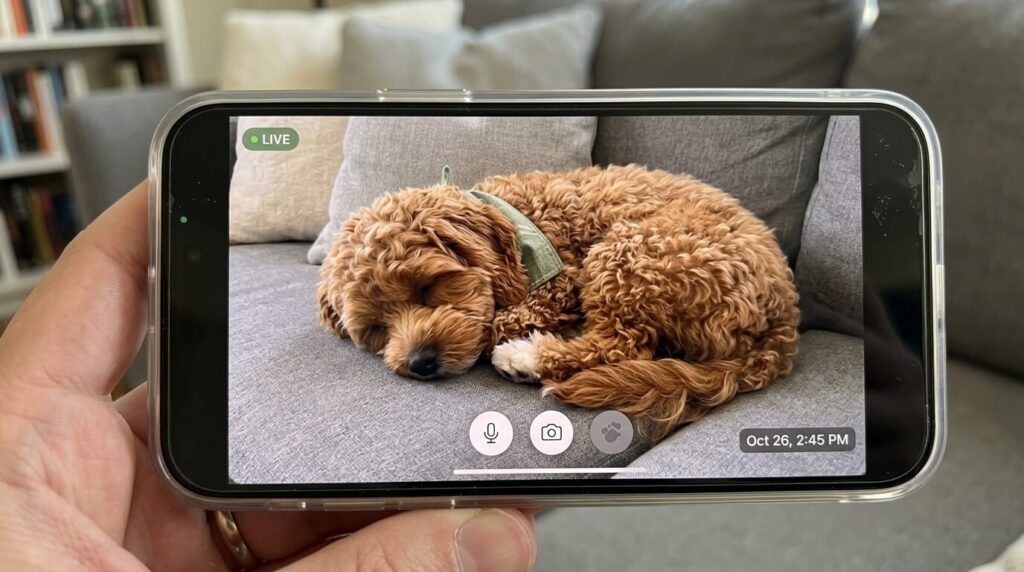
A pet camera is helpful because it replaces guessing with evidence. It can show whether your dog sleeps, paces, barks, watches the door, eats enrichment, or reacts to hallway sounds.
But do not use a camera only to talk to your dog every time they move. For some dogs, hearing your voice without seeing you can increase confusion. Use the camera first as an observation tool. Look for patterns.
| Camera Behavior | Likely Meaning | What To Do |
|---|---|---|
| Dog settles and sleeps | Current plan may be working | Keep routine consistent and avoid sudden long jumps. |
| Dog barks at hallway sounds | Noise trigger, not necessarily separation anxiety | Move safe zone away from door and add sound masking. |
| Dog paces nonstop | Stress or under-preparation | Shorten absence and add pre-departure exercise or training. |
| Dog scratches exits | Possible distress or escape behavior | Stop long absences and seek professional support if repeated. |
| Dog ignores food after you leave | Stress may be overriding appetite | Use easier alone-time steps and watch for anxiety signs. |
If you later want to add product recommendations, this is where a pet camera guide can naturally link: best pet camera for dogs. Keep the current article focused on decision-making, not shopping.
Separation Anxiety vs. Normal Boredom
Not every dog who misbehaves alone has separation anxiety. Some are bored. Some are under-exercised. Some are not fully house-trained. Some react to hallway noise. Some have medical needs. The distinction matters because the solution changes.
Boredom usually improves with exercise, enrichment, a better safe zone, and a clearer routine. Separation anxiety or separation-related distress often requires gradual training, careful absences, and sometimes professional help.
Common distress signs include panic when departure cues begin, drooling, shaking, frantic escape attempts, destruction near doors or windows, and vocalizing that does not fade. If you suspect separation anxiety, avoid punishment. Punishment can make the distress worse and does not teach the dog how to feel safe alone.
For a deeper apartment-specific breakdown, link to your guide here: dog separation anxiety in apartments.
Sample Alone-Time Schedules
Puppy Schedule
Morning potty break, breakfast, short play session, potty again, then a short safe-zone nap. Plan a midday visit or walker. A puppy should not be expected to wait through a full workday without help.
Adult Dog Workday
Morning walk, breakfast or enrichment meal, calm departure, 4 to 6 hours alone, midday walker or break if needed, then evening walk and decompression. Test whether your dog actually settles before assuming 8 hours is fine.
Senior Dog Schedule
Shorter morning walk, easy potty access, soft bedding, water, temperature control, and more frequent breaks. If accidents start suddenly, schedule a veterinary check rather than only changing the routine.
Alone-Time Plan by Owner Schedule
Your dog’s safe alone-time limit also depends on your schedule. A remote worker, office worker, nurse, teacher, service worker, and hybrid employee all need different systems. The mistake is trying to copy someone else’s routine without asking whether your workday actually matches theirs.
Use your real schedule as the starting point. Then build the dog care plan around the longest stretch your dog is alone, not around the total number of hours you are busy.
| Owner Schedule | Main Risk | Best Apartment Plan |
|---|---|---|
| Remote worker | Dog never learns true independence | Practice short planned absences even when you work from home. |
| Office worker | Long midday gap | Use a walker, lunch break, neighbor visit, or daycare. |
| Hybrid worker | Inconsistent routine | Keep the morning routine similar on home and office days. |
| Shift worker | Irregular potty and sleep schedule | Build predictable anchor points before and after each shift. |
| Student | Unpredictable class and social schedule | Use a calendar-based care plan instead of deciding day by day. |
| Frequent traveler | Too many caretaker changes | Choose one consistent sitter or daycare relationship when possible. |
If You Work From Home
Remote workers often assume their dogs are fine because they are rarely alone. The hidden problem is that the dog may become dependent on constant human presence. Then a dentist appointment, dinner out, or sudden office day becomes a major event.
If you work from home, schedule small alone-time practices on purpose. Leave for 10 minutes. Work from another room. Use the safe zone while you are still in the apartment. The goal is to teach your dog that separation is normal, not alarming.
If You Work in an Office
Office workers need a midday plan if the workday is longer than the dog’s comfort window. For some adult dogs, that may mean a walker three days a week. For puppies, it may mean daily help. For anxious dogs, it may mean daycare or a training plan before long solo days are realistic.
Do not wait for neighbor complaints to confirm the schedule is too hard. If your dog is silent but distressed, you may not know until you check video. If your dog is loud, your neighbors may know before you do.
If Your Schedule Changes Every Week
Dogs can adapt to flexible schedules, but they still need predictable signals. Keep the pre-departure routine consistent: potty break, water check, safe-zone setup, enrichment item, calm exit. Even if the time of day changes, the pattern tells your dog what to expect.
For apartment dogs, predictability is especially helpful because the building itself is unpredictable. You cannot control elevator noise, hallway footsteps, or deliveries. You can control your routine.
Common Mistakes Apartment Owners Make
Mistake 1: Jumping from 30 minutes to 8 hours
Build alone time gradually. A dog who handles a grocery trip is not automatically ready for a full workday.
Mistake 2: Crating without conditioning
A crate should feel safe before it becomes part of your alone-time plan. If your dog panics in the crate, the crate is not solving the problem.
Mistake 3: Ignoring neighbor feedback
If a neighbor says your dog barked for an hour, treat it as useful data. It may be the first sign that your camera missed a trigger or that your dog needs more support.
Mistake 4: Using food puzzles with unsafe items
Only leave items your dog can use safely without supervision. Avoid anything that splinters, breaks apart, or becomes a choking risk.
Mistake 5: Calling every problem separation anxiety
Rule out potty needs, boredom, medical problems, hallway triggers, and unsafe confinement before deciding your dog has separation anxiety.
FAQ
How long can you leave a dog alone in an apartment if you work full-time?
Many adult dogs cannot comfortably handle a full workday without support. If you work full-time, plan a dog walker, lunch break, neighbor visit, daycare, or gradual training plan depending on your dog’s age and behavior.
Is 8 hours too long to leave a dog alone in an apartment?
Eight hours is too long for puppies, many senior dogs, anxious dogs, and dogs without a potty or support plan. Some calm adult dogs can handle it, but only if they settle comfortably and do not show distress on camera.
Is 10 hours too long to leave a dog alone?
For most dogs, 10 hours is too long as a regular routine. If it happens rarely, arrange support. If it happens often, your dog needs a different care plan.
Should I leave my dog in a crate while I am gone?
Only if your dog is properly crate trained and the time is appropriate. A crate should not be used as punishment or as an all-day holding solution. Some dogs do better in a gated safe area instead.
What do dogs do when left alone in an apartment?
Comfortable dogs usually sleep, chew safe enrichment, drink water, and shift resting spots. Stressed dogs may pace, bark, drool, scratch, destroy items, or wait near the door.
How can I tell if my dog is okay alone?
Use video, neighbor feedback, and physical evidence. A dog who settles quickly, sleeps, eats normally, and shows no damage or accidents is likely coping better than a dog who paces, vocalizes, or scratches exits.
Can I leave a puppy alone in an apartment?
Yes, but only for short periods with a safe setup and frequent potty breaks. Puppies need gradual alone-time training and should not be left for a full workday without help.
What to Do If Your Dog Is Almost Okay Alone
Some dogs are not in crisis, but they are not fully comfortable either. They may settle after 20 minutes, bark once or twice, pace briefly, or ignore a chew at first and then nap. These dogs often improve with small changes rather than a complete overhaul.
Start by improving the first 30 minutes after departure. That is when many apartment alone-time problems happen. Give a calmer pre-departure routine, add a short sniff walk before leaving, move the safe zone away from the hallway, and leave enrichment that your dog only gets when you go.
If your dog is almost okay, avoid making the absence suddenly longer. Build gradually. A dog who can handle three hours calmly may not be ready for eight hours just because one test went well.
The 3-Day Apartment Alone-Time Reset
Use this mini reset when your dog is close but not quite settled:
- Day 1: Do a short morning walk, set up the safe zone, leave for 20 minutes, and review video.
- Day 2: Repeat the same routine, but add one enrichment item and leave for 30 to 45 minutes if Day 1 was calm.
- Day 3: Test a realistic errand-length absence. Keep the greeting calm when you return.
If the dog improves, continue building slowly. If the dog gets worse, reduce the duration and consider whether anxiety, noise triggers, or confinement stress is the real issue.
Next Step
Do one camera test this week. Set up your dog’s normal safe zone, leave for 20 minutes, and watch what happens after the first two minutes and after the first ten minutes. If your dog settles, you can build slowly. If your dog panics, shorten the absence and make the setup easier.
The best answer to how long can you leave a dog alone in an apartment is not a universal number. It is the longest window your dog can handle while staying calm, safe, quiet enough for shared walls, and physically comfortable.