Single Person Dog Safety: Quick Answer
Single person dog safety means having a plan for the moments when no one else is automatically there: late-night walks, illness, injury, work delays, building emergencies, lost keys, vet visits, power outages, and sudden hospital trips. A dog can make solo apartment life feel warmer and more structured, but a dog also depends on you. That is why solo owners need backup systems before something goes wrong.
Start with seven basics: an emergency contact who can reach your dog, a spare-key plan, updated microchip and ID information, a small go-bag, safer night-walk habits, written care instructions, and a backup walker or friend who can step in if you are sick. These are not dramatic preparations. They are boring systems that protect both you and your dog.
Do not think of your dog as your whole safety plan. Dogs can bark, comfort, alert, and create routine, but they should not be your only protection plan. Your best safety plan combines people, documents, building awareness, good walking habits, vet readiness, and practical routines.
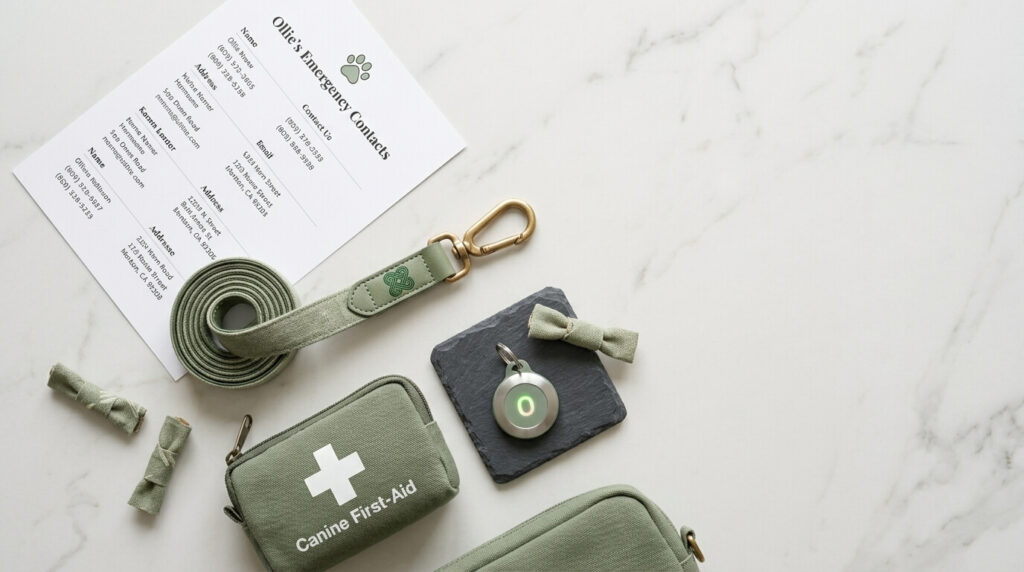
Table of Contents
Why Solo Dog Owners Need a Plan
Living alone with a dog has real benefits. You may walk more, keep a steadier schedule, feel less isolated, and notice your neighborhood more carefully. Your dog may give you a reason to go outside, stop working, and maintain a daily rhythm. But solo ownership also has a simple vulnerability: if you cannot care for the dog, there may be no second person in the home to notice right away.
That matters in apartments. A dog may need elevator access, a key fob, a building code, a leash location, medication instructions, and permission for someone else to enter. If you get the flu, twist an ankle, get stuck at work, or have an emergency, your dog still needs food, water, relief, and safe supervision. A plan turns panic into a checklist.
Single person dog safety is not about being afraid of everything. It is about removing the fragile points in your routine. Who can enter your apartment? Who knows your dog’s vet? Who can walk your dog if you cannot? Where are the records? What happens if your phone dies? What happens if the building has a fire alarm or elevator outage? Answering those questions now is a gift to future you.
7 Essential Smart Plans
1. Create a Two-Person Backup Network
One backup person is helpful. Two is safer. Choose people who are realistic, not just kind. They should be able to reach your apartment, handle your dog, and follow instructions. One may be a neighbor in the building. Another may be a friend, family member, dog walker, or nearby coworker.
Give them the basics: your address, building access instructions, vet information, where the leash is, where food is stored, and what your dog needs in an emergency. If your dog is shy, reactive, strong, or medically complicated, the backup person should know that before a crisis.
2. Make a Spare-Key and Access Plan
A spare key only helps if the right person can use it. Apartments may involve fobs, codes, parking gates, concierge desks, elevators, locked stairwells, or pet policies. Write down the exact access steps. If your building requires emergency contact authorization, add your backup person where allowed.
Do not hide keys in unsafe public places. Use a trusted person, building-approved system, or locked key system only if allowed and safe. The access plan should protect your home, not create a new risk.
3. Keep Medical and Identification Information Updated
Your dog’s ID tag, microchip, license, vaccination records, medication list, and vet contact should be current. Keep a digital copy on your phone and a printed copy in the apartment. If someone else has to take your dog to a vet, they should not need to search through drawers while your dog waits.
Include feeding amount, medication timing, allergies, behavior notes, and handling warnings. “Friendly” is not enough. Write specifics: pulls on leash, afraid of elevators, cannot greet other dogs, needs harness, or takes pills with food.
4. Build a Small Dog Emergency Go-Bag
A go-bag does not need to be fancy. Keep a spare leash, waste bags, collapsible bowl, food for a short period, medication copy, towel, vet records, and a familiar item. If you live in a high-rise or storm-prone area, add building-specific needs. Rotate food and medication so nothing expires.
Store it where a backup person can find it quickly. Label it clearly. If you ever need to leave quickly, you do not want to assemble dog supplies while stressed.
5. Design a Safer Night-Walk Routine
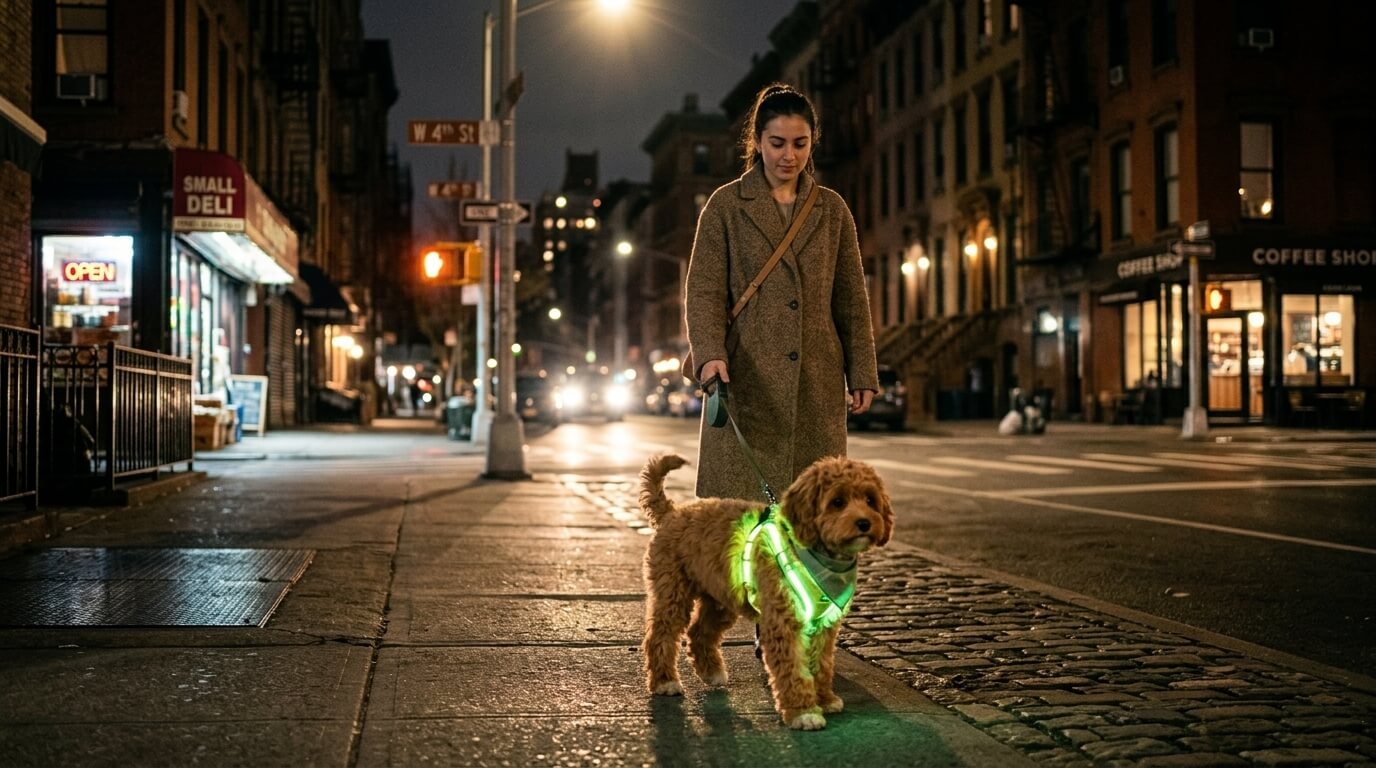
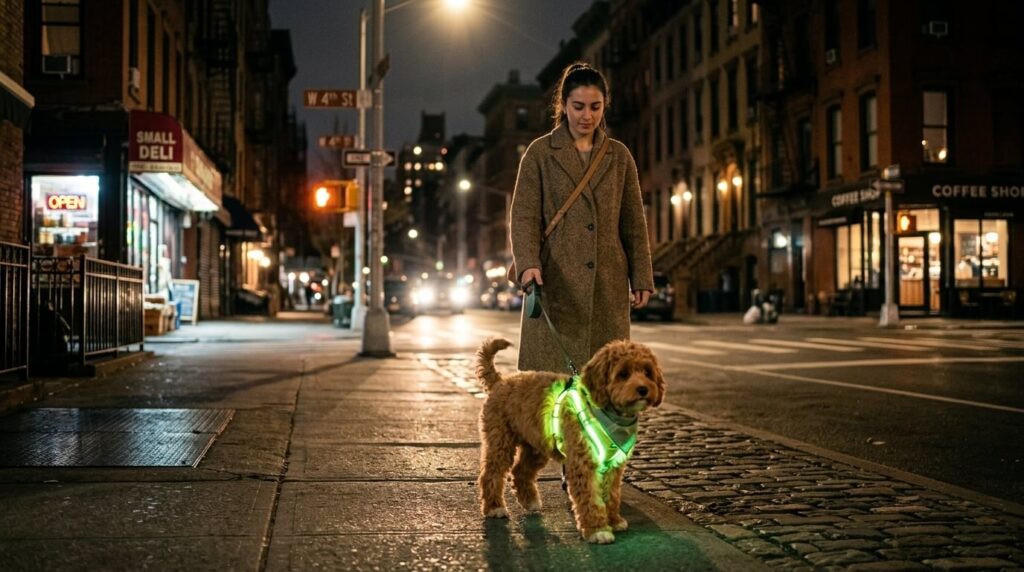
Night walks are one of the biggest solo-owner safety habits. Choose well-lit routes, avoid isolated corners, keep your phone charged, and use visible gear when needed. Tell someone your usual late route if your situation warrants it. Keep headphones low or off so you can hear people, cars, bikes, and other dogs.
Your dog should wear well-fitted gear. A loose collar, retractable leash near traffic, or poorly fitted harness can turn a routine walk into a lost-dog emergency. If your dog needs better walking control in apartment settings, review dog harnesses for apartment dogs.
6. Prepare for Sick Days
The solo-owner test is not vacation. It is the day you have a fever, migraine, injury, or stomach bug and your dog still needs care. Decide in advance what happens. Can a neighbor do a relief walk? Can a walker come on short notice? Can your dog use a temporary indoor potty option if the vet says it is appropriate? Can you shorten walks safely for one day?
If your dog has high exercise needs, build a low-energy plan before you need it. Food puzzles, scent games, calm training, and short sniff breaks may help on sick days. For indoor options, see how to keep a dog entertained while at work.
7. Document Your Dog’s Daily Routine
Write a one-page care sheet. Include feeding, walks, medication, potty habits, behavior concerns, emergency contacts, vet, and where supplies are stored. Put it in an obvious place and share a copy with your backup person. Update it when anything changes.
This may feel unnecessary until the day someone else needs it. A clear care sheet can prevent overfeeding, missed medication, unsafe greetings, or confusion about leash gear.
The Emergency Card System
Carry a card in your wallet or phone case that says you have a dog at home and lists who to contact. If you are injured or unable to communicate, someone needs to know there is an animal waiting in your apartment. This card should include your dog’s name, your address or building information as appropriate, and two contacts who can help.
You can also put a similar note near your apartment entrance for emergency responders or approved helpers. Keep privacy in mind. Do not post sensitive details in a public hallway. Use a discreet system that alerts the right people without advertising your routine to everyone.
For renters, ask your property manager how emergency contacts are handled. Some buildings keep tenant emergency contacts, pet information, or permission notes. Do not assume they do. Confirm it.
Night Walk Safety
Night walking is not only about personal safety. It is also about traffic, visibility, loose dogs, wildlife, icy sidewalks, distracted drivers, and your dog’s reactivity. Pick routes that give you space to turn around. Avoid narrow blind corners if your dog reacts to other dogs. Keep your leash short enough for control but not tight enough to create tension.
If you use visibility gear, choose it for function. Reflective leashes, lights, and bright clothing can help drivers and cyclists see you. For a specification-based comparison of collars, covers, clip-on lights, and harnesses, see our LED visibility gear guide for apartment night walks. Do not let lights become chew toys. Check batteries. If you walk near roads, train a reliable pause at curbs.
Apartment lobbies and elevators matter too. If you return late, scan before entering tight spaces. Let crowded elevators pass if your dog is uncomfortable. Stand to the side of doors. If elevator manners are part of your safety plan, use dog elevator training.
Backup Care If You Get Sick
A backup care plan should include three levels. Level one is a small inconvenience: you are tired, late, or have a headache. Level two is a short illness or injury: you need help with walks for a day or two. Level three is a real emergency: you cannot return home and someone else must take over.
| Situation | Dog need | Plan |
|---|---|---|
| Work runs late | Relief walk | Backup walker or trusted neighbor |
| You are sick at home | Shorter safe routine | Low-energy enrichment and help if needed |
| You cannot get home | Food, water, potty, safety | Emergency contact with access instructions |
| Dog needs vet care | Transport and records | Printed vet info and authorization notes where appropriate |
If your dog has separation anxiety, medical needs, or difficult handling, backup care requires more planning. Do not wait until an emergency to discover that no one can leash your dog safely. For alone-time concerns, see dog separation anxiety in apartments.
Technology That Helps Without Replacing People
Cameras, smart locks, trackers, and automatic feeders can support single person dog safety, but they should not replace human backup. A camera can show that your dog is barking, but it cannot walk the dog. A feeder can provide a meal, but it cannot notice vomiting, injury, heat, or a water spill. A smart lock can let someone in, but only if someone is available.
Use technology as a layer. A pet camera may help you understand barking or distress. A tracker may help if your dog slips out. A calendar reminder may keep medication consistent. But the strongest plan still includes people who know your dog and can act.
If you are considering cameras, read best pet camera for dogs as a decision guide, not as a substitute for training or backup care.
Money and Time Safety
Solo owners carry the full cost of dog care. That does not mean you need a perfect budget, but you do need a plan for predictable expenses and one unpleasant surprise. Write down monthly food, prevention, grooming, pet rent, insurance if you use it, walker costs, and emergency savings. If your dog needs medication or a special diet, put that number in the plan, not in your memory.
Time is part of safety too. If your job has long shifts, overnight travel, or unpredictable commutes, build support before the schedule breaks. A trusted walker, neighbor, or daycare option may be cheaper than a behavior problem that grows from repeated missed relief breaks. If your dog spends long hours alone, read how long you can leave a dog alone in an apartment and build a realistic routine.
A solo owner should also know the nearest emergency vet, the fastest route there, and how transportation will work if you do not drive. Save the address in your phone. Keep a carrier or car harness accessible if your dog uses one. If your dog is large and you live in a walk-up, think through how you would get help if the dog could not walk.
Building Emergency Planning
Apartment emergencies are different from house emergencies. You may have fire alarms, elevator outages, water leaks, power outages, maintenance entry, pest treatment notices, or evacuation orders. Your dog needs a plan for each likely building event.
For fire alarms, keep leash and shoes in the same place every night. If your dog hides during alarms, practice calm leash pickup and exit routes before a real alarm. For elevator outages, know whether your dog can handle stairs. For water leaks or maintenance, know where your dog can be safely contained away from open doors and workers. If your dog barks at hallway activity, a planned safe room can prevent chaos.
Put a small checklist near the door: leash, phone, keys, waste bags, medication if needed, and go-bag. In a real alarm, you will not think as clearly as you do now. A boring checklist is useful because it saves mental energy.
Weekly Solo Owner Checklist
Once a week, do a five-minute safety check. This keeps the plan alive instead of letting it become a document you wrote once and forgot.
| Check | Question | Action if not ready |
|---|---|---|
| Contacts | Can two people reach my dog? | Update contact list and access steps |
| Supplies | Do I have food, meds, and waste bags? | Restock before running low |
| Walking gear | Does the leash, collar, or harness fit? | Adjust or replace worn gear |
| Records | Are vet and microchip details current? | Update printed and digital copies |
| Building | Any new notices, repairs, or outages? | Plan around noise, entry, or access changes |
This checklist is especially helpful after moving, changing jobs, switching walkers, or starting a new medication. Solo safety is not one dramatic setup. It is maintenance.
Safety by Apartment Type
Studio Apartment
In a studio, your dog can see almost everything you do, which can be comforting but also overstimulating. Create one consistent rest zone away from the door. Keep emergency supplies in one visible container because there may not be a separate closet. If your dog reacts to hallway sounds, use furniture placement, rugs, and white noise to reduce constant door focus.
High-Rise Apartment
High-rises need elevator and outage planning. Know the stair route, but do not assume your dog can safely use many flights. Keep a plan for elevator breakdowns, fire alarms, and late-night potty trips. If your dog is nervous in elevators, work on that skill before it becomes urgent.
Ground-Floor Apartment
Ground-floor living may make potty trips easier, but windows, patios, and foot traffic can create other concerns. Check locks, screens, blinds, and visibility from outside. If your dog barks at passersby, manage window access early so the apartment does not become a constant watch post.
Walk-Up Apartment
Walk-ups require a plan for illness, injury, groceries, and senior dogs. If you hurt your ankle, can your dog still get outside? If your dog becomes injured, can someone help carry or transport them? Write the answer now, not during the emergency.
One-Page Care Sheet Template
Your care sheet should be simple enough that a tired friend can use it. Put the most important information at the top, not buried in paragraphs.
| Section | What to include |
|---|---|
| Dog basics | Name, age, weight, microchip number, photo |
| Vet info | Clinic, emergency clinic, medication list |
| Daily routine | Food amount, walk times, potty habits, bedtime |
| Handling notes | Harness location, fears, dog-dog rules, bite or escape risks |
| Apartment access | Entry steps, fob notes, elevator tips, supply locations |
Print one copy and store one digital copy. If your dog has special medical or behavior needs, add a short “do not do” line. Examples: do not greet other dogs, do not use retractable leash, do not feed chicken, do not leave balcony door open, do not skip medication with breakfast. Clear warnings prevent well-meaning mistakes.
Common Mistakes
Mistake 1: Assuming Your Dog Is the Safety Plan
A dog may alert you or discourage some situations, but they should not be your only protection plan. Build human, building, and emergency systems too.
Mistake 2: Having a Backup Person Who Cannot Access the Building
A willing friend is not useful if they cannot get through the gate, lobby, elevator, or apartment door.
Mistake 3: Keeping Vet Records Only in Your Email
In an emergency, helpers need quick access. Keep printed and digital copies.
Mistake 4: Walking the Same Isolated Route Every Night
Predictable is good for dogs, but not every route is equally safe. Choose lighting, visibility, and space over habit.
Mistake 5: Waiting Until You Are Sick to Find Help
Backup care should be arranged while life is normal. During illness, even simple tasks feel harder.
FAQ
What is the most important single person dog safety step?
Create a backup contact who can access your dog and knows what to do. Without access and instructions, many other plans fail.
Should I rely on my dog for personal protection?
No. Your dog may offer companionship, alert barking, or routine, but they should not be treated as your whole personal safety plan. Use normal personal safety practices too.
What should be in a solo dog owner emergency kit?
Include leash, food, water bowl, waste bags, medication information, vet records, contact list, towel, and any essential care notes. Keep it easy to find.
How do I walk safely at night with a dog?
Use well-lit routes, visible gear, charged phone, well-fitted leash setup, and enough awareness to hear traffic or approaching dogs. Avoid isolated areas when possible.
What if I live alone and get sick?
Use your backup plan: short relief walks, a trusted helper, walker contact, or temporary low-energy routine. If you cannot care for the dog, contact your backup person early.
Should my apartment manager know I have a dog?
Follow your lease and building rules. It may also help to have emergency pet information on file if your building supports that process.
Is living alone with a dog too hard?
Not necessarily. Many solo owners do well. The difference is planning. Backup care, safer walks, financial readiness, and realistic routines make solo dog ownership much easier.
Next Step
If you want better single person dog safety, do one thing today: choose two backup contacts and write a one-page dog care sheet. Then add a spare access plan, update ID information, and assemble a small go-bag. You do not need a dramatic emergency system. You need a practical one that works on an ordinary bad day.
Solo dog ownership can be steady and joyful when the fragile points are covered. Your dog gives you routine; your plan gives your dog protection if that routine is interrupted. Small written systems make stressful days easier and safer for both of you today.