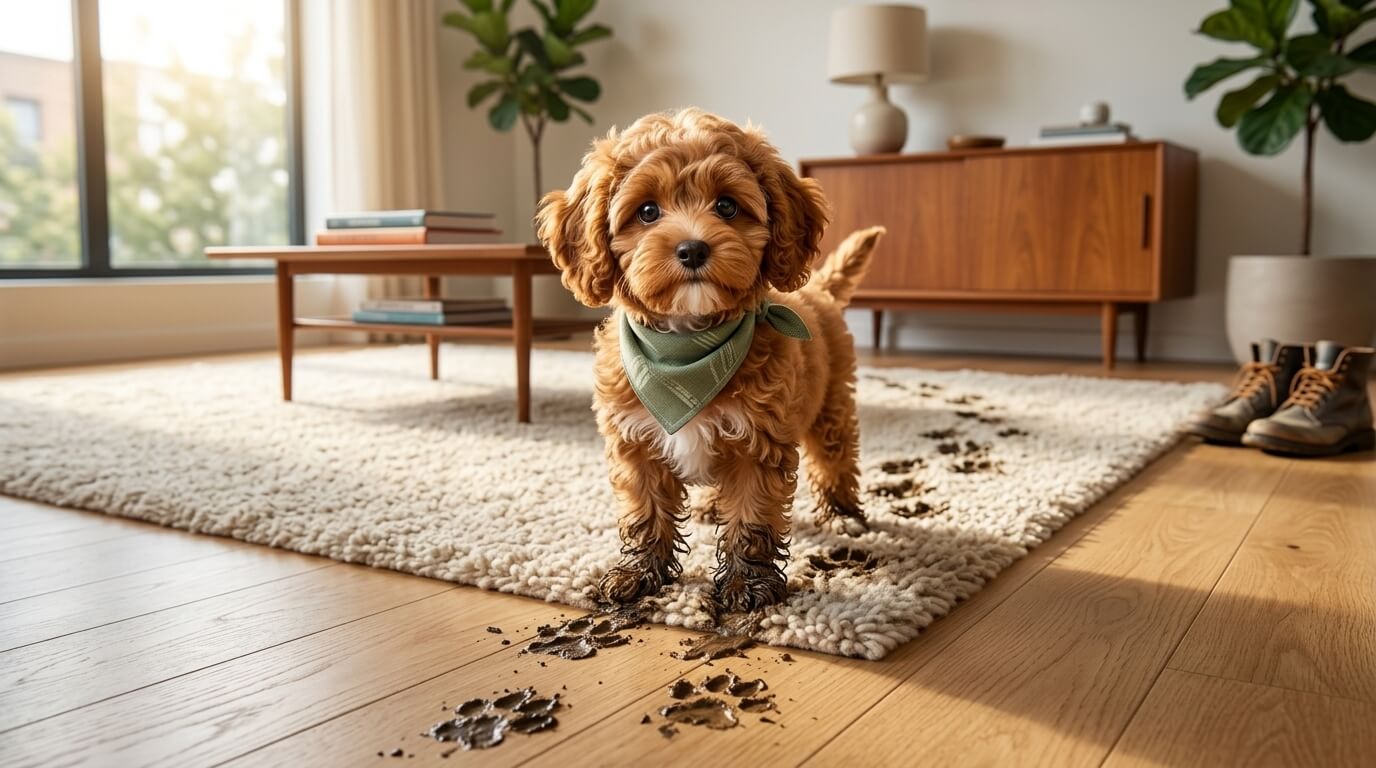
Quick answer: For most apartments, a manual paw-washer cup is the simplest option for wet mud because it contains the mess without requiring an outdoor hose. Choose by measured paw width, not breed name alone. A no-rinse brush cleanser or pet grooming wipe is easier for light dirt and small entryways, while an automatic washer adds charging, noise, and storage requirements. This guide compares five representative options using manufacturer specifications and apartment-focused editorial assessment. It is not a hands-on test.
How We Evaluated Portable Paw-Cleaning Options
Current search results mix product roundups, individual product pages, shopping results, videos, and owner discussions. That means the useful answer is not a longer list of look-alike cups. Apartment dog owners need a selection framework plus a small number of products with specifications that can be checked.
We reviewed manufacturer pages or manufacturer documentation for size information, materials, cleaning directions, portability, paw-size guidance, and replacement parts. Where a manufacturer did not provide a detail, the comparison says Not specified.
- Manufacturer specification: a fact stated by the product maker or in its product manual.
- Editorial assessment: our practical interpretation of the specifications for elevators, small entryways, apartment sinks, wet storage, and daily walks.
- Hands-on evidence: none. We did not physically test these products.
Portable Dog Paw Washer Comparison
| Option | Type | Verified size information | Best apartment use | Cleaning and storage | Ongoing items | Main drawback |
|---|---|---|---|---|---|---|
| Dexas MudBuster | Manual water cup | Small: 4.3 × 3.65 in, paws up to 2 in wide. Medium: 6 × 4 in, paws 2.5–3.5 in wide. Large: 8.85 × 4.75 in, paws above 3.5 in wide. | Contained cleanup after muddy elevator walks | Manufacturer cleaning method: Not specified on the reviewed page. Empty and dry before enclosed storage. | Water and a drying towel | The paw must fit the correct size and tolerate being inserted into a cup. |
| Paw Plunger | Handled manual cup | Petite: 5.25 × 3.5 × 4 in, 2-in opening. Medium: 8.5 × 6 × 6.5 in, 3.5-in opening. Large: 9.75 × 7 × 9.5 in, 4.5-in opening. | Dogs that need a taller cup or a handle for steadier use | Manufacturer recommends rinsing and air-drying; occasional dishwasher use is mentioned but not recommended routinely. | Water and a drying towel | The medium and large versions require more entryway and drying space. |
| DOGNESS W01 | Rechargeable automatic washer | 4.13 in diameter × 6.77 in high; 1.23 lb. Paw-opening guidance: Not specified in the reviewed manufacturer manual. | Owners who cannot comfortably twist a manual cup | The brush assembly can be removed for washing. The device also needs a dry charging location. | Charging, water, and a drying towel | More parts, motor noise, charging, and no verified paw-width guidance in the reviewed manual. |
| Dandylion Clean Paws | No-rinse foam with silicone brush | 5 fl oz / 150 mL. Physical dimensions: Not specified. | Small entryways and routine dirt when carrying a water cup to the sink is inconvenient | Foam, brush, and wipe dry; rinse the silicone brush under warm water. Refills and replacement bristles are available. | Foam refills and a towel | It is a cleanser, not a water-rinse cup for heavy mud or grit. |
| Earth Rated Grooming Wipes | Disposable pet grooming wipes | Standard wipes: 8 × 8 in. Packs include 100 or 400 standard wipes; a 60-count XL option is also offered. | Travel, lobby cleanup, or light dirt before entering the apartment | Dispose after use; do not flush. | Replacement packs | Consumable waste and less effective than rinsing for packed mud or road salt between toes. |
Specifications were checked on 2026-08-26. Product availability, packaging, and prices can change. The options are not ranked because the right fit depends on paw width, mess level, storage, and your dog’s tolerance.
1. Dexas MudBuster: Compact Manual Cup in Three Sizes
Manufacturer specification: Dexas describes the MudBuster as a manual tumbler with soft silicone bristles. The official size guidance covers small paws up to 2 inches wide, medium paws from 2.5 to 3.5 inches wide, and large paws above 3.5 inches wide. The maker instructs users to add water, insert the paw, twist the cup, and dry the paw.
Editorial assessment: This is the most straightforward format for a renter who comes in from a wet sidewalk and wants to contain muddy water at the door. The three sizes are useful, but the gap between “up to 2 inches” and “2.5 inches” means you should measure the widest part of the paw and confirm fit rather than guessing from breed.
2. Paw Plunger: Taller Cup With a Handle
Manufacturer specification: Paw Plunger offers Petite, Medium, and Large models with published product dimensions and opening sizes. The manufacturer recommends rinsing the cup and allowing it to air-dry. It says occasional dishwasher cleaning is possible but does not recommend doing that regularly. The reviewed page describes soft bristles but does not specify their material.
Editorial assessment: The handle may help an owner keep the cup steady on an entry mat. The taller medium and large models can reach farther up a muddy lower leg, but they also take more cabinet or shelf space and must be left open until fully dry.
3. DOGNESS W01: Automatic Rotation With More Setup
Manufacturer specification: The W01 manual lists a 4.13-inch diameter, 6.77-inch height, 1.23-pound weight, 8-watt maximum power, 2,000 mAh battery, two speeds, two-way rotation, and 157 silicone brushes. The brush assembly can be removed for cleaning. The reviewed manual does not give a usable paw-opening width or dog-size limit.
Editorial assessment: Automatic rotation may suit someone who finds twisting a manual cup uncomfortable. It is less compelling in a tiny entryway because it adds charging, motor noise, more parts, and uncertainty about paw fit. Measure before buying and avoid assuming “small or medium dog” marketing will match your dog’s actual paw.
4. Dandylion Clean Paws: No-Rinse Brush Cleanser
Manufacturer specification: This 5-fluid-ounce no-rinse foam uses a built-in silicone brush. The directions are to dispense foam, massage it over the paws, and wipe dry. The brush can be rinsed under warm water, and the manufacturer sells refills and replacement silicone bristles.
Editorial assessment: A brush-on cleanser is easier to store than a large water cup and avoids carrying dirty water across a studio. It is better suited to routine grime than to thick mud, sand, or de-icer that needs a thorough rinse. Check the ingredient list for your dog and stop if irritation appears.
5. Earth Rated Grooming Wipes: Portable Backup for Light Dirt
Manufacturer specification: Earth Rated says its standard grooming wipes measure 8 by 8 inches and are intended for paws, body, and quick daily cleanup. The company identifies the wipe material as wood-derived viscose and says the wipes should not be flushed.
Editorial assessment: Wipes fit easily in a leash bag or lobby kit and are useful when a dog only has dusty or lightly dirty feet. They are not the right tool for mud packed between toes or winter residue that should be rinsed away. They also create ongoing consumable cost and waste.
How to Choose the Right Paw Washer for an Apartment
Measure the Paw, Not Just the Dog
Measure the widest part of the paw while your dog is standing naturally. Compare that measurement with a manufacturer’s opening guidance. Your dog should be able to insert and remove the paw without the rim catching the toes, dewclaw, or fur. If the usable opening is not published, treat fit as unverified.
Match the Tool to the Mess
- Dry dust: a towel or pet grooming wipe may be enough.
- Wet sidewalk mud: a manual cup contains water and debris well.
- Road salt or grit between toes: use a thorough rinse and dry between the pads.
- Heavy mud up the lower leg: a taller cup or sink rinse may be more practical.
- Dog refuses cup handling: start with a damp cloth, training, or a no-rinse brush rather than forcing the paw.
Plan the Wet Storage Before You Buy
A wet paw washer should not go straight into a closed cabinet. Decide where it can drain and air-dry without blocking the door or dripping onto wood flooring. In a studio, a shallow waterproof tray beside the sink often works better than an oversized entryway station.
A Small-Entryway Paw-Cleaning Station
- Place a washable, non-slip mat inside the door before the rainy walk starts.
- Keep one absorbent towel within reach and the empty washer beside it.
- Ask the dog to pause on the mat while you remove your own wet shoes.
- Clean one paw at a time, then dry it before the dog steps off the mat.
- Carry dirty water directly to the sink or toilet without setting the cup on carpet.
- Rinse the device according to its manufacturer directions and leave every part open to dry.
For the rest of the floor routine, see how to clean an apartment with a dog. Drying the washer and towel promptly also supports your broader apartment dog odor-control routine.
Help Your Dog Tolerate the Washer
Do not make the first introduction after the muddiest walk of the year. Start with the dry device on the floor. Reward looking at it, then touching it, then a brief paw lift beside it. Progress to touching the rim to one paw before asking for insertion. Keep the cup still at first; add water and twisting only after the earlier steps are comfortable.
Pause if your dog repeatedly pulls away, freezes, growls, pants, or stops taking food. A paw washer is optional equipment, not a reason to force handling. Painful, cracked, swollen, or bleeding paws need veterinary attention rather than more cleaning practice.
Rain, Snow, and Road-Salt Cleanup
After wet city walks, check between the toes and around the pads before deciding that a quick surface wipe is enough. The ASPCA advises washing and drying paws after winter walks to remove ice, salt, and chemicals. AKC guidance likewise notes that salt and dirt can remain between toes, around pads, and under nails.
Use lukewarm—not hot—water, dry thoroughly, and prevent licking until residue is removed. If you suspect contact with a harmful chemical or see persistent irritation, contact your veterinarian or an animal poison-control service.
Common Paw-Washer Mistakes
- Buying by breed label without measuring paw width.
- Using the same dirty water for all four paws when it is already full of grit.
- Putting a wet cup or brush into a closed apartment cabinet.
- Leaving paws damp, especially between the toes.
- Using human cleaning products or adding soap when the product directions do not call for it.
- Expecting a wipe to remove packed mud or winter chemicals.
- Forcing a dog that is frightened by paw handling.
Frequently Asked Questions
Are portable dog paw washers worth it in an apartment?
They can be useful when wet or muddy walks are frequent and you do not have an outdoor hose. The benefit is containment: dirt stays in a small vessel instead of reaching rugs and hallways. For mostly dry sidewalks, a towel or pet wipe may be simpler.
What size paw washer should I buy?
Measure the widest part of the standing paw and use the manufacturer’s opening guidance. Do not assume weight or breed alone predicts fit. If an opening measurement is not published, ask the manufacturer before buying.
Can I use dish soap in a paw washer?
Plain water is often sufficient for ordinary mud. Do not add dish soap or another cleanser unless it is appropriate for dogs and the washer directions allow it. Rinse residue thoroughly and stop if the skin becomes irritated.
Are wipes enough after a snowy city walk?
Not always. A wipe can handle light surface dirt, but salt and grit may remain between toes and around pads. A thorough lukewarm-water rinse followed by careful drying is the safer choice when residue is visible or likely.
How do I stop a paw washer from smelling?
Empty it immediately, rinse removable parts as directed, and let everything dry completely before storage. Wash the drying towel regularly and avoid leaving dirty water at the door.