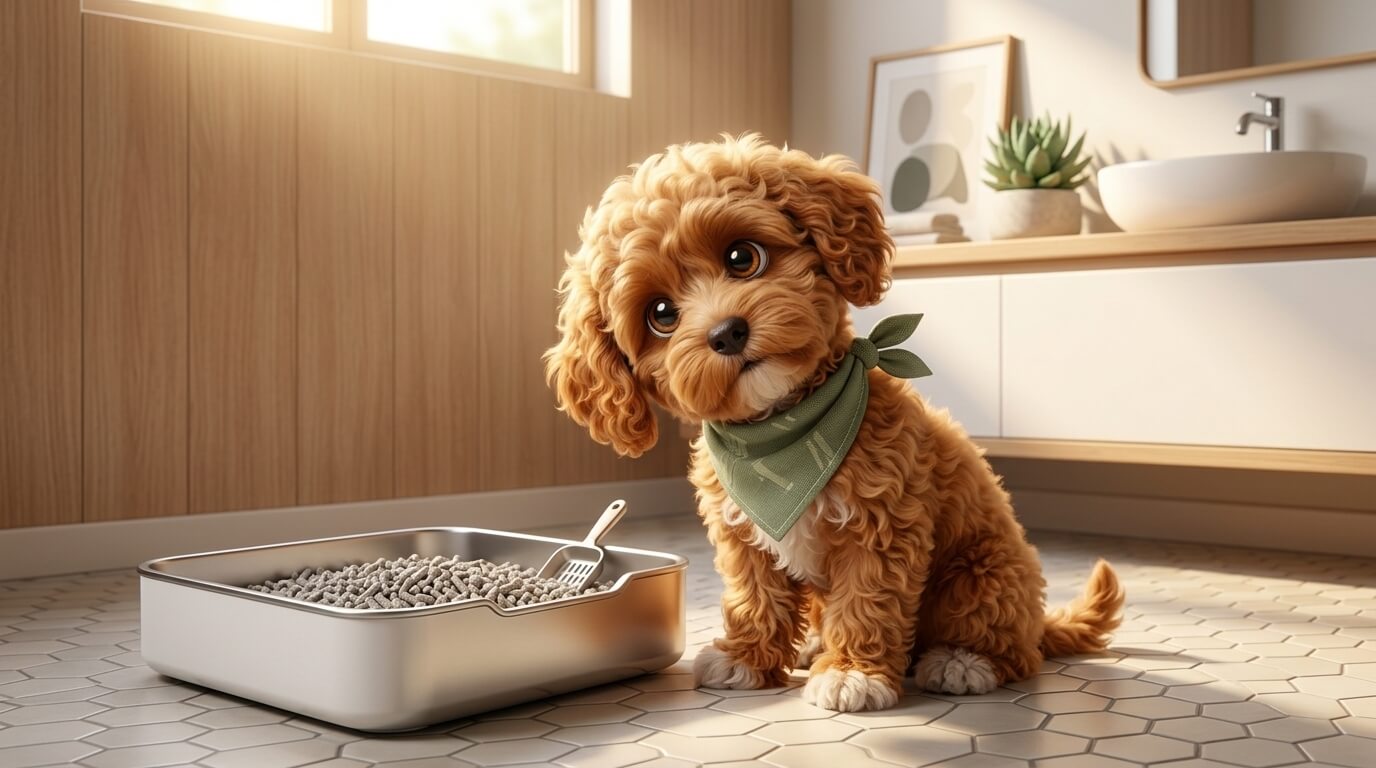
A litter box for dogs can be genuinely useful in an apartment, but it is not a miniature cat setup and it is not the right answer for every dog. The best candidates are usually young puppies who cannot reach an outdoor toilet area in time, senior or mobility-limited dogs, small dogs facing severe weather, and households that need a carefully managed backup bathroom.
The awkward truth is that most failures are not caused by a stubborn dog. The tray is too small, the surface feels unfamiliar, the location is noisy, the owner moves it too often, or the dog is being asked to wait longer than their body can manage. Sometimes a dog who suddenly stops using an indoor toilet has a medical problem rather than a training problem.
This guide helps you decide whether an indoor box fits your household, choose a safe setup, teach it without punishment, and recognize when to change course. It focuses on the practical details that matter in a rental: missed aim, flooring, odor, elevators, shared hallways, cleaning, and preserving outdoor routines.

Can Dogs Use Litter Boxes? Quick Answer
Yes, many dogs can learn to use a litter box, but the setup has to fit the dog’s size, mobility, training, and hygiene needs. It may suit some puppies, small dogs, seniors, dogs with mobility limits, or households that need a carefully managed indoor backup, but not every dog is a good candidate.
Dog litter-box systems also differ from cat litter boxes. Use a tray large enough for the dog to turn and eliminate fully, choose a dog-appropriate surface such as paper-based dog litter, a secured pad, synthetic turf, or real grass, and clean waste promptly. Do not assume ordinary cat litter is suitable. If a previously reliable dog suddenly has accidents, straining, pain, blood, increased thirst, diarrhea, or other changes, contact a veterinarian instead of treating the problem as failed training.
| Your situation | Is an indoor box reasonable? | First concern to solve |
|---|---|---|
| Young puppy in a high-rise | Often useful as a temporary or dual option | Frequent opportunities and a surface the puppy understands |
| Senior dog with arthritis or reduced mobility | Often useful after veterinary discussion | Low entry, traction, short route, and comfort |
| Healthy adult dog with reliable outdoor habits | Possible as a backup, but not always necessary | Teach the second location deliberately |
| Large male dog who lifts a leg | Possible, but a small flat tray is unlikely to contain urine | Footprint, splash protection, and wall clearance |
| Dog suddenly urinating indoors | Do not treat the tray as the first solution | Veterinary assessment for medical or mobility causes |
| Dog eats pads, turf, pellets, or plastic | Only with a safer supervised setup and professional guidance | Ingestion prevention |
Table of Contents
What Counts as a Dog Litter Box?
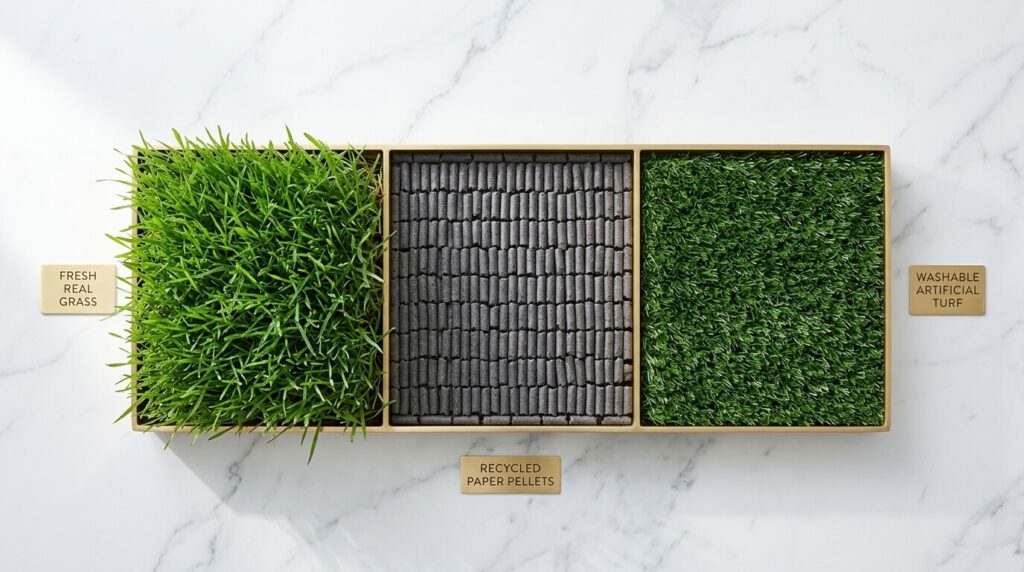
The phrase covers several indoor toilet systems. Some use a shallow plastic tray filled with paper pellets. Others hold an absorbent pad, a washable mat, synthetic turf, or a replaceable square of real grass. A large storage tray with a safely modified entrance may work for some households, but rough cut edges, unstable walls, and chewable plastic create avoidable risks.
The right litter box for dogs depends less on the label and more on four things: whether the dog will step onto the surface, whether the usable area contains the dog’s whole elimination posture, whether the entrance is physically comfortable, and whether the household can clean it consistently. A stylish tray that the dog avoids is furniture, not a bathroom.
Do not assume a dog and cat can safely or practically share one litter box. Their space, entry, substrate, access, and cleaning needs differ, and dogs should not be allowed to eat cat litter or cat feces. Use separate, species-appropriate toilet areas and prevent unsupervised access when ingestion is possible.
If you are still comparing pads, turf, grass, trays, and balcony systems, use the indoor dog potty solutions guide. This page is about using a box safely and teaching the behavior, not ranking products.
The 7 Honest Apartment Rules
1. Choose the Surface Before You Choose the Product
Dogs notice what is under their feet, so the surface inside a litter box for dogs matters. A puppy raised on pads may hesitate on plastic grass. An adult dog accustomed to outdoor grass may walk around paper pellets and urinate on the nearest rug. A senior with sore joints may dislike a shifting grate even when the tray is technically accessible.
Start with the surface your dog already associates with elimination whenever practical. You can place a familiar pad inside a larger holder, use a small amount of the accepted material over the new surface, or transition in small steps. Change one variable at a time. Replacing the tray, location, substrate, and schedule on the same day makes it impossible to know what the dog rejected.
Watch how the dog interacts with a new material. Digging once out of curiosity is different from repeatedly chewing pellets, pulling turf loose, or shredding pads. If the dog consumes any part of the setup, remove access and discuss safer options with the veterinarian. “Non-toxic” does not mean a swallowed object cannot cause choking or gastrointestinal obstruction.
2. Size the Box for the Dog’s Entire Movement
A common apartment mistake is buying a litter box for dogs by body weight alone. Dogs usually turn, sniff, reposition, squat, or lift a leg before eliminating. The useful area must contain that movement and the urine stream, not merely fit four paws when the dog stands perfectly centered.
Observe the dog’s normal outdoor posture. A dog who circles widely needs more floor area. A male who lifts his leg may need a system with a stable vertical target and splash protection. A senior may need a broad, low entrance and non-slip flooring around the tray. Place a waterproof, washable mat beyond the box edge during training, but do not use a mat the dog will chew or confuse with another toilet surface.
Measure the intended location before ordering anything. Check door swing, cabinet access, ventilation, and the route from the dog’s sleeping area. In a studio apartment, a wider low-profile tray may be more workable than a tall enclosed unit that technically occupies less floor space but feels cramped.
3. Pick a Quiet, Permanent, Cleanable Location
The best location for a litter box for dogs is boring. It is easy for the dog to reach, easy for you to clean, and far enough from food and sleep areas to feel separate. Tile, sealed flooring, or a properly protected utility area is easier to manage than carpet. Avoid placing the box beside a washing machine that suddenly spins, next to the front door where neighbors pass, or in a narrow corner where a cautious dog feels trapped.
Do not hide the box so well that a puppy cannot reach it before an accident. At the same time, do not place it in the center of family traffic. For a senior dog, count actual steps and obstacles: slick flooring, thresholds, furniture, and a closed bathroom door can turn a short route into an impossible one.
Once training starts, keep the location stable. If you must move it, shift it gradually while maintaining the same surface and cue. Moving an established bathroom across the apartment overnight often creates an accident where the box used to be.
4. Train Events, Not an Arbitrary Calendar
There is no honest promise that every dog will understand a litter box for dogs in seven days. Progress depends on age, previous training, surface preference, health, household consistency, and how often the dog gets a successful opportunity. Train around predictable body events instead of forcing the dog through a generic day-by-day program.
Guide the dog to the box after waking, after meals or a substantial drink, after energetic play, after confinement, and whenever you see sniffing, circling, wandering away, or restlessness. Stand quietly rather than repeating the cue. When the dog finishes, mark the success and reward immediately, while the location and action are still clear.
If nothing happens after a few calm minutes, return the dog to close supervision and try again shortly. Do not allow free wandering immediately after an unsuccessful attempt. Keep a simple record of meals, water, sleep, play, urination, bowel movements, accidents, and successes. Patterns are more useful than guessing.
For a complete housetraining framework, including supervision and accident prevention, see how to potty train a dog in an apartment.
5. Treat Cleaning as Part of Training
A litter box for dogs has to be usable for both the dog and the people sharing the apartment. Remove solid waste promptly. Replace or wash the substrate according to its instructions. Clean the tray with a pet-appropriate product, rinse as directed, and let it dry before reassembly. Do not mix cleaning chemicals, and keep the dog away while products are being used.
There is a balance. A heavily soiled box can make a dog avoid it and can create odor that reaches neighbors. A completely unfamiliar, strongly scented box can also be less inviting during early training. Clean for hygiene while keeping the location and surface consistent. You do not need to preserve a dirty tray to preserve the lesson.
Clean misses beyond the box with an enzymatic cleaner suitable for that specific flooring or fabric. Blot rather than spread urine, follow contact-time directions, and test the product on an inconspicuous area. For a broader apartment routine, use the guide to controlling dog odor in an apartment.
6. Keep Outdoor Bathroom Habits and Enrichment Alive
A litter box for dogs should solve access, weather, mobility, or scheduling problems; it should not become a reason to remove healthy outdoor opportunities. Dogs still benefit from sniffing, movement, daylight, social information, and a change of environment when their health and local conditions allow.
If you want both indoor and outdoor toileting, first make one location understandable and reliable. Then teach the second location using the same calm cue and immediate reward. Some dogs switch easily. Others need a gradual surface bridge, such as moving a familiar pad toward the outdoor area or placing a familiar surface at the new toilet spot.
Do not assume an indoor option makes an unusually long workday appropriate. Dogs still need social contact, activity, meals, medication, and care. Compare the schedule with the guide on how long a dog can be left alone in an apartment.
7. Know When the Box Is Making the Problem Worse
Pause and reassess when the dog repeatedly sleeps in the box, eats the substrate, avoids entering, urinates over the edge, chooses every soft rug in the apartment, becomes frightened near the location, or was previously reliable and suddenly stops using it. Buying a second identical tray is not a diagnosis.
First check the physical setup: entry height, traction, size, cleanliness, noise, accessibility, and whether another pet blocks the route. Then review timing and supervision. If the dog understands the location but now has frequent, urgent, painful, or uncontrolled elimination, contact the veterinarian.
A page about why a dog avoids the litter box should be used for refusal and regression troubleshooting. This guide remains the main setup and training page, which keeps the two search intents separate.
Who Benefits Most From an Indoor Dog Toilet?
Young Puppies in High-Rise Apartments
A puppy may wake from a nap and need to urinate before an elevator arrives, stops on several floors, and reaches the outdoor toilet area. An indoor station can prevent repeated failures while bladder control develops. It is most useful when paired with supervision and frequent planned opportunities, not when left as a distant emergency target the puppy is expected to find alone.
Ask the veterinarian where the puppy can safely eliminate before completing vaccinations. Disease risk differs by location and individual circumstances. An indoor option may reduce exposure to heavily trafficked dog areas, but it does not replace veterinary guidance, vaccination, or safe socialization.
Senior Dogs and Dogs With Mobility Changes
Arthritis, weakness, sensory decline, cognitive change, or reduced bladder control can make a familiar outdoor route difficult. A low-entry box close to the resting area may protect dignity and reduce painful rushing. Add non-slip runners on the route and make sure the dog can turn without losing balance.
A new indoor toilet is management, not a medical explanation. A senior dog who suddenly has accidents needs veterinary assessment. Pain, urinary disease, gastrointestinal illness, cognitive dysfunction, medication effects, and other conditions can change elimination behavior.
Small Dogs During Dangerous Weather
Severe cold, heat, smoke, storms, ice, or unsafe nighttime conditions may make an indoor backup valuable. The decision should be based on the individual dog’s health and the actual environment, not the assumption that every small dog dislikes weather. Keep ordinary outdoor routines when conditions are safe.
Owners With Mobility or Access Limitations
A litter box for dogs can reduce the number of urgent trips through stairs, long hallways, or unreliable elevators. It should make care more sustainable without silently removing the dog’s other needs. A dog walker, trusted neighbor, family member, or professional carer may still be necessary for exercise and social contact.
A Practical Training Process
Prepare the Apartment Before the First Attempt
Remove nearby bath mats, loose rugs, laundry, and other soft items that could compete with the chosen surface. Protect the floor beyond the tray. Place rewards within your reach but out of the dog’s access. If another pet lives in the home, prevent crowding and guarding around the toilet area.
Let the dog inspect the clean box without pressure. Reward stepping toward it, touching the surface, and entering. Do not trap the dog inside or physically hold them on the substrate. A dog who is worried about the box cannot learn the bathroom behavior at the same time.
Catch the Most Predictable Opportunities
The first successful repetitions should be easy. Use the dog’s existing elimination rhythm. After waking or a meal, take the dog directly to the station on leash if needed. Keep your body quiet and give enough space to turn. Say the potty cue once as elimination begins, not continuously while the dog is still deciding.
Reward after completion. Rewarding too early can interrupt the behavior, while rewarding after the dog has walked into another room weakens the connection. Then clean or replace the surface as required.
Expand Freedom Only After Evidence
Reliable use means more than one lucky success. The dog should choose the correct location across several ordinary days and common situations. Increase access gradually while watching the log. If accidents return when freedom expands, reduce the area again and rebuild successful repetitions.
Do not punish an accident. Interrupt gently only if you catch the dog beginning, guide them to the correct location, and reward if they finish there. If you discover the accident later, clean it and adjust supervision. The dog cannot connect delayed anger with a past location choice.
Apartment Setup Details That Prevent Misses
For Dogs Who Urinate Over the Edge
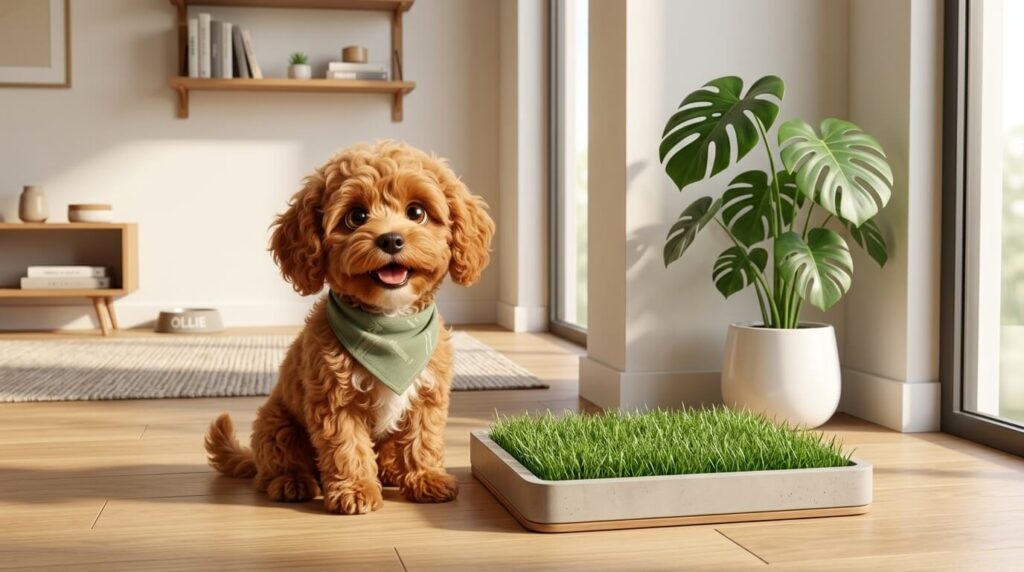
Do not assume the dog is being careless. The box may be too short, too narrow, or positioned so the dog stands partly outside. Watch from a respectful distance and identify where the feet and urine stream go. A larger tray, stable splash panel, or different orientation may solve what looks like a training failure.
Protect walls and baseboards with removable, landlord-approved materials. Do not attach a permanent panel or sealant without written permission. Leave airflow around the area and inspect behind protection for trapped moisture.
For Male Dogs Who Lift a Leg
A flat pad may not contain the stream. Some dogs use a stable vertical target inside a broad tray, while others can be taught to squat or use a different system. Any upright piece must be secure, washable, and impossible to topple or chew apart. Keep it away from electrical outlets and shared walls.
For Seniors and Disabled Dogs
Entry height matters more than a marketing label. Observe whether the dog catches a paw, hesitates, or struggles to turn. Add traction outside the tray and keep the route illuminated at night. A towel that slides is not a mobility aid. Ask the veterinary team about safe flooring and posture for the dog’s condition.
For Multi-Dog Homes
One dog may block access, investigate waste, or make the other dog uncomfortable. Provide enough space and supervise the interaction. Separate toilet stations may be needed, especially when dogs have different surfaces, schedules, or medical needs. Do not place the only box inside a crate or gated zone that one dog controls.
Troubleshooting by What You Actually Observe
| What happens | Likely setup question | Reasonable next action |
|---|---|---|
| Dog will not step inside | Is the entry high, surface unstable, or box frightening? | Reward approach and entry separately; improve access and traction |
| Front paws enter but urine lands outside | Is the usable area too short? | Use a larger footprint and observe posture |
| Dog chooses rugs or bath mats | Does the dog prefer soft absorbent surfaces? | Remove competing items and transition from the familiar texture gradually |
| Dog urinates in box but defecates elsewhere | Is the tray clean and large enough for circling? | Increase space, clean promptly, and use the dog’s bowel schedule |
| Dog used it, then suddenly stopped | Did health, mobility, surface, location, or household routine change? | Restore the last successful setup and arrange veterinary assessment when sudden |
| Dog shreds or eats the system | Can the material be safely accessed? | Remove it and seek a safer supervised alternative |
The Dog Uses the Floor Beside the Box
This often means the location is understood but the physical target does not work. Enlarge the toilet area temporarily, secure the surface so it cannot slide, and observe entry and posture. Avoid moving the entire station before testing size and traction.
The Dog Is Afraid of the Tray
Plastic may flex, a grate may click, or the box may have moved during entry. Stabilize it and rebuild comfort without waiting for the dog to need the bathroom. Reward looking, approaching, touching, and stepping in. If the dog shows persistent fear, change the physical design rather than forcing more exposure.
The Dog Uses It Only When You Are Present
The dog may rely on your prompt, may not have access at the right time, or may become distressed when alone. Use a camera to see whether the route is open and whether the dog rests normally. Do not interpret exit-focused pacing, vocalization, or panic as a litter-box problem.
The Dog Suddenly Has Frequent Accidents
Contact the veterinarian, especially with straining, frequent small urinations, blood, licking, pain, increased thirst, large urine volume, diarrhea, constipation, weakness, confusion, or leakage during sleep. The adult dog potty training regression guide explains how to document the pattern without assuming the dog forgot their training.
Odor, Hygiene, and Neighbor Considerations
In a small apartment, odor control around a litter box for dogs is mostly a waste-removal and ventilation system. Remove feces promptly, replace saturated material, wash reusable parts completely, and dry them before use. Keep a lidded waste container where permitted, empty it often, and follow building disposal rules.
Fragrance does not neutralize waste. Heavy perfume can make the area unpleasant for the dog and for people with respiratory or scent sensitivities. Essential oils and homemade deodorizing mixtures may create pet-safety problems. Use products labeled for the intended surface and follow directions.
If odor reaches the hallway, the setup needs attention even if you have become accustomed to it. Check hidden splash behind the tray, seams in flooring, washable mats, waste storage, and cleaning frequency. Do not place the station against a shared HVAC intake or where runoff can reach a balcony below.
When Not to Rely on a Litter Box
Do not use a litter box for dogs to postpone care for urinary, gastrointestinal, neurologic, cognitive, pain, or mobility problems. Do not leave a known substrate eater alone with pellets, pads, turf, or plastic. Do not expect a small tray to make an extreme alone-time schedule humane. Do not remove outdoor activity from a healthy dog simply because indoor elimination is convenient.
It may also be the wrong setup when the lease prohibits it, the apartment cannot support hygienic cleaning, the dog is persistently frightened, or the household cannot prevent another pet or child from accessing waste. A different indoor system, more frequent outdoor help, or a professional care plan may be more realistic.
Frequently Asked Questions
Can dogs really use litter boxes?
Yes. Many dogs can learn to use a litter box for dogs through consistent surface, timing, supervision, cues, and immediate reinforcement. Success depends on the individual dog and setup; it is not as automatic as placing a cat box in the room.
Can I use cat litter for a dog?
Do not use it by default. Dogs may dig, inhale dust, chew, or swallow material, and products differ. Choose a dog-appropriate system according to its directions and ask your veterinarian about safety for a dog who eats non-food items or has health concerns.
What size litter box does my dog need?
It should contain the dog’s full turning and elimination posture, with extra area for aim. Observe how the dog urinates and defecates outdoors. Large dogs and leg-lifting males often need far more space or vertical splash protection than a standard cat tray provides.
Will an indoor box confuse outdoor potty training?
It can slow learning if locations, surfaces, and rewards are inconsistent, but many dogs can learn both. Make one location reliable first, then introduce the second deliberately using a familiar cue and surface transition.
How often should I clean a dog litter box?
Remove solid waste promptly and replace saturated material before odor and wetness make the area unpleasant. Wash reusable parts according to product directions. The exact frequency depends on dog size, material, use, and ventilation.
Why does my dog pee next to the litter box?
The dog may understand the location while the tray is too small, unstable, dirty, difficult to enter, or poorly matched to posture. Observe where all four feet are positioned and whether the dog can turn comfortably before treating it as disobedience.
Should a senior dog start using an indoor box?
It can reduce difficult trips for a dog with mobility or bladder changes, but new accidents need veterinary evaluation. Choose a low, stable entry, non-slip route, and quiet location, and keep safe outdoor enrichment when possible.
What if my dog eats the litter or pad?
Remove access and contact your veterinarian if material may have been swallowed or symptoms appear. Do not rely on a “non-toxic” label to rule out choking or obstruction. Choose a safer supervised setup with professional guidance.
What a Successful Setup Looks Like
A successful litter box for dogs is easy to reach, large enough for natural posture, physically comfortable, and cleaned before it becomes objectionable. The dog uses it without fear, the household can manage waste, and outdoor activity remains part of life when appropriate.
Start with one stable setup and a few highly predictable opportunities. Watch the dog instead of the calendar. If the system fails, ask whether the problem is surface, size, location, timing, access, health, or safety. That practical diagnosis is more valuable than buying another product and hoping the dog understands.