Litter Box Avoidance Dogs: 6 Essential Indoor Potty Fixes
Litter box avoidance dogs develop can look almost comical at first: the dog pees beside the pad, stands half in and half out of the tray, sniffs the indoor potty and walks away, or uses it for two days and then refuses. In an apartment, though, it stops being funny quickly. Every miss can affect rugs, floor seams, odor, neighbor relationships, and a renter’s deposit.
This guide is for dogs who are avoiding an indoor potty area, including dog litter boxes, pee pad holders, grass patches, porch potty systems, and similar small-space setups. It is not a general house-training guide and it is not a product ranking. If your dog needs basic training from the beginning, start with how to potty train a dog in an apartment. If you are comparing indoor potty products, use best indoor dog potty solutions.
The key is to find out whether your dog is avoiding the potty because the setup is wrong, the location feels unsafe, the surface is unpleasant, the cleaning routine is confusing, the schedule is unfair, or a medical issue is changing their urgency.
Litter Box Avoidance Dogs: Quick Answer
To address the litter box avoidance dogs show in apartments, first make sure there is no sudden medical issue. Then check six things: the potty area’s size, surface texture, location, cleanliness, training history, and schedule. Many dogs need a larger target, a clearer boundary, safer footing, better accident cleanup, immediate rewards, and a temporary period of closer supervision.
| Problem | Likely Cause | First Fix |
|---|---|---|
| Peeing next to the tray | Target too small or unclear | Increase target area |
| Sniffs and walks away | Texture, odor, or location problem | Test surface and location |
| Uses it only sometimes | Weak routine or inconsistent rewards | Run a 10-day reset |
| Sudden refusal | Health, stress, or negative event | Check medical and trigger history |
| Misses when alone | Schedule or anxiety issue | Video check and shorter intervals |
First: Is This Avoidance or a Potty Training Problem?
There is a difference between a dog who does not understand indoor potty rules and a dog who understands but avoids the setup. If your dog has never reliably used the indoor area, you are still training the behavior. If your dog used it well and then stopped, you may be dealing with regression, stress, pain, odor, or a changed environment.
A true avoidance pattern often includes one of these signs:
- The dog approaches the potty area, then leaves.
- The dog pees directly beside the tray or pad.
- The dog places front paws on the potty but keeps the back end off.
- The dog uses the potty only when you stand nearby.
- The dog avoids the area after slipping, being startled, or being scolded.
- The dog chooses rugs, bath mats, or soft surfaces instead.
If the accidents started suddenly after your dog was reliable, read the dog potty training regression guide too. Regression and avoidance often overlap, but this page focuses on the indoor potty station itself.
Medical Rule-Out: Do This Before Blaming the Box
A dog who suddenly avoids the indoor potty may not be making a training choice. Urinary tract infections, bladder irritation, digestive urgency, pain, medication changes, mobility problems, and senior cognitive changes can all affect bathroom behavior.
Call your veterinarian if avoidance appears suddenly or comes with warning signs such as straining, repeated small puddles, blood, diarrhea, vomiting, increased thirst, accidents during sleep, licking, pain, confusion, or a major change in frequency. A dog who cannot comfortably wait or aim should not be treated as stubborn.
This is especially important for senior dogs and dogs with a history of urinary or digestive problems. Once health concerns are ruled out or treated, the training and setup fixes below become much more useful.
Read the Accident Pattern Before Changing the Setup
The location of a miss is useful, but it is not a diagnosis by itself. A full bladder emptied beside a tray suggests something different from several teaspoon-sized spots on furniture legs. Stool beside a clean station raises different questions from urine released while the dog is asleep. Before calling every event avoidance, look at the whole pattern.
| What You Observe | Questions to Ask | Reasonable First Response |
|---|---|---|
| Full puddle immediately beside the tray | Were all four paws on? Did the dog circle or step forward? | Enlarge the usable target and check body position |
| Several small urine spots | Is there straining, urgency, licking, marking, or increased frequency? | Contact the veterinarian when this is new or uncomfortable |
| Dog reaches the station, then backs away | Does the tray move, click, wobble, smell strong, or trap the dog in a corner? | Stabilize footing and rebuild voluntary approach |
| Accidents only during long absences | Is the interval realistic? Does video show pacing, vocalizing, or panic? | Change the care schedule and assess separation-related distress |
| Urine on vertical objects | Is the dog marking rather than emptying a full bladder? | Discuss medical and behavioral causes; redesign for leg lifting if appropriate |
| Leaking while asleep or rising | Is this new, especially in an older or spayed dog? | Arrange a veterinary examination rather than a training reset |
A phone photo of the station and a short written log can help your veterinarian or trainer understand what “missing the box” actually means. Avoid filming intimate close-ups; a room-level view that shows approach, footing, posture, and exit is usually more informative.
Reason 1: The Indoor Potty Is Too Small
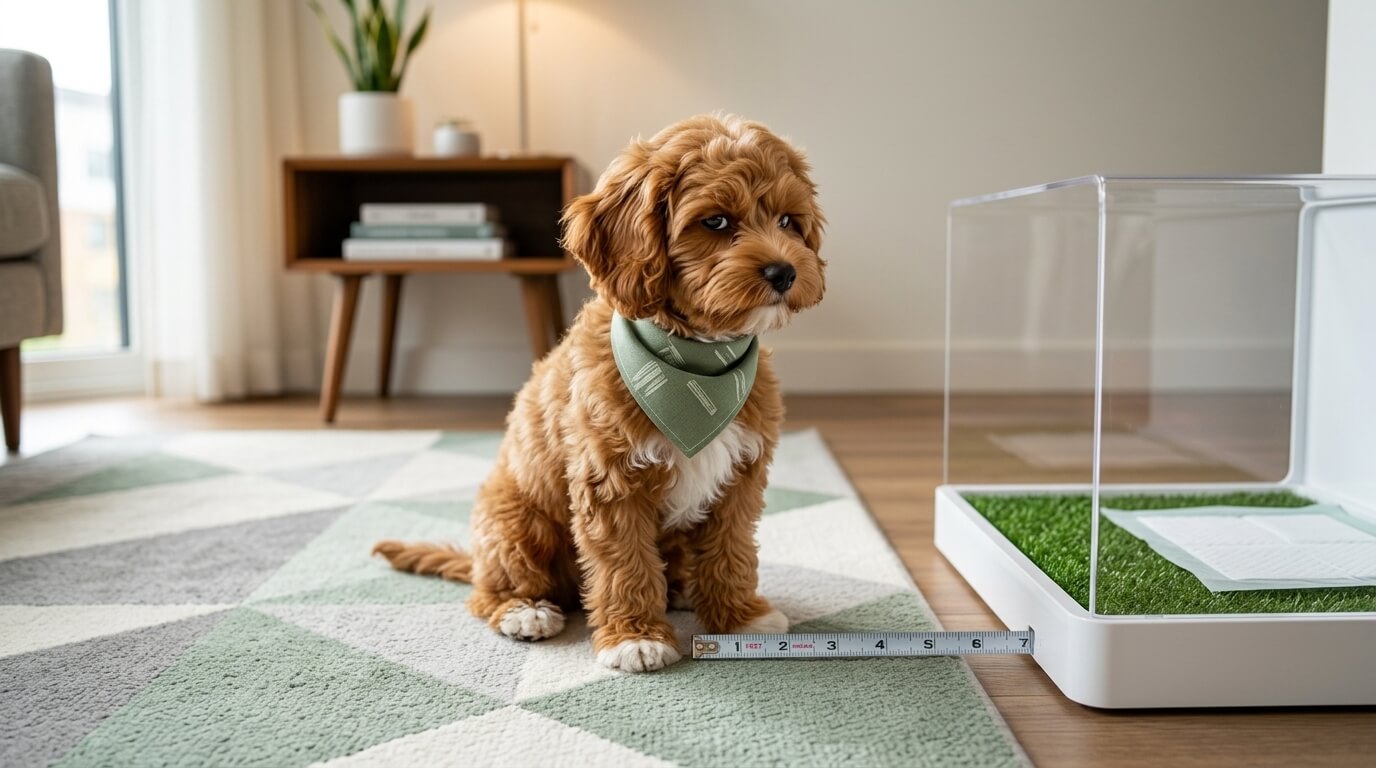
Many indoor potty setups are built for human convenience rather than dog movement. Dogs often circle, sniff, reposition, and step forward as they go. If the tray is barely bigger than the dog’s body, the front paws may land correctly while the back end misses.
This is one of the most common reasons a dog pees next to the pad. From the dog’s perspective, they may have entered the target. From the owner’s perspective, the urine landed on the floor. The problem is not attitude. It is geometry.
How to Fix Size Problems
- Use a larger target than you think you need.
- Temporarily place extra pads around the main tray during the reset.
- Reward only when all four paws are on the correct area.
- Move the reward close to the potty so the dog does not step off too early.
- For male dogs, consider whether leg lifting requires a different setup.
Once accuracy improves, you can gradually reduce the extra pad area. Do not shrink it too quickly. A clean two-week streak is more valuable than saving a few inches of floor space too early.
Reason 2: The Surface Texture Feels Wrong
Dogs care about surface texture. A dog who learned to potty on grass may avoid plastic grates. A dog who likes soft pads may dislike synthetic turf. A dog who slipped on a tray may avoid stepping on it again. Texture can matter as much as smell.
In apartments, texture confusion is common because rugs, bath mats, puppy pads, and washable mats can feel similar. If the indoor potty feels too much like a household item, your dog may generalize. If it feels too strange, your dog may avoid it.
How to Test Surface Preference
For a few supervised sessions, offer two clean options side by side: the current surface and one alternative. Watch where your dog chooses to sniff, stand, and relax. Do not turn this into a permanent buffet of bathroom choices. The goal is to learn what your dog can physically and emotionally use.
| Surface | Possible Advantage | Possible Problem |
|---|---|---|
| Pee pad | Soft and easy to replace | May resemble rugs or laundry |
| Plastic grate | Keeps paws drier | Some dogs dislike the feel |
| Synthetic grass | Feels closer to outdoor potty | Can hold odor if not cleaned well |
| Real grass patch | Natural scent and texture | Needs replacement and maintenance |
If surface choice is the issue, avoid changing everything at once. Keep the location and schedule stable while you test the texture. Too many changes can make avoidance worse.
Reason 3: The Location Does Not Feel Safe
Humans often put indoor potty areas where they are easy to hide: laundry corners, bathrooms, balconies, utility rooms, or tight spaces near trash cans. Dogs may see those locations differently. A washer turns on. A balcony is windy. A bathroom floor is slippery. A hallway has foot traffic. A corner feels trapped.
Good potty locations are boring, accessible, and predictable. The dog should be able to enter, turn, sniff, potty, and leave without squeezing past furniture or feeling cornered.
Apartment Location Checklist
- Is the potty easy to reach from the dog’s main living area?
- Can the dog turn around without backing up awkwardly?
- Is the area away from food and water bowls?
- Is the floor stable and not slippery?
- Is the location away from loud appliances?
- Can the dog use it without being stared at by guests or other pets?
- Is the area consistent from day to day?
If the location is the problem, move the potty gradually if possible. A sudden move from bathroom to balcony can confuse the dog. Shift the setup a few feet at a time or run a brief reset with rewards in the new location.
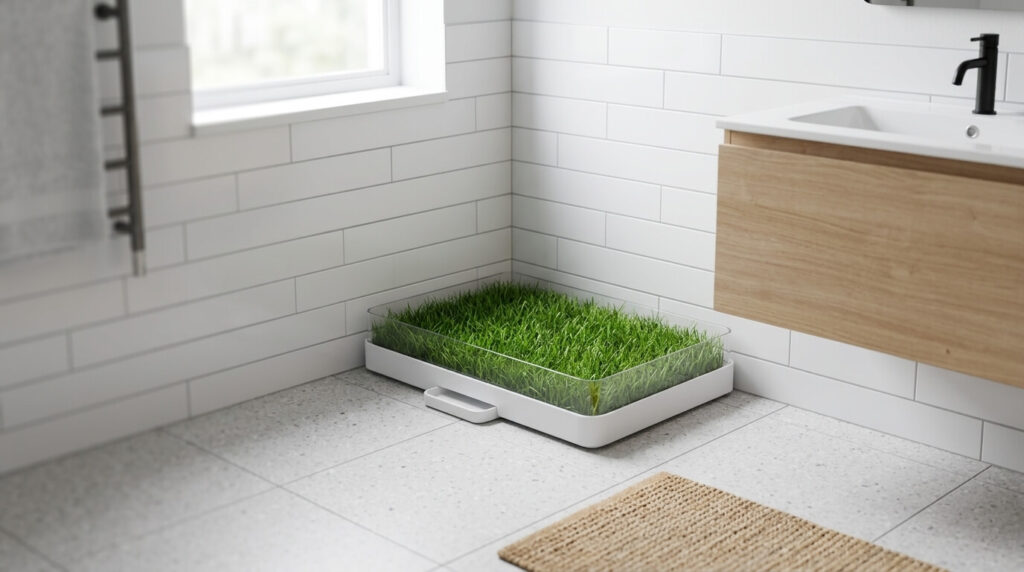
Reason 4: The Cleaning Routine Is Sending Mixed Signals
Indoor potty setups need a careful balance. If the potty area is too dirty, many dogs avoid it. If it is scrubbed so completely that no familiar scent remains, some dogs lose the cue. Meanwhile, accidents nearby can create a stronger smell trail than the actual potty.
Use enzymatic cleaner on misses, especially on rugs, mats, wood seams, and baseboards. For the potty area itself, follow the product’s cleaning instructions and keep it sanitary. If you use pads, change them often enough that the dog is not stepping onto a soaked surface.
Do not clean accidents with strong ammonia-like smells. Dogs may interpret some harsh odors differently than humans do. The goal is to remove accident odor without making the whole corner smell like a chemical event.
Reason 5: The Dog Formed a Negative Association
Dogs can avoid an indoor potty after one bad event. Maybe the tray slid. Maybe the balcony door slammed. Maybe someone yelled after a miss. Maybe another pet rushed them. Maybe the dog was forced onto the pad and felt trapped.
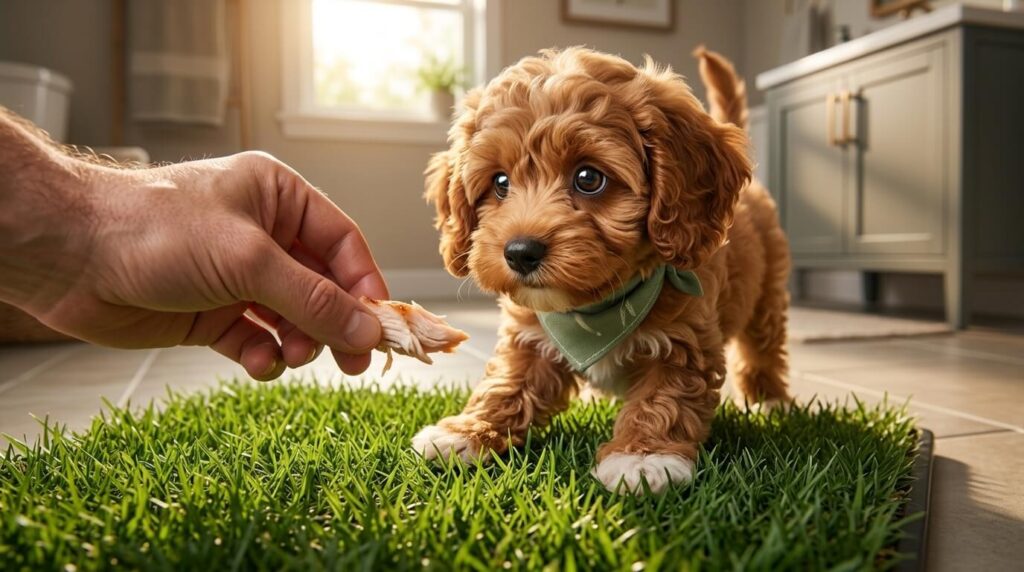
If the dog looks cautious near the potty, do not force them onto it. Rebuild the area as neutral and safe. Feed a few treats near the potty, reward investigation, and keep sessions short. When the dog steps onto the area voluntarily, praise calmly. You are repairing trust before asking for accuracy.
This is where positive reinforcement matters. Reward the behavior you want and make the setup easier. Fear and pressure may create a dog who hides accidents instead of using the indoor station.
Reason 6: The Schedule Is Unfair or Unclear
Indoor potty options can make owners accidentally loosen the schedule too much. The dog is expected to use the box whenever needed, but nobody has taught a clear routine. Some dogs need a predictable cue, especially during the transition from outdoor potty to indoor backup.
Use a schedule for the reset. Bring your dog to the indoor potty after waking, after meals, after naps, after play, before you leave, and before bed. Stand nearby without hovering. If your dog goes, reward immediately. If not, try again later instead of turning it into a long negotiation.
If your dog is alone for long periods, check whether the issue is actually time. The how long can you leave a dog alone in an apartment guide can help you decide whether the schedule needs support.
Run a Behavior-Based Indoor Potty Reset
Use a reset when your dog has at least some history of using the station but now misses, hesitates, or refuses it. The reset is not a ten-day promise. A dog who only needs a larger target may improve quickly; a dog with pain, fear, mobility loss, or a long rehearsal history may need a veterinary plan and several weeks of careful work.
Start With a 48-Hour Observation Record
Before buying another tray, write down each elimination event for two ordinary days. Record the time, urine or stool, exact location, surface, body posture, what happened immediately before it, and whether the dog was alone. Note circling, slipping, leg lifting, straining, repeated small puddles, startling sounds, and whether another pet was nearby. This record separates a geometry problem from urgency, marking, fear, or schedule failure.
Make the Correct Choice Physically Easy
Increase the target temporarily and add a non-slip base. Remove bath mats and loose rugs that compete with the potty texture. Keep a clear route from the dog’s resting area to the station. If your dog circles or walks forward while eliminating, the usable surface must accommodate that movement, not merely the dog’s standing footprint.
Supervise the Moments That Predict Elimination
Guide the dog to the station after waking, eating, drinking heavily, play, excitement, and long rest. Wait quietly rather than repeating a cue. Reward immediately after the dog finishes in the correct place. If nothing happens, leave without pressure and offer another opportunity soon; do not confine the dog on the tray until they give in.
Change One Variable at a Time
If the dog approaches but will not step on, test footing or surface. If all four paws enter but urine lands outside, enlarge the target or add a vertical splash surface appropriate for a leg-lifting dog. If the dog will not enter the room, test location and noise. If accidents happen only after a long absence, change the care schedule. Multiple simultaneous changes may produce one good day without telling you what solved the problem.
Shrink the Setup Only After Reliable Evidence
Keep the successful setup until the dog approaches without hesitation and repeatedly eliminates fully on the target under the conditions that used to cause misses. Then reduce extra pad coverage a little at a time. If edge misses return, restore the last reliable size. Apartment aesthetics can wait; repeated successful practice is what makes the final compact station possible.
Common Apartment Mistakes
Mistake 1: Putting the Potty Too Close to Food
Many dogs do not want to potty beside their food or water. Keep the indoor potty separate from the feeding area.
Mistake 2: Moving the Potty Every Few Days
Changing the location too often makes the target unclear. Pick the best location you can and keep it consistent during training.
Mistake 3: Expecting a Tiny Tray to Work for a Moving Dog
If your dog circles or steps forward, a small tray may fail even when your dog is trying. Start bigger.
Mistake 4: Letting Rugs Compete With Pads
If your dog chooses soft rugs, remove or block them during the reset. Do not ask a confused dog to choose between two similar surfaces.
Mistake 5: Treating Avoidance as Defiance
Avoidance usually has a reason. Find the reason and fix the setup before assuming your dog is refusing on purpose.
When to Stop Using an Indoor Potty
Indoor potty setups are useful when they solve a real apartment problem: puppy transitions, senior needs, severe weather, mobility issues, high-rise access, or unavoidable schedule gaps. They are less useful when they create confusion, odor problems, or conflict with your long-term goal.
You may need to stop or redesign the indoor potty plan if your dog becomes more confused, starts using multiple indoor surfaces, guards the area from other pets, avoids it despite a careful reset, or clearly prefers outdoor potty and can access it on a fair schedule.
Stopping does not mean failure. Some dogs do better with a consistent outdoor routine. Others need an indoor option only during storms, illness, or senior years. Match the system to the dog in front of you.
Apartment Location Troubleshooting
If your dog is avoiding the potty, the exact location can matter more than the product. The same tray may work in one corner and fail completely in another.
| Location | Why It Can Work | Why Dogs May Avoid It |
|---|---|---|
| Bathroom | Easy to clean and separate from living space | Echo, slippery floor, closed door, bath mat confusion |
| Laundry area | Out of the way and often washable flooring | Washer noise, vibration, tight corners |
| Balcony | Feels more outdoor-like | Wind, heat, cold, noise, safety concerns |
| Living room corner | Easy access and easy supervision | Too much foot traffic or guest attention |
| Entryway | Close to outdoor routine | Hallway noise and door excitement |
If you are choosing between locations, pick the spot your dog can reach calmly. Owners often choose the place that hides the potty best, but dogs usually choose based on safety, footing, smell, and access. A visible but reliable setup is better than a hidden setup your dog refuses.
Multi-Pet Problems
The litter box avoidance dogs show can become more complicated when there are multiple pets. Another dog may block the area, investigate while the first dog is trying to go, or mark near the station. Cats can also make the area feel socially crowded if litter boxes and dog potty stations are too close together.
If you have more than one pet, watch the room during potty attempts. Does another pet follow? Does your dog freeze when someone walks by? Does one dog use the indoor potty and the other avoid it? Social pressure can be subtle in a small apartment.
Give the avoiding dog a protected route and enough space. You may need separate potty zones, a gate, or supervised access during the reset. Do not expect a shy dog to use a potty area while another pet stands over them.
Adjust the Indoor Potty for the Dog in Front of You
Puppies
A puppy who misses the station may simply have too little bladder control, too much freedom, or too few supervised opportunities. Keep the route short, offer the potty after predictable events, and reward completed elimination. Do not interpret normal puppy mistakes as a lasting surface preference after only a few attempts.
Leg-Lifting Dogs
A flat pad can be large enough for the paws and still fail to catch urine from a raised leg. Observe direction and height, then use a stable system designed to contain vertical splash without introducing a chewable loose panel. Protect the wall and baseboard while retraining, and clean old marking odor thoroughly.
Senior Dogs and Dogs With Mobility Limits
High tray lips, slick grates, tight turns, and long routes become harder with arthritis, weakness, vision loss, or cognitive change. A low-entry, non-slip station near the sleeping area may be more humane than expecting the dog to reach the old location. Sudden changes, nighttime confusion, increased drinking, leaking, or difficulty posturing belong in a veterinary conversation.
Dogs Who Eat Pads or Potty Materials
A dog who shreds or swallows pads, turf, litter, or tray parts should not have unsupervised access to that material. Ingestion can create gastrointestinal risk, and spraying bitter products on an elimination surface may make avoidance worse. Use a physically secured system, direct supervision, or a different management plan while your veterinarian or qualified trainer helps address the chewing or pica.
How to Know Which Fix to Try First
If everything looks wrong at once, use the most visible clue. Fix one variable first, then observe for several days.
- If your dog misses by a few inches, enlarge the target first.
- If your dog steps on and jumps off, test texture and stability first.
- If your dog will not enter the area, change location or reduce fear first.
- If the area smells bad, fix cleaning first.
- If the refusal was sudden, call the vet first.
- If mistakes happen only when alone, check schedule and anxiety first.
- If the dog chooses rugs, remove competing soft surfaces first.
This order keeps the process calm. Owners often buy a new system immediately, but many dogs do not need a new product. They need a bigger target, a safer route, a cleaner area, or a more consistent reward history.
What Progress Looks Like
Progress may not mean perfect use on the first day. Look for small signs that your dog is becoming more comfortable with the indoor potty station.
- Your dog approaches the area without hesitation.
- Your dog stands with all four paws on the target more often.
- Misses move closer to the correct area before disappearing.
- Your dog sniffs and circles instead of avoiding the station.
- Your dog accepts rewards near the potty area.
- Accidents on rugs or mats become less frequent.
Do not rush the final step. If you made the target larger with extra pads, keep it large until your dog has a reliable streak. Then shrink the area slowly from the outside edges. If misses return, you shrank too quickly.
Choose the Right Kind of Potty Help
Use this guide when the dog avoids an indoor potty station or uses it inaccurately. If the dog has never learned a reliable elimination routine, begin with apartment potty training. If the current tray is clearly the wrong size or format, compare indoor dog potty solutions. When a previously reliable adult dog suddenly starts having accidents anywhere in the home, follow the broader adult dog potty training regression assessment and contact your veterinarian when indicated.
FAQ
What causes litter box avoidance dogs show in apartments?
The most common causes are a potty area that is too small, an uncomfortable surface, a stressful location, poor cleaning balance, a negative association, an unclear schedule, or a medical issue that changes urgency.
Why does my dog pee next to the pad instead of on it?
Your dog may think they are on the target if their front paws are on the pad but their back end is off. Use a larger area, reward correct positioning, and reduce nearby surfaces that compete with the pad.
Can dogs really use litter boxes?
Some small dogs can learn indoor potty boxes or trays, but not every dog is a good match. Size, surface, cleaning, and consistency matter. Larger dogs may need a bigger grass-style or tray setup rather than a small box.
Should I scold my dog for avoiding the indoor potty?
No. Scolding can make the dog avoid the area more or hide accidents. Clean mistakes, improve the setup, supervise, and reward correct use.
How long does it take to fix indoor potty avoidance?
There is no responsible fixed timeline. A target-size mistake may improve after the setup changes, while medical issues, fear, mobility limitations, long-standing habits, or multi-pet stress take longer. Judge progress by approach, posture, complete target use, and fewer accidents rather than by a promised number of days.
What if my dog used the indoor potty before but suddenly stopped?
Sudden refusal can mean health changes, stress, odor buildup, a bad experience, or schedule changes. Ask your veterinarian about an abrupt change, especially with straining, repeated small amounts, blood, increased thirst, diarrhea, pain, leaking during sleep, or confusion. Do not wait for a training reset to solve a possible medical problem.
Is an indoor potty bad for apartment dogs?
No, not when it has a clear purpose and consistent rules. It can help puppies, seniors, small dogs, high-rise dogs, and weather-sensitive dogs. It becomes a problem when it confuses the dog or replaces a fair routine.
Make the Next Decision From Evidence
Watch the next few potty attempts without correcting the dog mid-process. Notice whether the dog avoids the surface, misses an edge, hesitates at the doorway, loses footing, reacts to another pet, or simply cannot wait for the current schedule. That observation tells you which single variable to change first.
The litter box avoidance dogs display is usually information, not disobedience. Make the target physically achievable, keep the route quiet and stable, remove the odor from misses, and reinforce completed use. If the change is sudden or your dog appears uncomfortable, move the veterinary call ahead of the training experiment.