Clean Apartment With Dog: 9 Practical Renter Routines
Clean apartment with dog life gets easier when you stop deep-cleaning from panic and start controlling where dirt, moisture, hair, food residue, and accident odor enter or collect. A dog in a small apartment does not simply create “mess.” They create daily traffic: paws through the entry, hair on fabric, crumbs near bowls, nose marks on glass, wet towels after rain, toys under furniture, and that one blanket everyone knows belongs to the dog even if it started as yours.
The goal is not to keep your apartment looking untouched. That is exhausting and, honestly, not how a lived-in dog home works. The goal is to keep mess from compounding. Ten minutes at the right time can prevent the weekend from becoming a depressing two-hour reset where you wonder how one dog became a weather system.
This guide is different from an odor guide. Odor matters, but cleaning is broader: hygiene, floors, laundry, pet-safe products, storage, guest readiness, and making the apartment feel calm enough that you are not constantly apologizing for having a dog.
Quick Answer
To keep a clean apartment with a dog, build routines around the places mess enters and collects: entryway, feeding area, favorite resting spot, floors, laundry, toys, bowls, indoor potty area, and trash. Clean food-contact items after use, launder bedding when it is visibly dirty or develops odor, clean accidents with an appropriate product, follow every cleaner’s label, ventilate when directed, and keep supplies where the mess actually happens.
| Area | Small Routine | Why It Works |
|---|---|---|
| Entryway | Mat, towel, paw wipe, leash hook | Stops dirt before it spreads |
| Dog bed | Wash cover weekly or every other week | Prevents fabric odor and hair buildup |
| Food area | Wash bowls daily, wipe floor | Controls crumbs, bacteria, and smells |
| Floors | Microfiber pass plus slow vacuuming | Captures hair instead of chasing it |
| Furniture | Washable cover on favorite spot | Cleans the real source, not the whole sofa |
| Toys | Rotate, inspect, wash or discard | Reduces grime and chewing hazards |
If hair is the main battle, start with get dog hair off everything. If smell is the main issue, use control dog odor apartment. This page ties those pieces into one apartment cleaning system.
The Entryway Is Your First Cleaning Tool
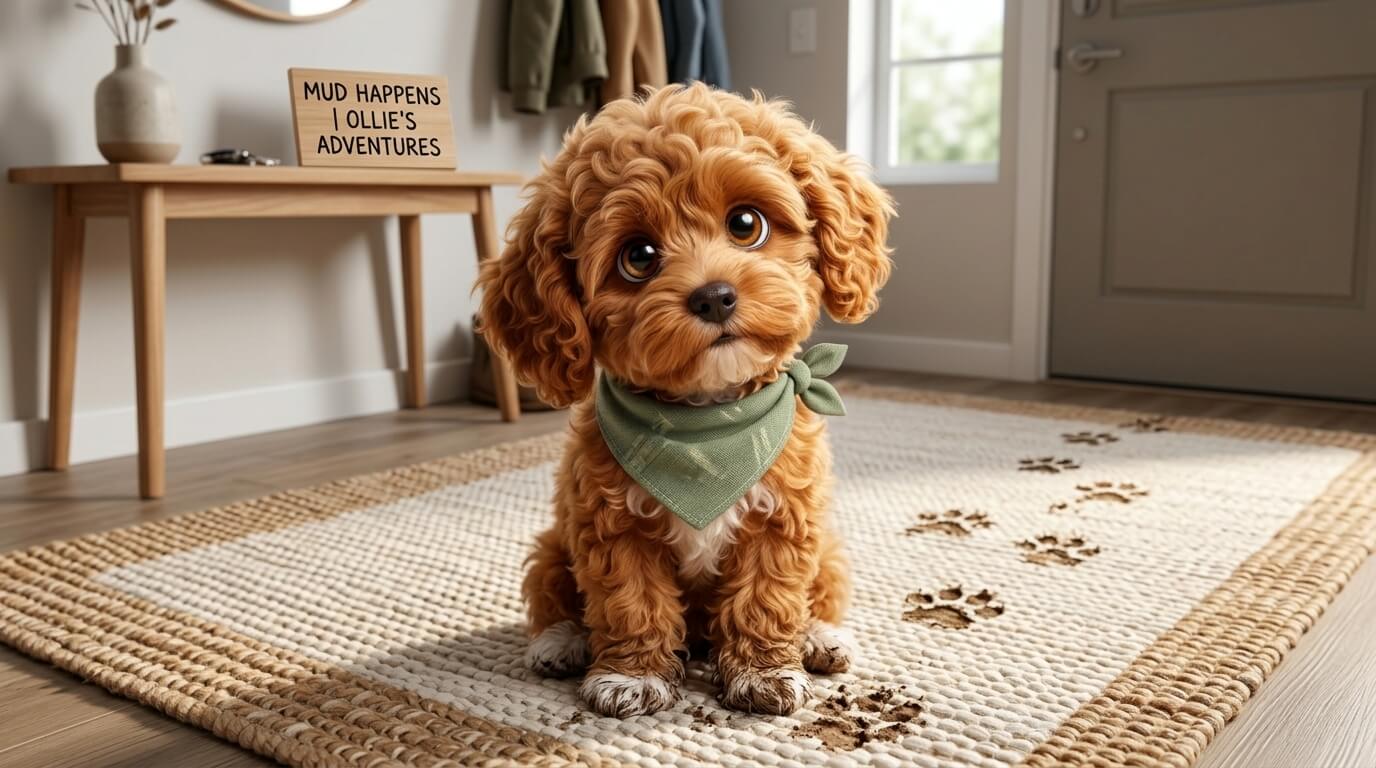
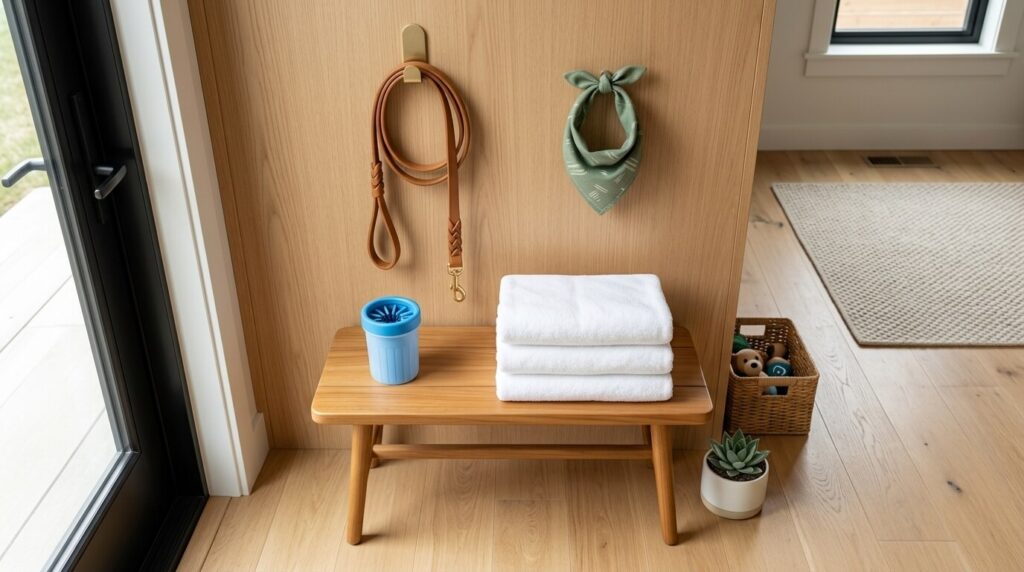
Most apartment mess starts at the door. Mud, pollen, sidewalk dust, rainwater, salt, grass, elevator grime, and hallway debris all ride in on paws, leash clips, harnesses, and your own shoes. If you wait until dirt reaches the sofa, you are cleaning too late.
Build a tiny entry station:
- Washable mat
- Dog towel
- Paw wipes or rinse cup
- Leash and harness hook
- Small trash bag or bin
- Treats for calm standing
The emotional trick is to make it easy enough that you will do it when tired. If the towel is in a closet and the wipes are under the sink, you will skip it after a cold rainy walk. Put supplies where the dog actually enters.
Paw cleaning is not about scrubbing after every ordinary walk. It is about removing visible mud, road salt, sticky residue, and moisture before they travel onto rugs and bedding. Check between the toes, dry rather than rub irritated skin, and contact your veterinarian if pads are cracked, painful, swollen, or repeatedly licked.
Build a Short Daily Reset
A daily reset should feel small, not heroic. Pick a natural transition: after the evening walk, before bed, or after breakfast. The point is to touch the highest-impact areas before they become weekend problems. It may take five minutes in dry weather and longer during shedding or rain; the clock is less important than clearing wet fabric, food residue, and the busiest hair zones.
- Shake or straighten the dog blanket.
- Wipe the food and water bowl area.
- Microfiber the main hair corners.
- Put toys back in one basket.
- Remove wet towels or dirty paw wipes.
- Check the entry mat.
- Open a window briefly if safe and weather allows.
This is not “clean the whole apartment.” It is stop-the-slide cleaning. It keeps the apartment from tipping into chaos. Many owners fail because they set the standard too high and then avoid cleaning entirely. A small reset you repeat is better than a perfect plan that shames you from the fridge door.
Floors: Clean by Surface, Not Mood
Hard floors need hair capture. Rugs need hair loosening. Carpet needs slow passes. If you clean every surface the same way, you will work harder than necessary.
Hard floors
Use microfiber first, especially in corners, under the dog bed, around bowls, and along baseboards. Dry sweeping can push hair and dust into the air. A slightly damp microfiber cloth or mop holds more of the mess.
Rugs and carpet
Use rubber before vacuuming if hair is embedded. A rubber broom, glove, or squeegee can pull hair into clumps. Then vacuum slowly in more than one direction. If your dog digs or scratches carpet, check stop dog digging carpet before cleaning becomes repair.
Robot vacuums
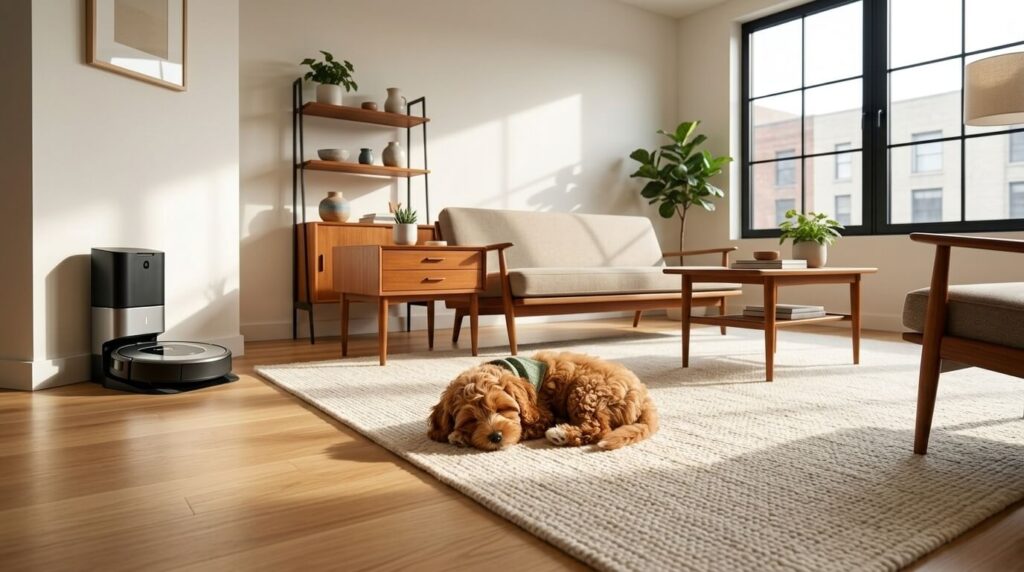
A robot vacuum can help, but it is not the boss of the cleaning system. It works best when floors are clear, cords are managed, toys are picked up, and the bin is emptied often. If your dog is nervous around the robot, introduce it slowly and do not run it when your dog is already stressed.
Bowls, Toys, and Pet Items
Pet items get dirty quietly. Bowls collect saliva and food residue. Toys collect dirt and mouth bacteria. Beds collect hair, dander, outdoor dust, and body oils. CDC guidance says pet bowls can be washed in the sink or dishwasher if dishwasher-safe, and hard pet items can be cleaned with soapy water before disinfection when needed. Soft items such as blankets, beds, clothes, plush toys, and rope toys can be cleaned in a washing machine and dryer when appropriate.
For daily life, do this:
- Wash food and water bowls daily.
- Rinse slow feeders and puzzle feeders after wet food.
- Wash washable toys on a schedule.
- Throw away toys with loose parts, sharp edges, or stuffing coming out.
- Keep a “dirty toy” spot so gross toys do not vanish under the couch.
Separate dogs during food-based toys if there is any tension. For enrichment options and cleanup reality, see DIY dog enrichment ideas.
Soft Surfaces Matter More Than Floors
Floors look dirty first, but soft surfaces often hold the real apartment feeling. Dog bed covers, sofa throws, blankets, pillows, and rugs can make a room feel stale even after you vacuum.
Use washable layers where your dog actually rests. Do not try to protect the whole apartment equally. If your dog sleeps on one end of the sofa, cover that end. If they nap beside your desk, use a washable mat. If they love the bed, use a top blanket that is easier to wash than the whole comforter.
Dry everything fully. Damp fabric in a small apartment is a fast road to sour smell. If your dog bed insert never dries properly, replace it with a more washable setup. The article on small apartment dog beds can help you choose a bed that does not become a cleaning enemy.
Pet-Safe Cleaning Without Panic
Pet-safe cleaning does not mean using only vinegar and hope. It means reading labels, using products correctly, keeping pets away from wet surfaces when directed, rinsing when needed, ventilating, and storing products where dogs cannot reach them.
ASPCA notes that most cleaning products can be used safely around dogs and cats when used according to label directions, but pets should be kept away from areas where potentially toxic substances are being used. It also notes that diluted bleach can be used for some pet items when properly diluted, rinsed, and aired out. CDC similarly recommends following cleaning instructions on pet items and allowing disinfectants to dry fully before pets use them.
Important rules:
- Never mix cleaning products.
- Do not mix bleach with ammonia or acids.
- Ventilate during and after cleaning when safe.
- Store cleaners in original containers.
- Keep pets away from wet floors and treated surfaces as directed.
- Use enzymatic cleaner for pet accidents.
- Do not rely on fragrance to hide dirty surfaces.
EPA also advises reading household product labels and keeping products out of reach of pets and children. Labels are not decoration; they are the instructions that keep cleaning from becoming a risk.
Do Not Confuse Cleaning, Sanitizing, and Disinfecting
These jobs are not interchangeable. Cleaning removes hair, dirt, saliva, food residue, and organic material. Sanitizing lowers germs to a level defined by the product or public-health guidance. Disinfecting uses a registered product for specific organisms and requires the surface to remain wet for the stated contact time. Most ordinary dog-home maintenance begins with cleaning, not automatically disinfecting every surface.
Overusing disinfectant can add residue, fumes, cost, and unnecessary pet exposure without improving a dirty surface. Remove debris first, use the correct product for the material, follow dilution and contact-time instructions, and keep the dog away until the label says the area is ready. Never assume that “natural,” strongly scented, or homemade means harmless.
| Situation | Primary Job | Important Detail |
|---|---|---|
| Hair and sidewalk dust | Physical removal | Microfiber, brushing, and vacuuming do most of the work |
| Dried food around a bowl | Wash with soap and water | Clean the bowl and mat, then dry fully |
| Urine accident | Remove soil and odor residue | Use a surface-appropriate enzymatic product as labeled |
| Contagious illness in the home | Veterinary-directed cleaning and disinfection | Ask which product, dilution, contact time, and surfaces apply |
| Unknown cleaner exposure | Prevent licking and seek advice | Keep the container and contact a veterinarian or poison-control service |
Laundry Strategy for Dog Homes
Dog laundry fails when everything is mixed together. Dog blankets, muddy towels, human sheets, work clothes, and sofa covers should not always share the same load. Hair transfers. Smell transfers. Wet fabric makes everything worse.
Use this order for hairy items:
- Shake outside if your building allows it, or shake into the tub.
- Run an air-only dryer cycle if hair is heavy.
- Clean the lint trap.
- Wash with appropriate detergent.
- Dry fully.
- Clean the lint trap again.
If your dog has sensitive skin, use fragrance-free detergent when needed and avoid heavy scent boosters. A blanket that smells strongly “clean” to you may be unpleasant for your dog.
Accidents Need a Different Cleaning Brain
Urine, stool, and vomit are not ordinary dirt. Wiping the surface may remove the visible mess but leave odor compounds behind. Use enzymatic cleaner for pet accidents and follow the contact time. If a rug or carpet smells again after humidity rises, the residue may be deeper than you cleaned.
Do not punish accidents after the fact. Clean, prevent access if needed, and solve the cause. If an adult dog suddenly starts having accidents, consider medical causes, routine changes, stress, or mobility before assuming bad behavior. See adult dog potty training regression for the behavior side.
If you use an indoor potty, cleaning is daily management, not occasional cleanup. For a dog who approaches the station but refuses or misses it, use the litter box avoidance dogs troubleshooting guide.
Trace Odor to Its Source Instead of Adding Fragrance
A clean apartment should not depend on a permanent cloud of perfume. If odor returns within hours, identify whether it is coming from damp bedding, a dog bed insert, an accident in carpet backing, food residue under a bowl mat, a dirty trash can, ears, skin, mouth, or the dog themselves. Air freshener can change what a person smells while leaving the source untouched.
Use your nose methodically. Smell at floor level near baseboards and rug edges, then check washable fabrics, food storage, drains, trash, and the entry station. A UV flashlight may reveal some urine residue, but it can also highlight cleaners and other materials, so confirm any suspicious area by location and odor rather than treating every glow as urine.
A new or unusually strong odor from the dog’s mouth, ears, skin, urine, or stool is not merely a housekeeping problem. Persistent odor with itching, discharge, pain, increased thirst, diarrhea, or urinary changes belongs in a veterinary conversation.
Guests, Inspections, and the Emotional Side
Cleaning with a dog is practical, but it is emotional too. Guests coming over can trigger a weird burst of shame. So can a landlord inspection. So can seeing dog hair on your pants after you just cleaned. Try not to turn every mess into evidence that you are failing.
For guests, clean the areas they actually experience: entry, seating, bathroom, visible floor path, and trash. For inspections, focus on lease-sensitive areas: carpet, walls, baseboards, odor, scratches, balcony, and water damage. For your own sanity, focus on the dog’s real mess route rather than trying to make the whole apartment spotless.
If your dog jumps on guests and spreads hair or paw marks immediately after you clean, pair cleaning with stop dog jumping on guests. Manners and cleaning are connected in small spaces.
Document Lease-Sensitive Problems Before They Grow
Renters need to distinguish ordinary cleaning from building maintenance. Urine that has reached carpet padding, moisture under vinyl seams, a leaking appliance, loose flooring, damaged grout, mold-like growth, or a recurring drain odor may not be solvable with another household product. Delaying a maintenance report can allow damage to spread and can make the timeline harder to explain later.
When you find a problem, photograph the wider area and a close view, record the date, note any relevant event, and keep copies of written communication with property management. Do not hide structural moisture with fragrance or paint. Follow the lease’s reporting procedure, and keep the dog away from exposed adhesive, damaged flooring, wet paint, tools, and repair debris.
Before a scheduled inspection, check the places a quick tidy misses: baseboards behind the dog bed, floor beneath the water mat, wall corners beside indoor potty equipment, balcony drainage, entryway paint, carpet edges, and the space under food storage. The goal is not to conceal dog ownership. It is to catch preventable wear while it is still small.
Clean the Cleaning Tools
A vacuum with a packed filter, a damp mop head, a hair-filled brush, or an old sponge can spread odor and reduce cleaning performance. Tool maintenance is easy to overlook because the apartment appears cleaner immediately after use, even when the equipment itself is becoming the next odor source.
- Empty vacuum bins before airflow drops and clean filters according to the manufacturer.
- Remove wrapped hair from brush rolls after heavy sessions.
- Wash microfiber cloths and mop pads separately when they carry accident residue.
- Dry buckets, brushes, paw towels, and washable mats fully before storage.
- Replace cracked bowl sponges, worn rubber tools, and items that retain odor after washing.
- Store accident-cleaning tools away from food-preparation tools.
This maintenance also makes trends visible. A vacuum that suddenly fills much faster may reflect seasonal shedding; a repeatedly soaked entry towel may signal a drainage or weather-management problem; a mop pad that keeps smelling after washing may need replacement rather than stronger fragrance.
A Flexible Apartment Cleaning Rhythm
Use this as a starting rhythm, then shorten or extend intervals according to moisture, shedding, food type, illness, number of pets, and the product instructions:
- Daily: bowls, entryway, wet towels, visible crumbs, quick hair corners.
- Twice weekly: vacuum main room, brush dog, wipe sofa cover or dog mat.
- Weekly or as soiled: wash bedding, clean washable toys, mop high-traffic floors, clean trash area.
- Monthly: vacuum under furniture, clean filters, inspect rugs, wash leashes or harnesses if dirty.
- Seasonally: review storage, replace worn mats, deep clean hidden hair zones.
The rhythm can change. Shedding season, rainy weather, illness, a puppy, a senior dog, or indoor potty training will all increase cleaning. That does not mean the system failed. It means the season changed.
If automated daily hair pickup is useful, choose a quiet robot vacuum for a dog apartment by brush design, dock footprint, floor fit, and mode-specific noise evidence.
Adjust the Routine to Your Dog’s Life Stage
Puppies
Puppies make cleaning feel unfair because the mess is constant and the dog is still adorable. Expect more paper towels, more laundry, more floor wipes, and more toy inspection. Keep cleaning supplies close to the puppy zone, not hidden across the apartment. Use gates and washable mats so one accident does not become a whole-room event.
Do not use strong fragrance to cover puppy accidents. Clean with the right product, then manage freedom better. If the puppy can wander into three rooms unsupervised, the apartment is doing more training than you are.
Adult dogs
Adult dogs usually need maintenance, not crisis cleaning. Their mess patterns become predictable: the sofa corner, the entry mat, the food bowl splash zone, the bed cover, the hallway hair corner. Once you know those places, you can stop cleaning the whole apartment equally and clean the places that actually matter.
Senior dogs
Senior dogs may need softer bedding, more frequent laundry, non-slip floor care, easier water access, and quicker accident response. Be careful with slippery wet floors after mopping. A cleaning routine that makes the apartment shiny but hard for an older dog to walk on is not a good routine.
If a senior dog starts having accidents, smelling different, or tracking more mess because they struggle to stand or squat, look at health and comfort before blaming the dog. Cleaning should support dignity, not create shame.
Adjust the Routine to Weather
Rainy weeks
Rainy weeks are entryway weeks. Keep two dog towels in rotation so one can dry while the other is used. Hang harnesses where air reaches them. Wipe the floor around the entry before damp grit travels across the apartment. Wash the entry mat more often than usual.
Shedding season
During shedding season, clean from the dog outward. Brush more often in one washable spot, then vacuum or microfiber after brushing. If you vacuum first and brush later, you have simply scheduled the same cleaning job twice.
Hot weather
Hot weather makes bowls, bedding, trash, and wet food smell faster. Wash bowls daily, take trash out sooner, and do not let damp fabric sit. If your apartment has weak air conditioning or poor airflow, soft surfaces may need washing more often.
Winter sidewalk salt
Winter cleaning is paw cleaning. Salt and de-icing chemicals can irritate paws and mark floors. Wipe paws after walks, dry between toes, and wash entry mats often. Store paw towels where you can reach them while holding the leash.
Small-Space Storage That Actually Helps
Cleaning systems fail when supplies are stored according to fantasy instead of use. In a small apartment, you may not have a utility closet. That is fine. Make small stations.
- Entry station: towel, wipes, mat, leash hook, small trash bag.
- Food station: bowl sponge, drying towel, food scoop, sealed storage.
- Accident station: enzymatic cleaner, paper towels, gloves, waste bags.
- Hair station: brush, lint tool, rubber glove, small vacuum attachment.
- Laundry station: dog blanket basket and a place for damp towels to dry.
This does not mean cluttering every room with products. It means the right tool is close enough that you will use it before the mess spreads. A perfect cleaning basket in the back of a closet is less useful than one towel hanging by the door.
When Cleaning Reveals a Bigger Problem
Sometimes the apartment is not hard to clean because you are lazy. It is hard to clean because something else is happening. A dog who tracks urine from an indoor potty may need a better potty setup. A dog who chews rugs may need management and enrichment. A dog who drools or smells different may need a health check. A dog who barks and runs at every hallway sound may keep stirring up hair and dust because they never settle.
If one mess repeats, do not just clean it forever. Ask what keeps creating it. Cleaning should give you information. The recurring pile of hair tells you where the dog rests. The muddy trail tells you where the entry system fails. The chewed toy bits tell you which toys are unsafe. The sour bed tells you the cover schedule is too slow or the insert is wrong.
This is the expert shift: cleaning is not punishment after mess. Cleaning is feedback from the apartment.
Do Not Let Cleaning Become the Relationship
One quiet warning: if every interaction with your dog starts to feel like wiping, correcting, moving, washing, or apologizing, the apartment routine is too heavy. Build a smaller system. Clean the entry, cover the favorite sofa spot, wash the bowls, and let some normal dog life exist. A clean apartment should make living with your dog easier, not make your dog feel like a walking chore.
Common Mistakes
Trying to clean everything at once
Whole-apartment cleaning is overwhelming. Start where mess enters and where your dog rests. Those two zones usually change the apartment fastest.
Using too much product
More cleaner does not mean cleaner. Residue can irritate paws, attract dirt, or leave strong smells. Follow labels and rinse when needed.
Forgetting the tools
Vacuum filters, mop heads, towels, and pet brushes can all hold odor and hair. Dirty tools spread yesterday’s mess.
Leaving damp items in piles
Wet towels, harnesses, and mats make small apartments smell fast. Hang or wash them before they turn into the source.
Cleaning around behavior problems
If your dog keeps having accidents, digging carpet, chewing baseboards, or jumping on guests with muddy paws, cleaning alone will not solve it. Add management and training.
FAQ
How do I keep a clean apartment with dog hair everywhere?
Brush at the source, use washable covers, microfiber hard floors, rubber tools on fabric, and vacuum slowly. Focus on the dog’s favorite resting spots first.
How often should I clean dog bowls?
Wash food and water bowls daily. CDC says pet bowls can be washed in the sink or dishwasher if dishwasher-safe. Follow item instructions.
What cleaning products are safe around dogs?
Many products can be used safely when label directions are followed. Keep dogs away from wet treated areas as directed, ventilate, store products safely, and never mix cleaners.
How do I clean after muddy walks?
Use an entry mat, towel, paw wipe or rinse, and a treat for calm standing. Clean paws before the dog reaches fabric surfaces.
How do I make my apartment guest-ready fast?
Focus on entryway, seating, bathroom, trash, and visible floor paths. Fold or wash the dog blanket, wipe bowls, remove wet towels, and use microfiber on main hair zones.
Do air purifiers help keep apartments clean with dogs?
They can support indoor air quality, but they do not replace brushing, washing, vacuuming, source control, or ventilation. Use them as support, not the whole plan.
Start Where the Mess Repeats
Pick the one area you clean repeatedly: entryway, food mat, dog bed, sofa corner, or indoor potty station. Ask what keeps recreating the mess, place the correct supplies there, and change the source before expanding the routine. A clean apartment with a dog is not built by heroic deep cleans. It comes from catching dirt at the door, washing residue at the bowl, drying fabric before it sours, and noticing when a recurring smell or accident needs more than another spray.