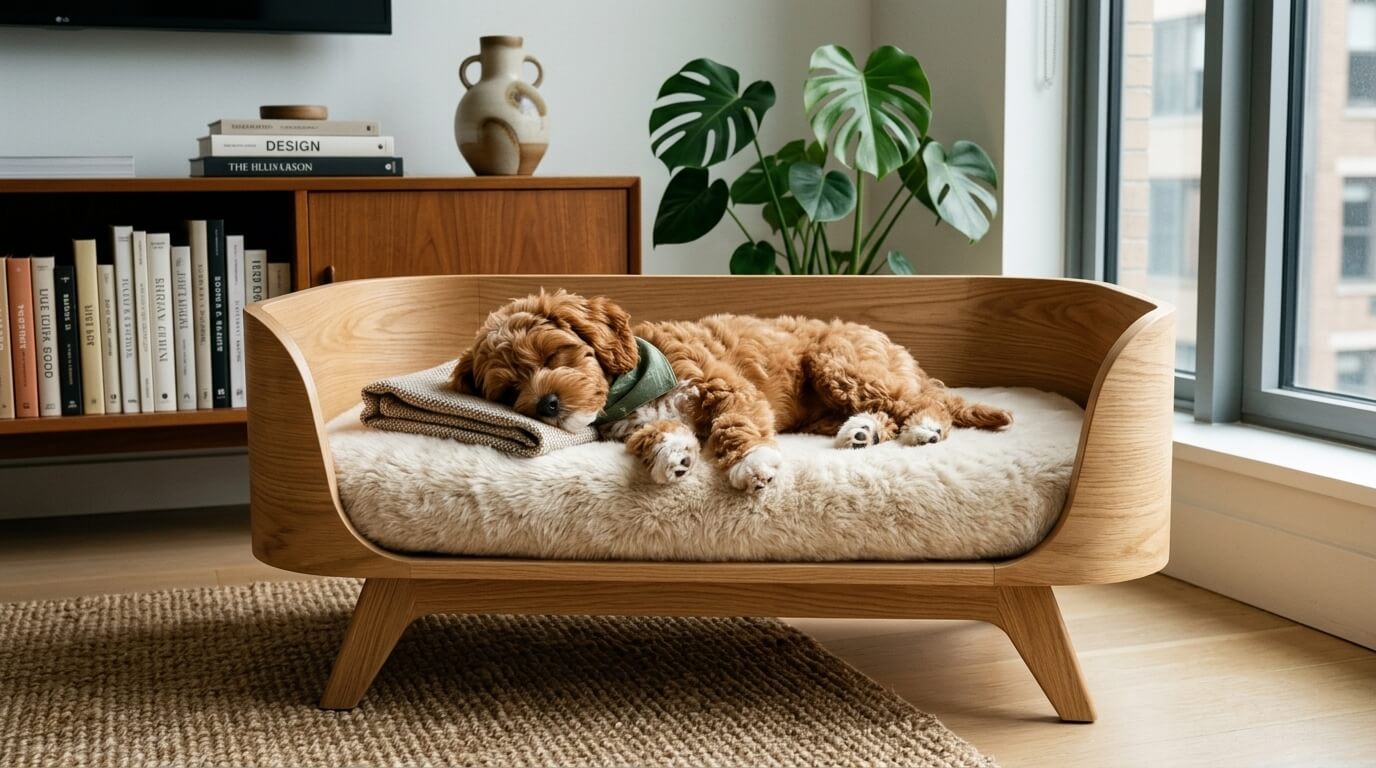
Small apartment dog beds have to satisfy two customers at once: the dog who sleeps on them and the renter who must walk around, wash, store, and live with them every day. A bed can fit your dog’s weight range and still be wrong for the room. It may block a closet, scrape the wall, trap hair in deep seams, overwhelm a small washer, or sit so close to the front door that your dog never truly switches off.
I would not choose by appearance first. Start with the way your dog actually sleeps, then test the bed’s footprint in the apartment and check how the cover and insert will be cleaned. A curled sleeper may genuinely enjoy a compact bolster. A long side sleeper needs more usable surface than the product’s outer dimensions suggest. A senior dog may need a stable, low edge rather than the deepest cushion in the store.
This is a bed-type decision guide, not a claim that every product in a category performs equally. We have not ranked named models as though they were all personally tested. Instead, the seven choices below are compared using apartment-specific criteria: usable sleeping area, floor footprint, ease of entry, washability, heat, noise, movement on hard floors, and how easily the bed fits into a real rental routine.

Table of Contents
The Short Answer
For many renters, the most practical choice is a low-profile rectangular bed or supportive mat with a removable, machine-washable cover and a non-slip base. It uses floor space efficiently, works beside a desk or human bed, and is easier to clean than a deep bed with fixed upholstery.
That is not a universal winner. Choose a bolster if your dog consistently curls and leans against edges. Consider a low orthopedic-style mat for an older or mobility-limited dog. Use a crate-fit pad only when the crate is already a comfortable resting place. An elevated cot can suit a warm apartment or a dog who seeks cool surfaces, while a portable roll mat makes sense when one room changes function throughout the day.
| Bed type | Usually suits | Apartment advantage | Main tradeoff |
|---|---|---|---|
| Low rectangular mat | Side sleepers and sprawlers | Efficient footprint and easy placement | May not satisfy dogs who want an edge |
| Bolster bed | Curlers and dogs who lean | Creates a defined rest zone | Raised sides reduce usable sleeping area |
| Supportive low-entry bed | Seniors and dogs with mobility changes | Stable access without a tall step | Dense inserts can be bulky to wash or store |
| Crate-fit pad | Dogs already relaxed in a crate | Combines crate and sleeping footprint | Wrong for dogs distressed by confinement |
| Washable modular bed | Shedders, puppies, damp-weather homes | Cover, liner, and insert can be managed separately | More zippers and parts to inspect |
| Elevated cot | Warm dogs and easy-clean homes | Airflow and vacuum access underneath | Can flex, squeak, or require a step up |
| Roll-up place mat | Flexible rooms and easy settlers | Stores and moves easily | Limited cushioning |
How This Guide Evaluates a Bed Without Pretending to Test Every Model
A useful buying guide should tell you what to inspect, not simply attach “best” labels to attractive photographs. For each bed type, use the same six checks:
- Usable sleeping area: Measure the flat area inside bolsters, not only the outside dimensions.
- Access: Check the height and stability of the edge your dog must cross.
- Cleaning: Confirm whether the cover, liner, and insert are separately washable.
- Floor behavior: Consider sliding, rocking, frame noise, and vacuum clearance.
- Room fit: Test doors, drawers, chair movement, and the normal walking path.
- Return reality: Read the current return terms before purchase, especially for compressed foam that expands after opening.
Product dimensions, materials, care instructions, and return policies can change. Verify those details on the current manufacturer or retailer page rather than relying on an old roundup. A particular bed earns a place in your home only when its current specifications pass your own measurements.
Run the Towel Test Before You Buy
Measure your dog while asleep, not while standing politely for a tape measure. Note the longest position you see over several naps. A dog who is 24 inches long when standing may occupy much more space with the neck extended and hind legs behind the body. For a bolster bed, compare that sleeping length with the inner surface, because thick sides can consume several inches on every edge.
Next, fold a towel or mark painter’s tape to the bed’s published outside dimensions. Leave it on the proposed spot for a full day. Open the closet. Pull out the desk chair. Carry a laundry basket past it. Walk the late-night route to the bathroom. Run the robot vacuum if you use one. This catches the apartment problems that a product photograph cannot show.
Measure these items before ordering:
- Your dog’s curled and fully stretched sleeping dimensions
- The bed’s outside dimensions and usable inner dimensions
- The lowest entry height
- Clearance for doors, drawers, chairs, and walking routes
- Your washer opening and drum capacity for the cover or entire bed
- A dry location for the insert while the cover is being washed
One detail renters often miss is what happens on laundry day. If the only bed is dismantled for hours, where will the dog settle? A familiar washable blanket or thin backup mat solves that problem without requiring a second full-size bed.
Seven Bed Types That Can Work in a Small Apartment
1. Low Rectangular Mat for Side Sleepers
A simple rectangular mat is usually the easiest shape to place against a wall, beside a human bed, or under the open side of a desk. It wastes less floor area on decorative sides, and it lets a dog extend paws beyond the edge without climbing out of a deep nest.
Look past the word “orthopedic” on the label. That term alone does not tell you how the insert will support your individual dog. Inspect thickness, firmness, whether the dog will sink through to the floor, whether the surface wrinkles, and whether the base slides when the dog stands. Thin dogs may need more cushioning over hard flooring, while a dog who runs warm may reject a thick heat-retaining surface.
This shape is less satisfying for dogs who always sleep pressed against the sofa or with the chin on an edge. You can sometimes add a washable rolled blanket along one side, provided the dog does not chew or ingest fabric.
2. Bolster Bed for Curlers and Leaners
A bolster bed can turn an exposed corner into a defined resting place. Dogs who curl tightly, lean their back against furniture, or rest the chin on a rim often use the raised side naturally. In a studio, that visual boundary can help distinguish the dog’s quiet spot from the rest of the open room.
The outside size can be misleading. A bed advertised as 30 inches wide may offer far less flat sleeping room after thick bolsters are counted. Check internal dimensions and choose a model with a lowered opening for a short-legged, older, or stiff dog. Deep shag-style sides may also hold hair and take longer to dry than a smooth removable cover.
Skip a soft raised edge for a dog currently shredding cushions or swallowing fabric. Address access to tempting materials and provide suitable chewing outlets first. The guide to dog chewing furniture in an apartment separates normal exploration, boredom, stress, and safety concerns.
3. Supportive Low-Entry Bed for Senior Dogs
For an older dog, space saving should never mean creating a difficult step. A low, stable entry and a non-slip route can matter more than a sculpted shape. The bed should not skid away as the dog lowers the body or stands. A very deep, unstable cushion may make balance harder even though it looks luxurious.
Sudden changes in sleep deserve attention. If a dog begins pacing at night, repeatedly changes spots, hesitates before lying down, struggles to rise, or abandons a familiar bed, do not assume the answer is simply more foam. AAHA’s senior-care guidance includes appropriate bedding and home modifications as part of supporting comfort and mobility, but a veterinarian should assess new pain or movement changes.
A supportive insert may be heavy and awkward in an apartment laundry area. Prefer a removable cover plus a protective liner so that routine cleaning does not require wrestling the entire insert into a small machine.
4. Crate-Fit Pad for a Dog Who Already Rests Comfortably in a Crate
When a crate is already part of a calm routine, a fitted pad lets one footprint serve as both enclosure and sleeping area. This is useful in apartments where a separate crate and large bed would compete for the same wall space.
Fit matters. A pad that bunches at the edge can be uncomfortable or become a chewing target. It should lie flat without interfering with the door or divider. Do not add thick bedding to persuade a distressed dog to tolerate confinement. Panting, drooling, frantic scratching, repeated escape attempts, or inability to settle indicate a training or welfare problem, not a decorating problem.
Use the bed only after the enclosure itself is introduced gradually. Our apartment crate-training guide explains how to build voluntary, calm crate use and when a gated room may be a better option.
5. Modular Washable Bed for Shedding, Rain, and Accidents
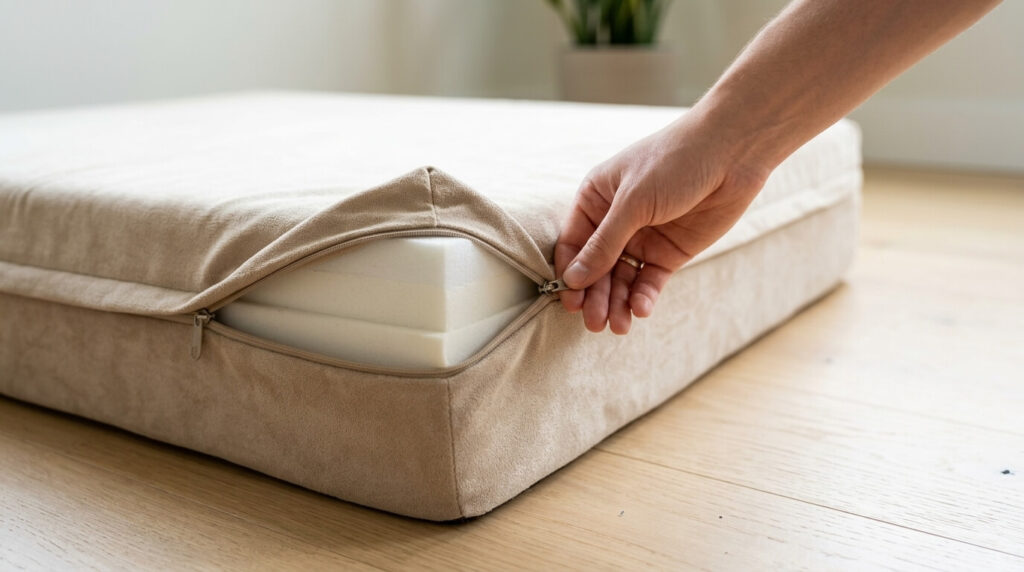
“Machine washable” can mean the cover is washable, the entire bed is washable, or only spot cleaning is recommended. Those are very different promises in a small apartment. A practical modular bed has a cover that comes off without a struggle, a zipper that can be closed or protected, and an insert that is shielded from moisture by a washable or water-resistant liner.
This design is particularly useful for a puppy, a senior dog with occasional accidents, a heavy shedder, or any household dealing with wet city walks. Smooth, tightly woven fabric is often easier to vacuum than long faux fur, although the dog’s texture preference still matters.
Do not mask persistent odor with fragrance. Wash and dry every layer fully, clean the floor beneath the bed, and investigate skin, ear, dental, or continence problems when odor is unusual. The broader apartment dog-odor routine covers bedding, ventilation, floors, grooming, and situations that deserve veterinary attention.
6. Elevated Cot for Warm Rooms and Easy Floor Cleaning
An elevated cot leaves space underneath for airflow and vacuuming. Some thick-coated dogs prefer the cooler, firmer surface, and a wipeable fabric panel can be convenient when plush bedding stays damp or hairy.
The apartment tradeoffs are noise, stability, and access. Feet can tap on hard flooring, fabric can flex or squeak, and the frame may be a shin-height obstacle in a narrow room. Check whether the base grips your floor and whether the frame rocks as the dog turns. A washable mat beneath the feet may reduce noise, but it must not create a sliding layer.
A cot is not automatically suitable for a senior dog simply because the surface is firm. The dog must step up, feel stable on the fabric, and turn without wobbling. Observe the whole movement rather than judging the bed with your hand.
7. Roll-Up Place Mat for a Room That Changes Function
A portable mat works well when the living room is an office during the day, an exercise space in the evening, and a guest area on weekends. It can move beside your desk, travel to another room, or be stored when floor space is needed.
This is usually a secondary rest surface rather than a substitute for substantial cushioning in a dog who needs support. It suits dogs who already settle comfortably and enjoy changing rooms with their person. Because the same mat travels, it can also provide a familiar cue during a move or overnight stay.
If your dog has just arrived at a new address, keep the familiar mat and routine stable before buying several new items at once. Our first 48 hours after moving guide focuses on predictable potty trips, meals, rest, and low-pressure exploration.
Choose the Location Before You Choose the Color
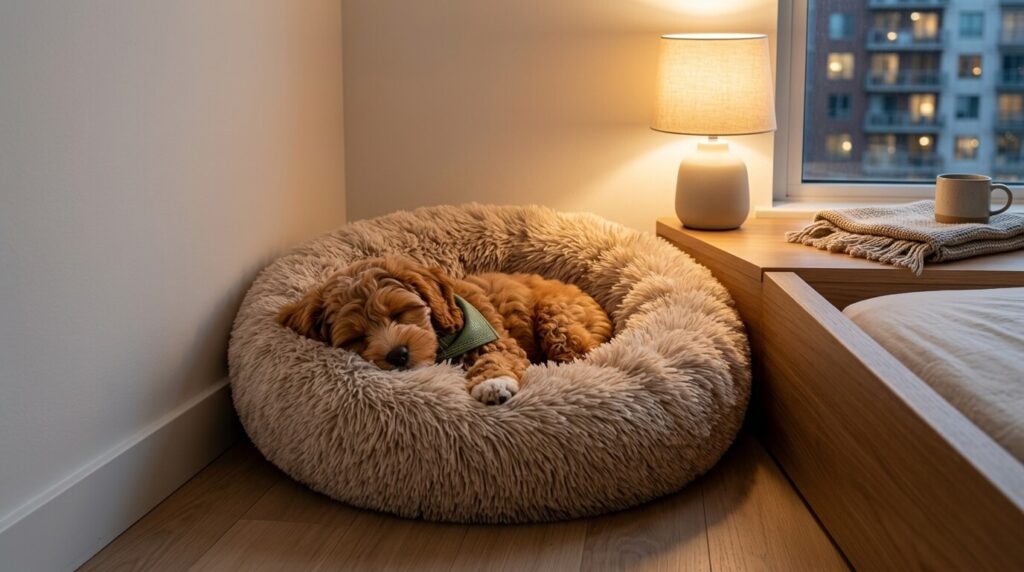
A dog bed should be close enough to household life that the dog chooses it, but far enough from traffic and triggers to permit real sleep. In a small home, a difference of six feet can move the bed from a quiet desk corner to a front-door listening post.
Good candidates include the quiet side of a desk, the foot of the human bed, the end of a sofa away from the main walkway, or an open crate the dog already likes. Riskier positions include directly behind the entry door, under a strong heating or cooling vent, beside the trash area, or in a narrow passage where people repeatedly step over the dog.
Watch the dog rather than forcing the floor plan. If the dog repeatedly leaves a beautiful corner to sleep on the hard floor beside your chair, the chosen location may be too isolated, warm, unstable, or noisy. Move the existing bed before purchasing another one.
The First-Week Fit Test
Keep packaging and read the seller’s current return conditions before allowing destructive play on a new bed. During the first week, look for ordinary voluntary use rather than trying to place the dog on it repeatedly.
- Sleep position: Can your dog use their preferred curled or extended posture without hanging off unintentionally?
- Entry and exit: Does the bed slide, tip, or make the dog hesitate?
- Temperature: Does the dog leave after a few minutes for a cooler surface?
- Recovery: After a hallway sound, can the dog relax again in that location?
- Cleaning: Can you remove and replace the cover without moving half the room?
- Human traffic: Are you stepping around it, shifting it daily, or blocking furniture?
A dog ignoring a new bed does not prove stubbornness. The bed may smell unfamiliar, feel unstable, retain too much heat, or sit in a place the dog does not trust. Place a familiar washable blanket on it, move it near an established sleep spot, and reward voluntary investigation. Do not hold the dog on the bed.
Keeping the Bed Clean Without Turning Laundry Into a Project
The ASPCA’s general dog-care guidance recommends a warm, quiet resting place and frequent washing of bedding. “Frequent” depends on the household. A short-haired dog who stays dry may need less cleaning than a heavy shedder after rainy walks, but apartment residents usually notice buildup quickly because the bed shares the main living air.
Vacuum or shake loose hair several times a week. Wash the removable top layer when it is visibly dirty, develops odor, or after an accident, following the current care label. Dry every layer completely before reassembly. Damp foam and trapped moisture create a larger problem than a little ordinary dog smell.
Use a detergent appropriate for the fabric and household, avoid adding fragrance merely to cover odor, and run an extra rinse if residue is a concern. If your dog suddenly scratches more, avoids the bed after washing, or develops skin changes, stop guessing and speak with your veterinarian.
For heavy shedding, the bed is only one collection point. The dog-hair cleaning system for apartments explains how to sequence brushing, upholstery, floors, laundry, and filters so loose hair is removed rather than moved between surfaces.
When a Bed Problem May Actually Be a Health Problem
Contact your veterinarian if your dog suddenly avoids lying down, repeatedly circles without settling, cries during position changes, struggles to stand, slips when leaving the bed, soils a previously clean sleep area, or becomes unusually restless at night. A different bed may improve comfort, but it cannot diagnose or treat pain, urinary disease, cognitive changes, or another medical condition.
The AAHA senior-care guidelines discuss home modifications and supportive care as parts of maintaining quality of life for older pets. Ask your veterinarian what surface and access arrangement fit your dog’s condition rather than relying on the word “orthopedic” alone.
Common Apartment Buying Mistakes
Buying by Weight Range Alone
Two dogs of the same weight can occupy very different sleeping areas. Body length, leg position, and whether the dog curls or sprawls are more useful than the front-label weight range.
Counting Bolsters as Sleeping Space
Compare inner dimensions. Thick sides can turn an apparently large bed into a cramped center cushion, especially for a long-bodied dog.
Assuming “Washable” Means the Whole Bed Fits Your Machine
Read the care instructions for every layer. A removable cover is useful only if accidents cannot soak an unprotected insert that is difficult to clean.
Placing the Bed in the Dog’s Alert Station
A front-door or busy-window location may keep a dog monitoring sounds instead of sleeping. Use a quieter rest location and address barking or hallway reactions separately.
Buying an Expensive Bed Before Understanding Chewing
No soft bed should be treated as indestructible. If your dog tears and swallows fabric, supervise, manage access, and ask for professional advice when ingestion is possible.
Frequently Asked Questions
What size dog bed is best for a small apartment?
Choose the smallest outside footprint that still accommodates your dog’s largest normal sleeping position. For a bolster bed, use the inner sleeping dimensions. Mark the outside dimensions on the floor before ordering.
Do small apartments need more than one dog bed?
Often they do not. One primary bed plus a thin portable mat or familiar blanket can cover daytime and laundry needs without filling the room. Two full-size beds make sense only when the dog regularly rests in separated areas and both locations remain functional.
Is an orthopedic bed automatically better?
No. The label does not guarantee the correct firmness, stability, entry height, or size for a particular dog. Dogs with pain or mobility changes need veterinary assessment as well as an appropriate resting surface.
Where should a dog bed go in a studio apartment?
Place it near normal household activity but outside the primary walking path and away from the entry if hallway sounds trigger alert behavior. A desk-side wall, the quiet end of a sofa, or the foot of the human bed often works better than an isolated decorative corner.
How often should an apartment dog bed be washed?
Follow the care label and wash when the cover is dirty, smells, or has been exposed to an accident, dampness, or heavy shedding. Vacuuming between washes reduces hair and grit. Puppies, incontinent seniors, and dogs with skin conditions may need a veterinarian-guided routine.
Why does my dog sleep beside the bed instead of on it?
The floor may be cooler, firmer, quieter, or closer to you. The bed may slide, smell unfamiliar, feel too soft, or be in the wrong location. Test placement and surface temperature before replacing it.
Can a dog bed help with separation anxiety?
A familiar rest place can support a calm routine, but a bed does not treat separation anxiety. Distress when alone requires an appropriate behavior plan and, in significant cases, help from a veterinarian or qualified behavior professional.
A Practical Final Choice
If you are torn between two beds, choose the one that passes the less glamorous tests: your dog can enter and stretch comfortably, the cover fits your laundry setup, the base stays still, and the footprint can remain in one quiet location without being moved every day. In a small apartment, reliable fit and easy maintenance usually create more long-term comfort than dramatic thickness or decorative shape.