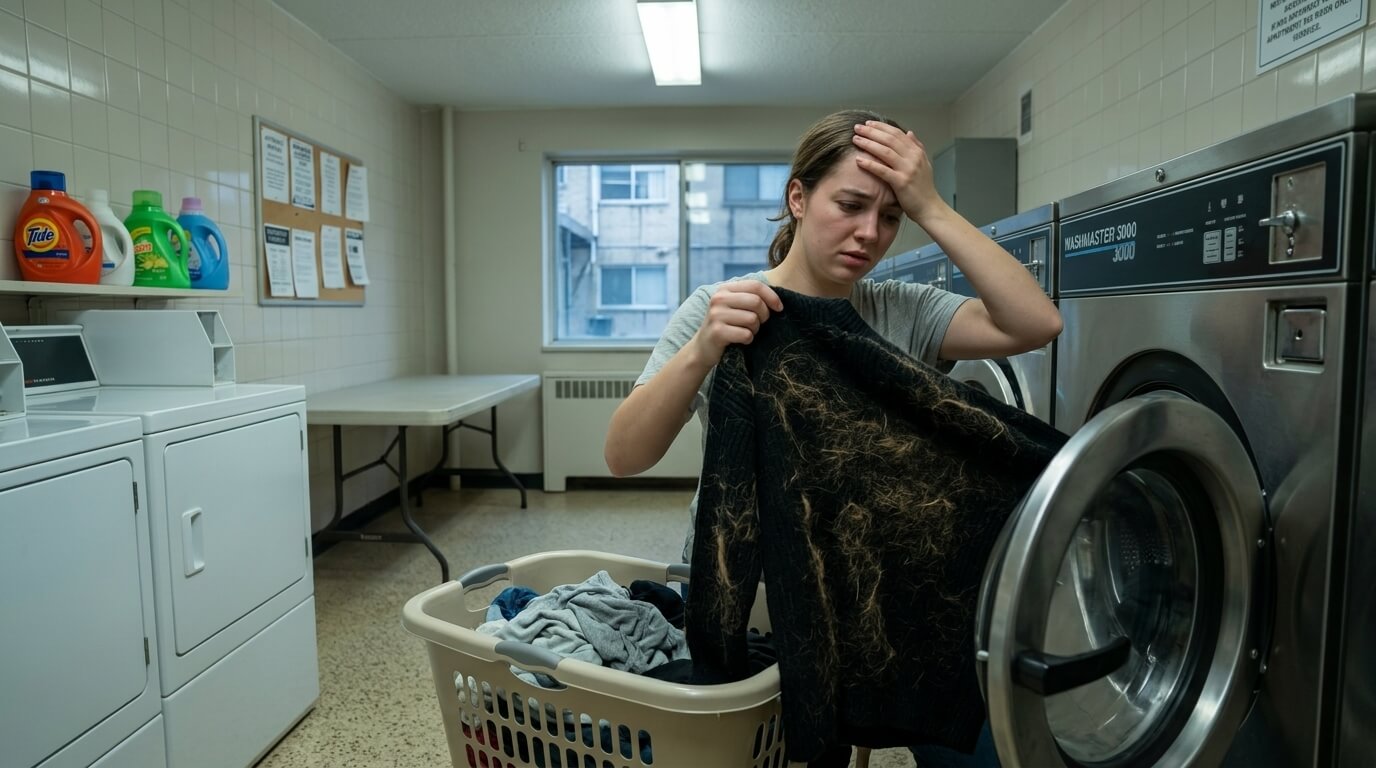
Remove dog hair from laundry sounds like a small chore until you live in an apartment with shared machines, dark clothes, dog bedding, hallway neighbors, and one dryer that already looks tired before you start. Hair on your own hoodie is annoying. Hair left in a shared washer or dryer can become a neighbor problem.
Most apartment dog owners do not need a dramatic laundry system. They need a repeatable one. The mistake is waiting until hairy blankets, work clothes, towels, and dog beds all land in the same load. By then, the washer is trying to solve a problem that should have been handled before the laundry room.
This guide is written for renters and apartment dog owners. It focuses on practical hair control, shared laundry etiquette, fabric care, dryer safety, and realistic routines for people who do not have a mudroom, utility sink, garage, or private laundry room.
Quick Answer
The easiest way to remove dog hair from laundry is to remove as much loose hair as possible before washing, run very hairy items through a short no-heat or low-heat dryer cycle first if the care label allows it, clean the lint filter, wash with enough water and detergent for the load size, avoid overloading the machine, dry completely, and clean the washer and dryer area after use. In shared laundry rooms, pre-removal and cleanup matter as much as the wash cycle. Treat it like a small routine, not a rescue mission.
| Laundry Problem | Better Fix | Why It Helps |
|---|---|---|
| Hairy dog blanket | Shake, brush, then dryer first if allowed | Dry hair releases better than wet hair |
| Black clothes | Wash separately from towels and dog bedding | Reduces lint and hair transfer |
| Shared dryer full of hair | Clean lint filter before and after | Improves airflow and protects the next user |
| Dog bed smell | Wash bedding on a regular schedule | Prevents odor from building in small apartments |
| Hair left in washer | Wipe drum and gasket after hairy loads | Prevents residue on the next person’s laundry |
If dog odor is part of the laundry problem, read control dog odor apartment. If your whole cleaning routine needs structure, use clean apartment with dog.
Table of Contents
Why Dog Hair Survives the Washer
Dog hair clings to fabric because of texture, static, moisture, and friction. Once hair gets wet, it can mat into fabric, collect in seams, stick to fleece, or move from one item to another. A washer can loosen dirt, but it is not a magic hair vacuum.
This is why the pre-wash step matters. If a blanket goes into the machine covered in dry hair, much of that hair becomes wet hair. Wet hair is harder to remove and can stay in the drum, gasket, lint area, or on the next load.
Apartment laundry adds another layer. You may not know whether the previous person cleaned the lint filter, overloaded the washer, used fabric softener heavily, or washed shedding items before you. Your best defense is bringing your own routine instead of trusting the machine to do all the work.
The 9 Easy Essential Steps
1. Remove hair before laundry day
The best laundry fix starts before the hamper. Brush your dog during shedding seasons, especially before washing blankets, couch covers, or bed linens. Use a lint roller, rubber brush, damp rubber glove, or pet hair scraper on fabric before it reaches the washer.
Do this near a trash can, not over your clean floor or bed. In a small apartment, hair you remove in one place can quickly become hair somewhere else. If grooming is part of the bigger care routine, read new dog owner checklist for basic maintenance habits.
This step feels tedious, but it saves the shared laundry room. The washer should clean fabric, not become the first place hair is removed.
2. Shake items outside or over a contained area
Shake dog blankets, washable covers, and towels before washing. If your building has an outdoor trash area, balcony, or approved utility area, use it carefully. If you cannot shake outside, shake into a dry bathtub or over a sheet you can clean afterward.
Do not shake hairy items in the hallway, elevator, laundry room, or shared courtyard. That may feel quick, but it moves your dog hair into everyone else’s space. Apartment etiquette includes where you deal with mess, not just whether you clean eventually.
If your dog uses shared spaces often, pair this habit with apartment dog social etiquette. Hair and waste are different problems, but neighbors judge both as signs of responsibility.
3. Use a short dryer-first cycle when the fabric allows it
For many hairy washable items, a short dryer cycle before washing can loosen dry hair so the lint filter catches some of it. Use no heat or low heat if the care label requires it. Do not do this with items that should not go in a dryer, items with rubber backing that may be heat-sensitive, or anything with cleaning instructions that say air dry only.
Clean the lint filter before starting and after finishing. If you are using a shared dryer, this is non-negotiable. A lint filter packed with dog hair is rude to the next person and can affect airflow.
Massachusetts fire safety guidance and appliance manufacturers both emphasize cleaning dryer lint filters regularly. In apartment buildings, that matters even more because dryers may be used all day by many households.
4. Sort dog-heavy items from people clothes
Do not wash dog blankets, towels, couch covers, and your black work pants together. Dog-heavy items should have their own load when possible. Dark synthetic clothes attract hair and lint. Towels can shed lint. Fleece can hold hair like it was designed for it.
Separate loads may feel inefficient, especially when laundry costs money. But rewashing hair-covered clothes costs money too. If you have to combine items, keep the load small and choose fabrics carefully.
Also separate sick-dog laundry when needed. If your dog has diarrhea, skin infection, parasites, urine accidents, or vomit on bedding, treat that as hygiene laundry, not normal hair laundry. Follow veterinary advice and fabric care labels.
5. Do not overload the washer
Overloaded machines cannot move fabric well. When fabric cannot move, hair cannot rinse away. A packed washer may leave clothes technically wet and soapy but still hairy.
Use a load size that lets items tumble or agitate freely. Large dog beds, thick blankets, and couch covers may need a larger machine. If your building has small washers only, take oversized dog bedding to a laundromat with larger machines or wash removable covers separately.
If the item is too large to clean properly in your shared machine, forcing it is not saving time. It is creating half-clean laundry and possibly leaving hair behind for the next person.
6. Use detergent correctly and be careful with extras
Use laundry detergent according to the label and machine type. More detergent is not always better. Too much detergent can leave residue that traps hair, irritates sensitive skin, or make fabric feel dull.
Some people add vinegar to laundry for odor or fabric feel. Be cautious. Vinegar is not a reliable disinfectant, and it is not a substitute for detergent. CDC notes there is not enough evidence to treat vinegar as a strong cleaner or disinfectant for pet items. If you use it, keep expectations modest and check your washer instructions because some manufacturers warn against certain additives.
If your dog has sensitive skin, fragrance-free detergent may be a better choice. CDC’s pet supply cleaning guidance notes that detergents without dyes and fragrance may be preferable for pets with sensitive skin.
7. Dry fully and clean the lint filter again
Drying is where a lot of remaining hair releases. Use dryer balls if they help separate fabric, but do not expect them to carry the whole job. Clean the lint filter before and after the load. If the lint filter is damaged, clogged, or missing, do not ignore it in a shared laundry room. Report it.
Dry items completely unless the care label says otherwise. Damp dog bedding can smell quickly in a small apartment. If you air dry indoors, give the item airflow. Draping a damp dog blanket over a chair in a studio can make the whole room smell like wet fabric and dog.
For rainy walks, muddy sidewalks, and slushy entryways, a paw-cleaning routine helps reduce what ends up in the hamper. If you use a washing tool, see portable dog paw washer; otherwise, keep a towel by the door and avoid putting damp items straight into the hamper.
8. Wipe the shared machines after hairy loads
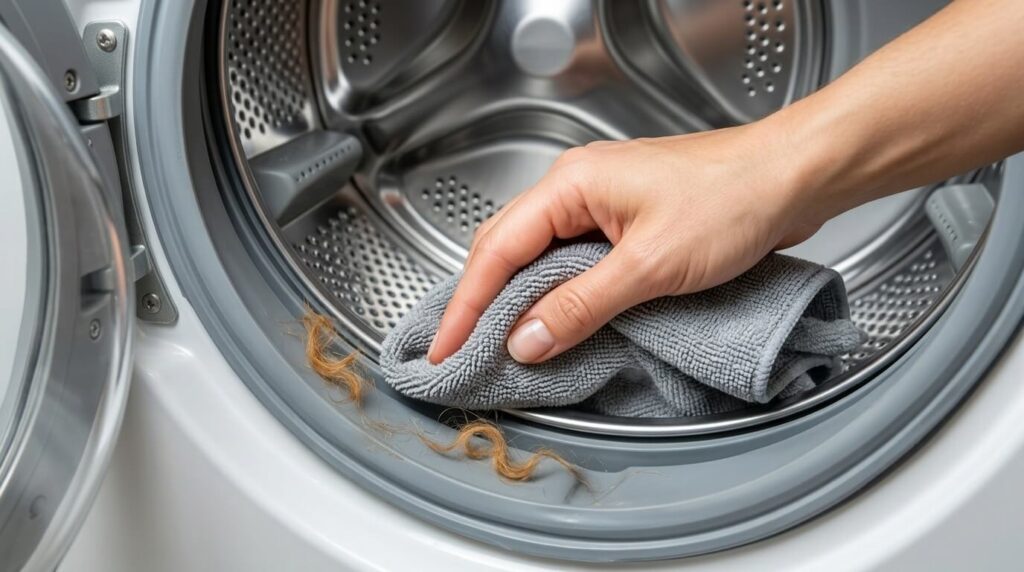
After washing dog-heavy items, check the washer drum, door gasket, detergent tray, and the area around the machine. After drying, check the lint filter, dryer door, and nearby floor. A quick wipe can prevent a neighbor from finding your dog’s hair on their clean clothes.
This is the part owners often skip because they are tired, carrying a basket, and trying to get back upstairs. But shared laundry rooms are reputation machines. If your dog’s hair keeps appearing after your loads, people remember.
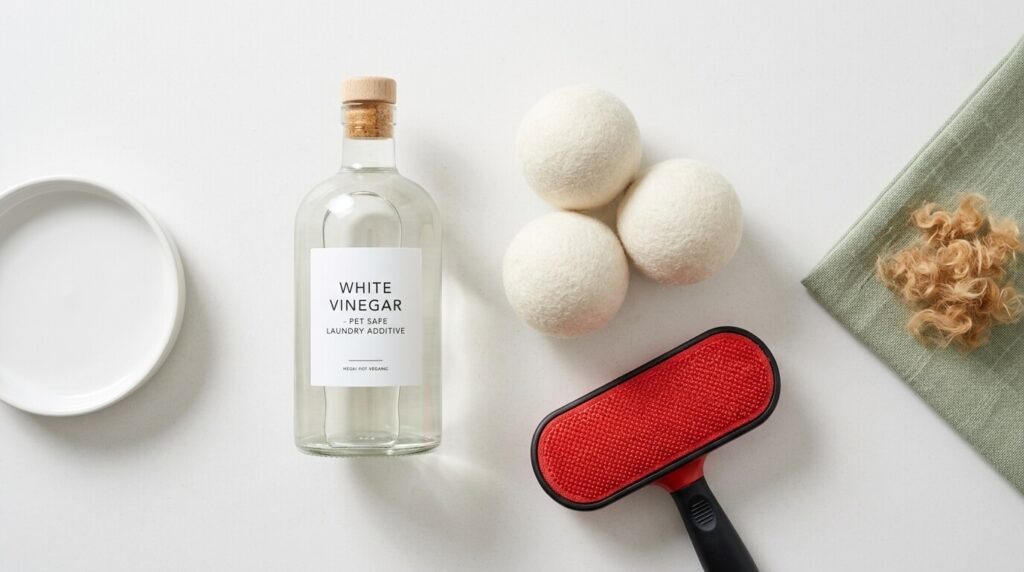
Keep a few supplies in your laundry bag: lint roller, microfiber cloth, extra bags, and maybe a small brush for your own items. Do not use harsh cleaners on shared machines unless building rules allow it.
9. Build a weekly dog laundry rhythm
The worst dog hair loads usually happen because laundry waits too long. A weekly rhythm keeps hair from becoming a project. Wash dog bedding before it looks terrible. Rotate couch covers. Keep one backup blanket so you are not forced to reuse a hairy one while the other dries.
CDC suggests cleaning pet beds and blankets regularly, with more frequent cleaning if items look dirty or smell bad. In apartments, “smells bad” arrives faster because bedding, sleeping space, and human living space are close together.
A simple rhythm might be: brush dog midweek, wash dog blankets once a week, wash bed covers every one to two weeks depending on shedding, clean collars and harnesses when dirty, and check the laundry bag before every shared laundry trip.
Shared Laundry Room Etiquette
Shared laundry etiquette is not about being nervous. It is about leaving no obvious trace. Other residents should not open a washer and find clumps of hair, smell wet dog, or pull your forgotten fur from the dryer filter.
Use off-peak laundry times if you are washing dog bedding. Crowded Sunday evenings are not ideal for bulky, hairy loads. If your building has rules about pet items, follow them. Some buildings may restrict washing pet beds in shared machines, especially if items are heavily soiled.
Do not leave dog laundry sitting in machines. Wet dog bedding can smell, and delayed loads annoy neighbors. Set a timer. If you cannot return on time, choose another laundry window.
If someone complains politely, do not argue first. Say, “Thanks for telling me. I will clean the filter and wipe the drum.” Then improve your routine. That response does more for your reputation than a long explanation about shedding season.
The 60-Second Leave-No-Trace Check
Before leaving the laundry room, do one slow scan. Look inside the washer drum. Run your eyes around the rubber gasket if it is a front loader. Check the detergent tray area. Look at the dryer lint filter, dryer door, folding table, and floor under the machine. Dog hair hides in places you do not notice when you are rushing.
This check takes less than a minute, but it changes how neighbors experience your dog. They may never know you did it. That is the point. Good shared laundry etiquette often means nobody has to think about your dog at all.
If your building has posted rules, follow those first. If there are no rules, use the standard you would want from the person before you: no visible hair clumps, no wet dog smell left behind, no forgotten lint, no overloaded machine, and no pet bedding abandoned in the dryer.
There is also a practical benefit for you. When you leave the machines clean, you are less likely to be blamed for every hair problem in the room. In apartment buildings, reputation can become a kind of quiet insurance.
That may sound small, but small manners are what keep pet-friendly buildings feeling pet-friendly. They also make your own next laundry day less tense and more predictable.
What to Keep in an Apartment Laundry Kit
- Lint roller or reusable lint brush
- Rubber glove or pet hair brush for pre-removal
- Microfiber cloth for wiping machine edges
- Extra bags for hair and lint
- Fragrance-free detergent if your dog has sensitive skin
- Dryer balls if they work for your fabrics
- A washable laundry bag for dog items
- A timer on your phone for washer and dryer cycles
Keep the kit small. Apartment laundry already involves carrying too much. The goal is not to build a cleaning cart. It is to avoid standing in the laundry room wishing you had something basic.
Hair Control Starts Before the Hamper
If hair is overwhelming every load, the laundry room may not be the main problem. Look at your home routine. Is the dog sleeping on every blanket? Are you washing covers only after they are visibly packed with hair? Is the dog damp after walks? Are you brushing during shedding season? Are dark clothes sitting near the dog bed?
In small apartments, dog hair moves in loops: dog to bed, bed to clothes, clothes to washer, washer to dryer, dryer to clean clothes, clean clothes back to dog. Break the loop earlier. Use washable throws on favorite spots. Keep work clothes away from dog bedding. Brush before big shedding loads. Wash bedding before it becomes a hair mat.
This is also where floor cleaning matters. If the floor is covered in hair, laundry will keep picking it up. A compact vacuum routine can help, especially around the bed, sofa, and entryway. For apartment equipment choices, see quiet robot vacuum for dogs, and for the broader hair problem use how to get dog hair off everything.
Common Mistakes
Washing hairy items while they are damp
Damp hair sticks. If a blanket is wet from rain, drool, or a bath day, let it dry enough to brush or shake safely before washing, unless it is soiled and needs immediate cleaning.
Mixing towels with hair-attracting clothes
Towels shed lint, and many dark clothes attract both lint and hair. Keep them apart when you care how the clothes look.
Using too much detergent
Extra detergent can leave residue. Residue can hold odor and hair. Follow the product label and machine instructions.
Forgetting the dryer filter
Dog hair often appears in the dryer filter more than the washer. Cleaning it before and after is basic shared laundry manners and supports dryer performance.
Letting bedding go too long
Old hair, skin oils, outdoor dirt, and odor become harder to fix when bedding waits for weeks. Smaller, regular loads are easier than one giant hairy emergency.
The Emotional Side of Dog Hair Laundry
Dog hair can make owners feel embarrassed in a way that seems silly until you are standing in a shared laundry room pulling fur out of a dryer filter while someone waits behind you. It can feel like your private life is suddenly public: yes, you have a dog; yes, the dog sheds; yes, you are trying.
Try not to turn that embarrassment into panic cleaning or giving up. A steady routine is enough. Pre-remove hair, sort loads, clean the filter, wipe the machine, and wash bedding before it gets overwhelming. Most neighbors do not need perfection. They need not to inherit your laundry problem.
Also remember that shedding is normal. The goal is not a fur-free life. The goal is keeping hair from taking over your clothes, your machines, your apartment smell, and your relationship with shared spaces.
FAQ
What is the fastest way to remove dog hair from laundry?
Remove loose hair before washing, then use a short dryer-first cycle if the fabric allows it. Clean the lint filter, wash without overloading, and dry fully. The fastest successful method usually starts before the washer.
Can I put dog bedding in a shared washing machine?
Check your building rules first. If it is allowed, remove loose hair before washing, avoid overloaded machines, and wipe the washer and dryer afterward. Heavily soiled pet items may need a different cleaning plan.
Does vinegar remove dog hair from laundry?
Vinegar may affect fabric feel or odor for some loads, but it is not a reliable disinfectant and should not be treated as a magic dog hair remover. Use detergent correctly, remove hair before washing, and follow your washer and fabric instructions.
Do dryer balls help with dog hair?
They can help separate fabric and reduce some static, which may help hair release, but results vary by fabric and load size. They work best as support, not as the whole system.
Why are my clothes still hairy after washing?
The load may have been too full, too hairy before washing, mixed with lint-heavy items, or not dried in a way that released hair. Try smaller loads, pre-removal, better sorting, and careful dryer filter cleaning.
How often should I wash dog bedding in an apartment?
Weekly is a good starting point for many apartments, with more frequent washing if the bedding smells, looks dirty, gets wet, or your dog has skin or health issues. Follow care labels and veterinary advice when needed.
Next Step
Before your next laundry day, choose one dog-heavy item and handle it properly from start to finish: brush or shake it, dryer-first if safe, wash it separately, clean the lint filter, dry it fully, and wipe the machine. Once that routine feels automatic, apply it to bedding, towels, couch covers, and clothes.