A good new dog owner checklist should save you money, not push you into buying every cute product at the pet store. This is especially true in an apartment. You have less storage, closer neighbors, stricter cleaning needs, and less room for supplies that seemed useful online but become clutter by day three.
This checklist is built for apartment dog owners and renters. It focuses on what you need before the dog arrives, what can wait, and what is easy to overbuy. It does not assume you need the most expensive version of every item. The best first setup is safe, washable, quiet, and easy to repeat when you are tired.
The goal is simple: bring your dog home with enough structure to sleep, potty, eat, walk safely, settle indoors, and avoid rental damage.
New Dog Owner Checklist: Quick Answer
The essential new dog owner checklist for apartments includes a safe sleep setup, leash and ID gear, food and water supplies, potty training and cleaning tools, renter-safe dog-proofing items, quiet enrichment, and basic first-aid and vet records. Buy these first. Delay decorative beds, large toy bundles, complicated gadgets, and specialty gear until you know your dog’s size, habits, chewing style, and apartment routine.
Table of Contents
How I Choose What Belongs on This Checklist
For an apartment dog, a good first-week item has to pass a practical test. It should make the dog safer, make the routine clearer, protect the rental, reduce noise, improve hygiene, or help you get through the first few days without guessing. Cute is not enough. Expensive is not proof. A product that solves a real apartment problem is more valuable than five products that only look organized in a photo.
| Checklist Test | Why It Matters in an Apartment | Example |
|---|---|---|
| Quiet | Shared walls and floors make noise part of the decision | Soft enrichment toy instead of a hard rolling toy at night |
| Washable | Accidents, drool, mud, and shedding show up fast in small rooms | Washable mat near the door and a bed cover you can launder |
| Removable | Renters need protection without drilling or permanent damage | Freestanding gate before adhesive wall hardware |
| Size-appropriate | Oversized gear turns into clutter and makes routes tighter | A compact crate or pen measured before ordering |
| Useful on day one | The first 48 hours need safety, potty, food, sleep, and control | Leash, ID tag, food, bowls, cleaner, poop bags, and rest area |
This is also why this page does not rank brands. A brand list would be less useful before you know your dog’s size, chewing style, noise sensitivity, potty reliability, and comfort with confinement.
The 7 Smart Apartment Essentials
1. Safe Sleep and Confinement Setup
Your dog needs a predictable place to rest from the first day. In an apartment, this can be a crate, pen, gated area, or dog bed in a quiet corner. The exact setup depends on the dog’s age, training history, and comfort with confinement.
A crate can be useful for many dogs, but it should be introduced positively. It should not be used as a punishment or as a way to force a panicked dog to be quiet. If you are bringing home a puppy or a newly adopted dog, choose a setup that prevents accidents and chewing while still allowing the dog to feel safe.
Buy first: crate or pen if appropriate, washable bed or mat, blanket, baby gate if needed, and a safe chew for settling.
Wait on: expensive designer beds until you know whether your dog chews, digs, sheds heavily, or has accidents.
2. Leash, Harness, Collar, and ID
Apartment dogs move through shared spaces: hallways, elevators, stairwells, parking lots, sidewalks, and lobby doors. Safe walking gear matters from day one. If evening potty trips are part of the routine, compare LED collar, clip-on light, and lighted harness options for apartment night walks after the core leash, collar, harness, and ID setup is secure.
At minimum, you need a properly fitted collar with ID tag, a leash, and a harness if your dog pulls, has a delicate neck, or needs more control in shared spaces. Avoid retractable leashes in apartment hallways and elevators because they give too much distance in tight areas.
Buy first: six-foot leash, ID tag, collar, harness, poop bags, and a small treat pouch.
Wait on: multiple fashion collars, long lines, specialty training gear, and seasonal accessories.
3. Food, Water, and Feeding Basics
You do not need a complicated feeding station at first. You need clean bowls, the food your dog is already eating, fresh water, and a plan for gradual diet changes if needed.
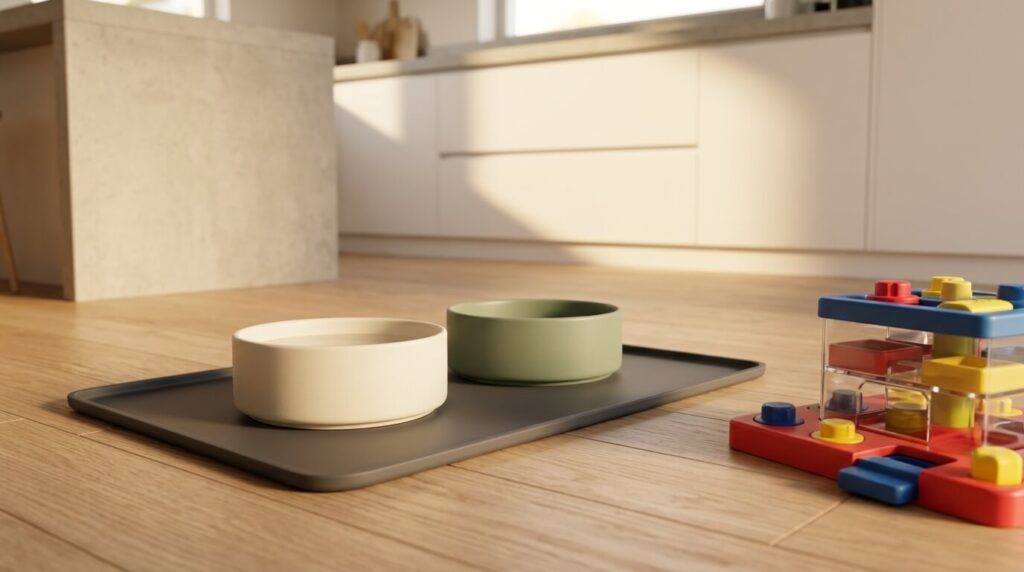
Stainless steel bowls are a safe default because they are durable and easy to wash. Ceramic can work if it is not chipped. Plastic bowls are lightweight, but scratches can make them harder to clean over time.
Buy first: food, stainless steel bowls, measuring scoop, airtight food storage, and training treats.
Wait on: automatic feeders, elevated stands, slow feeders, water fountains, and specialty diets unless you already know your dog needs them.
4. Potty Training and Cleaning Tools
Apartment potty mistakes are stressful because they can affect flooring, rugs, neighbors, and your deposit. Cleaning supplies are not optional.
Even if your dog is supposedly house-trained, the new apartment may cause mistakes. New smells, elevator delays, schedule changes, and stress can all affect potty habits. Have supplies ready before the first accident.
Buy first: enzymatic cleaner, paper towels or washable cleaning cloths, poop bags, washable mat near the door, and puppy pads only if they fit your training plan.
Wait on: indoor potty systems unless you know you need one for a puppy, senior dog, high-rise delays, illness, or emergency backup.
If potty training is a concern, use the full guide on how to potty train a dog in an apartment.
5. Apartment Dog-Proofing Supplies
Dog-proofing is cheaper than repairing chewed trim, scratched doors, stained rugs, or damaged cords. New dogs explore. Puppies chew. Anxious dogs may scratch. Curious dogs may investigate trash, plants, shoes, and low shelves.
Buy first: cord covers if needed, closed trash can, baby gate, cabinet latch for risky areas, washable rugs, and storage bins for shoes or bags.
Wait on: large furniture covers, camera systems, and specialty barriers until you know your dog’s actual habits.
For a full renter-safe setup, use the dog proof rental apartment guide.
6. Quiet Enrichment and Chewing
Apartment dogs need enrichment that does not sound like a bowling alley to the downstairs neighbor. Choose quiet items: food puzzles, lick mats, safe chews, snuffle mats, and soft toys that do not squeak constantly.
Do not buy a huge toy basket before you know your dog. Some dogs destroy plush toys. Some ignore balls. Some resource guard high-value chews. Start small and observe.
Buy first: two or three safe chew options, one food puzzle or snuffle mat, one soft toy, and training treats.
Wait on: bulk toy bundles, noisy toys, hard toys that may damage floors, and advanced puzzles that frustrate a new dog.
7. Health, Safety, and Records
Before your dog arrives, create one folder for health and rental documents. Apartment owners often need vaccine records, pet agreements, microchip information, adoption papers, and vet contacts quickly.
Buy or prepare first: vet appointment, vaccine records, microchip registration, pet insurance research if relevant, basic first-aid supplies, and your building’s pet rules.
Wait on: large medical kits and supplements unless your veterinarian recommends them.
Apartment Dog Shopping Priority Table
| Category | Buy Before Arrival | Can Wait |
|---|---|---|
| Sleep | Crate/pen or bed, washable mat | Designer bed, extra blankets |
| Walking | Leash, collar, ID, harness, bags | Long line, fashion gear |
| Feeding | Food, bowls, treats, storage | Automatic feeder, fountain |
| Potty | Enzymatic cleaner, door mat, bags | Indoor potty system unless needed |
| Dog-proofing | Gate, trash solution, cord control | Complex barriers, cameras |
| Enrichment | Few chews, one puzzle, treats | Large toy bundle |
| Health | Vet contact, records, basic first aid | Supplements unless advised |
What Not to Buy on Day One
New dog owners often overspend because everything feels urgent. In apartments, overbuying creates clutter and makes the first week harder.
- Too many toys: You do not know your dog’s play style yet.
- Expensive bed: Wait until chewing and potty reliability are clearer.
- Large bags of new food: Sudden food changes can upset digestion.
- Complicated gadgets: Cameras, feeders, and fountains can wait unless you already know the need.
- Harsh training tools: Start with management, rewards, and professional guidance when needed.
- Every cleaning spray on the shelf: An enzymatic cleaner and good laundry routine matter more.
Budget-Friendly Starter Plan
You can build a solid apartment setup without buying the most expensive version of everything. Spend more on safety and cleanability. Spend less on decorative items until you know your dog.
Worth prioritizing: secure leash gear, enzymatic cleaner, washable bedding, safe confinement, food storage, and a vet visit. These items reduce risk in the first week.
Worth keeping simple: bowls, toy selection, grooming tools, and extra beds. Basic versions are fine at first.
Worth delaying: automatic feeders, pet cameras, fountains, GPS collars, premium furniture-style crates, and large monthly subscription boxes. These can be useful later, but they are not first-night essentials for most dogs.
Buy by Timing, Not Excitement
A helpful new dog owner shopping list is organized by time. What you need before pickup is different from what you need after two weeks of living with the dog.
Before pickup
Buy the items that keep the dog safe immediately: leash, collar, ID, food, bowls, bed or crate setup, cleaner, poop bags, and a few treats. This is the non-negotiable layer.
First week
Add items based on observed behavior: extra gates if your dog rushes the door, a different chew if your dog ignores the first one, a better mat if water spills, or more cleaning cloths if potty training is active.
After two weeks
Upgrade only after you know the dog. This is the time to consider a better bed, water fountain, slow feeder, camera, grooming tools, or special storage. By then, you will know what problem you are solving.
Printable Apartment Starter Checklist
If you want the short version, use this as your apartment starter list:
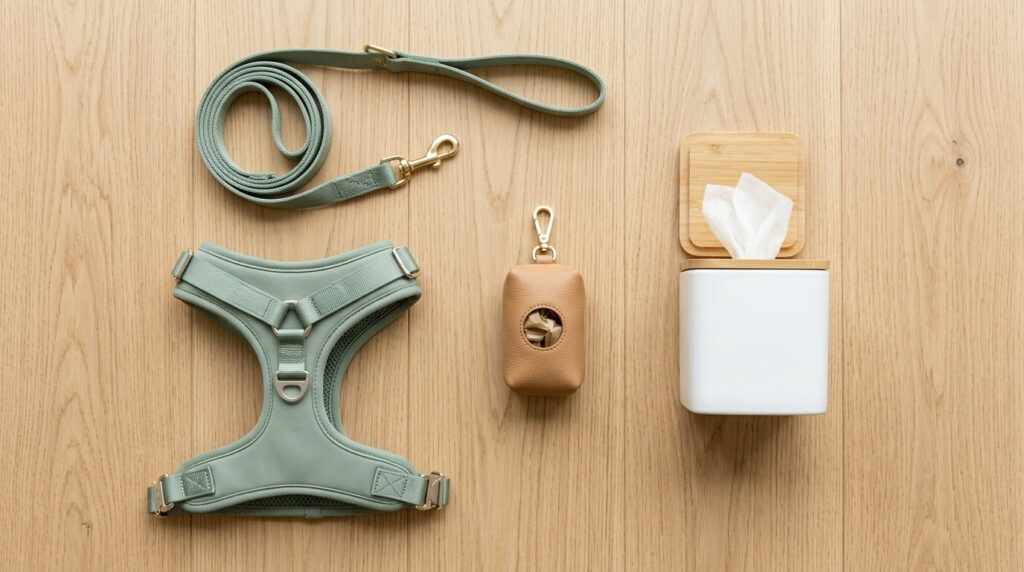
- Collar with ID tag.
- Six-foot leash.
- Harness if needed for safer hallway control.
- Poop bags.
- Food your dog already eats.
- Two washable bowls.
- Measuring scoop.
- Airtight food container.
- Crate, pen, gate, or safe rest area.
- Washable bed or mat.
- Enzymatic cleaner.
- Cleaning cloths or paper towels.
- One safe chew.
- One quiet enrichment item.
- Vet records and appointment information.
- Building pet rules and emergency contacts.
That list is enough to start well. Everything else can be chosen with better information after your dog settles in.
First Night Setup: Put These Items in One Place
The first night goes better when you are not searching through bags while your dog is pacing. Put the true essentials in one obvious station before the dog arrives: leash, harness or collar, ID tag, poop bags, treats, food, bowls, cleaner, paper towels or cloths, and the bedding or confinement setup.
If you live in a high-rise, add keys, fob, elevator routine, and a small treat pouch to that station. If your dog is a puppy, add the potty schedule. If your dog is an adult rescue, add whatever information the shelter, foster, or previous owner gave you about food, sleep, fear, accidents, and walking style.
The point is not to make the apartment perfect. The point is to make the first several decisions easy: where the dog sleeps, where the dog eats, how the dog gets outside, where accidents are cleaned, and what the dog can safely chew.
First-Week Apartment Schedule
Supplies work best when they support a routine. Here is a simple first-week plan for a new apartment dog.
| Day | Main Goal | What to Use |
|---|---|---|
| Day 1 | Calm arrival and potty route | Leash, treats, bed, cleaner |
| Day 2 | Safe zone and feeding routine | Crate/pen/bed, bowls, food storage |
| Day 3 | Hallway and elevator manners | Harness, leash, treat pouch |
| Day 4 | Chewing and enrichment | Safe chews, puzzle, snuffle mat |
| Day 5 | Dog-proofing review | Gate, storage bins, cord covers |
| Day 6 | Short alone-time practice | Safe zone, chew, camera if already owned |
| Day 7 | Shopping review | List what actually helped and what is missing |
This schedule keeps you from trying everything at once. New dogs need patterns more than product variety.
First 48 Hours Setup
The first 48 hours should be calm, not impressive. Your dog does not need to meet every neighbor, test every toy, or explore every room immediately.
Set up one safe zone before your dog arrives. Put water, bed or crate, leash, treats, and cleaning supplies where you can reach them. Walk the dog to the potty area before long indoor exploration. Keep the first evening boring in the best possible way.
If you are bringing the dog into a new apartment at the same time you are moving, read moving to apartment with dog because moving stress and new-dog stress can overlap.
Room-by-Room Apartment Setup
Entryway
Keep leash, bags, treats, towel, and keys in one place. The entryway is your launch station for potty trips, walks, and hallway training. A small washable mat can catch wet paws and reduce floor mess.
Kitchen
Use clean bowls, closed food storage, and a trash can your dog cannot easily open. Keep food bags off the floor. If your dog is curious or tall enough to counter-surf, do not leave food near the edge.
Living area
This is usually the main rest and enrichment zone. Choose one place for the bed or crate, one place for toys, and one place for chews. Avoid scattering supplies everywhere because it makes the apartment feel chaotic.
Bathroom or laundry area
Store cleaning supplies safely and keep them out of reach. If you use pee pads or an indoor potty backup, this is often the easiest room to clean, but make sure the dog can access it when needed.
Checklist by Dog Type
Puppy
Prioritize potty supplies, a pen or crate, safe chew options, washable bedding, and frequent schedule support. Puppies need management more than accessories.
Adult rescue dog
Prioritize calm confinement, ID, leash safety, simple food routine, and observation. Give the dog time before buying specialty gear.
Senior dog
Prioritize traction, easy potty access, lower bed height, vet records, and cleaning supplies. Senior dogs may need more comfort and less clutter.
Small apartment dog
Prioritize quiet enrichment, hallway control, compact storage, and a clear rest zone. Small dogs still need training and structure.
Skip These Until You Know Your Dog Better
Some products are useful later but poor day-one guesses. Waiting is not neglect. Waiting gives you better information.
- Large toy bundles: You do not know whether your dog destroys plush, ignores balls, guards chews, or prefers food puzzles.
- Luxury beds: Wait until chewing, digging, shedding, and potty reliability are clearer.
- Automatic feeders: Useful for some schedules, but not a substitute for observing appetite, stool, weight, and stress in the first weeks.
- Water fountains: Helpful for some dogs, but a clean bowl is enough to start unless you already know your dog needs encouragement to drink.
- Permanent gates or mounted hardware: Measure first and check lease rules before drilling or using strong adhesive.
- Supplements: Do not start joint, skin, calming, or digestive supplements without a clear reason and veterinary guidance when health is involved.
Upgrade Later Checklist
After two to four weeks, you will know more about your dog. That is when upgrades make sense.
- If your dog drinks poorly: consider a water fountain or extra bowl location.
- If your dog eats too fast: consider a slow feeder or puzzle feeder.
- If your dog barks when alone: consider a camera and a training plan, not only a gadget.
- If your dog sheds heavily: upgrade grooming tools and washable covers.
- If your dog chews furniture: add management barriers and better chew outlets.
- If your dog struggles with potty timing: consider dog walker help or an indoor backup system.
- If your dog is bored: add enrichment gradually instead of buying a giant toy bundle.
For water upgrades, the best dog water fountain guide can help later. It does not need to be a day-one purchase for every dog.
How to Store Dog Supplies in a Small Apartment
Storage matters because clutter makes apartment life harder. Keep daily supplies near the task: leash and bags by the door, food near bowls, cleaning supplies near accident-prone areas, and records in one folder.
Use closed bins instead of open baskets if your dog steals toys or chews household items. Store food in an airtight container. Keep medications, cleaners, and high-value chews out of reach.
Common New Owner Mistakes
Buying before measuring
Measure the crate area, bed corner, food storage space, and entryway before buying large items. Apartment returns are annoying when you do not have space to repack boxes.
Forgetting neighbor noise
Choose quiet enrichment. Hard plastic toys, bouncing balls, and squeaky toys may be fine in short sessions but frustrating for downstairs or next-door neighbors.
Skipping the cleaner
Many owners buy toys before buying enzymatic cleaner. Reverse that priority. A single accident on a rug can become a repeat problem if the scent remains.
Changing food immediately
Keep the dog on familiar food at first unless your veterinarian advises otherwise. A sudden diet change plus moving stress can create digestive problems.
Giving full apartment freedom too soon
New dogs need supervised freedom. Start with a safe zone and expand gradually after you understand potty reliability, chewing, and alone-time behavior.
Return Policy and Fit Checks
Apartment dog supplies fail for ordinary reasons: the crate is too large for the bedroom corner, the bed blocks a walkway, the harness rubs, the toy is too loud, or the bowl slides across the floor. Before removing tags or packaging, check fit in the actual apartment.
- Can the crate door open fully without hitting furniture?
- Can your dog stand, turn, and lie down comfortably in the crate?
- Does the bed fit without blocking a walking path?
- Does the harness allow shoulder movement and avoid rubbing?
- Can bowls be washed easily and placed away from heavy foot traffic?
- Does the toy make noise that could bother neighbors?
- Can cleaning supplies be stored safely out of reach?
Keep receipts for the first week. You are not failing if you return something. You are learning what fits your apartment and your dog.
Rental Paperwork to Prepare
Apartment dog ownership is not only about supplies. It also involves paperwork. Before your dog arrives, keep a small digital folder with your lease pet policy, pet deposit receipt, vaccination records, microchip number, adoption or breeder paperwork, vet contact, emergency clinic contact, and a clear photo of your dog.
This folder helps if your building asks for updated records, your dog slips a collar, you need emergency care, or you apply for another rental later. It also prevents the first week from becoming a paperwork scramble when you should be focused on routine, potty trips, and helping your dog settle.
Keep the folder updated whenever vaccines, microchip details, emergency contacts, or building rules change.
FAQ
What should a new dog owner buy first?
Buy safe sleep gear, leash and ID, food and water bowls, current food, potty and cleaning supplies, basic dog-proofing items, a few quiet enrichment tools, and vet records or appointment information.
What is the most important item on a new dog owner checklist?
For apartment owners, the most important item is a safe management setup: crate, pen, gate, or quiet rest zone. It prevents accidents, chewing, escape risk, and overstimulation during the first days.
Do I need a crate for a new dog in an apartment?
Not every dog needs a crate, but many dogs need some form of safe confinement. A pen, gated room, or dog-proofed area can work if the dog is not comfortable in a crate.
Should I buy pee pads before bringing a dog home?
Buy pee pads only if they fit your potty plan. They can help puppies, senior dogs, or emergency backups, but they can confuse outdoor-only training if used randomly.
How much should I spend before bringing home a dog?
Spend enough to cover safety, feeding, potty, cleaning, walking, and health basics. Avoid spending heavily on decorative or specialty items until you understand your dog’s habits.
What supplies are apartment-specific?
Apartment-specific supplies include hallway-safe leash gear, quiet enrichment, enzymatic cleaner, renter-safe dog-proofing, storage bins, and sometimes an indoor potty backup for high-rise or senior dogs.
My Recommendation
Use this checklist as a first-week survival kit, not a lifetime shopping list. Buy the essentials that protect your dog, your apartment, and your routine. Then let your dog show you what to buy next.
When this page becomes monetized later, product links should be added only where they match clear criteria: apartment fit, safety, cleaning ease, noise level, storage size, and who should skip the item. That will keep the page helpful rather than pushy.
Next Step
Before you buy anything else, walk through your apartment with this checklist in your hand. Stand at the entry door, the food area, the sleeping spot, the potty route, and the place your dog will stay when you shower, work, or take out the trash. If an item does not solve a real problem in one of those places, it can probably wait.
References
FDA: Potentially Dangerous Items for Your Pet