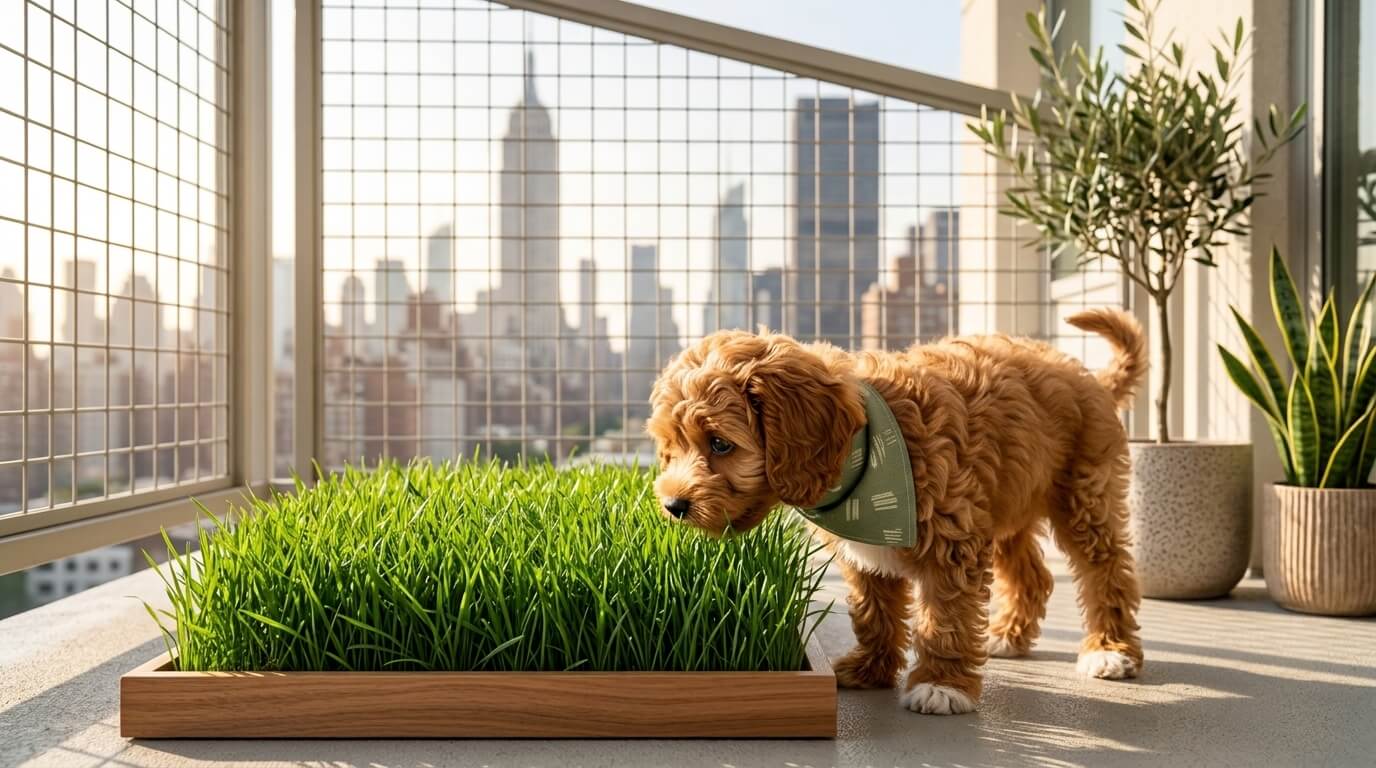
Indoor Dog Porch Potty: Quick Answer
An indoor dog porch potty can help apartment owners who need a controlled backup potty area for puppies, senior dogs, bad weather, high-rise elevator delays, mobility limits, or late-night emergencies. It can be placed on a covered balcony, in a laundry nook, near a patio door, or in another easy-to-clean zone if your lease, building rules, ventilation, and cleaning routine allow it.
But it is not a magic backyard. A porch potty can smell, leak, confuse housetraining, attract insects, annoy neighbors, or become a chewing target if the setup is wrong. It also does not replace outdoor walks for exercise, sniffing, sunlight, social exposure, and mental enrichment. The best setup is the one your dog understands, your building allows, and you can clean every day without resentment.
This guide does not rank specific products. Instead, it compares practical setup types: real grass, synthetic turf, washable trays, disposable pads, litter-style boxes, balcony systems, and temporary recovery setups. That is more useful for renters because the right answer depends on dog size, floor type, drainage, balcony rules, and how much cleaning you can realistically do.
Table of Contents
Who an Indoor Dog Porch Potty Is For
An indoor dog porch potty is most useful as a backup, not the whole bathroom plan. It can help a small puppy who cannot safely wait through elevator delays. It can help a senior dog who needs more frequent relief. It can help during storms, icy sidewalks, illness recovery, late-night safety concerns, or a temporary schedule disruption. It can also help high-rise renters who need a predictable emergency option while still maintaining outdoor walks.
It is less useful if your dog is already confused about where to potty, if your apartment has no easy-to-clean location, if your building bans balcony potty areas, or if you cannot manage daily cleaning. In those cases, a porch potty may create more problems than it solves. If your real issue is training, start with how to potty train a dog in an apartment before buying a setup.
Think of it as a management tool. Management tools are helpful when they support training and routine. They are frustrating when they become an excuse to avoid training, cleaning, or walks.
7 Essential Smart Setups
1. Real Grass Tray
A real grass tray is often the easiest for dogs to understand because it smells and feels closer to outdoor grass. It can be useful for puppies, small dogs, and dogs transitioning from yard access to apartment life. The downside is replacement cost, delivery timing, weight, drainage, and disposal. Real grass can still smell if urine sits too long or if the tray is poorly ventilated.
Best fit: owners who want the most natural surface and are willing to replace grass regularly. Poor fit: owners who travel often, dislike recurring maintenance, or have a dog who digs turf apart.
2. Synthetic Turf With Drainage Tray
Synthetic turf is reusable and widely available. It usually sits over a drainage tray that catches urine. It can work well when cleaned consistently, but it can develop odor if urine remains in the fibers or tray. Some dogs dislike the texture. Others chew or pull it up.
Best fit: owners who want washable reuse and can rinse, scrub, and dry the system often. Poor fit: owners without a place to wash turf properly or dogs who shred mats.
3. Washable Flat Tray With Pads
A flat tray with disposable or washable pads is simple, lightweight, and easy to move. It can work for small dogs, puppies, and temporary indoor use. It may be less appealing for dogs trained only to grass. Pads can also teach some dogs that soft rectangles on the floor are bathroom surfaces, so placement and training matter.
Best fit: temporary use, small dogs, post-surgery routines, or bad-weather backups. Poor fit: dogs who already confuse rugs, bath mats, or laundry with potty surfaces.
4. Litter-Style Box for Dogs
Some small dogs can learn a litter-style box, but it is not the default choice for most dogs. The box must be large enough, easy to enter, and filled with a dog-appropriate material. It needs frequent cleaning and careful introduction. It may be useful for toy breeds or dogs with consistent indoor potty histories.
Best fit: very small dogs and owners who already understand indoor potty training. Poor fit: medium or large dogs, diggers, and dogs who eat litter material. If this topic fits your dog, compare it with litter box for dogs.
5. Covered Balcony Potty Station
A covered balcony station can be convenient if your lease allows it, the balcony is safe, and drainage is controlled. It must not drip onto neighbors, collect rainwater, attract pests, or encourage the dog to climb near railings. Balcony use should always be supervised unless the balcony is fully dog-proofed.
Best fit: renters with a safe, private, covered balcony and clear building permission. Poor fit: windy balconies, shared balconies, rail gaps, strict leases, or dogs who jump, dig, or bark outside. Use how to dog-proof a balcony before considering this option.
6. Laundry Room or Utility Corner Setup
A laundry or utility corner can work because floors are often easier to clean. The challenge is ventilation and distance from living areas. Keep the area far from food bowls, dog beds, rugs, and human laundry piles. Use a tray with raised edges and a cleaning routine that prevents smell from spreading.
Best fit: apartments with tile, vinyl, or other easy-clean flooring. Poor fit: carpeted corners, poorly ventilated closets, or homes where the dog cannot access the area quickly.
7. Temporary Medical or Weather Backup
Sometimes an indoor dog porch potty is not meant to be permanent. It may help during a snowstorm, injury recovery, elevator outage, late-night safety concern, or short-term medication that increases urination. In these cases, make the setup visually distinct and remove it when the need ends if you do not want long-term indoor potty habits.
Best fit: short-term management with a plan to transition back. Poor fit: owners who leave it indefinitely without training or cleaning rules.
Real Grass vs. Synthetic Turf
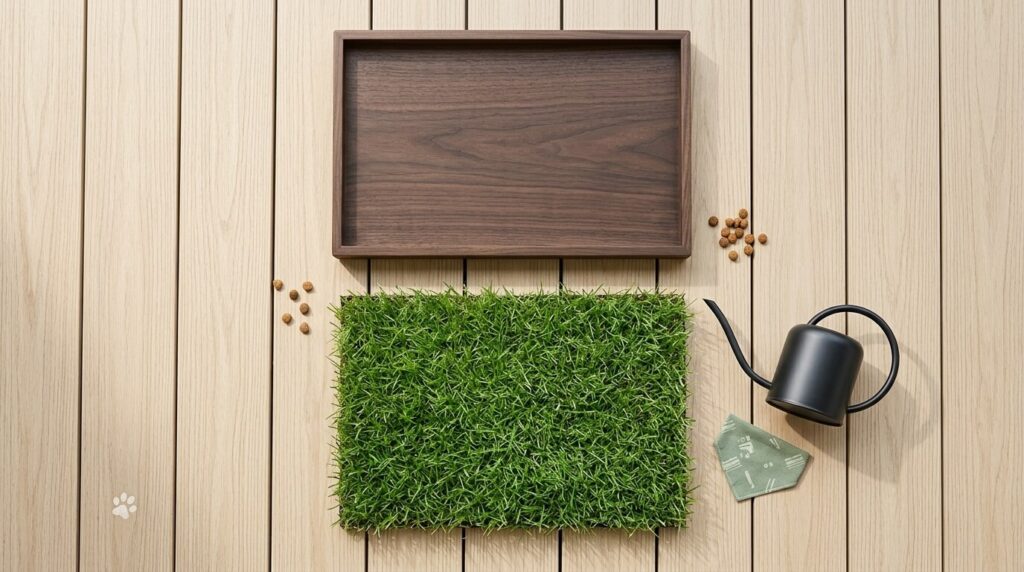
Real grass and synthetic turf are the two choices most renters compare first. Real grass is easier for many dogs to understand but costs more over time. Synthetic turf is reusable but demands more cleaning. Both can smell if maintenance slips. The difference is where the work happens: real grass shifts work toward replacement and disposal, while turf shifts work toward washing and drying.
| Feature | Real grass | Synthetic turf |
|---|---|---|
| Dog recognition | Often easier | Depends on texture and training |
| Odor control | Good only with replacement and tray cleaning | Good only with thorough washing and drying |
| Cost pattern | Recurring replacement | Upfront cost plus cleaning supplies |
| Apartment practicality | Disposal can be annoying | Washing can be annoying |
| Best for | Dogs who need a natural cue | Owners who can clean consistently |
If your dog already prefers outdoor grass, start with real grass or a very grass-like surface. If your dog is pad-trained, a tray-and-pad system may be smoother. If your dog has never used any indoor surface, choose one setup and train it carefully rather than switching every few days.
How to Train the New Potty Area
Do not simply place an indoor dog porch potty down and expect your dog to understand it. Treat it like a new bathroom location. Bring your dog to the area on leash after waking, eating, drinking, playing, and during normal potty times. Use a simple cue if you already have one. Reward immediately after success. Keep the reward small but meaningful.
At first, limit access when you cannot supervise. If your dog wanders away and has an accident elsewhere, the setup is not teaching clearly enough yet. Clean accidents with an enzymatic cleaner and return to a more structured schedule. If your dog uses the porch potty once and then starts using rugs, move the potty farther from soft household items and review whether pads or turf are confusing the dog.
For puppies, consistency matters more than the equipment. For adult dogs, a sudden need for indoor potty access may signal a health issue, especially if it comes with frequent urination, straining, accidents, increased thirst, or pain. In those cases, call your veterinarian and read adult dog potty training regression.
Size and Location Decisions
The right size depends on how your dog actually eliminates, not only on body weight. Some dogs step neatly onto a target and stay still. Others circle, back up, or need space to turn before they go. If the tray is too small, misses are likely, and the owner may blame the dog for a design problem. Measure your dog’s normal potty posture and choose a setup with extra room around it.
Small dogs may use compact trays, but toy breeds can still miss if the edge is too high or the surface is slippery. Medium dogs often need more space than product photos suggest. Large dogs need a serious footprint, and many apartment trays are simply too small for comfortable use. If you cannot fit a large enough setup without blocking walkways, the porch potty may not be right for your apartment.
Location should balance speed, cleaning, and privacy. A dog should reach the potty quickly, but the area should not sit in the middle of daily traffic. Good locations are usually near an exterior door, on a safe balcony, in a utility area, or on easy-clean flooring. Poor locations include beside the crate, beside food bowls, on carpet, directly under a sunny window that intensifies odor, or in a corner you cannot reach for cleaning.
Noise matters too. A nervous dog may avoid a potty area beside the front door if hallway footsteps happen constantly. A social dog may get distracted on a balcony facing pedestrians. A dog who guards resources may treat a hidden corner as territory. Watch your dog for a few days and choose the place that supports calm use, not the place that looks best in the room.
A Realistic Maintenance Schedule
An indoor dog porch potty succeeds or fails on maintenance. If the cleaning schedule feels too demanding on paper, it will feel worse in real life. Build the schedule before you buy the setup.
| Task | Typical timing | Why it matters |
|---|---|---|
| Remove solid waste | Immediately | Prevents odor, pests, and dog avoidance |
| Empty catch tray | Daily or more often | Stops urine from sitting under the surface |
| Rinse or wash surface | Daily to several times weekly | Reduces trapped odor and residue |
| Dry reusable parts | After washing | Prevents damp smell and slippery surfaces |
| Deep clean tray area | Weekly or as needed | Protects floors, balcony surfaces, and nearby walls |
Use pet-safe cleaning products as directed and avoid strong scent cover-ups. If you need heavy fragrance to tolerate the setup, something is wrong with drainage, cleaning, placement, or surface choice. In warm weather, expect more frequent cleaning. In wet weather, check for puddling. In winter, make sure the surface does not become unpleasant enough that your dog avoids it.
Fit by Dog Type
Puppies
Puppies need supervision, timing, and rewards. A porch potty can help during vaccination-limited periods or high-rise elevator delays, but it should not teach the puppy that every soft mat is a bathroom. Keep the surface consistent and reward success immediately.
Senior Dogs
Senior dogs may benefit from a backup option if they cannot wait as long as they used to. Choose a low-entry setup with good traction. If accidents are new, ask your veterinarian whether pain, urinary issues, cognitive changes, medication, or kidney problems could be involved.
Small Dogs
Small dogs are often good candidates because the setup can stay compact. Still, small dogs can be picky about texture and edge height. A tray that looks tidy to humans may feel awkward under tiny paws.
Large Dogs
Large dogs need more space, more drainage capacity, and more cleaning. A tiny patch can lead to misses and frustration. If your apartment cannot fit a large enough potty area, prioritize outdoor scheduling instead.
Dogs Who Mark
Marking is not the same as normal elimination. If your dog marks indoors, a porch potty may not fix the behavior and could even add confusion. Work on supervision, cleaning, management, and professional guidance if needed.
Odor and Cleaning Rules
Odor control is the make-or-break issue. Any indoor dog potty can smell if urine sits, drains poorly, or gets trapped in seams. Clean the tray daily. Replace grass on schedule. Wash turf thoroughly and let it dry. Empty catch trays before they become reservoirs. Keep the area ventilated, but do not use strong fragrances to hide odor.
Avoid placing the potty near food, water, dog beds, crates, laundry, or upholstered furniture. Keep cleaning supplies nearby but out of reach. If you use a balcony, make sure runoff cannot reach neighbors, walls, or shared surfaces. If you use indoor placement, protect the floor with a waterproof mat that does not slide.
If the apartment already has odor problems, fix cleaning routines first. A porch potty adds another odor source unless managed carefully. For broader cleanup help, use how to control dog odor in an apartment and how to clean an apartment with a dog.
Balcony and Lease Checks
Before putting a potty on a balcony, read your lease and building rules. Some apartments ban pet relief on balconies. Others allow plants but not pet waste. Some buildings have drainage rules because liquid can drip, stain, or affect neighbors below. Do not assume privacy means permission.
Safety matters too. A balcony potty should never encourage climbing, leaning, or squeezing through railings. Keep the potty away from edges. Supervise dogs who bark at people below, chase birds, jump at railings, or dig at planters. If wind can move the tray, the setup is not safe enough.
Weather changes the setup. Summer heat can intensify odor. Rain can flood trays. Winter cold can make surfaces unpleasant. Wind can dry grass or scatter pads. A balcony option needs a weather plan, not just a cute photo.
Who Should Skip This Setup
Skip an indoor porch potty if your dog is fully healthy, easily walked, and only needs more structure from you. In that case, more regular outdoor breaks may be better. Also skip it if your dog is a heavy chewer, eats pads or turf, digs trays apart, marks indoors, or guards the potty area. Those behaviors need training and management before adding equipment.
Renters should also skip it if cleaning access is poor. If you cannot rinse, dry, dispose, or sanitize the setup without creating mess, smell, or conflict with neighbors, choose another plan. A porch potty that makes the apartment unpleasant will not feel like a convenience for long.
Finally, do not use a porch potty to replace walks entirely. Dogs need movement, sniffing, mental stimulation, and outdoor exposure when health and safety allow. If your dog is bored indoors, add enrichment and walks rather than turning the potty into the whole routine. For indoor enrichment, see how to keep a dog entertained while at work.
Common Mistakes
Mistake 1: Buying the Prettiest Setup
Pretty trays can still leak, smell, or confuse the dog. Choose based on cleaning, size, surface, and building rules before appearance.
Mistake 2: Switching Surfaces Too Often
If you try pads, turf, grass, and litter in one week, your dog may not understand the rule. Pick one surface and train it consistently before changing.
Mistake 3: Waiting Too Long Between Cleanings
Odor usually means the setup is not being cleaned, replaced, or dried well enough. Indoor potty systems need a real schedule.
Mistake 4: Putting It Beside the Dog Bed
Dogs generally should not be asked to sleep beside their bathroom. Keep the potty area separate from rest, food, and crate zones.
Mistake 5: Ignoring Sudden Accidents
If a previously reliable dog suddenly needs indoor potty access, consider health, stress, age, medication, and schedule changes. Do not assume the dog simply wants a porch potty.
FAQ
Does an indoor dog porch potty smell?
It can. Odor depends on surface type, drainage, cleaning frequency, ventilation, dog size, and how quickly waste is removed. No setup stays fresh if it is neglected.
Can an indoor dog porch potty replace walks?
No. It can support bathroom management, but dogs still need outdoor walks for exercise, sniffing, routine, and enrichment when health and safety allow.
Is real grass better than artificial turf?
Real grass may be easier for some dogs to understand, while artificial turf can be reused. Real grass requires replacement. Turf requires thorough cleaning. The better choice is the one your dog uses and you can maintain.
Can I put a dog potty on my apartment balcony?
Only if your lease and building rules allow it, the balcony is safe, runoff is controlled, and your dog is supervised. Keep it away from railings and neighbors’ spaces.
How do I train my dog to use it?
Use leash-guided potty trips, predictable timing, a consistent cue, immediate rewards, and supervision. Treat it like a new bathroom location, not a piece of furniture.
What size should the setup be?
Your dog should be able to step on, turn around, and posture naturally. Too-small setups cause misses and frustration. Large dogs usually need more space than many apartment trays provide.
What if my dog starts using rugs instead?
Stop giving unsupervised freedom, clean accidents with an enzymatic cleaner, move the potty away from rug-like surfaces, and return to a structured training schedule. The surface may be too similar to household textiles.
Next Step
If you are considering an indoor dog porch potty, start by deciding whether you need a permanent system or a temporary backup. Then check your lease, choose one surface, pick a location you can clean daily, and train it like a real bathroom spot. The right setup should make apartment life easier without creating odor, confusion, or neighbor problems.
For most renters, the winning setup is not the fanciest one. It is the one your dog understands, your building allows, and you can maintain on an ordinary tired weekday.