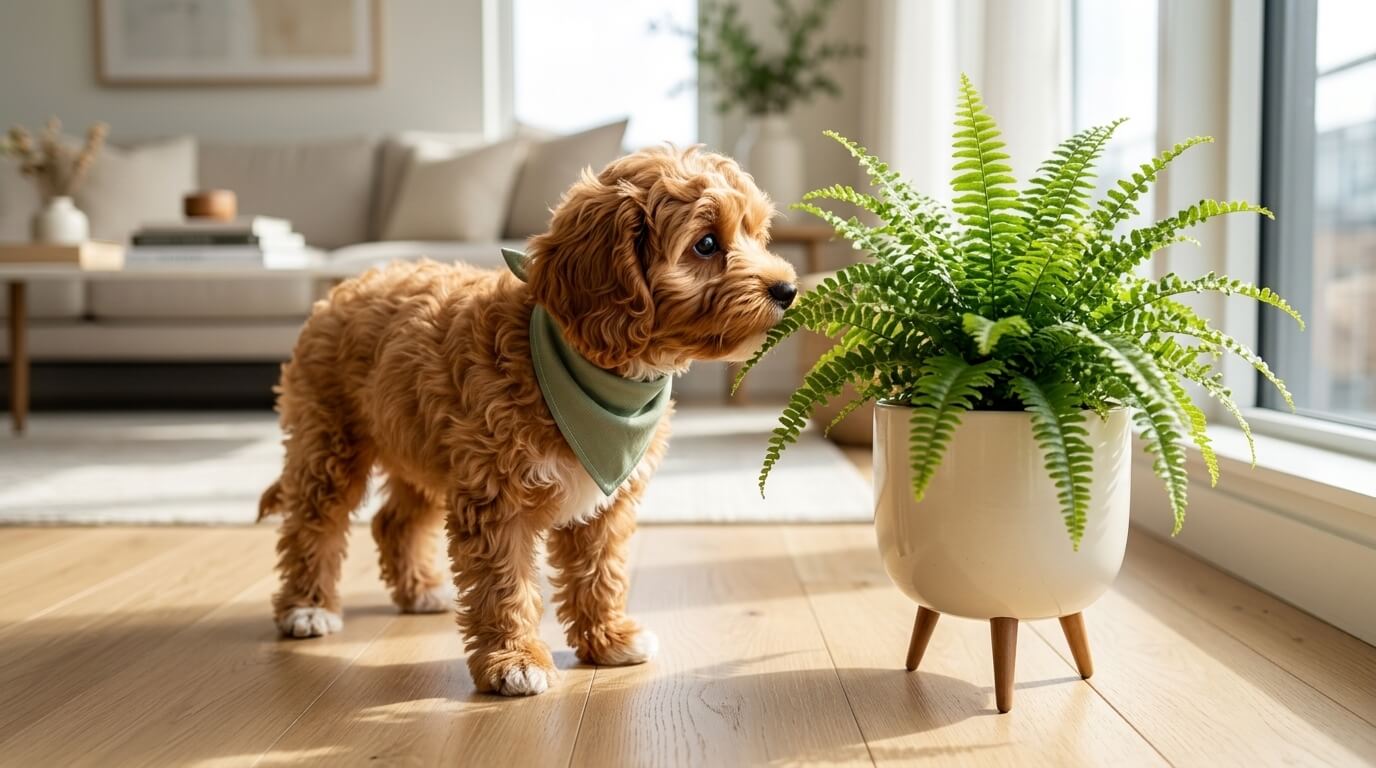
Dog safe plants apartments can actually live with are possible, but the safest choice is not just a pretty plant on a shelf. In a small apartment, your dog may be able to reach window ledges, plant stands, hanging leaves, dropped soil, drainage trays, and decorative moss faster than you expect.
This guide focuses on houseplants that are commonly listed as non-toxic to dogs by reputable pet safety sources, plus the apartment setup rules that make plants safer in real life. It also explains which popular plants to avoid, what to do if your dog chews a plant, and how this page differs from a narrower air-purifying plant article.
Important safety note: non-toxic does not mean snack. A dog who eats enough leaves, soil, fertilizer, or plant material may still vomit, drool, or have diarrhea. If your dog eats an unknown plant or shows symptoms, call your veterinarian or a pet poison hotline.
Dog Safe Plants Apartments: Quick Answer
The best dog-safe plants for apartments are non-toxic houseplants that are also practical for small spaces: spider plant, Boston fern, parlor palm, calathea, peperomia, Swedish ivy, and air plants. Keep them out of chewing range, avoid toxic lookalikes, skip chemical soil additives, and check every plant name before bringing it home. For puppies, heavy chewers, or dogs who eat soil, even non-toxic plants should be managed carefully.
| Plant | Apartment Strength | Dog Safety Note |
|---|---|---|
| Spider plant | Easy, bright indirect light | Dangling leaves may tempt playful dogs |
| Boston fern | Good for shelves or stands | Needs humidity and cleanup of fallen fronds |
| Parlor palm | Good low-light option | Keep fronds out of chewing range |
| Calathea | Colorful, compact foliage | Can be fussy about water and humidity |
| Peperomia | Small-space friendly | Use stable pots to avoid tipping |
| Swedish ivy | Trailing, shelf-friendly | Keep trailing stems trimmed |
| Air plants | No soil, tiny footprint | Do not leave loose where dogs can swallow them |
Table of Contents
How to Choose Dog-Safe Plants for Apartments
Start with the exact plant name. Common names can be confusing, and one store label may cover several species. Before buying, check the plant in a pet toxicity database such as the ASPCA toxic and non-toxic plant list. If you cannot confirm the plant, do not bring it into a dog apartment.
Then judge the apartment fit. A plant can be non-toxic but still impractical if it drops leaves, needs a huge pot, attracts digging, blocks a window, or creates a tempting toy at tail height. A safe plant in a bad location can still cause mess, stomach upset, or training problems.
Finally, judge your dog. A calm adult dog who ignores plants has different risk than a puppy, a bored adolescent, a terrier who digs, or a dog with a history of eating socks. For plant-eating dogs, the safest plant strategy may be fewer plants, higher placement, or enclosed plant shelves.
The 7 Best Dog-Safe Plant Choices
1. Spider Plant
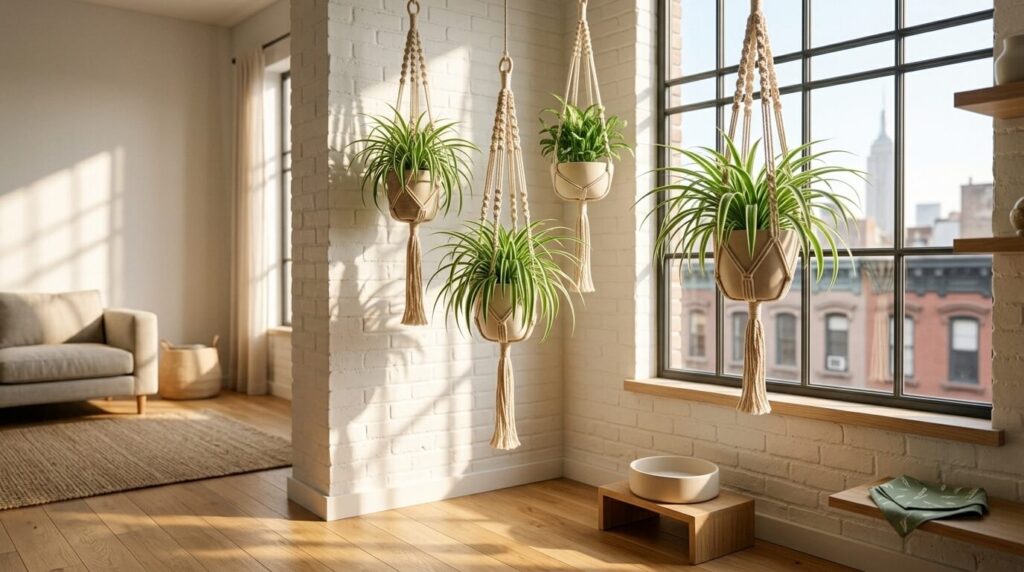
Spider plants are popular because they are forgiving, affordable, and adaptable. They work well in bright indirect light and can tolerate normal apartment conditions better than many delicate plants.
The apartment issue is temptation. Spider plants make dangling baby plants and arching leaves that can look like toys. If your dog bats at leaves, mount the plant higher or trim dangling growth. Do not place it on a wobbly stand near a sofa where a dog can jump and pull it down.
Best for: beginner plant owners, bright windows, shelves, and hanging planters.
Use caution if: your dog jumps, paws at hanging objects, or chews moving leaves.
2. Boston Fern
Boston ferns can soften an apartment and add a fuller green look without relying on toxic trendy plants. They can work on plant stands, shelves, or hanging baskets, but they like more humidity than many apartments provide.
The practical issue is leaf drop and maintenance. Fallen fronds can attract dogs who like to mouth debris. Keep the plant tidy, clean up dropped pieces, and do not let damp soil become a digging station.
Best for: bathrooms with light, humid corners, plant stands, and owners who do not mind maintenance.
Use caution if: your dog eats fallen leaves or digs in soft soil.
3. Parlor Palm
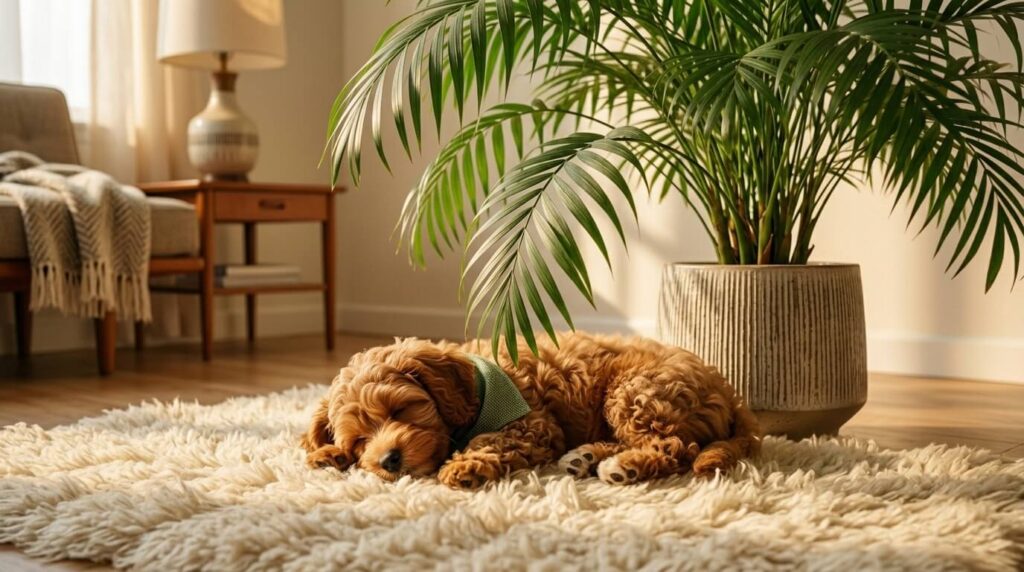
Parlor palms are a good apartment choice because they tolerate lower light better than many palms and do not need a large tree-like footprint. They can make a rental feel warmer without using plants that are unsafe for dogs.
Fronds can still be tempting. Put the palm where your dog does not brush against it every time they pass the sofa. If your dog chews long leaves, choose a smaller plant on a shelf instead of a floor plant.
Best for: low-to-medium light apartments, calm adult dogs, and corners that need vertical greenery.
Use caution if: your dog chews grass-like or palm-like leaves.
4. Calathea
Calatheas are often chosen for patterned leaves and compact size. Many varieties are listed as non-toxic to dogs, making them a better choice than some dramatic foliage plants that are unsafe.
The challenge is care. Calatheas can be fussy about water quality, humidity, and light. If the plant struggles, it may drop leaves or attract attention. Keep it stable, away from drafts, and out of direct dog traffic.
Best for: owners who want color and are willing to care for a slightly more demanding plant.
Use caution if: your dog noses through plant stands or pulls leaves from low pots.
5. Peperomia
Peperomia plants are small, tidy, and useful for apartments where floor space is limited. Many types stay compact enough for shelves, desks, and window ledges.
The main safety issue is pot stability. Small pots are easy for dogs to knock over with a nose, paw, leash, or wagging tail. Use heavier pots or place them where they cannot fall onto your dog.
Best for: small apartments, desks, shelves, and owners who want compact greenery.
Use caution if: your dog jumps onto furniture or knocks objects off ledges.
6. Swedish Ivy
Swedish ivy is a trailing plant that can work well on shelves or hanging planters. It gives the look of a cascading plant without choosing more concerning trailing options.
Keep the vines trimmed. Long trailing stems can become a tug toy for puppies or bored dogs. If your dog pulls one stem, the whole pot may come down.
Best for: shelves, bright indirect light, and dog owners who keep trailing growth managed.
Use caution if: your dog likes tugging fabric, cords, or dangling objects.
7. Air Plants
Air plants are useful in tiny apartments because they do not need soil and can sit in small holders. They are a good option when your dog digs in pots or when you want greenery without a large planter.
Do not leave air plants loose on coffee tables. A small plant can become a chew item or swallowing risk. Use secure holders and keep decorative stones, shells, moss, or wire pieces away from dogs.
Best for: tiny apartments, soil-free displays, and shelves away from dog reach.
Use caution if: your dog steals small objects from tables.
Popular Plants to Avoid Around Dogs
Some trendy houseplants are not a good match for dog apartments. Even if a plant is common on social media, it may irritate the mouth, cause stomach upset, or create more serious risks depending on the plant and amount eaten.
| Plant | Why to Be Careful | Apartment Issue |
|---|---|---|
| Monstera | Can irritate mouth and digestive tract | Large leaves sit at dog height |
| Pothos | Common toxic trailing plant | Vines hang into reach |
| Philodendron | Many types are unsafe for pets | Often sold under broad labels |
| Snake plant | Popular but not dog-safe | Often placed on floors |
| Sago palm | Highly dangerous | Should not be in a dog home |
| Lilies | Risk depends on species and pet | Confusing labels make mistakes easy |
If you already own one of these plants, do not rely on “my dog has ignored it so far” as your safety plan. Dogs change behavior when bored, stressed, teething, under-exercised, or left alone. Remove high-risk plants or keep them in a room your dog cannot access.
Apartment Plant Safety Setup
Plant safety is not only the plant species. It is the whole setup: pot, soil, stand, placement, drainage tray, sunlight, and your dog’s access.
- Use stable pots that do not tip easily.
- Avoid decorative moss, cocoa mulch, or loose stones that dogs may eat.
- Keep fertilizer, plant food, insecticides, and soil bags locked away.
- Put plants away from crate edges, sofas, and beds dogs can climb.
- Trim trailing vines before they become tug toys.
- Clean fallen leaves quickly.
- Use gates or closed doors for any plant you cannot verify as dog-safe.
If your dog explores everything in the apartment, pair plant safety with the dog-proof rental apartment guide. Plant safety is part of renter safety because spilled soil, scratched floors, chewed leaves, and tipped pots can create both health and deposit problems.
Plant Safety by Dog Type
The same plant setup can be low-risk for one dog and a daily problem for another. Before you buy anything, match the plant plan to your dog’s real behavior.
Puppies and Young Dogs
Puppies investigate with their mouths. Even dog-safe plants should be treated like training distractions, not decorations the puppy can freely test. Use higher shelves, closed rooms, or plant-free zones until chewing and potty habits are more reliable. If you are still setting up for a new dog, use the first time dog owner apartment guide to think through the whole home environment.
Senior Dogs
Senior dogs may be less likely to chew plants, but they can knock into floor pots if their vision, balance, or mobility changes. Keep walkways clear, avoid heavy pots near beds, and watch for new confusion around plant stands. If your senior dog suddenly starts eating plants or acting unusual, mention it during indoor dog vet visits.
Bored Workday Dogs
A dog who ignores plants when you are home may investigate them during a long workday. If your camera shows wandering, chewing, or soil digging, treat that as boredom or stress information. Improve the routine with safe enrichment and use the keep dog entertained while at work guide before adding more plants.
Dogs With Separation Stress
Plant destruction can happen during panic, not just mischief. If your dog chews plants only after you leave, and you also see barking, pacing, drooling, scratching, or escape attempts, read the dog separation anxiety apartments guide. Moving the plant may protect the dog today, but it will not solve the emotional problem.
Before You Buy a Plant: 8-Point Checklist
Use this checklist in the store or before ordering online. It prevents most apartment plant mistakes.
- Can I identify the exact plant, not just a common nickname?
- Does a trusted pet safety source list it as non-toxic to dogs?
- Is the pot heavy enough that my dog cannot tip it easily?
- Will trailing leaves hang into chewing range?
- Can I keep fertilizer, soil, and plant supplies locked away?
- Will the plant drop leaves onto a rug, bed, crate, or food area?
- Does the plant need a floor location, or can it live higher?
- Do I have a plan if my dog becomes interested in it?
If you cannot answer these questions, pause the purchase. A less dramatic but verified plant is better than a beautiful plant you have to worry about every time you leave the room.
Plant Placement by Apartment Layout
Studio Apartment
Studios have fewer closed rooms, so vertical placement matters. Use wall shelves, high plant stands that cannot tip, or hanging planters secured well above dog reach. Avoid floor plants for puppies and plant-chewers.
High-Rise Apartment
Do not put plants where they encourage dogs to climb toward windows or balcony doors. Window ledges can create risk if your dog jumps, paws, or leans. Keep balcony plant setups especially controlled, and never assume height alone makes a balcony safe.
Rental With Carpet
Use trays under pots and avoid overwatering. Soil spills and plant drainage can stain carpet. If your dog digs, do not place floor pots on carpet until the digging habit is managed.
Apartment With Crates or Playpens
Do not place plants close enough that your dog can pull leaves through crate bars or playpen panels. A plant outside the crate can still be reachable. If you are designing a rest zone, pair plant placement with the best dog crates for apartments guide so the crate area stays calm and uncluttered.
Work-From-Home Apartment
Desk plants are popular, but watch for video-call boredom. Some dogs learn that stealing leaves gets attention. Keep small plants out of reach and give your dog a better workday routine using the keep dog entertained while at work guide.
What to Do If Your Dog Eats a Plant
Stay calm but take it seriously. Remove your dog from the plant, collect the plant name if you know it, take a photo, and note how much may have been eaten. Do not wait for severe symptoms if the plant is unknown or listed as toxic.
Call your veterinarian, an emergency veterinary clinic, or a pet poison hotline for advice. They may ask for your dog’s weight, the plant species, the amount eaten, the time of exposure, and current symptoms. Do not try home remedies unless a professional tells you to.
Watch for drooling, pawing at the mouth, vomiting, diarrhea, weakness, tremors, trouble breathing, swelling, collapse, or unusual behavior. Symptoms can vary by plant and dog. When in doubt, treat plant ingestion as a medical question, not a training inconvenience.
How to Stop Plant Chewing
Plant chewing often means access plus opportunity. A dog may chew plants because they are bored, teething, under-exercised, curious, anxious, or rewarded by your reaction. The first fix is management: move the plant, block the room, or use a higher location.
Then give the dog a legal alternative. Use safe chews, food puzzles, sniff walks, and short training sessions. If your dog is generally destructive indoors, the issue may be broader than plants. The stop dog chewing furniture guide can help with that pattern.
Do not use bitter sprays as your only plan. Some dogs ignore them, and some sprays are not appropriate for all surfaces or plants. Management and enrichment are more reliable than hoping taste alone solves the problem.
If plant chewing continues, remove access for a full reset period instead of arguing with your dog every day. Put plants behind a closed door, on a secure high shelf, or in a room used only when supervised. Then reintroduce one plant at a time after your dog has a better routine. This is calmer for the dog and easier for you to measure than changing the whole apartment at once.
How This Page Differs From Air-Purifying Plants
This page is the broad safety guide for dog-safe plants in apartments. Its job is to help readers choose non-toxic plants, avoid dangerous trendy plants, and set up plants safely around dogs.
The separate dog-safe air-purifying plants article should be narrower. It can discuss plants people commonly associate with indoor air quality, but it should not repeat this entire safety list. That page should answer: which dog-safe plants are reasonable choices if the reader specifically wants air-quality-friendly greenery?
Common Mistakes
Mistake 1: Trusting Store Labels Alone
Store labels may use broad common names. Verify the plant before buying, especially if your dog has access to it.
Mistake 2: Treating Non-Toxic Plants Like Snacks
Non-toxic plants can still cause stomach upset if eaten. Soil, fertilizer, and decorative materials can also be a problem.
Mistake 3: Putting Floor Plants Beside the Sofa
If your dog can stand on the sofa and reach the plant, the plant is not really out of reach.
Mistake 4: Forgetting About Puppies
Puppies chew and explore. A plant that is safe for a calm adult dog may be too tempting for a puppy.
Mistake 5: Keeping Toxic Plants “Just for Now”
Temporary toxic plants often become permanent. Remove or isolate them before your dog gets curious.
FAQ
What are the best dog safe plants apartments can use?
Good options include spider plants, Boston ferns, parlor palms, calatheas, peperomias, Swedish ivy, and air plants. Always confirm the exact plant name with a reliable pet toxicity source before buying.
Are dog-safe plants okay if eaten?
No. Non-toxic means the plant is not expected to cause poisoning in the same way toxic plants can, but eating plant material may still cause vomiting, diarrhea, or irritation. Keep plants out of chewing range.
What plants should dog owners avoid in apartments?
Common plants to avoid include monstera, pothos, philodendron, snake plant, sago palm, and many lilies. Check a toxicity database before bringing any new plant home.
Can I keep toxic plants if they are on a high shelf?
It is safer not to keep toxic plants in a dog-accessible home. Shelves fail, leaves drop, dogs jump, and guests may move plants. If you keep one, it should be in a room your dog cannot enter.
What should I do if my dog eats a houseplant?
Remove access, identify the plant, take a photo, note the amount eaten, and call your veterinarian, an emergency clinic, or a pet poison hotline. Do not wait if the plant is unknown or your dog has symptoms.
Are air plants safe for dogs?
Air plants are generally considered pet-friendly choices, but they should not be left loose where a dog can chew or swallow them. Use secure holders and avoid small decorative pieces.
Can plants help apartment air quality for dog owners?
Plants can make a space feel fresher, but they are not a replacement for ventilation, cleaning, air filters, or veterinary care for respiratory symptoms. Use the air-purifying plant article for that narrower topic.
Next Step
Before buying a plant, write down the exact plant name and check it against a trusted pet toxicity database. Then decide where it will live in your apartment before it comes home.
The best dog safe plants apartments can use are not only non-toxic. They are also placed well, potted safely, and matched to the dog who lives there.