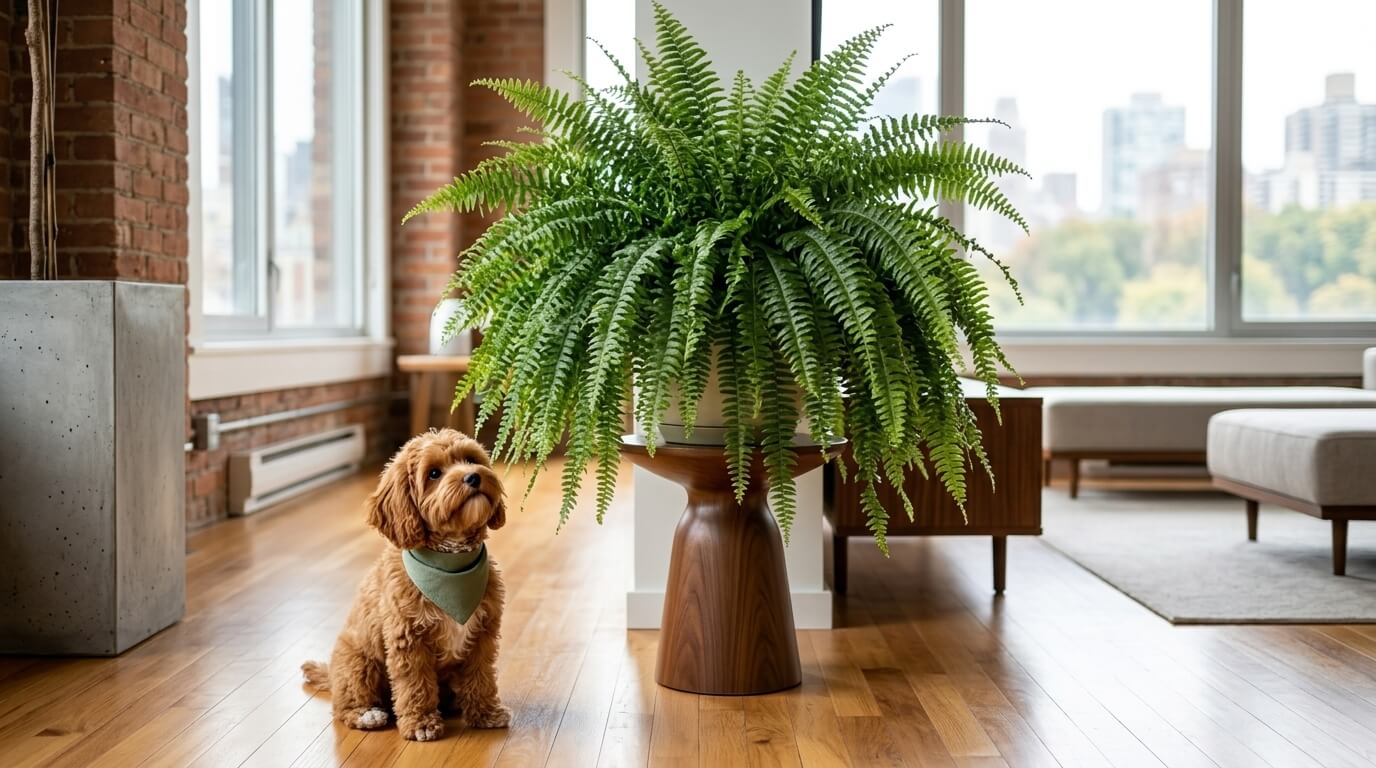
Dog Safe Air Purifying Plants: Quick Answer
Dog safe air purifying plants are houseplants that are commonly considered non-toxic or lower-risk for dogs and are sometimes chosen by renters who want a fresher-looking apartment. Good options often include spider plant, Boston fern, parlor palm, areca palm, bamboo palm, calathea, prayer plant, moth orchid, bromeliad, and many peperomia varieties. Still, “dog safe” does not mean “safe to chew daily,” and “air purifying” does not mean a few plants will replace ventilation, cleaning, humidity control, or an air purifier.
The safest approach is simple: verify the specific plant species, avoid known toxic plants, place plants out of reach, cover tempting soil, skip risky fertilizers, and treat plants as decor rather than your main indoor air strategy. If your dog chews leaves, digs in pots, eats soil, or guards window shelves, choose sturdier placement and fewer plants. A beautiful apartment plant setup is only successful if your dog can live around it safely.
This article is narrower than a general list of pretty houseplants. It focuses on dog households in apartments: limited floor space, curious dogs, low windows, balconies, shared hallways, dry air, odor, cleaning routines, and the temptation to buy “air cleaning” plants without checking toxicity first. For a broader plant-safety list, also see dog-safe plants for apartments.
Table of Contents
The Air Quality Reality in Apartments
Many plant articles make indoor greenery sound like a complete air solution. That is where dog owners need a calmer view. Plants can make a room feel more peaceful, add humidity in tiny amounts, and encourage a cleaner-looking home. Some plants have been studied for their interaction with indoor pollutants under controlled conditions. But a normal apartment is not a sealed lab chamber. Air moves through doors, windows, vents, cooking areas, carpets, furniture, cleaning products, pet bedding, and outdoor pollution.
For most renters, dog safe air purifying plants should be considered a small lifestyle layer, not a medical or environmental fix. If your apartment smells like dog, feels dusty, has poor ventilation, or triggers allergies, start with the basics: clean washable dog bedding, vacuum hair and dander, manage humidity, use safe cleaning routines, increase fresh air when outdoor conditions allow, and consider appropriate filtration. Plants can sit alongside those habits, but they should not distract from them.
This matters for SEO and for real readers. Someone searching for dog-safe air plants may be worried about Peace Lily toxicity, stale apartment air, pet odor, or a dog who licks everything. A useful article should answer all of that without promising that a fern will transform indoor air. The honest message is better: choose safer plants, avoid toxic ones, and use a whole-apartment air plan.
Before You Buy Any Plant
Plant names are messy. The same common name can refer to more than one plant, and plant shops sometimes label varieties casually. Before bringing a plant home, check the scientific name when possible. “Palm” is not enough. Some palms are commonly listed as non-toxic to dogs, while sago palm is highly dangerous. “Money plant” can mean different plants in different stores. “Lily” is another common-name trap. If you cannot identify the plant confidently, do not put it where your dog can reach it.
Use this quick pre-buy checklist:
| Question | Why it matters | Safer choice |
|---|---|---|
| Do I know the scientific name? | Common names can be confusing | Buy only clearly labeled plants |
| Is it listed as non-toxic for dogs by a reputable source? | Decor blogs may copy unsafe lists | Check ASPCA or ask your veterinarian |
| Will my dog chew it? | Even non-toxic plants can upset the stomach | Place high, fence off, or skip the plant |
| Does the pot use fertilizer, cocoa mulch, or pest products? | Soil additives can be the bigger risk | Use plain potting mix and avoid risky extras |
| Can the pot fall? | Apartment shelves and windowsills are tight | Use stable planters and keep cords out of reach |
If your dog is a known plant chewer, your best “plant choice” may be no reachable plants. You can still use hanging planters, closed terrariums with safe placement, wall shelves, or a single plant in a room your dog cannot access. A plant that is technically non-toxic can still cause vomiting, diarrhea, choking, or a mess if a dog eats enough of it.
10 Essential Safer Picks
The plants below are commonly used as lower-risk indoor choices for homes with dogs, but you should still verify the species and local plant labels. Different varieties, pesticides, soil additives, and dog behavior can change the practical risk.
1. Spider Plant
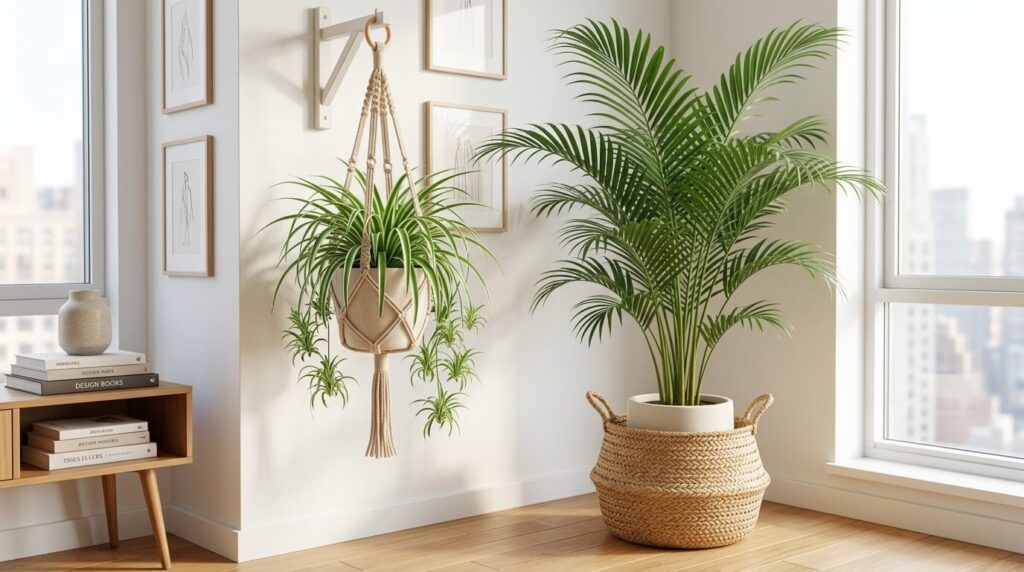
Spider plant is one of the most familiar dog safe air purifying plants for apartments because it is easy to find, adaptable, and often listed as non-toxic to dogs. It works well on a high shelf, hanging basket, or bright indirect window. The dangling baby plants can tempt playful dogs, so keep them out of reach if your dog bats at moving leaves.
Apartment tip: spider plants are forgiving, which makes them good for renters who travel, work long shifts, or forget watering schedules. Use a stable hanging hook and make sure falling leaves or plantlets do not become toys.
2. Boston Fern
Boston fern gives a soft, full look that suits shelves, plant stands, and bright bathrooms. It is often chosen by people who want greenery without stiff leaves. It likes humidity more than many apartments naturally provide, so it may need attention in dry air.
Dog tip: the fronds can be tempting for dogs who like brushing past plants or pulling soft textures. Place it where your dog cannot turn it into a chew toy. If your apartment already has dry air issues, review humidity more broadly rather than expecting one fern to fix the room.
3. Parlor Palm
Parlor palm is a classic small-space palm with a gentle shape and indoor-friendly size. It can give a room a calmer feel without taking over the floor. It is a better choice than buying a random “palm” from a shop and assuming every palm is dog safe.
Apartment tip: use a heavy pot if the plant sits on the floor. A light nursery pot can tip if a dog bumps it during zoomies or hallway excitement after a walk.
4. Areca Palm
Areca palm can create more visual height and softness than a small shelf plant. It is often used by renters who want one large plant rather than many small pots. It can help make a corner look intentional, especially in studios where dog beds, crates, and storage can make the room feel busy.
Dog tip: because it is larger, think about traffic flow. Do not place it where your dog squeezes past every time they head to the balcony, water bowl, or front door. If the plant becomes a hallway obstacle, it will get bumped or chewed.
5. Bamboo Palm
Bamboo palm is another palm often considered for pet households, but labels matter. Confirm the specific plant before buying. In a dog apartment, bamboo palm works best as a stable floor plant in a low-traffic corner, not beside a narrow doorway.
Apartment tip: large floor plants should not block emergency exits, balcony doors, crate doors, or the path to the leash station. A plant can be safe botanically and still be badly placed.
6. Calathea
Calathea varieties are popular because of their patterned leaves. They can make an apartment feel designed rather than cluttered. Many are chosen for pet-friendly plant lists, but plant names and classifications can shift, so verify the variety you buy.
Dog tip: calatheas can be more demanding than spider plants. If you are already busy managing dog walks, cleaning, training, and work, do not choose a fussy plant just because it looks impressive online. A healthy simple plant is better than a dramatic plant that drops leaves and invites digging.
7. Prayer Plant
Prayer plant is compact and colorful, which makes it useful for shelves and small tables. It is often a good choice when you want greenery but do not have floor space. In apartments with curious dogs, shelf plants are usually easier to manage than floor plants.
Apartment tip: make sure the shelf itself is stable. Dogs who jump, nudge furniture, or chase toys indoors can shake wobbly shelves. If you would not put a coffee mug there, do not put a plant there.
8. Moth Orchid
Moth orchids can be elegant and compact. They are a good option for renters who want flowers without choosing common toxic flowering plants. They usually sit well on a high counter or windowsill, but they still need placement away from chewers.
Dog tip: flowers can attract dogs who normally ignore leaves. If your dog investigates every bouquet, keep orchids out of reach and avoid dropped petals becoming snacks.
9. Bromeliad
Bromeliads add color without taking much floor space. Many are used as pet-safer houseplant options, but variety matters. They can work well on a console table, shelf, or bright corner where the dog cannot mouth the plant.
Apartment tip: avoid placing bromeliads on low coffee tables if your dog likes to rest their chin on the table edge or inspect everything you bring home.
10. Peperomia
Many peperomia varieties are compact, attractive, and useful for small apartments. They are good for renters who want several small plants rather than one large floor plant. Their size also makes them easy to move when you need to clean, rearrange, or dog-proof a room.
Dog tip: small pots are easy for dogs to knock over. Use a stable cachepot, keep the plant high, and avoid loose decorative stones that could become choking hazards.
Common Plants to Avoid Around Dogs
When people search for dog safe air purifying plants, they often find attractive plants that are unsafe for pets. Some popular houseplants are widely sold, heavily recommended in decor content, and not appropriate for reachable dog areas. Be especially careful with sago palm, oleander, certain lilies, dieffenbachia, philodendron, pothos, jade plant, aloe, snake plant, and peace lily. Toxicity level varies by plant, amount, and animal, but the safer apartment habit is to avoid risky plants where your dog can access them.
Peace lily deserves extra attention because it appears in many “air plant” lists, yet it can irritate pets if chewed. Snake plant is another common decor choice that people often buy for low maintenance, but it is not the best choice for reachable dog areas. Pothos and philodendron are common trailing plants, and their dangling vines can attract dogs. Sago palm is especially important to avoid because it can be very dangerous.
If you already own one of these plants, do not panic. Move it somewhere your dog cannot reach, verify the plant, and decide whether it belongs in the home at all. If your dog chewed a plant and you are unsure whether it is toxic, call your veterinarian, an animal poison control resource, or an emergency clinic. Take a photo of the plant and label if possible.
Apartment Placement and Dog-Proofing
In apartments, placement often matters more than the plant list. Floor space is limited, windowsills are low, and dogs may use furniture to reach shelves. A plant that is safe on paper can become a problem if it sits beside the dog’s bed, blocks the balcony door, or drops leaves into the crate area.
Use vertical space carefully. Wall shelves, hanging baskets, and tall plant stands can work, but only if they are stable. Do not hang plants over dog beds or crates. Do not place heavy pots on shelves that wobble. Do not let vines hang low enough to become tug toys. If you use a balcony, keep plants away from railings and never let plant placement encourage climbing. For outdoor spaces, pair this article with how to dog-proof a balcony.
Think about your dog’s daily route. Where do they run after a walk? Where do they shake off rain? Where do they wait for food? Where do they nap in sun? Put plants outside those routes. In a studio apartment, one well-placed shelf may be safer than five pots scattered around the floor.
If your dog likes windows, be careful with plant-window combinations. A plant on the window ledge can make the ledge more interesting and encourage jumping. If your dog already watches outside, use the guide on dog looking out window behavior to decide whether window access is calm enrichment or a trigger.
Soil, Fertilizer, and Pot Risks
The plant itself is not the only concern. Dogs may dig in soil, eat potting mix, chew labels, pull moss, drink plant water, or swallow decorative stones. Fertilizers, pest treatments, cocoa mulch, and some soil additives can create risks that have nothing to do with whether the leaf is listed as non-toxic.
For dog homes, keep plant care boring. Avoid cocoa mulch. Avoid loose fertilizer pellets where a dog can access them. Store plant food, pest sprays, pruning tools, and soil bags in closed storage. Use plain saucers and empty standing water. If your dog digs, cover soil with a fitted barrier designed for planters or move the plant out of reach. Do not use sharp stones as a dog deterrent.
Pot choice matters too. Heavy ceramic pots can injure paws if knocked down. Lightweight plastic pots can spill soil everywhere. Tall narrow stands can tip. Choose stable containers that match your dog’s behavior. A calm senior dog and a young mouthy dog need different plant setups.
A Better Apartment Air Quality Plan
Dog safe air purifying plants can be part of a pleasant home, but better apartment air usually comes from a layered routine. Start with source control: remove odor sources, wash dog bedding, clean food areas, dry wet towels, and handle accidents quickly. Then improve ventilation when outdoor air quality and building rules allow. Then manage particles: vacuum, dust, clean filters, and consider an air purifier sized for the room if needed.
Humidity is another piece. Dry air can bother some dogs and people, while excess humidity can encourage odors or mold. Plants do not replace a hygrometer, dehumidifier, humidifier, or building maintenance. If dry air is a concern for your dog, the related guide on dog humidifiers for dry skin can help you think through humidity carefully.
Cleaning routine matters more than plant count. Dog hair, dander, paw dirt, food crumbs, and wet gear can make an apartment feel stale. For practical home routines, see how to clean an apartment with a dog and how to control dog odor in an apartment. These habits support air quality more reliably than buying ten plants and hoping they solve the room.
Common Mistakes
Mistake 1: Trusting Common Names
Common names can be misleading. A plant labeled “palm” may not be the safe palm you had in mind. A “money plant” can mean different plants depending on the store. Check the species before buying.
Mistake 2: Assuming Non-Toxic Means Edible
Non-toxic does not mean your dog should eat it. Any plant material can upset the stomach if eaten in enough quantity. If your dog chews plants repeatedly, solve access and boredom rather than relying on the label.
Mistake 3: Buying Plants Instead of Fixing Air Problems
If the apartment smells musty, smoky, damp, or strongly of dog, plants are not the first fix. Clean sources, improve ventilation, manage humidity, and check filters or building issues.
Mistake 4: Leaving Soil Within Reach
Some dogs are more interested in soil than leaves. Soil digging can lead to mess, vomiting, swallowed additives, or broken pots. Covered soil or higher placement may matter more than plant choice.
Mistake 5: Putting Plants in the Dog’s Path
A plant beside the door, crate, balcony, or favorite window will get bumped. Place plants around your dog’s real movement pattern, not around a furniture photo you saw online.
FAQ
Do dog safe air purifying plants really clean apartment air?
They may contribute modestly to a pleasant indoor environment, but a few houseplants should not be treated as a complete air-cleaning system. For real apartment air quality, focus on ventilation, source control, cleaning, humidity management, and appropriate filtration.
What is the safest plant for a dog apartment?
There is no single safest plant for every dog. A spider plant on a high shelf may be safe for one dog and too tempting for another. The safest choice is a verified non-toxic plant placed where your dog cannot chew, dig, or knock it over.
Are spider plants safe for dogs?
Spider plants are commonly listed as non-toxic to dogs, but dogs can still vomit or have digestive upset if they eat enough plant material. Keep them out of reach if your dog likes dangling leaves.
Are peace lilies dog safe?
No, peace lilies are not a good reachable plant choice for dog households. They can cause oral irritation and other problems if chewed. Choose a safer alternative and verify plants before buying.
Are snake plants safe for dogs?
Snake plants are popular and low maintenance, but they are not a good reachable choice around dogs. If you already have one, keep it completely out of reach or choose a different plant for dog-accessible rooms.
What should I do if my dog ate a houseplant?
Move the plant away, identify it if possible, take a photo, and call your veterinarian, an animal poison control service, or an emergency clinic if you are unsure. Do not wait for severe signs if the plant may be toxic.
Can I keep plants on my balcony with a dog?
Yes, but only with careful setup. Avoid toxic plants, keep pots away from railings, prevent climbing, stabilize containers against wind, and supervise balcony access. Safety matters more than decor.
Next Step
If you want dog safe air purifying plants, start with one or two verified safer plants, not a full indoor jungle. Choose plants with clear labels, check them against a reputable toxicity source, place them above your dog’s reach, and keep soil and fertilizers boring. Then handle indoor air the practical way: clean dog bedding, control odor sources, manage humidity, ventilate when possible, and use filtration if your apartment needs it.
The best plant setup for a dog apartment is calm, reachable only by humans, easy to clean around, and honest about what plants can and cannot do. That kind of setup improves the room without creating a new dog-safety problem.