How much space does a dog need is one of the first questions apartment renters ask before getting a dog or moving with one. The honest answer is not a single square-foot number. A dog does not judge your apartment the way a landlord does. A dog needs safe rest space, predictable bathroom access, daily movement, mental enrichment, a calm place to be alone, and enough open layout to move without constant conflict.
A 600-square-foot apartment can work beautifully for the right dog with the right routine. A larger apartment can fail if the dog is bored, alone too long, overstimulated by hallway noise, or blocked from exercise. Space matters, but functional space matters more than raw square footage.
This guide gives you a practical apartment framework, not a generic breed chart. Use it to decide whether your current home works, what to change, and when a dog may need a different setup.
How Much Space Does a Dog Need? Quick Answer
Most dogs need enough indoor space for a bed or crate, a clear walking path, food and water, safe chewing or play, and separation from hazards. In apartments, exercise and routine usually matter more than square footage alone. A calm small dog may do well in a studio if walks, potty access, and enrichment are consistent. A high-energy or anxious dog may struggle in a larger apartment if they are alone too long or have no structured outlet.
Instead of asking only “is my apartment big enough,” ask whether your dog has five functional zones: sleep, food, potty access, movement, and quiet recovery.
Table of Contents
The 7 Smart Apartment Rules
1. Measure Functional Space, Not Just Square Footage
Square footage can be misleading. A 700-square-foot apartment full of oversized furniture, narrow walkways, and slippery floors may feel smaller to a dog than a 500-square-foot apartment with clear paths and a calm layout.
Functional dog space means your dog can walk from bed to water to door without squeezing around obstacles, slipping, or being stepped over. It also means your dog has at least one place to rest where people are not constantly passing.
2. Match Space to Energy, Not Just Size
Large dogs do not automatically need huge apartments, and small dogs do not automatically thrive in tiny spaces. Energy, age, training, health, and temperament matter more than height alone.
A calm adult greyhound may sleep most of the day after appropriate walks. A young terrier or herding mix may struggle in a small home without daily activity and mental work. Ask what the dog does with energy, not just how much room the dog occupies on the floor.
3. Create a Real Rest Zone
Dogs need more than a corner where a bed technically fits. They need a rest zone that feels safe. In an apartment, this may be a crate, bed, mat, gated room, or quiet corner away from the front door.
If your dog never fully settles because the bed is beside the hallway wall, front door, trash can, or children’s play area, the apartment may feel too small even if the square footage looks fine.
4. Plan Potty Access Before You Need It
Apartment dogs need a realistic bathroom route. Ground-floor dogs may only need a short walk outside. High-rise dogs may need leash, elevator, lobby, and outdoor access. Puppies, senior dogs, and dogs with medical needs may need more frequent trips or a backup plan.
If potty access is the weak point, read how to potty train a dog in an apartment and consider whether an indoor backup is appropriate. Space is not only where your dog sleeps. It is also how quickly your dog can reach the right bathroom spot.
5. Replace Yard Space With Daily Structure
A yard can be useful, but it is not the same as exercise, training, or enrichment. Many apartment dogs do well without yards because their owners provide structured walks, sniff time, training, food puzzles, and calm rest.
If you do not have a yard, build a routine that includes outdoor walks, sniffing, short training, and quiet enrichment. Your guide on how to exercise dog in small apartment can help if your dog has energy but limited room.
6. Think About Alone-Time Space
A dog may have enough space while you are home but not enough safe space while alone. Alone-time space should be dog-proofed, comfortable, and away from obvious triggers when possible. Some dogs do best in a crate. Others need a gated room or safe zone.
If your dog barks, scratches, chews, or panics when left alone, the issue may be schedule or anxiety, not square footage. Pair this article with how long you can leave a dog alone in an apartment.
7. Test the Layout Before Blaming the Apartment
Before deciding your apartment is too small, test the layout. Move the bed away from the door. Clear a walking path. Add a rug for traction. Put toys in one station instead of everywhere. Move food away from busy traffic. Block unsafe zones.
Many “too small” apartments are really poorly organized apartments. A few layout changes can make the home calmer for both dog and owner.
Apartment Space Scorecard
Use this scorecard to judge your home honestly. You do not need a perfect score, but weak areas show where to improve.
| Category | Good Sign | Warning Sign |
|---|---|---|
| Rest space | Dog can sleep undisturbed | Dog is constantly stepped over or startled |
| Movement | Clear path from bed to door and water | Furniture blocks normal movement |
| Potty access | Realistic outdoor or backup plan | Dog often cannot make it in time |
| Noise | Dog can settle despite normal building sounds | Dog guards the door or barks constantly |
| Exercise | Daily walks, sniffing, and enrichment | Dog relies on indoor pacing for activity |
| Alone time | Safe zone works when owner leaves | Door damage, panic, or long barking |
Space Needs by Dog Type
Puppies
Puppies do not need a huge apartment, but they need management. A pen, crate, washable floor area, potty schedule, and safe chew zone matter more than open space. Too much freedom can create accidents and chewing problems.
Small adult dogs
Small adult dogs can do well in studios and one-bedroom apartments when they have routine, walks, and a calm rest area. Do not assume small means low-energy. Some small dogs are vocal, busy, or sensitive to hallway noise.
Large calm dogs
Large calm dogs may need less indoor activity space than people expect. They do need a bed that fits their body, clear walking paths, and enough room to turn around without knocking into furniture.
High-energy dogs
High-energy dogs need daily outlets. If you live in a small apartment, plan for structured exercise, training, sniff walks, and food enrichment. Indoor square footage will not replace a missing routine.
Senior dogs
Senior dogs may need less activity space but more accessibility. Think about traction, shorter potty routes, lower beds, less furniture clutter, and easier access to water. A senior dog who slips or struggles to reach the door may need layout changes more than a bigger home.
Can a Dog Be Happy in a Studio?
Yes, some dogs can be happy in a studio apartment. The studio needs a clear rest area, safe storage, reliable potty access, and a daily routine outside the apartment. The owner also needs to manage clutter because there are fewer separate zones.
A studio is hardest for dogs who are sound-sensitive, reactive at the door, not potty trained, or uncomfortable being close to activity all the time. In those cases, visual barriers, white noise, rugs, and a consistent rest spot can help.
Space by Apartment Type
Studio apartment
A studio needs careful zoning because everything happens in one room. Put the dog bed in the quietest corner, keep food and water away from the potty route, and avoid placing the bed directly beside the front door. Use furniture placement, a crate, or a low barrier to create a visual rest zone.
The biggest studio mistake is letting the entire apartment become a play area. A studio works better when the dog knows where to rest, where to chew, where the door routine begins, and where people move.
One-bedroom apartment
A one-bedroom apartment often gives you a helpful separation option. The bedroom can become a sleep zone, crate zone, or quiet area during deliveries and cleaning. If your dog barks at hallway sounds, keep the main rest area away from the entry when possible.
Two-bedroom apartment
A two-bedroom apartment gives more flexibility, but it can also create more unsupervised corners. If your dog is new, young, or not fully reliable, do not give full access immediately. Use gates and gradually expand freedom as your dog proves they can settle, potty correctly, and leave furniture alone.
The Layout Test
Before you decide whether your dog has enough room, walk through your apartment from your dog’s point of view. This test is simple and surprisingly useful.
- Can your dog get from bed to water without squeezing around furniture?
- Can your dog reach the door quickly for potty trips?
- Can your dog turn around comfortably near the bed, crate, and food area?
- Is there a clear place to chew or play without bumping furniture?
- Does your dog have traction on slippery floors?
- Is the main rest area away from constant foot traffic?
- Are trash, cords, plants, shoes, and food stored safely?
If several answers are no, the issue may be layout rather than apartment size. Remove one piece of unused furniture, move the dog bed, add a runner rug, or clear the path to the door. Small changes can make the same square footage feel much more usable.
Furniture Density Matters
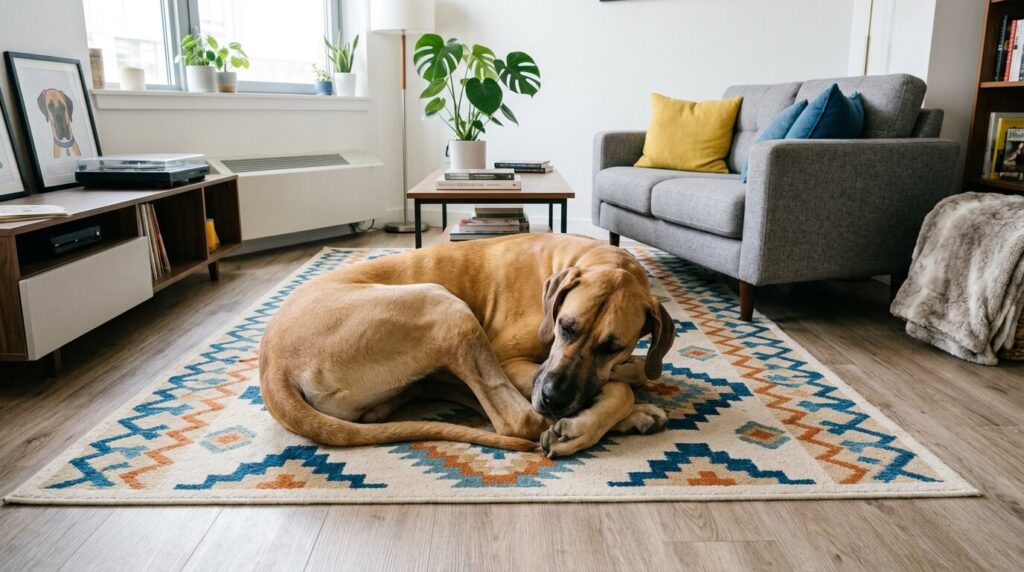
Dogs need space to move their bodies naturally. A coffee table, bar stools, floor lamp, shoe rack, and storage basket can turn an open living room into an obstacle course. This matters more for puppies, senior dogs, large dogs, and dogs with joint issues.
Try to leave at least one open path through the apartment. If your dog is always jumping around objects, backing out of tight spaces, or knocking into furniture, reduce clutter before deciding the apartment is too small.
For renters, dog-friendly furniture choices also protect the deposit. Washable rugs, non-slip runners, covered cords, and closed storage make small spaces easier to share.
Noise Space Is Real Space
Some dogs do not need more floor space. They need more quiet space. An apartment with thin walls, a busy hallway, or a loud elevator can make a dog feel crowded even when the rooms are large.
If your dog rests beside the front door and reacts to every sound, move the bed deeper into the apartment. Add white noise, close blinds, and avoid letting your dog monitor the hallway all day. A dog who is always on alert is not resting well.
If barking is already a problem, read stop dog barking in apartment. Noise sensitivity can make an otherwise adequate apartment feel unworkable.
Daily Routine for a Small Apartment Dog
A small apartment works best when the routine carries part of the load. Here is a practical example for an adult dog with normal health and energy:
| Time | Routine | Why It Helps |
|---|---|---|
| Morning | Potty walk plus sniffing | Meets bathroom and mental needs early |
| After breakfast | Short calm rest period | Prevents constant apartment pacing |
| Midday | Walk, sitter, or enrichment if needed | Breaks up long alone time |
| Evening | Longer walk, training, or play | Provides physical and mental outlet |
| Night | Quiet potty trip and sleep routine | Helps the dog settle in a small space |
High-energy dogs may need more. Senior dogs may need shorter, more frequent outings. The point is not to copy the table exactly. The point is to give your dog a predictable rhythm so the apartment is a home base, not the only source of stimulation.
When a Bigger Home May Be Needed
Sometimes the apartment really is not working. Consider a different setup if your dog cannot settle anywhere, cannot safely move through the home, repeatedly injures themselves, has no realistic potty access, or needs management the apartment cannot provide.
A bigger home is not automatically the answer, but it may help if the current space cannot support the dog’s basic needs. Before moving, identify the real constraint: noise, stairs, elevator, no safe zone, lack of outdoor access, too many people, or too much time alone.
Signs Your Apartment Is Working
Your apartment is probably working if your dog can:
- Sleep deeply during normal household activity.
- Walk through the apartment without slipping or bumping into furniture.
- Reach the potty route without repeated accidents.
- Recover from hallway sounds instead of staying on alert.
- Chew or play with appropriate items without destroying the home.
- Be alone for a realistic period without panic or damage.
- Show relaxed body language at home most of the day.
If your dog is calm, healthy, and meeting their needs, you do not need to feel guilty about an apartment lifestyle. The dog is telling you the space works.
Signs the Setup Needs Help
Your apartment setup may need changes if your dog paces constantly, barks at every hallway sound, has repeated accidents, chews door frames, cannot rest, guards windows, slips on floors, or becomes frantic before walks. These signs do not automatically mean you need a larger home, but they do mean something in the system is not working.
Start with the easiest fix: more outdoor structure, less clutter, better rest placement, improved potty timing, or better alone-time support. If the dog still struggles, consider a trainer, veterinarian, dog walker, daycare, or a different living setup depending on the cause.
Quick Space Improvements You Can Make Today
If your apartment feels tight, start with small changes before buying more gear or assuming the home cannot work. Most renters can improve dog space without drilling, remodeling, or replacing major furniture.
- Move the dog bed away from the front door and hallway wall.
- Clear one continuous path from the bed to water and the exit door.
- Add a washable runner rug where your dog slips or turns quickly.
- Use closed bins for toys instead of scattering toys across the floor.
- Move the food bowl out of the busiest walking path.
- Store shoes, bags, cords, and trash behind doors or in closed containers.
- Use a gate to block one problem area instead of giving full access everywhere.
- Create one predictable chew or enrichment station.
These changes make the apartment easier for the dog to understand. Dogs relax faster when the home has clear patterns: this is where I sleep, this is where I eat, this is where we exit, and this is where I can chew safely.
Space Setup by Dog Size
Different dogs use space differently. A small dog may need help with noise, potty timing, and safe furniture access. A large dog may need wider paths, a bigger bed, and fewer tight turns. The setup should match the body in front of you.
| Dog Size | Apartment Priority | Common Fix |
|---|---|---|
| Toy and small dogs | Potty timing, sound sensitivity, safe access | Consistent potty route, quiet bed, steps or ramps if needed |
| Medium dogs | Exercise, furniture flow, alone-time setup | Clear paths, daily sniff walks, safe rest zone |
| Large dogs | Turning room, traction, bed size | Fewer floor obstacles, large washable bed, runner rugs |
| Senior dogs | Mobility, easy potty access, low-impact rest | Non-slip flooring, shorter routes, lower bed, better lighting |
The best apartment setup is the one your dog can use calmly every day. If the home looks stylish but your dog cannot turn, rest, or reach the door comfortably, the layout needs to serve the dog a little more.
Common Mistakes
Counting the balcony as dog space
A balcony is not a substitute for indoor rest space or safe exercise. It may be useful for fresh air or a supervised potty backup if allowed, but it must be secure and lease-compliant.
Assuming a yard solves everything
A yard does not train, exercise, or enrich a dog by itself. Many dogs with yards are still bored. Many apartment dogs are fulfilled because their owners are intentional.
Letting furniture steal the apartment
If every walkway is narrow and every corner is occupied, your dog has less functional space than the floor plan suggests. Clear paths matter.
Ignoring hallway noise
For some dogs, sound space matters as much as floor space. A bed beside the front door may keep the dog on alert all day.
Leaving the dog alone too long
Space does not fix long, stressful absences. A dog with enough square footage can still struggle if the schedule is unrealistic.
FAQ
How much space does a dog need in an apartment?
A dog needs enough functional space for rest, movement, food, water, potty access, and safe alone time. The exact square footage depends on dog size, energy, age, health, and routine.
Can a dog be happy in a 600-square-foot apartment?
Yes, many dogs can be happy in 600 square feet if the layout is clear and the routine includes walks, potty access, enrichment, and rest. A cluttered or noisy 600-square-foot apartment may need adjustments.
Do big dogs need more apartment space?
Big dogs need larger beds, wider turning room, and clear paths, but they do not always need more activity space indoors than smaller dogs. Temperament and exercise needs matter more than size alone.
Is it cruel to have a dog without a yard?
No, not if the dog gets daily walks, sniffing, training, enrichment, and reliable potty access. A yard is convenient, but it is not the only way to meet a dog’s needs.
What makes an apartment too small for a dog?
An apartment may be too small or poorly suited if the dog cannot rest, move safely, reach a potty area, avoid constant stress, or be left safely even with reasonable management.
How do I make a small apartment better for a dog?
Create a dedicated bed or crate area, clear walking paths, add rugs for traction, store hazards, improve potty routines, and build daily exercise outside the apartment.
Next Step
If you are deciding whether to get a dog, read should I get a dog in an apartment next. If you already have a dog and your apartment feels too small, start with layout changes and a better daily routine before assuming you need to move.