
Calming aids for dogs can be useful, but they are not magic. A diffuser will not fix severe separation anxiety by itself. A chew will not erase panic during fireworks. A pressure wrap will not make an under-exercised apartment dog calm all day. The right calming aid works best when it matches the trigger, the dog, and the training plan.
Apartment owners often reach for calming aids because the problem feels urgent. The dog barks when left alone, shakes during storms, paces at night, reacts to hallway sounds, or cannot settle after the elevator ride. In a shared building, anxiety is not private. It can become a neighbor complaint, a damaged door, a noise issue, or a safety concern.
This guide compares seven types of calming aids for dogs from an apartment-owner perspective. It explains what each option may help with, what it will not fix, when to ask a veterinarian, and how to avoid buying products that sound comforting but do not match your dog’s real problem.
Calming Aids for Dogs: Quick Answer
The safest calming aids for dogs are usually the ones that reduce stress without sedating or overwhelming the dog: a predictable routine, a quiet resting zone, food enrichment, pheromone products, pressure wraps for specific events, and behavior training. Supplements and CBD products require more caution, and prescription medication should be discussed with a veterinarian when anxiety is severe, recurring, or dangerous.
| Calming Aid | May Help With | Best Use |
|---|---|---|
| Safe zone and routine | General apartment stress, settling, predictable days | Daily foundation |
| Food enrichment | Boredom, mild stress, transition periods | Before departures or quiet time |
| Pheromone diffuser or spray | Mild stress, new homes, travel, some fear triggers | Background support |
| Pressure wrap | Storms, fireworks, vet visits for some dogs | Short predictable events |
| Training and desensitization | Fear, sound sensitivity, elevator stress, alone time | Long-term behavior change |
| Supplements | Mild anxiety support in some dogs | Vet-approved trial |
| Prescription medication | Panic, severe anxiety, self-injury, dangerous distress | Veterinary plan |

Table of Contents
Before Buying Calming Aids, Identify the Trigger
The biggest mistake is buying a calming product before naming the problem. Anxiety is not one thing. A dog who trembles during thunder has a different problem from a dog who barks at hallway noises, destroys the door when alone, or lunges in the elevator. Different triggers need different support.
Start with a simple log. For three to seven days, write down when the behavior happens, what came before it, how long it lasted, and what helped. In an apartment, pay special attention to door sounds, delivery times, neighbor footsteps, other dogs passing, work departures, storms, fireworks, and elevator rides.
Common Apartment Anxiety Triggers
- Being left alone after the owner leaves for work.
- Hallway footsteps, doors closing, and elevator sounds.
- Thunderstorms, fireworks, traffic, or construction noise.
- New apartment smells after a move.
- Other dogs in the lobby, hallway, or elevator.
- Too little exercise, enrichment, or sleep.
- Medical pain, age-related changes, or sensory decline.
If the trigger is mild and predictable, a non-medical calming aid may help. If the dog is panicking, injuring themselves, refusing food, biting, or unable to recover, do not treat the problem as a shopping decision. That is a veterinary or behavior-support situation.
1. Safe Zone and Routine
The most underrated calming aid is a predictable apartment setup. Dogs settle better when they know where to rest, where to eat, what happens before the owner leaves, and what sounds are normal. A calming chew may be optional; a stable routine is not.
Create a quiet rest area away from the front door if possible. Use a bed, crate, or pen only if your dog is comfortable there. Add water, safe chew options, and a sound buffer such as a fan or white noise if hallway sounds trigger barking. Keep the area boring in a good way: no children grabbing, no guests reaching in, no sudden punishment.
This is especially important for newly adopted dogs and dogs who recently moved apartments. They may not be “bad” or “dramatic.” They may simply be processing new smells, new noises, new schedules, and a new building.
2. Food Enrichment and Licking Activities
Food enrichment can help some dogs settle because it gives the mouth and brain something predictable to do. Stuffed food toys, lick mats, puzzle feeders, scatter feeding, and safe chews can turn anxious energy into a quiet activity.
For apartment dogs, enrichment is most useful before predictable stress: owner departures, evening hallway traffic, storm preparation, or a busy lobby trip. Keep it safe and supervised when needed. Avoid hard items that can damage teeth, tiny pieces that may be swallowed, or messy foods that stain carpets.
Food enrichment does not cure separation anxiety. If your dog ignores food the moment you leave or panics after finishing it, the problem is bigger than boredom. In that case, read the dog separation anxiety apartments guide and consider professional help.
3. Pheromone Diffusers and Sprays
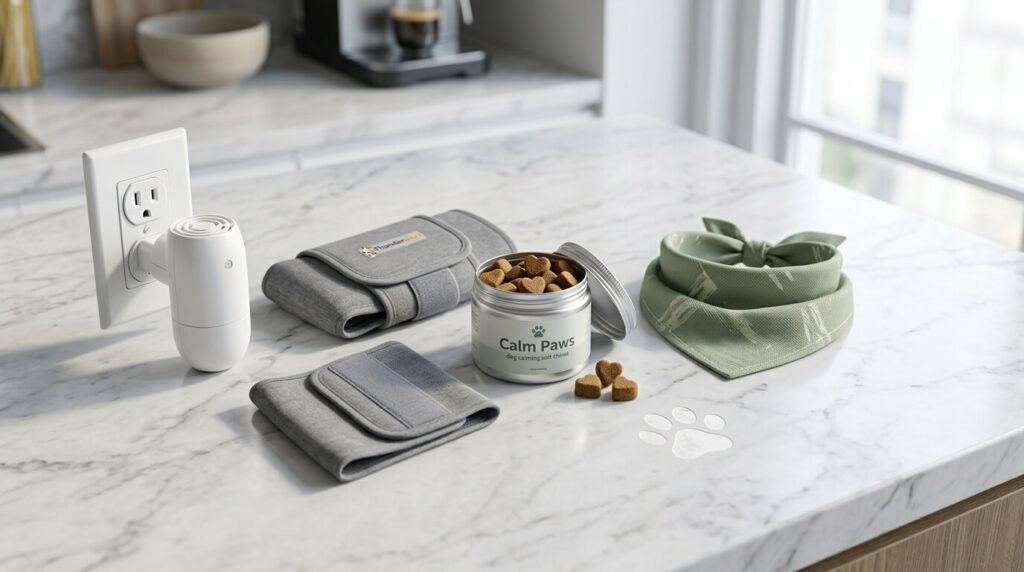
Dog appeasing pheromone products are designed to mimic calming signals associated with nursing mother dogs. They are usually sold as diffusers, sprays, or collars. Some owners find them helpful during transitions, travel, vet visits, or mild stress at home.
In apartments, a diffuser may be worth trying when the dog is adjusting to a new home, reacting mildly to background noise, or struggling to settle in a specific room. Use it as background support, not as the main plan for severe anxiety.
Set expectations carefully. A pheromone diffuser is unlikely to stop a dog from destroying a door during panic, barking for hours when alone, or lunging at other dogs in a hallway. If it helps, you may see softer body language, easier settling, or slightly faster recovery, not a complete personality change.
4. Pressure Wraps and Calming Shirts
Pressure wraps and calming shirts apply gentle, consistent pressure around the dog’s body. Some dogs appear calmer while wearing them during storms, fireworks, vet visits, travel, or other short stressful events. Other dogs dislike the feeling or freeze because they are uncomfortable.
Introduce a pressure wrap before the stressful event. Let your dog sniff it, wear it loosely for a short session, eat treats, then take it off. Build a positive association. Do not put it on for the first time during a major thunderstorm and expect instant calm.
Watch your dog’s body language. Relaxed muscles, normal movement, eating treats, and easier settling are good signs. Freezing, hiding, pawing at the wrap, refusing food, or trying to escape means the wrap may be adding stress.
5. Training, Desensitization, and Counterconditioning
Training is not always marketed as a calming aid, but it is often the piece that changes the dog’s emotional response. Desensitization means exposing the dog to a trigger at a low enough level that the dog can stay calm. Counterconditioning means pairing the trigger with something good so the dog’s feeling changes over time.
For apartment dogs, this can be used for hallway sounds, elevator noises, doorbells, thunder recordings, handling, grooming, and short alone-time practice. The key is working below the dog’s panic threshold. If your dog is already barking, trembling, or trying to escape, the trigger is too intense for learning.
For example, if hallway footsteps cause barking, do not wait for a loud neighbor rush hour. Start with a quieter sound, reward your dog for noticing and returning to you, then gradually build. If elevator rides are the problem, use the dog elevator training routine before the dog learns to panic at every door opening.
6. Calming Supplements
Calming supplements for dogs may contain ingredients such as L-theanine, alpha-casozepine, tryptophan, probiotics, melatonin, chamomile, valerian, or other blends. Some dogs may benefit from a carefully chosen supplement, especially for mild stress. But supplements are not automatically safe just because they are sold without a prescription.
Talk to your veterinarian before using supplements if your dog is a puppy, senior, pregnant, on medication, has liver or kidney disease, has seizures, or has a known medical condition. Also ask before combining multiple calming products. More products do not always mean more calm; sometimes they mean more side effects.
When testing a supplement, try it on a normal day first. Do not wait until fireworks night or moving day. Watch for vomiting, diarrhea, unusual sleepiness, agitation, appetite changes, wobbliness, or any behavior that seems off. Stop and contact your vet if you see concerning signs.
7. Vet-Prescribed Anxiety Medication
Medication is not a failure. For some dogs, it is the humane option. Severe anxiety can block learning, damage the home, create neighbor complaints, and put the dog at risk of injury. A veterinarian can check for medical causes and discuss whether situational medication or longer-term anxiety support makes sense.
Prescription options are especially worth discussing when a dog panics during storms, injures themselves when alone, cannot recover after triggers, shows escalating aggression, or has anxiety that affects daily life. Medication works best as part of a behavior plan, not as a way to ignore the environment.
Do not give human anxiety medication, sleep aids, cannabis products, or leftover prescriptions without veterinary direction. Dogs metabolize substances differently than humans, and apartment emergencies are harder when a dog is sedated, disoriented, or physically unsteady.
A Cautious Note About CBD for Dogs
CBD is one of the most searched calming aids for dogs, but it needs careful wording. Some owners report benefits, and research is still developing, but product quality, labeling, contamination, THC exposure, drug interactions, and dosing remain concerns. CBD products for pets should not be treated like harmless treats.
If you are considering CBD, talk with your veterinarian first, especially if your dog takes medication or has liver disease, seizures, pain, anxiety, or other medical concerns. Avoid products that promise to cure anxiety, stop aggression, or replace veterinary care. Be especially cautious with products that do not provide clear testing information.
For an apartment dog with mild situational stress, start with lower-risk foundations first: routine, enrichment, sound management, training, and veterinary guidance when symptoms are persistent.
Best Calming Aid by Apartment Problem
| Problem | Start With | When to Escalate |
|---|---|---|
| Hallway barking | White noise, door buffer, reward calm responses | If barking lasts minutes or triggers complaints |
| Storm fear | Safe zone, pressure wrap trial, sound masking | If panic, escape attempts, or trembling are severe |
| Alone-time distress | Video check, gradual absence training, enrichment | If destruction, howling, drooling, or self-injury occurs |
| Moving stress | Routine, familiar bedding, pheromone trial, quiet days | If the dog cannot eat, sleep, or settle after several days |
| Elevator anxiety | Distance, rewards, short rides, quiet practice | If the dog freezes, lunges, or panics repeatedly |
White noise and sound masking belong in the environmental-management category. They may reduce the contrast of hallway voices, elevator chimes, doors, construction, or storm sounds, but they do not treat panic or teach a new response by themselves. Use a steady, comfortable volume, place the sound source between the dog’s rest area and the trigger when practical, and pair it with desensitization or counterconditioning when the dog can stay under threshold.
Apartment Calming Plan by Time of Day
Many apartment dogs are not anxious all day. They struggle during specific windows: the owner leaving, afternoon hallway traffic, evening zoomies, late-night noises, or storms. Matching calming aids to the time of day makes the plan more useful than leaving a product in the room and hoping for the best.
Morning Departures
If your dog becomes stressed when you leave for work, the morning routine matters. Avoid a dramatic goodbye. Use a predictable sequence: potty walk, breakfast or enrichment, calm settling area, background sound, and a low-key exit. If your dog can eat while you leave and relax afterward, enrichment may help. If your dog ignores food and panics, treat it as alone-time distress, not a chew-toy problem.
Afternoon Hallway Noise
Some buildings get noisy when school ends, deliveries arrive, or neighbors return from work. For sound-sensitive dogs, try moving the rest area away from the front door, adding white noise, closing blinds, and rewarding the dog for checking in when sounds happen. A pheromone diffuser may support this setup, but the core plan is reducing rehearsal of barking and helping the dog recover faster.
Evening Overstimulation
Evening anxiety is sometimes anxiety, and sometimes it is unmet needs. A dog who had a boring day may pace, bark, mouth, or demand attention at night. Before adding supplements, check the basics: enough sniffing, age-appropriate exercise, food enrichment, training, and sleep. If the dog is restless but not fearful, the best calming aid may be a better evening routine.
Storms and Fireworks
Storms and fireworks are different because they are intense, unpredictable, and hard to escape in an apartment. Prepare early. Choose an interior room, use sound masking, close curtains, set up familiar bedding, and test any pressure wrap before the event. If your dog has a history of panic, do not wait until the holiday or storm night. Talk with your veterinarian in advance.
If the concern is physical sound exposure during a short, very loud event rather than fear treatment, review our dog hearing protection comparison. Calming aids and hearing-protection gear serve different jobs.
When Calming Aids Are Not Enough
Calming aids for dogs are useful only when the dog is still capable of learning, eating, resting, and recovering. If the dog is over threshold, the product may not touch the real problem. This is where many owners waste money: they keep buying new chews when the dog actually needs a diagnosis and a behavior plan.
Ask for professional help if your dog injures themselves, breaks crates, damages doors, soils from panic, howls for long periods, bites, growls in a way that escalates, cannot sleep, refuses food during normal days, or becomes suddenly anxious without an obvious reason. Sudden behavior changes can be medical. Pain, gastrointestinal discomfort, skin problems, endocrine disease, sensory decline, and age-related cognitive changes can all affect behavior.
For behavior help, look for qualified professionals who use humane, reward-based methods. Avoid advice that relies on fear, leash corrections, startling the dog, or “dominance” explanations for anxiety. A frightened dog does not need to be overpowered. The dog needs safety, structure, gradual exposure, and the right medical support when appropriate.
How to Compare Calming Products Without Fake Certainty
If you eventually compare products, use a practical checklist instead of marketing language. Look for clear ingredient labels, dosing instructions by weight, manufacturer contact information, quality-control information, and a realistic claim. Be suspicious of products that promise instant results for every dog, claim to replace veterinary care, or use vague blends without explaining what is inside.
For apartment owners, also consider mess, smell, noise, and daily usability. A product that stains rugs, smells strong in a studio, requires constant supervision, or makes your dog too sleepy for potty trips may not be a good fit. The best calming aid is not the most dramatic product. It is the one you can use safely and consistently while you address the real trigger.
7-Day Product Test Plan
Test one aid at a time and keep the rest of the routine stable. This makes it easier to see whether the aid changes barking, pacing, appetite, body tension, sleep, or recovery time without confusing the result with several simultaneous changes.
- Day 1: Define one trigger and record the dog’s normal response.
- Day 2: Confirm the setup, fit, label directions, and veterinary guidance when supplements or medication are involved.
- Day 3: Introduce the aid during a low-stress period rather than during panic.
- Days 4–5: Use it consistently for the same trigger and record behavior before, during, and after the event.
- Day 6: Review appetite, sleep, alertness, stomach upset, skin irritation, and recovery time.
- Day 7: Keep, adjust with professional guidance, or stop the aid based on the record—not on one unusually quiet day.
For apartment owners, video can be very helpful. A camera or old phone recording can show whether your dog settles after you leave or panics once the food toy is gone. This matters because many dogs look fine when the owner returns but were distressed for much of the absence.
Common Mistakes With Calming Aids for Dogs
Mistake 1: Expecting One Product to Fix Anxiety
Most calming aids support a plan. They are not the whole plan. A dog with real anxiety usually needs environment changes, predictable routines, training, and sometimes veterinary care.
Mistake 2: Waiting Until the Event Starts
Do not introduce a pressure wrap, supplement, or safe zone during the loudest part of a storm. Practice before the event so the aid already feels familiar.
Mistake 3: Ignoring Medical Causes
Pain, itching, digestive problems, hearing changes, cognitive decline, and other medical issues can look like anxiety. If behavior changes suddenly, call your veterinarian.
Mistake 4: Combining Too Many Products
Product stacking makes results harder to interpret and can increase the risk of excessive sedation, stomach upset, or interactions. Do not combine calming supplements, CBD, antihistamines, sedatives, or prescription medication unless your veterinarian has reviewed the exact products and doses. Add only one non-drug environmental aid at a time and record the change.
Mistake 5: Punishing Fear
Scolding a frightened dog may stop a behavior temporarily, but it does not make the dog feel safer. Reward calm choices, reduce trigger intensity, and get help when the dog is overwhelmed.

FAQ
What are the best calming aids for dogs?
The best calming aids for dogs depend on the trigger. For mild stress, start with routine, a quiet safe zone, enrichment, pheromone products, and training. For severe anxiety, panic, self-injury, or aggression, ask a veterinarian about a behavior plan and medication options.
Do calming chews really work for dogs?
Some calming chews may help some dogs with mild stress, but results vary. Ingredients, dose, dog size, medical history, and product quality matter. Test on a normal day and ask your veterinarian before using supplements regularly.
Are pheromone diffusers good for apartment dogs?
Pheromone diffusers may help some apartment dogs settle during transitions, mild stress, or new environments. They are unlikely to solve severe separation anxiety, panic, or reactivity by themselves.
What can I give my dog for storm anxiety?
Start with a safe interior room, sound masking, calm owner behavior, and a pressure wrap trial if your dog tolerates it. If your dog panics, shakes severely, tries to escape, or cannot recover, ask your veterinarian about situational medication before the next storm season.
Can calming aids stop apartment barking?
Calming aids may reduce stress-related barking, but they will not fix every barking problem. Identify whether the barking comes from fear, boredom, alerting, separation distress, or lack of exercise. Then match the plan to the cause.
Is CBD safe for dogs with anxiety?
CBD should be discussed with a veterinarian before use. Product quality, labeling, THC contamination, dosing, side effects, and drug interactions are concerns. Avoid any product that makes cure-like claims.
Next Step
Before buying another product, write down your dog’s top trigger and choose the lowest-risk aid that matches it. For many apartment dogs, the first step is not a supplement. It is a predictable safe zone, a quieter sound environment, more appropriate enrichment, and a training plan that works below the dog’s panic threshold.
If your dog is panicking, injuring themselves, showing aggression, or unable to settle even with routine changes, make a veterinary appointment. The safest calming aids for dogs are the ones used honestly: as support for the right diagnosis, not as a replacement for care.