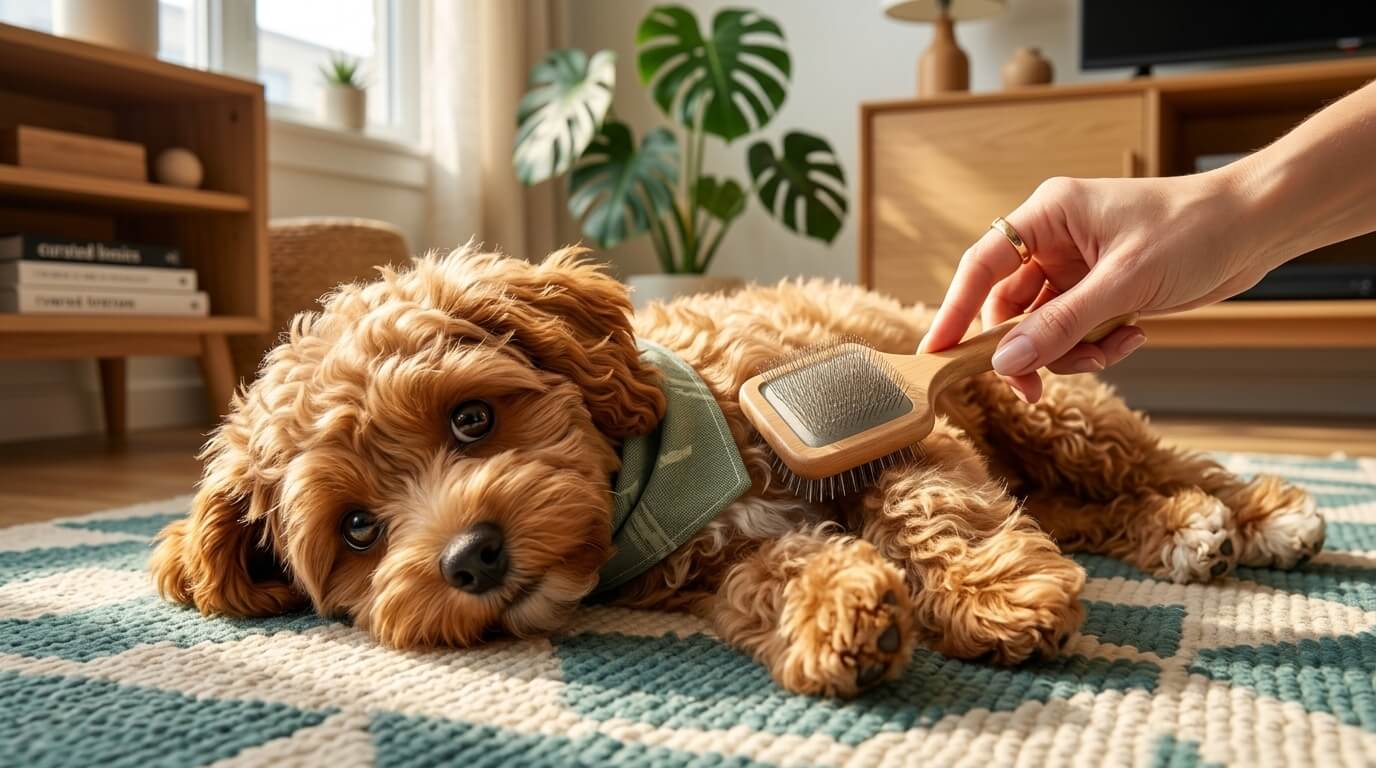
Best home dog grooming tools for apartment owners are not about replacing every professional groomer visit. They are about keeping your dog comfortable between appointments, reducing hair and odor in a small space, trimming routine maintenance costs, and noticing skin, nail, ear, or paw problems before they turn into bigger issues.
In an apartment, grooming has a different job than it does in a large house. You may not have a laundry room, garage sink, outdoor hose, grooming table, or extra closet for supplies. A tool that works beautifully in a grooming salon can feel loud, messy, bulky, or stressful in a bathroom the size of a closet. The best kit is compact, washable, quiet, and matched to your dog’s coat type, tolerance level, and actual grooming needs.
This guide covers nine essential grooming tool categories for apartment dog owners, rather than ranking individual products.
This guide is a practical apartment grooming checklist, not a claim that you can safely do every grooming task at home. Brushing, basic bathing, paw cleanup, and gentle nail maintenance may be realistic for many owners. Severe mats, painful skin, infected ears, heavy shedding from medical causes, badly overgrown nails, or fearful aggression during grooming should involve a veterinarian, groomer, or qualified behavior professional.
Quick Answer
Most apartment dog owners need nine core grooming tools: a coat-appropriate brush, a metal comb, dog nail clippers or a grinder, styptic powder, dog shampoo, absorbent towels, paw wipes or a paw washer, a small grooming mat, and a lidded storage container. Add specialty tools only if your dog’s coat, skin, or grooming plan truly requires them.
| Tool | Best For | Apartment Note |
|---|---|---|
| Coat-appropriate brush | Loose hair, tangles, weekly coat care | Choose by coat type, not popularity |
| Metal comb | Checking tangles after brushing | Small, cheap, and very useful |
| Nail clipper or grinder | Routine nail length maintenance | Quiet training matters in apartments |
| Styptic powder | Backup for accidental quick nicks | Keep nearby before trimming nails |
| Dog shampoo | Bathing and odor control | Use dog-specific products, not human shampoo |
| Absorbent towels | Drying after baths or rain | Reduces wet-dog smell and floor mess |
| Paw wipes or washer | Rain, mud, sidewalk grit, winter salt | Useful at the apartment entryway |
| Grooming mat | Bathroom floor, hallway, or balcony-door cleanup | Keeps hair and water contained |
| Storage bin | Small-space organization | Prevents grooming supplies from spreading everywhere |
If your apartment’s main struggle is fur on clothes, furniture, and bedding, pair this guide with how to get dog hair off everything. Grooming tools help at the source, but cleaning routines still matter.
Table of Contents
What Apartment Grooming Tools Should Actually Do
A good home grooming kit should make routine care easier, not turn your bathroom into a stressful salon. The tools should help you brush before mats form, clean paws before dirt spreads, dry your dog before odor settles into fabric, and maintain nails before they click loudly on hard floors.
The ASPCA’s grooming guidance covers brushing, bathing, nail care, skin checks, paw care, and the importance of using dog-appropriate products. That broad view is helpful because grooming is not just about appearance. It is a recurring health and comfort check. During grooming, you may notice fleas, flea dirt, lumps, sore skin, ear odor, broken nails, paw irritation, or areas your dog does not want touched.
For renters, grooming also protects the apartment. Less loose coat means less fur in vents and upholstery. Cleaner paws mean fewer stains near the door. Shorter nails can reduce floor clicking and scratching. Faster drying can reduce wet-dog smell in bedding and rugs.
How to Build a Small-Space Grooming Kit
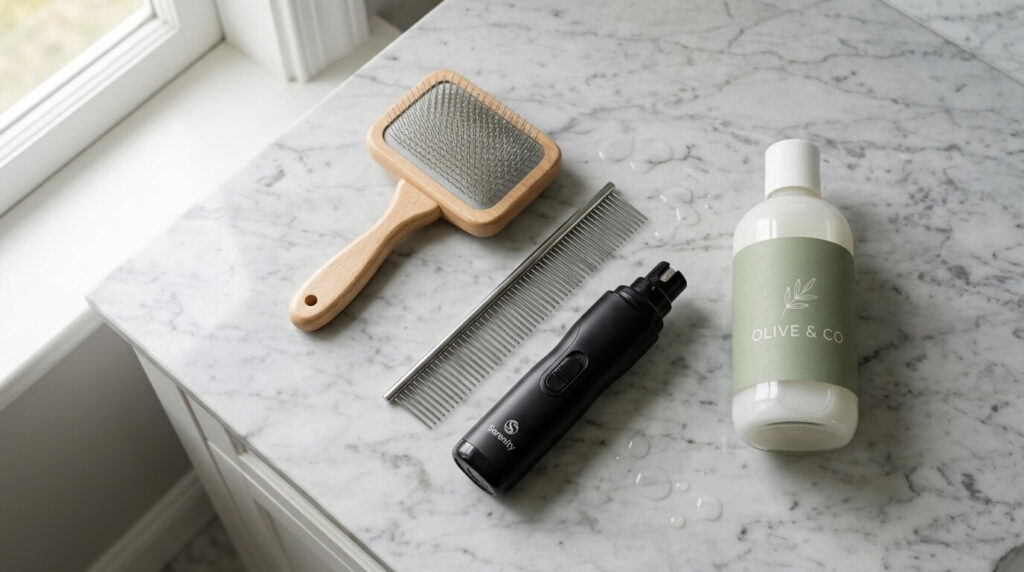
Start with the minimum kit your dog will actually tolerate. A compact, reliable setup used every week is better than a large collection of tools you avoid because grooming feels overwhelming. Keep everything in one bin so you are not searching for towels, combs, treats, and nail supplies while your dog is already nervous.
Your starter kit should include:
- A brush matched to your dog’s coat
- A metal comb for checking tangles
- Dog nail clippers or a quiet grinder
- Styptic powder or another bleeding-control product recommended by your veterinary team
- Dog shampoo
- Two absorbent towels
- Paw wipes or a rinse cup
- High-value treats for training cooperation
- A washable mat or towel for the grooming station
Avoid buying advanced dematting blades, clippers, or trimming scissors unless you have been shown how to use them safely. The AKC’s home grooming guidance warns against trying to cut out mats or shave sensitive areas without proper training. In an apartment, one nervous movement on a slippery bathroom floor can turn a simple grooming session into an injury risk.
9 Essential Home Dog Grooming Tools for Apartments
1. Coat-Appropriate Brush
The brush is the tool most owners should use first and most often. The right type depends on coat, not size. Smooth short coats may need a rubber curry or bristle brush. Double coats may need an undercoat rake or slicker used carefully. Long coats may need a pin brush plus comb. Curly coats often need frequent brushing and professional grooming to prevent mats.
Brush gently and in short sessions. Do not scrape skin or force the brush through tangles. If the brush catches, pause and use the comb to understand what is happening. A painful brushing session teaches your dog to avoid the tool next time.
In an apartment, brush on a washable mat, towel, or easy-to-vacuum area. Do not brush near the food bowl, open closet, or bed if loose hair will drift into everything.
2. Metal Comb
A metal comb is small, inexpensive, and surprisingly important. After brushing, run the comb gently through common tangle areas: behind ears, under the collar, armpits, chest, tail, and rear feathers. If the comb catches, that spot is not fully brushed out.
The comb also helps you distinguish loose coat from a mat. A brush can glide over the top of a mat and leave the tight hair close to the skin. The comb reveals what is really happening.
Do not yank. If you find a tight mat, especially close to the skin, stop and get professional help. Mats can hide irritation and pulling them can hurt your dog.
3. Nail Clipper or Nail Grinder
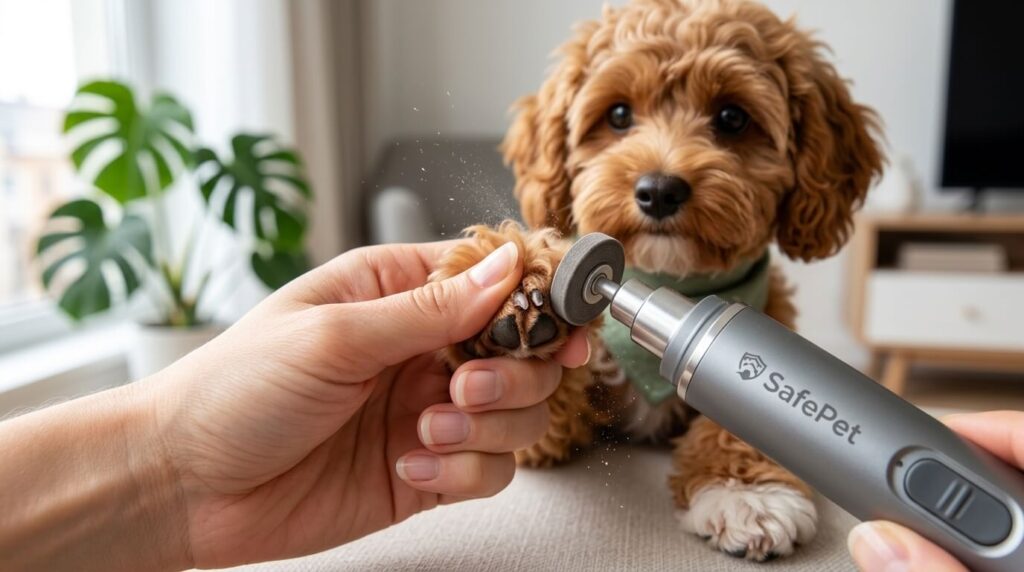
Nail care matters in apartments because overgrown nails can click loudly, snag rugs, affect movement, and scratch floors. Some owners prefer clippers because they are fast. Others prefer grinders because they remove tiny amounts gradually and smooth edges. The better tool is the one you can use calmly and safely with your dog.
The ASPCA notes that nails are ready for trimming when they just about touch the ground, and that grinders offer control but can take longer and may be unpleasant for some dogs because of sound and vibration. That is exactly why apartment dogs need desensitization before a full nail session.
If you choose a grinder, introduce the sound away from the paw first. Reward calm behavior. Touch the tool to one nail briefly, then stop. Build slowly. In a shared-wall apartment, use electric grooming tools at a considerate time and gradually condition your dog to the sound before bringing the tool near a paw. For a more detailed tool-specific guide, see best dog nail grinder.
4. Styptic Powder
Styptic powder is not glamorous, but it belongs in every nail kit. If you cut the quick, the nail can bleed. Having powder nearby prevents panic and lets you respond calmly. Keep it open and within reach before trimming, not buried in a drawer.
If bleeding does not stop after a few minutes, or your dog seems very painful, call your veterinarian. Do not keep trimming after a stressful quick cut. End the session, help your dog recover, and rebuild trust later.
5. Dog-Specific Shampoo
Use shampoo formulated for dogs. Human products can contain fragrances or ingredients that irritate canine skin, and human toothpaste can contain ingredients that are dangerous for dogs. For bathing, choose a gentle dog shampoo unless your veterinarian recommends a medicated product.
The ASPCA recommends bathing at least every three months for many dogs, with more frequent baths for some dogs depending on outdoor activity or skin issues. Apartment dogs may need paw and coat cleanup more often than full baths, especially after rain, sidewalk grime, or winter salt.
Do not bathe repeatedly to cover a persistent bad smell. Odor can come from ears, teeth, skin infections, anal glands, allergies, or other causes. If your apartment always smells doggy despite cleaning, read how to control dog odor in a small apartment and consider a vet check if the smell seems abnormal.
6. Absorbent Towels
Good towels are grooming tools. They reduce drying time, protect floors, and limit wet-dog smell. Keep one towel for the first heavy water pass and another for finishing. Microfiber can work well, but any absorbent towel is better than letting a wet dog shake through the hallway.
Dry feet, belly, ears, tail, and armpits carefully. Damp folds and thick coat areas can hold moisture. For wrinkle-faced breeds, dry skin folds thoroughly and ask your veterinarian how to clean them safely.
If your dog bolts after baths, place a non-slip mat on the bathroom floor and close doors before drying. Apartment bathrooms are tight, and a wet dog can slip quickly.
7. Paw Wipes or Portable Paw Washer
Paw cleanup is one of the most apartment-relevant grooming habits. Dogs track in sidewalk dust, mud, lawn chemicals, salt, pollen, and rainwater. A simple wipe station by the door can keep dirt from reaching rugs, beds, and sofas.
Paw wipes are fast for light cleanup. A portable paw washer or rinse cup is better for muddy walks. Dry paws afterward so moisture does not sit between toes. If your dog licks paws constantly, has redness, swelling, odor, or limping, ask your veterinarian rather than assuming dirt is the only issue.
For rainy city routines, use the more detailed guide to portable dog paw washer setups.
8. Washable Grooming Mat
A grooming mat gives your dog a predictable place to stand and gives you a cleanup boundary. It can be a real grooming mat, yoga mat, bath mat, or thick towel. The point is traction and containment.
Use the same mat for brushing, paw wipes, towel drying, and nail training. Over time, the mat can become a cue that grooming will be calm, short, and rewarded. Keep sessions brief at first. A dog who learns to relax for two minutes can gradually learn five or ten.
Wash or shake the mat often. A mat covered in old hair and dried paw grime defeats the purpose.
9. Lidded Storage Bin
Storage is not an afterthought in a small apartment. Grooming supplies scattered under the sink, in the hallway, and beside the leash hook make grooming feel like a chore before it starts. A lidded bin keeps tools clean, dry, and easy to grab.
Include a small checklist inside the lid: brush, comb, nails, paws, ears check, skin check, towel. This turns grooming into a repeatable routine instead of a once-a-month scramble.
Apartment Grooming Routine by Coat Type
Short smooth coats
Short-coated dogs still shed and still need skin checks. Use a rubber brush or grooming mitt once or twice a week, wipe paws after dirty walks, and keep nails trimmed. Bathing may be occasional unless your dog has odor, outdoor grime, or skin issues.
Double coats
Double-coated dogs can fill an apartment with undercoat quickly. Use an appropriate brush or rake gently and avoid harsh over-brushing. Do not shave a double coat for convenience without veterinary or professional grooming guidance. Focus on regular brushing, vacuuming, and seasonal shedding management.
Long or silky coats
Long coats need frequent brushing because mats can form behind ears, under harnesses, around legs, and near the tail. Use a pin brush or slicker carefully, then check with a metal comb. Professional grooming may still be necessary, especially if trimming is involved.
Curly or continuously growing coats
Curly coats can mat close to the skin if not maintained. A home kit can help between appointments, but many curly-coated dogs need professional clipping on a schedule. Do not wait until the coat is felted before booking grooming.
How to Make Grooming Less Stressful
Start when nothing urgent is happening. Put the brush on the floor, let your dog sniff it, reward, and stop. Touch a paw, reward, and stop. Run the grinder nearby without touching the nail, reward, and stop. These tiny sessions look almost too easy, but they prevent the classic apartment grooming battle: owner waits too long, dog becomes uncomfortable, and the first session is too much.
Use calm repetition. Groom after a walk, not during peak energy. Keep treats ready. End before your dog struggles. If your dog growls, snaps, freezes, drools, trembles, or tries to escape, stop and get professional help. Forcing grooming can make future care harder and less safe.
If your dog struggles to be alone or becomes distressed in small spaces, grooming may interact with those feelings. The guide on how long you can leave a dog alone in an apartment can help you think about stress signals more broadly.
A Small Apartment Grooming Station
You do not need a dedicated grooming room. You need one repeatable spot that is easy to clean, has enough light, and does not make your dog feel trapped. For many renters, the best grooming station is a bathroom floor with a non-slip mat, a hallway near the entry door, or a kitchen-adjacent area with a washable towel underneath.
Set the station before you call your dog over. Put treats in a pocket or bowl, open the storage bin, place the brush and comb within reach, and keep the towel nearby. If nail work is part of the session, open the styptic powder first. This small preparation step matters because dogs notice hesitation. A calm, organized owner makes grooming feel more predictable.
Use the same order each time. For example: mat, treat, brush one side, treat, brush the other side, treat, comb check, towel wipe, release. On nail days, do only one or two nails at first. On bath days, brush before water touches the coat so loose hair and tangles do not become worse when wet.
Keep grooming short enough that your dog finishes successfully. In a small apartment, it is tempting to do everything at once because cleanup is annoying. But three calm five-minute sessions are usually better than one long session that ends with slipping, panting, barking, or hiding under the bed. The goal is not only a cleaner dog. The goal is a dog who trusts the routine enough to let you repeat it next week.
After each session, clean the station immediately. Shake hair into the trash, wipe damp floors, and rinse tools if needed. Let towels, washable mats, brushes, combs, and paw-washer parts dry fully with good airflow before storing them; sealing damp gear in a bin can trap odor and moisture. For the wider cleanup routine, see cleaning an apartment after grooming.
When to Use a Professional Groomer or Veterinarian
Home grooming is not the right answer for every problem. Call a professional groomer or veterinarian if your dog has tight mats, skin sores, ear odor, eye discharge, broken nails, bleeding that will not stop, severe fear, biting risk, or coat needs that require clipping around sensitive areas.
Also ask for help if your dog suddenly smells bad, scratches constantly, loses hair, licks paws obsessively, or seems painful when touched. The ASPCA notes that skin problems can involve parasites, infections, allergies, metabolic problems, stress, or combinations of causes. Grooming tools can reveal these problems, but they do not diagnose them.
For regular health planning, use indoor dog vet visits to decide when home observation should turn into a professional appointment.
Common Mistakes
Mistake 1: Buying salon-level tools before learning basics
Expensive tools do not create skill. Start with brushing, combing, paw cleaning, and cooperative nail handling. Add advanced tools only after you understand your dog’s coat and your own comfort level.
Mistake 2: Brushing only the top layer
A coat can look smooth on top while mats form near the skin. Use a metal comb to check high-friction areas after brushing. If the comb cannot pass gently, do not force it.
Mistake 3: Bathing without drying well
Wet coat, damp bedding, and closed apartment air can create odor quickly. Dry thoroughly and wash towels promptly. For thick coats, ask a groomer whether a professional dryer is needed for safe drying.
Mistake 4: Waiting until nails are urgent
Long nails are harder to trim comfortably, and rushed trimming increases quick-cut risk. Short, frequent nail sessions are usually easier than rare dramatic ones.
Mistake 5: Treating grooming fear as stubbornness
Many dogs are scared of foot handling, water, vibration, restraint, or slippery surfaces. Slow training works better than wrestling. If fear is intense, get help before grooming becomes a household conflict.
FAQ
What are the best home dog grooming tools for beginners?
Beginners should start with a coat-appropriate brush, metal comb, dog shampoo, towels, paw wipes, nail tool, styptic powder, treats, and a washable mat. Avoid advanced clippers or dematting blades until you have training.
Can I groom my dog completely at home?
Some dogs can have most routine care done at home, while others need professional grooming because of coat type, mats, fear, skin issues, or clipping needs. Home grooming should support professional care, not replace it when professional skill is needed.
How often should I brush my dog in an apartment?
It depends on coat type. Short coats may need weekly brushing. Long, curly, or double coats may need brushing several times per week or more. Brush more often during shedding seasons and after harness friction.
Should I use clippers or a grinder for nails?
Both can work when used correctly. Clippers are faster. Grinders can remove small amounts and smooth edges, but some dogs dislike the sound and vibration. Ask your veterinarian or groomer to show you the safest technique.
How do I reduce dog smell in a small apartment?
Brush regularly, dry your dog well after baths and rain, clean bedding, wipe paws, check ears and teeth, and use dog-safe shampoo when bathing is needed. Persistent strong odor should be discussed with your veterinarian.
What grooming tools should I avoid as a renter?
Avoid loud high-powered dryers, tools you do not know how to use safely, fragrance sprays, human shampoo, household scissors for mats, and anything that creates more mess or stress than your apartment can handle.
Next Step
Build a small grooming bin first: brush, comb, nail tool, styptic powder, dog shampoo, towels, paw cleanup supplies, treats, and a mat. Use the kit for short weekly sessions before your dog is dirty, matted, or overdue. If you hit fear, pain, tight mats, skin problems, or nail bleeding that does not stop, pause the home plan and call a professional.