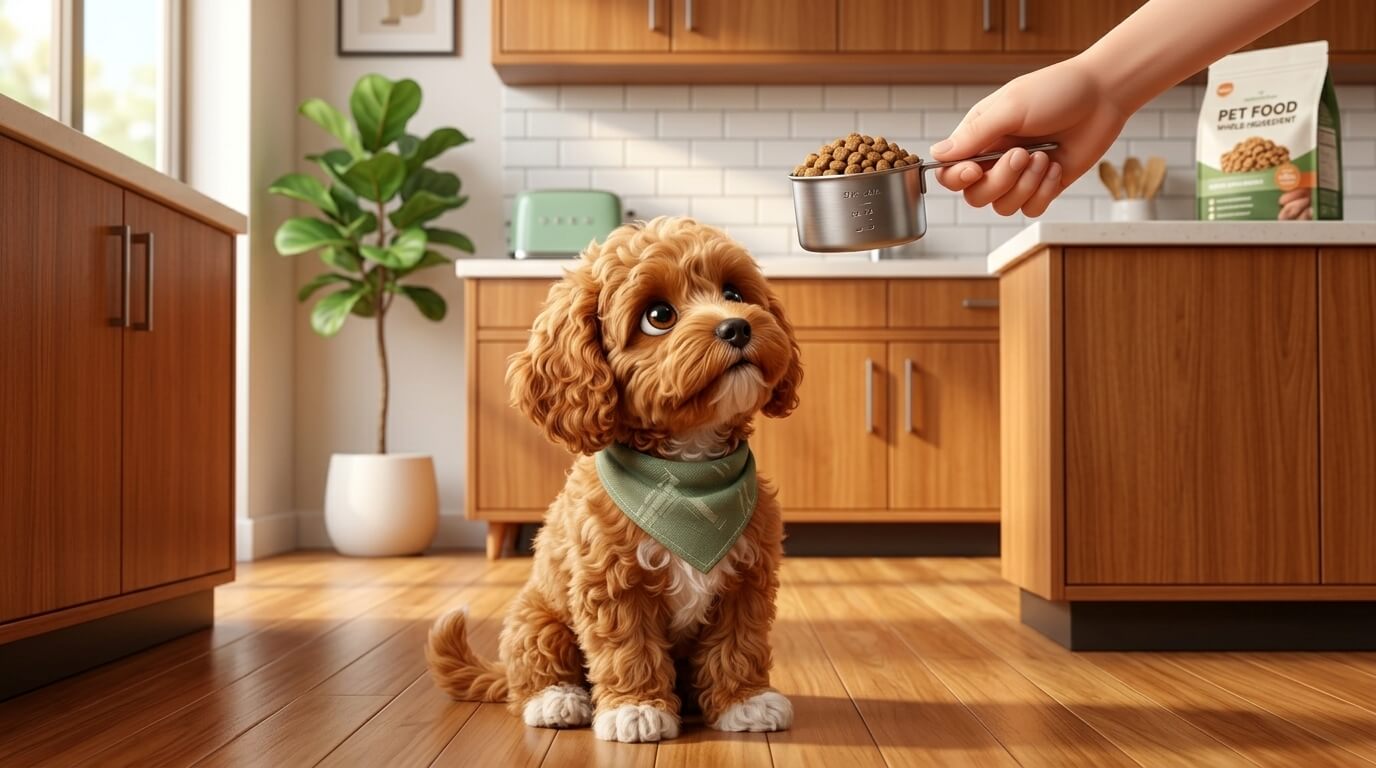
The best diet for apartment dogs is not a special bag of food labeled “indoor dog.” Most apartment dogs need the same basic things other dogs need: complete and balanced nutrition, the right calorie amount, fresh water, controlled treats, safe feeding routines, and adjustments for age, body condition, health, and activity level.
Apartment life does change the practical details. Some indoor dogs move less than expected. Some get too many treats because owners feel guilty about no yard. Some eat out of boredom. Some gain weight quietly because every potty trip is short and every snack feels small. The best diet is the one that fits the real dog in the real apartment, not the marketing on the front of the package.
This guide explains how to feed an apartment dog without overcomplicating it. It covers food labels, calories, treats, feeding schedules, enrichment feeding, hydration, weight control, and when to ask your veterinarian.
Best Diet for Apartment Dogs: Quick Answer
The best diet for apartment dogs is a complete and balanced dog food matched to the dog’s life stage, body condition, health, and activity level. Measure meals, limit treats, use food for enrichment, provide fresh water, monitor weight, and ask a veterinarian before changing diets for puppies, seniors, allergies, obesity, digestive problems, or medical conditions.
| Diet Area | Apartment Risk | Best First Step |
|---|---|---|
| Calories | Indoor dogs may gain weight slowly | Measure meals and track body condition |
| Treats | Training and guilt snacks add up | Budget treats into daily food |
| Food labels | Marketing can distract from nutrition | Look for complete and balanced wording |
| Feeding routine | Boredom eating and begging | Use puzzle meals and predictable times |
| Water | Small homes can hide low intake | Keep water clean and easy to access |
Table of Contents
1. Do Not Buy the Marketing First
Apartment dogs do not automatically need a special “indoor,” “small-space,” or “urban” diet. Some formulas may be appropriate for some dogs, but the label theme is not the decision. The decision is whether the food is complete and balanced for your dog’s life stage and whether the calories, ingredients, and feeding instructions fit your dog.
Start with the nutrition statement, not the front of the bag. Look for language indicating that the food is complete and balanced for the appropriate life stage. Puppies, adult dogs, seniors, pregnant dogs, and dogs with medical issues may need different nutrition plans.
If your dog has allergies, chronic digestive signs, kidney disease, pancreatitis history, urinary issues, diabetes, obesity, or other medical concerns, do not choose a diet from a blog post alone. Ask your veterinarian.
2. Match Calories to Real Apartment Activity
Many apartment dogs get less movement than their owners think. A few short potty walks may not equal the exercise of a longer sniff walk, play session, training routine, or outdoor adventure. If food intake stays high while activity stays low, weight can creep up slowly.
Use the feeding guide on the bag only as a starting point. It is not a perfect prescription. Track your dog’s body condition, waist, ribs, energy, stool, and weight trends. If your dog is gaining or losing weight unintentionally, adjust with veterinary guidance.
If your dog needs more safe activity before you cut food, pair diet changes with the exercise dog in small apartment guide.
3. Treats Count More Than You Think
Treats are useful for training, but apartment owners often overuse them. A treat for coming inside, a treat for being quiet, a treat for going into the crate, a treat during work calls, and a treat because the dog looks sad can become a second meal.
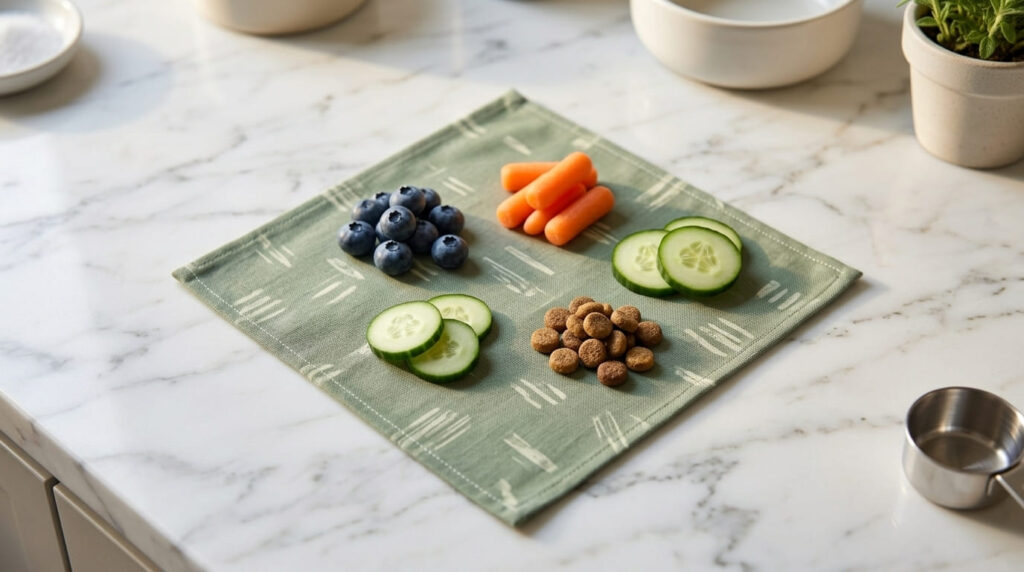
Use small treats. Break larger treats into tiny pieces. Use part of the daily kibble for training when appropriate. Keep high-value treats for harder tasks, such as vet handling, elevator stress, or recall. If you use food puzzles, count that food as part of the meal.
For weight control, treats should be planned, not invisible. If several people live in the apartment, make sure everyone knows how many treats the dog already had.
4. Use Food as Enrichment
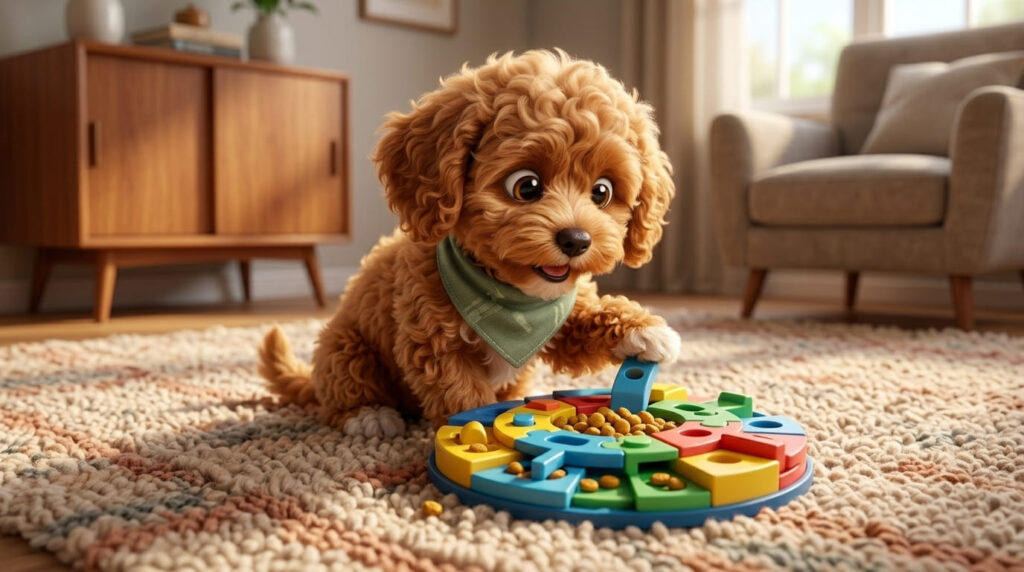
Food can do more than fill a bowl. Apartment dogs benefit from meals that make them sniff, search, lick, or problem-solve. This can reduce boredom, slow fast eaters, and give the dog quiet work during predictable problem windows.
Try scatter feeding on a clean mat, a slow feeder, a towel roll, a simple puzzle, or a stuffed food toy if your dog uses it safely. Keep difficulty low enough that the dog succeeds. Frustrating puzzles can create barking, chewing, or giving up.
If your dog guards food toys or chews, do not leave high-value food items loose in shared spaces. Read the dog resource guarding training guide and use separated feeding routines.
5. Build a Feeding Schedule That Supports Potty Training
Apartment potty training is easier when food timing is predictable. Free-feeding can make potty timing harder, especially for puppies and newly adopted dogs. Scheduled meals help you predict when the dog may need to go out.
For adult dogs, two meals a day works well for many households, but individual needs vary. Puppies need more frequent meals. Senior dogs or dogs with medical conditions may need special schedules. Ask your veterinarian if your dog vomits bile, has digestive issues, has diabetes, or needs a medical diet.
If potty logistics are already hard, use the how to potty train a dog in an apartment guide alongside this feeding plan.
6. Keep Hydration Simple and Reliable
Fresh water matters. In small apartments, water bowls may be tucked into corners, placed near dusty areas, or forgotten because the dog is indoors all day. Keep water easy to access and clean the bowl regularly.
Dogs eating dry food may drink differently than dogs eating wet food. Hot weather, exercise, illness, medication, and diet changes can all affect thirst. Sudden increase or decrease in drinking deserves a veterinary call.
If you use a fountain, clean it consistently. A dirty fountain is not better than a clean bowl. If you want to compare options later, the best dog water fountain guide can support that decision.
7. Watch Body Condition, Not Just Bowl Size
The best diet for apartment dogs is working if the dog maintains a healthy body condition, has steady energy, normal stools, healthy skin and coat, and can participate comfortably in daily activity. The bowl amount is only one clue.
Learn your dog’s body shape. You should be able to feel ribs with gentle pressure, see a waist from above in many dogs, and notice an abdominal tuck from the side, depending on breed and body type. If you are unsure, ask your veterinarian to show you a body condition score.
Weight gain is common in indoor dogs because it happens quietly. A little extra food each day becomes a lot over months. If you suspect weight gain, read the is my dog overweight guide and schedule a vet check if needed.
Diet by Apartment Dog Type
Puppies
Puppies need food formulated for growth and a schedule that supports potty training. Do not put puppies on adult weight-control diets without veterinary direction. Rapid growth, small stomachs, and frequent potty needs all matter.
Adult Dogs
Adult apartment dogs need a stable routine and calorie control. If your adult dog is gaining weight, first look at treats, table scraps, puzzle food, and reduced activity.
Senior Dogs
Senior dogs may need different calorie levels, softer food, dental care, joint support, or medical diets. Do not assume all senior dogs need less food; some do, some do not. Ask your veterinarian.
Low-Activity Dogs
Low-activity dogs may need fewer calories, but they still need enrichment. Do not solve boredom by cutting food alone. Use sniff games, slow feeders, training, and gentle movement.
Highly Active Dogs
Some apartment dogs are athletic despite the small home. Dogs who hike, run, train, or do sports may need more calories than a typical indoor dog. Feed the actual dog, not the apartment stereotype.
Apartment Feeding Schedule Example
| Time | Feeding Choice | Apartment Benefit |
|---|---|---|
| Morning | Measured breakfast after potty | Supports routine and digestion |
| Midday | Small training or puzzle portion if needed | Breaks boredom without overfeeding |
| Evening | Measured dinner or enrichment meal | Reduces begging and pacing |
| Bedtime | Only if medically or behaviorally appropriate | Avoids unnecessary calories |
This is only an example. Your dog’s age, health, medication, potty schedule, and veterinary advice should shape the final routine.
How to Read a Dog Food Label Without Getting Lost
Dog food labels can feel overwhelming. Apartment owners do not need to become nutritionists, but you should know what to check before switching foods.
Life Stage
Make sure the food matches the dog’s life stage. Growth, adult maintenance, and all-life-stages formulas are not the same decision. Puppies usually need growth nutrition. Adult dogs usually need adult maintenance unless your veterinarian says otherwise.
Calorie Content
Look for calories per cup, can, pouch, or kilogram. This matters more than the size of the bowl. Two foods can look similar in volume but contain very different calories.
Feeding Guide
The feeding guide is a starting estimate. It does not know your dog’s metabolism, treat intake, activity level, neuter status, apartment routine, or medical history. Start there, then track your dog’s body condition.
Company and Contact Information
Choose foods from companies that provide clear labeling and contact information. If you have questions about calories, life stage, or feeding amounts, you should be able to contact the manufacturer or ask your veterinarian to help interpret the label.
The Apartment Food Log
If your dog is gaining weight, begging constantly, or having stool changes, keep a food log for one week. Most owners are surprised by what appears when everything is written down.
| Item | Amount | Why It Matters |
|---|---|---|
| Breakfast | Measured cup, grams, or can portion | Shows true meal size |
| Dinner | Measured amount | Prevents guessing |
| Training treats | Number or estimated calories | Often underestimated |
| Chews | Type and duration | Some chews add many calories |
| Table food | Every bite | Small bites add up |
| Puzzle food | Part of meal or extra? | Should usually come from meal allowance |
This log is especially useful in multi-person apartments. One person may think the dog had one treat, while three roommates each gave “just a little.”
Different Apartment Scenarios
The Work-From-Home Dog
Work-from-home owners may snack with the dog nearby all day. The dog learns to stare, paw, or bark near the desk. Use scheduled food enrichment instead of random snacks. Reward calm mat behavior with part of the meal, not endless extras.
The Dog Alone During the Day
Food puzzles can help some dogs during alone time, but they are not a cure for separation anxiety. If your dog ignores food when you leave or panics after finishing it, the issue is emotional distress, not meal design. In that case, use the dog separation anxiety apartments guide.
The Dog Who Begs After Short Walks
Some dogs beg because they are hungry. Others beg because they are bored, under-stimulated, or rewarded for staring. Before increasing food, ask whether the dog needs sniffing, training, or a puzzle meal using measured food.
The High-Rise Puppy
High-rise puppies need feeding routines that support potty timing. Scheduled meals are usually easier than grazing. Track when your puppy eats, drinks, plays, wakes, and needs to go out.
Treat Rules for Apartment Training
Apartment dogs often get a lot of treats because there are many training moments: elevator manners, hallway sounds, potty trips, quiet cues, crate practice, and alone-time work. Treats are useful. They just need a budget.
- Use tiny pieces for easy behaviors.
- Reserve higher-value treats for harder situations.
- Use kibble for simple indoor practice if your dog likes it.
- Do not let every family member treat without tracking.
- Reduce meal portions slightly if training treats are frequent, with veterinary guidance if needed.
If your dog is training heavily for barking, potty, or elevator issues, treat calories may become significant. Plan them instead of feeling guilty about them.
7-Day Apartment Diet Reset
If your dog’s diet feels messy, do not change everything overnight. Use one week to collect information and make low-risk improvements.
Day 1: Measure Meals
Measure what you already feed. Do not change it yet. Just learn the real amount. If possible, use a kitchen scale or the same measuring cup each time.
Day 2: Count Treats
Write down every treat, chew, table bite, and training reward. This is often where hidden calories appear.
Day 3: Check the Label
Look for life stage, calorie content, and complete-and-balanced wording. If you cannot understand the label, take a photo and ask your veterinarian at the next visit.
Day 4: Add One Enrichment Meal
Use part of the normal meal in a slow feeder, towel roll, or simple find-it game. Do not add extra food just because the dog is doing a puzzle.
Day 5: Watch Water
Clean the bowl, refill with fresh water, and notice whether your dog is drinking normally. Sudden changes in thirst are a vet question, not a routine diet tweak.
Day 6: Check Body Condition
Look at your dog from above and the side. Feel the ribs gently. If you are unsure, do not guess; ask your vet to show you body condition scoring.
Day 7: Decide the Next Step
If everything looks stable, keep the improved routine. If weight, stool, appetite, or thirst concerns appear, schedule a vet conversation before making major changes.
Changing Food Safely
Sometimes a diet change makes sense. Your dog may move from puppy food to adult food, need a different calorie level, dislike a food, or have stool issues. But changing food too quickly can create digestive upset.
For many healthy dogs, gradual transitions are easier than sudden switches. Mix increasing amounts of the new food with decreasing amounts of the old food over several days. Go slower if your dog has a sensitive stomach. Follow your veterinarian’s instructions if the diet is medical or the dog is sick.
Do not change food every time your dog seems bored. Dogs do not need constant flavor novelty the way humans do. Frequent switching can make it harder to know what caused a stool or skin change.
Apartment Diet Red Flags
Call your veterinarian if you notice any of these signs:
- Sudden appetite loss.
- Repeated vomiting or diarrhea.
- Fast weight gain or weight loss.
- Drinking much more or much less than usual.
- New food guarding or intense food anxiety.
- Itchy skin, ear problems, or chronic digestive signs.
- Low energy, weakness, or behavior change around meals.
Diet can affect behavior, but behavior can also reveal pain, illness, stress, or schedule problems. Do not use food changes as a substitute for veterinary care when warning signs are present.
Common Diet Mistakes in Apartments
Mistake 1: Treating Indoor Dogs Like They Burn Yard Calories
A dog who spends most of the day indoors may not need the same calories as a dog doing long outdoor work. Track body condition and activity honestly.
Mistake 2: Believing Grain-Free, Fresh, Raw, or Boutique Means Better
Diet labels can sound impressive. Better depends on the individual dog, the formula, the company’s nutrition standards, and veterinary guidance. Do not choose a diet only because it sounds premium.
Mistake 3: Forgetting Training Treats
Training treats are food. If you train often, subtract some calories from meals or use tiny pieces.
Mistake 4: Changing Food Too Fast
Sudden diet changes can upset digestion. Transition gradually unless your veterinarian says otherwise.
Mistake 5: Ignoring Sudden Appetite or Thirst Changes
Sudden changes in appetite, thirst, weight, vomiting, diarrhea, or energy are not normal diet quirks. Call your veterinarian.
When to Ask a Veterinarian
Ask your veterinarian before making major diet decisions if your dog is a puppy, senior, pregnant, overweight, underweight, itchy, vomiting, having diarrhea, drinking more, urinating more, losing weight, gaining weight, or living with a medical condition.
Also ask before homemade diets, raw diets, vegan diets, prescription diets, elimination diets, or supplements. These can be appropriate in specific cases, but they should not be improvised from internet advice.
FAQ
What is the best diet for apartment dogs?
The best diet for apartment dogs is a complete and balanced food matched to life stage, health, activity, and body condition. Measure meals, limit treats, and ask your veterinarian for individual concerns.
Do apartment dogs need less food?
Some apartment dogs need fewer calories if they are less active, but not all. Feed based on the dog’s body condition, weight trend, activity, and veterinary guidance.
Is wet food or dry food better for apartment dogs?
Both can work. Dry food can be convenient for puzzle feeding, while wet food may support hydration or appetite for some dogs. The best choice depends on the dog and the formula.
How many times a day should I feed my apartment dog?
Many adult dogs do well with two meals a day, but puppies, seniors, and dogs with medical needs may need different schedules. Ask your veterinarian if you are unsure.
Can food help a bored apartment dog?
Food enrichment can help, but it should use measured portions. Puzzle meals, scatter feeding, and slow feeders can give quiet mental work without adding extra calories.
How do I know if my apartment dog is overweight?
Look at body condition, not just the scale. If you cannot easily feel ribs, the waist is disappearing, or your dog tires more easily, ask your veterinarian for a body condition assessment.
Next Step
Today, measure your dog’s normal meal instead of guessing. Then count treats, chews, puzzle food, and table scraps for one day. Many apartment diet problems become obvious when all food is visible.
If your dog is healthy and stable, use that information to build a calmer routine. If your dog has weight, digestion, appetite, thirst, or medical concerns, ask your veterinarian before making big changes. The best diet for apartment dogs is not the trendiest diet. It is the one that keeps your actual dog healthy in your actual apartment life, day after day. Simple, measured, consistent feeding usually wins.