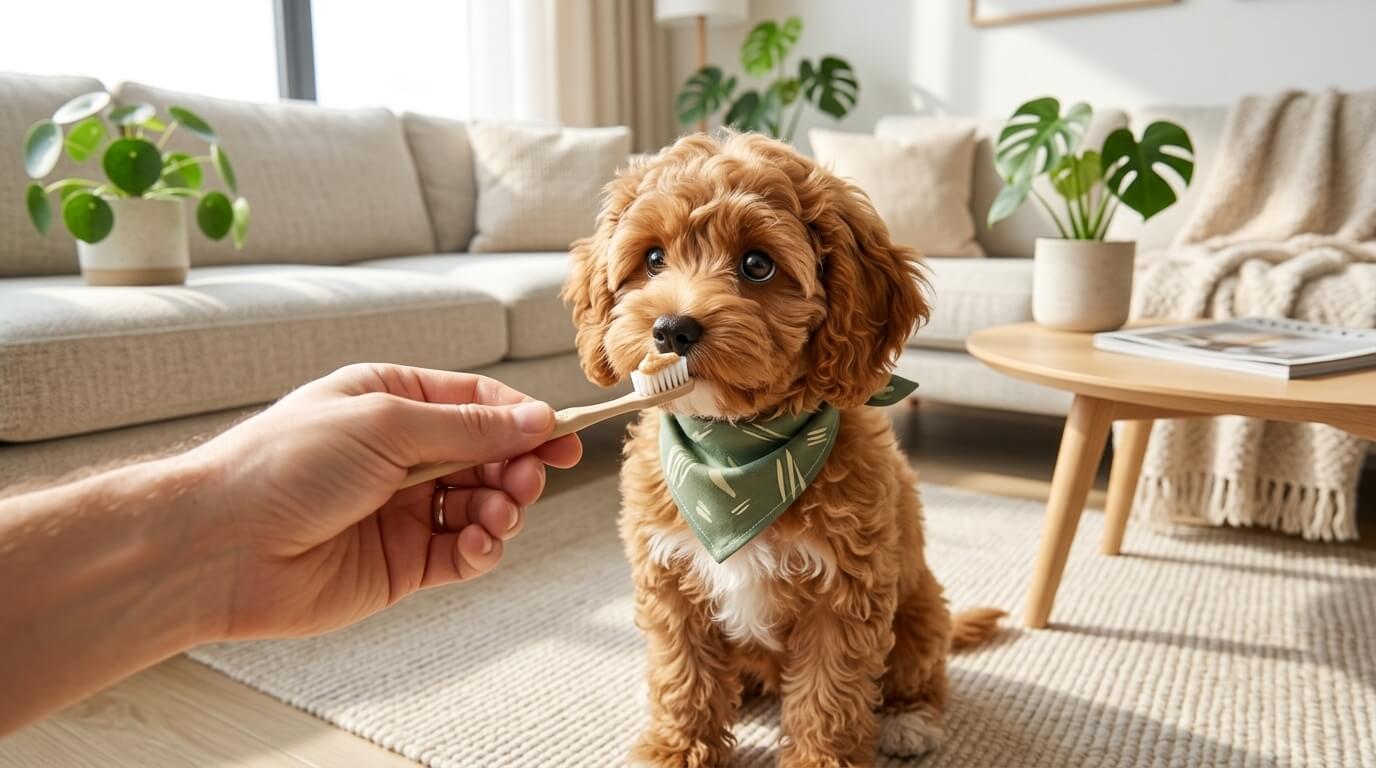
Dog dental care at home is one of the easiest routines to postpone, especially in an apartment where your dog seems clean, close, and healthy. But bad breath, plaque, sore gums, loose teeth, and mouth pain can build quietly long before a dog refuses food.
The goal is not to become your dog’s dentist. The goal is to build a realistic home routine that supports dental health between veterinary exams. Brushing, safe chews, mouth checks, and habit tracking can help, but they do not replace professional care when your veterinarian recommends it.
This guide is written for apartment dog owners who need a quiet, low-mess, repeatable routine. You will learn what to check, how to introduce brushing, how to judge dental products without overbuying, and when to call the vet.
Dog Dental Care at Home: Quick Answer
Dog dental care at home usually starts with a gradual toothbrushing routine using dog-safe toothpaste, short handling sessions, and rewards. Add veterinarian-guided dental checks, VOHC-accepted products when appropriate, safe chewing habits, diet and weight awareness, and regular vet visits. Never use human toothpaste, never scrape teeth with sharp tools at home, and call your veterinarian for bleeding, pain, loose teeth, swelling, appetite changes, or severe bad breath.
| Dental Goal | Home Action | Vet Role |
|---|---|---|
| Reduce plaque buildup | Brush with dog-safe toothpaste | Check teeth and gums at exams |
| Support chewing safely | Choose appropriate chews | Advise on dental risk |
| Catch problems early | Do weekly mouth checks | Diagnose pain, disease, or infection |
| Build cooperation | Use short positive sessions | Suggest handling plans if needed |
| Avoid unsafe products | Skip human toothpaste and hard objects | Recommend safe options for your dog |

Table of Contents
What Home Dental Care Can and Cannot Do
Home dental care is powerful when it is used for the right job. It can help reduce daily plaque buildup, make you notice changes earlier, and teach your dog that mouth handling is not scary. It cannot diagnose disease under the gumline, take dental X-rays, remove established calculus safely, treat infected teeth, or tell you whether a painful tooth needs extraction.
That boundary matters because dog dental problems often hide well. A dog may still eat, play, and wag while one side of the mouth is sore. Some dogs simply chew differently, drop kibble, avoid hard treats, or become more sensitive around the face. In a small apartment, those changes may look like picky eating, moodiness, or training resistance before they look like a medical problem.
| Home Care Is Good For | Vet Care Is Needed For |
|---|---|
| Teaching lip lifts and brushing cooperation | Pain, swelling, loose teeth, bleeding, or infection |
| Daily plaque-control habits | Dental X-rays, periodontal evaluation, and treatment planning |
| Choosing safer chews and watching calories | Heavy tartar, broken teeth, oral masses, or chronic bad breath |
| Tracking breath, chewing changes, and gum appearance | Professional cleaning, anesthesia decisions, and pain control |
AAHA’s dental care guidance is very clear that brushing helps with plaque, but established calculus and disease below the gumline are professional veterinary issues. That is why this guide focuses on safe prevention, early noticing, and cooperation rather than promising that home care can replace a dental exam.
Why Dental Care Matters for Apartment Dogs
Apartment dogs are often small or medium dogs, and many small breeds are prone to dental problems. Apartment life can also make dental issues easier to miss. Your dog may eat soft food, nap nearby, and still act normal even when their mouth is uncomfortable.
Dental disease can affect more than breath. Painful gums, loose teeth, infection, and trouble chewing can change appetite, mood, sleep, and behavior. Some dogs become less playful, avoid hard food, drop kibble, paw at the mouth, or resist face handling.
Dental care also connects to your broader health routine. During indoor dog vet visits, ask your veterinarian to check the teeth, gums, breath, bite, and any chewing habits. Home care is strongest when it supports what your vet sees in the exam room.
The Apartment Problem: You Need a Routine That Does Not Take Over the Room
Many dental routines fail for boring reasons. The toothpaste is in one cabinet, the brush is in another, the treats are across the room, the dog slips on the bathroom floor, and the owner only remembers brushing when the breath is already bad. In an apartment, friction matters. If the routine takes ten steps to set up, it probably will not happen often.
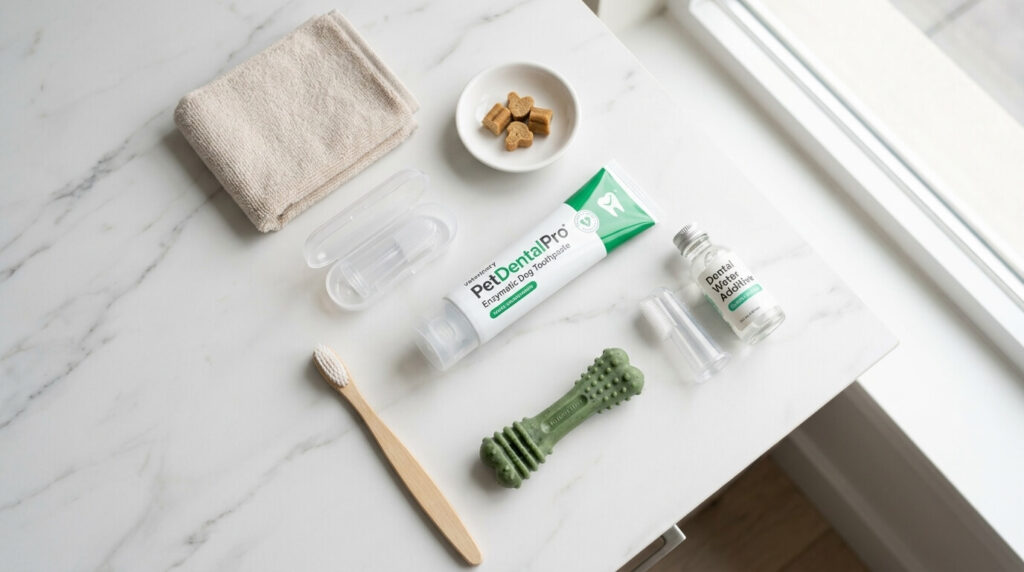
Set up a small dental station that can be moved and hidden easily: dog toothpaste, a brush or finger brush, a few high-value rewards, gauze or wipes if your vet recommends them, and a note card for tracking. Keep it out of your dog’s reach, especially if the toothpaste flavor is tempting. The goal is not a fancy grooming corner. The goal is a repeatable 60-second routine you can actually do.
Choose the location by your dog’s body language. A bathroom may be convenient for cleanup, but many dogs dislike slippery floors, echo, tight corners, and being blocked near a door. A mat beside the sofa, a calm bedroom corner, or a stable lap position for a small dog may work better. If your dog backs away, freezes, licks lips, turns the head, or paws at you, make the next session easier.
The 7 Essential Steps
1. Start With a Mouth Check Baseline
Before you start brushing, learn what your dog’s mouth looks and smells like on a normal day. Lift the lips gently, look at the outer surfaces of the teeth, check gum color, and notice breath. Keep the session short and reward your dog afterward.
Do not force the mouth open if your dog resists. You are not trying to diagnose disease at home. You are learning what to report to your veterinarian and whether your dog needs a gentler handling plan.
Call your veterinarian if you notice broken teeth, loose teeth, swelling, bleeding, pus, extreme odor, obvious pain, chewing on one side, facial swelling, appetite changes, or a dog who suddenly refuses mouth handling.
For the first week, do not judge the mouth like a dentist. Make a simple baseline. Write down what you can observe without forcing your dog.
| Check | Normal-ish | Call the Vet |
|---|---|---|
| Breath | Mild dog breath | Strong odor, sudden change, rotten smell |
| Gums | Pink or normally pigmented for your dog | Bleeding, swelling, pus, obvious redness, pain |
| Chewing | Uses both sides comfortably | Drops food, avoids hard food, chews one-sided |
| Handling | Allows brief lip lift with reward | New growling, snapping, panic, or pain response |
2. Use Only Dog-Safe Toothpaste
Human toothpaste is not for dogs. Many human products contain ingredients that should not be swallowed by pets, and dogs cannot rinse and spit like people. Use toothpaste made for dogs, and introduce it like a treat rather than a medicine.
Put a small amount on your finger and let your dog lick it if they are comfortable. If your dog turns away, try a different flavor or move more slowly. The first goal is not brushing. The first goal is teaching your dog that dental care predicts good things.
3. Teach Mouth Handling Before Brushing
Many failed brushing routines start too fast. Owners buy a toothbrush, hold the dog’s face, and try to clean every tooth on day one. The dog learns that brushing feels trapped and strange.
Instead, start with touch. Touch the cheek, reward. Lift the lip for one second, reward. Touch a front tooth with your finger, reward. Stop before your dog struggles. Tiny sessions build cooperation faster than one long battle.
4. Introduce the Brush Gradually
Once your dog accepts mouth handling and toothpaste, introduce a soft dog toothbrush, finger brush, or vet-recommended tool. Let your dog sniff it. Add toothpaste. Touch one or two teeth. Reward. End.
Over time, work toward brushing the outer surfaces of the teeth, especially the gumline where plaque builds. You do not need to pry the mouth open for a perfect human-style brushing session. A realistic routine your dog allows is better than an ideal routine that never happens.
5. Make It Apartment-Friendly
Dental care should fit your space. Keep supplies in one small container: toothpaste, brush, wipes if recommended, rewards, and a note card for tracking. Choose a location where your dog feels stable, such as a rug, mat, or low sofa area if appropriate.
Avoid slippery bathroom floors if they make your dog tense. Do not corner your dog between the tub and door. For small dogs, a stable lap routine may work. For larger dogs, sitting beside them on a rug may be calmer.
6. Choose Dental Chews and Products Carefully
Dental chews, water additives, wipes, and diets can support a home routine, but they are not all equal and they do not replace brushing or vet care. The Veterinary Oral Health Council (VOHC) lists accepted products that meet its standards for helping control plaque or tartar.
Choose products by size, chewing style, calories, dental condition, and supervision needs. If your dog swallows chews whole, guards food items, has allergies, is overweight, or has dental pain, ask your veterinarian before adding dental chews.
For chew safety in apartments, connect this decision with indestructible dog toys for apartments. Dental chews and durable toys are not the same thing, but both require size, hardness, supervision, and replacement judgment.
7. Keep Veterinary Dental Care in the Plan
Home care can slow buildup and help you notice problems, but it cannot safely clean under the gumline or diagnose hidden dental disease. Your veterinarian can tell you whether your dog needs monitoring, professional cleaning, dental X-rays, extractions, pain control, or a different home plan.
If your dog already has heavy tartar, painful gums, or loose teeth, do not try to scrape teeth at home. That can hurt your dog and miss the deeper problem. Use home care as prevention and support, not as a substitute for treatment.
Use Cooperative Care, Not Restraint
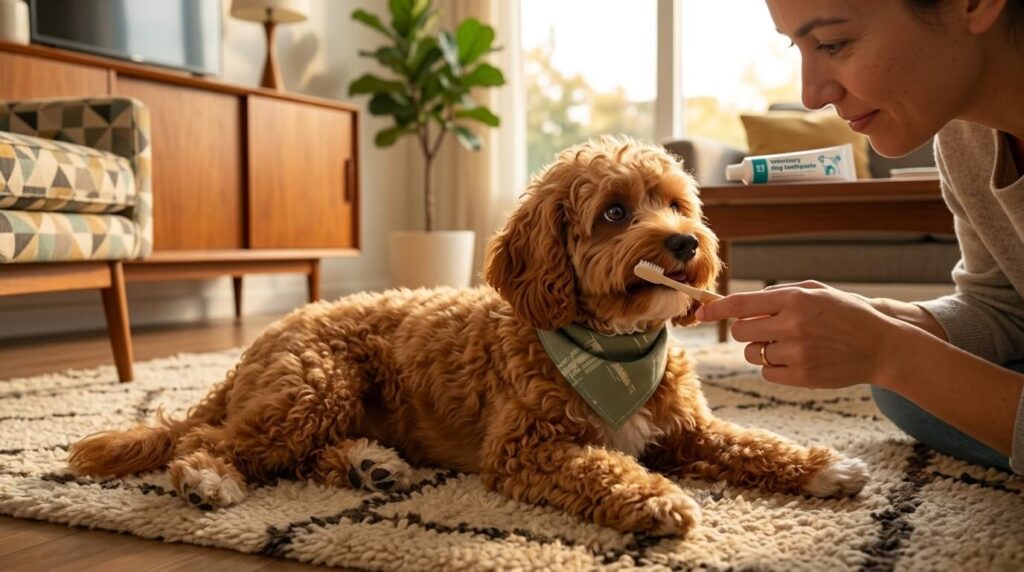
For apartment dogs, dental care works best when it feels like a tiny training game, not a grooming ambush. Cooperative care means the dog learns what is about to happen and can stay emotionally involved instead of being held still until the human finishes. This is especially important for small dogs, rescue dogs, senior dogs, and dogs who already dislike face handling.
Try a simple consent-style rhythm. Present your hand near the cheek. If your dog stays close, touch for one second and reward. If your dog turns away, pause and make the next repetition easier. You are not giving the dog unlimited control over medical care, but you are teaching trust during routine handling.
Do not wait for a crisis to teach mouth handling. It is much easier to practice one calm lip lift while your dog is comfortable than to introduce face handling for the first time when a tooth hurts.
A 4-Week Toothbrushing Training Plan
This plan is for dogs who are healthy enough to begin handling practice and do not have obvious mouth pain. If your dog shows pain, bleeding, or aggression around mouth handling, call your veterinarian first.
Week 1: Touch and Reward
Practice once a day for 30 to 60 seconds. Touch the cheek, lift the lip briefly, and reward. Do not brush yet. The goal is comfort with gentle handling.
Week 2: Toothpaste as a Positive Cue
Let your dog lick a small amount of dog toothpaste. Touch one front tooth with your finger if your dog is relaxed. Reward and stop. Keep the session easy.
Week 3: Add the Brush
Introduce the toothbrush or finger brush. Touch one or two outer tooth surfaces with toothpaste. Reward. Slowly increase the number of teeth only if your dog stays loose and cooperative.
Week 4: Build a Short Routine
Try brushing a few teeth on each side, focusing on the outer surfaces near the gumline. You may not brush the whole mouth every time. Consistency matters more than perfection.
Apartment Dental Care Schedule
| Frequency | Task | Why It Helps |
|---|---|---|
| Daily or often | Short brushing practice | Builds habit and reduces plaque opportunity |
| Weekly | Mouth and breath check | Spots changes early |
| Monthly | Check supplies and chew safety | Removes worn items |
| Vet-directed | Dental exams and professional care | Finds problems home care cannot |
If daily brushing is not realistic yet, do not quit. Start with three very short sessions per week and build from there. A small routine that grows is better than a perfect plan abandoned after two days.
Small-Apartment Setup for Dental Care
In a small apartment, the routine is easier when the supplies have one home. Use a small washable pouch or container for the toothbrush, toothpaste, rewards, wipes if recommended, and a simple tracking card. Keep it away from your dog’s reach, especially if the toothpaste flavor is tempting.
Choose a predictable location. A rug beside the sofa, a calm bedroom corner, or a mat near your dog’s bed can work better than a slippery bathroom. If your dog already relaxes in a crate or rest zone, do not turn that safe place into a forced dental station. Keep dental care separate from spaces your dog uses to decompress.
For dogs who get restless at night, dental care can become part of the wind-down routine after exercise and before sleep. Pair it with the how to tire out a dog before bed guide if your evenings feel chaotic. Calm bodies make mouth handling easier.
How to Judge Dental Products Without Getting Fooled
Dog dental products are confusing because many packages sound scientific. The cleanest shortcut is to look for whether a product has the VOHC Seal of Acceptance for plaque, tartar, or both. That does not mean every VOHC product is right for every dog, and it does not mean non-VOHC products are automatically unsafe. It means the product has met VOHC standards for the claim shown.
After that, judge the product by your dog, not by the marketing:
- Size: A chew that is too small can be swallowed too fast.
- Hardness: Very hard items may be risky for forceful chewers or dogs with tooth wear.
- Calories: Daily dental chews can quietly become a weight problem.
- Medical fit: Allergies, pancreatitis history, kidney disease, obesity, and dental pain can change what is safe.
- Supervision: The first few uses should be watched, especially with gulpers.
Dental products should support the routine. They should not become a substitute for brushing practice, vet exams, or noticing pain.
Choosing Between Brushes, Wipes, Chews, and Additives
Not every tool has the same job. A toothbrush is for mechanical cleaning. Wipes may help with handling practice or surface cleaning for some dogs. Chews may support chewing and tartar-control goals when appropriate. Water additives are convenience tools, not magic.
| Tool | Best Use | Watch Out For |
|---|---|---|
| Dog toothbrush | Regular plaque-control routine | Too much pressure or rushing |
| Finger brush | Transition tool for gentle dogs | Fingers near teeth with nervous dogs |
| Dental wipes | Handling practice or quick surface care | Not a full replacement for brushing |
| Dental chews | Supplemental chewing support | Calories, gulping, hardness, allergies |
| Water additives | Veterinarian-guided support for some dogs | Not enough alone for many dogs |
If you are already using food puzzles or chews for enrichment, do not stack dental chews on top without checking calories. Apartment dogs can gain weight quietly. The is my dog overweight guide can help you spot when treats and chews are adding up.
What to Avoid at Home
Do Not Use Human Toothpaste
Use dog-safe toothpaste only. Dogs swallow toothpaste, and human products are not designed for that use.
Do Not Scrape Teeth With Sharp Tools
Dental scraping at home can hurt gums, damage enamel, and create a false sense that the problem is fixed while disease remains under the gumline.
Do Not Rely Only on Water Additives
Water additives may help some routines, but they are not a complete dental plan. Ask your veterinarian what is appropriate for your dog.
Do Not Give Chews That Are Too Hard
Very hard chews can be risky for some dogs. If your dog bites down with force or has tooth wear, ask your vet before offering hard items.
Do Not Ignore Bad Breath
Dog breath does not need to smell minty, but strong persistent odor can signal dental disease or another health issue. Mention it at the vet.
Special Notes for Small Apartment Dogs
Small apartment dogs deserve extra dental attention because small mouths can make dental problems easier to miss and harder to manage late. A toy breed may eat normally even with crowded teeth or gum irritation. A dog who weighs 10 pounds can also gain weight quickly if a dental chew adds too many daily calories.
For small dogs, choose appropriately sized tools. A brush head that looks tiny to you may still be too big for your dog’s mouth. A finger brush may feel bulky. Gauze, a small pet toothbrush, or a vet-recommended wipe may be a better transition tool during training. Work with the mouth you have, not the one shown on the product package.
Also think about where the dog stands. A small dog on a slippery bathroom floor may feel trapped and unstable. A towel on your lap, a low sofa beside you, or a stable mat can make the same handling feel calmer. Keep the session short enough that your dog leaves wanting the next treat, not dreading the next brushing.
Dental Care for Different Apartment Dogs
Small Dogs
Small dogs often need special attention because their mouths can be crowded and dental problems may develop early. Use appropriately sized brushes and chews. Do not assume tiny teeth need tiny effort.
Senior Dogs
Senior dogs may have pain, loose teeth, or medical conditions that change what home care is safe. Ask your veterinarian before starting a new chew or brushing routine if your senior dog has mouth sensitivity.
Rescue Dogs
Some rescue dogs have unknown dental history or fear of face handling. Start slowly and ask the vet what needs attention first. Trust-building matters as much as technique.
Dogs Who Hate Handling
Do not force brushing. Start with cooperative care: touch, reward, pause, and end early. If your dog growls, snaps, or panics, ask a veterinarian or qualified trainer for a plan.
Problem-Solving Common Dental Roadblocks
My Dog Runs Away When I Pick Up the Toothbrush
The toothbrush has probably become a warning sign. Put it on the floor at a distance, reward your dog for noticing it, and put it away. Repeat until the brush predicts treats instead of restraint. Then move back to lip lifts and one-tooth touches.
My Dog Only Lets Me Brush the Front Teeth
That is still a start. Brush the front teeth calmly, then work toward one side tooth for one second. Do not turn progress into a wrestling match. Slow expansion usually works better than forcing access.
My Dog Chews the Toothbrush
Use shorter sessions and reward calm stillness. Some dogs need a finger brush, gauze, or vet-recommended alternative during training. If your dog bites down hard, protect your fingers and ask your vet or trainer for handling advice.
My Dog Has Bad Breath Even With Brushing
Do not just brush harder. Persistent strong odor can come from dental disease or other health issues. Schedule a veterinary exam and bring details about brushing frequency, diet, chews, and when the odor changed.
My Dog Will Not Use Dental Chews
Dental chews are optional support, not a requirement. Focus on brushing training and vet guidance. Some dogs dislike the texture, and some should not use certain chews because of diet, allergies, or chewing style.
When Bad Breath Is Not Just a Brushing Problem
It is tempting to treat bad breath as a hygiene problem only. Sometimes better brushing helps. But strong, persistent, or suddenly worse breath can also point to dental disease, infection, oral injury, kidney or digestive concerns, or another health issue your veterinarian should evaluate. Brushing harder is not the answer when the dog is in pain.
Make an appointment if the breath changes quickly, your dog drools more, drops food, paws at the mouth, avoids chews, has visible swelling, or becomes suddenly sensitive around the face. Bring notes about diet, treats, chews, brushing frequency, and when you first noticed the odor. Those details are more useful than apologizing that you did not brush perfectly.
Dental Care and Behavior
Mouth pain can look like behavior. A dog may growl when touched, avoid toys, stop tugging, drop food, become picky, or seem grumpy. In an apartment, owners may first notice the behavior problem because the dog refuses a chew, barks more, or avoids bedtime handling.
If behavior changes suddenly, think health first. Dental pain is not the only possible cause, but it belongs on the list. Mention changes during vet visits and bring videos when possible. If your dog also struggles with anxiety or handling sensitivity, the calming aids for dogs article may help you ask better questions, but medical pain should still be ruled out.
7-Day Starter Plan
If you feel overwhelmed, use this simple first week. It is designed to build cooperation, not clean every tooth immediately.
| Day | Task | Goal |
|---|---|---|
| Day 1 | Touch cheek, reward | Easy positive start |
| Day 2 | Lift lip for one second, reward | Comfort with handling |
| Day 3 | Let dog lick toothpaste | Introduce flavor |
| Day 4 | Touch front tooth with finger | First tooth contact |
| Day 5 | Show brush, reward | Make brush neutral |
| Day 6 | Touch one tooth with brush | Tiny brushing step |
| Day 7 | Repeat easiest successful step | Build confidence |
If your dog fails a step, go back one step. That is not failure. That is good training information.
How Diet and Treats Affect Dental Care
Diet does not replace brushing, but it does affect dental and overall health. Sticky treats, frequent snacks, and extra chews can add calories. Food-stuffed enrichment can be helpful, but it should count toward daily intake.
If your dog is gaining weight while you add dental chews, revisit best diet for apartment dogs. Dental care and weight care should work together, not compete.
Ask your vet whether a dental diet, chew, or product is appropriate for your dog. This is especially important for dogs with allergies, pancreatitis history, obesity, kidney disease, or other medical needs.
When to See the Vet
Call your veterinarian if you see any of these signs:
- Bleeding gums or blood on toys.
- Loose, broken, or discolored teeth.
- Swelling around the face or jaw.
- Strong persistent bad breath.
- Dropping food or chewing on one side.
- Pawing at the mouth.
- Sudden refusal of hard food or chews.
- Visible pain during brushing or mouth checks.
Dental pain can change behavior. If your dog becomes irritable, avoids touch, stops playing, or acts differently, mention dental health during the exam. Behavior and health often overlap.
Apartment-Specific Dental Mistakes
Keeping Dental Chews in Reach
Many dental chews smell exciting. Store them like food, not like toys. A dog who breaks into a bag can eat too many calories, swallow pieces too fast, or develop stomach upset.
Brushing Only When Breath Gets Bad
If the brush appears only after bad breath becomes obvious, the routine starts during a problem. Keep handling practice normal and boring, even when the mouth seems fine.
Turning the Bathroom Into a Trap
Bathrooms are convenient for humans but not always comfortable for dogs. If your dog slips, freezes, or avoids the doorway, move the routine to a mat or calmer corner.
Adding Chews Without Subtracting Calories
Daily chews count. If your dog is small, overweight, or on a calorie-controlled plan, ask your vet how to fit dental products into the diet.
Ignoring Chew Noise and Mess
In shared-wall apartments, a hard chew on bare floor can be surprisingly loud. Use a mat, choose appropriate chewing times, and remove chews that splinter, stain, or leave sharp pieces.
Common Mistakes
Mistake 1: Starting With a Full Brushing Session
Most dogs need a gradual introduction. Start with handling, then toothpaste, then a brush.
Mistake 2: Buying Products Without Checking Fit
A dental chew that is too small, too hard, or too calorie-heavy may not fit your dog. Choose by dog, not by label.
Mistake 3: Waiting Until Breath Is Severe
Bad breath often appears after problems have already started. Routine checks are easier than crisis care.
Mistake 4: Treating Home Care as a Replacement for the Vet
Home care is support. Veterinary dental exams and professional care are still important when needed.
Mistake 5: Quitting After One Bad Session
If your dog resists, make the next session easier. One tooth touch with a reward can be progress.
FAQ
What is the best dog dental care at home routine?
The best dog dental care at home routine is one your dog accepts consistently: dog-safe toothpaste, gradual brushing, weekly mouth checks, safe dental products when appropriate, and regular veterinary dental exams.
How often should I brush my dog’s teeth?
Many veterinarians encourage frequent brushing, but the right goal depends on your dog and your starting point. If daily brushing is not possible yet, build gradually with short positive sessions.
Can dental chews replace brushing?
No. Dental chews may support oral care, especially if they are appropriate for your dog, but they do not replace brushing or veterinary dental care.
What does VOHC mean?
VOHC stands for Veterinary Oral Health Council. Its accepted product list helps owners identify products that meet VOHC standards for plaque or tartar control claims.
Is bad breath normal for dogs?
Mild dog breath is common, but strong persistent odor can signal dental disease or another health issue. Ask your veterinarian if your dog’s breath changes or smells severe.
Can I use a finger brush instead of a toothbrush?
Some dogs accept finger brushes more easily. Use the tool your dog tolerates safely, and ask your veterinarian whether it is effective enough for your dog’s mouth.
Should apartment dogs have special dental care?
The dental biology is the same, but apartment routines are different. Small spaces benefit from low-mess supplies, quiet chew choices, safe storage, and a routine that fits daily life.
Next Step
Tonight, do one 30-second mouth handling session. Touch your dog’s cheek, lift the lip briefly, reward, and stop. Do not try to brush the whole mouth yet.
Dog dental care at home works best when it is calm, small, and repeatable. Build cooperation first, use safe products, and keep your veterinarian involved when symptoms or dental disease appear.