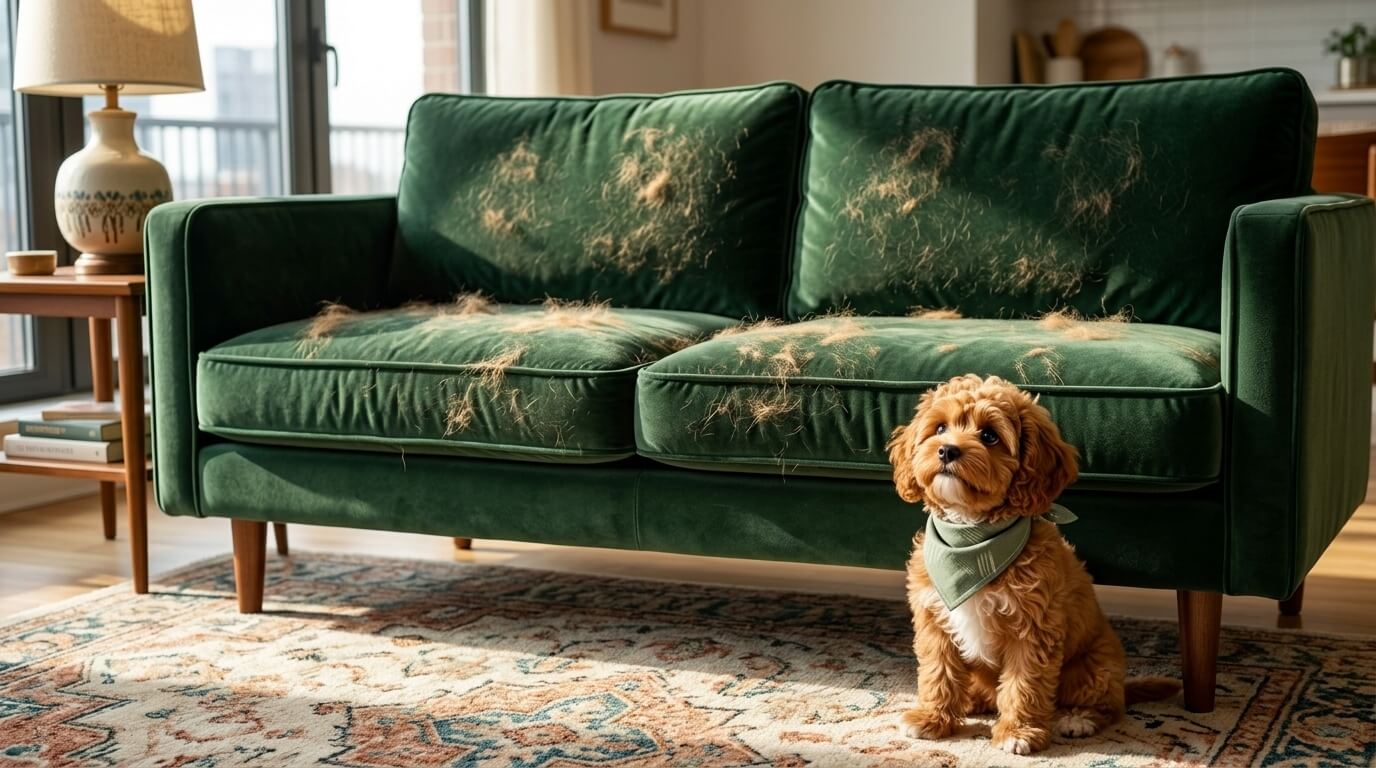
Get dog hair off everything becomes less of a joke when you live in a small apartment. Hair shows up on black leggings, sofa cushions, pillowcases, towels, laptop keyboards, baseboards, car seats, and the shirt you swear you just took from the dryer. In a bigger home, fur can spread out. In a small apartment, it feels like it has nowhere to go except directly onto you.
The goal is not a perfectly hair-free life. That is usually unrealistic with a shedding dog. The real goal is control: less hair floating, less hair embedded in fabric, less hair in laundry, less panic before guests arrive, and less time feeling like your apartment is losing a slow-motion fight against fur.
This guide treats dog hair as a system. You need to remove loose hair from the dog, lift stuck hair from surfaces, stop hair from recirculating through laundry, and build tiny routines that fit apartment life. A lint roller in every room is not a system. It is a cry for help with a sticky handle.
Quick Answer
To get dog hair off everything, brush your dog on a schedule, use a rubber tool on fabric surfaces, vacuum slowly with the right attachment, run hairy clothes through an air-only dryer cycle before washing, wash dog bedding separately, keep a washable cover on the dog’s favorite spot, clean filters and vents, use a damp microfiber cloth on hard surfaces, and treat sudden heavy shedding as a possible health or grooming issue.
| Hair Problem | Best First Tool | Apartment Tip |
|---|---|---|
| Hair on sofa | Rubber glove or fabric brush | Pull hair into piles before vacuuming |
| Hair on clothes | Dryer air cycle, then wash | Empty lint trap before and after |
| Hair on rugs | Rubber broom or squeegee | Use before vacuuming for embedded hair |
| Hair on bedding | Washable cover and frequent shaking | Keep dog blankets separate from human sheets |
| Hair in the air | Source grooming and surface cleaning | Air cleaners help some particles but do not replace cleaning |
| Hair in car seats | Rubber glove, pet brush, or seat cover | Clean before hair gets pressed in for weeks |
If odor is part of the problem, pair this with how to control dog odor in a small apartment. Hair carries dander, saliva, outdoor dust, and smell, so fur control and odor control often work together. trap shed hair close to the body — which means when it finally releases, it goes everywhere at once.
Table of Contents
Why Dog Hair Feels Worse in Apartments
Apartment fur problems are not only about how much your dog sheds. They are about density. Your dog sleeps, plays, dries off, eats, shakes, and rubs against furniture in the same few rooms. Your closet may be near the dog bed. Your laundry basket may be near the sofa. Your bed may be the guest room. There are fewer buffer zones.
Pet hair also behaves differently by surface. On smooth floors, it rolls into corners and under furniture. On upholstery, it weaves into fabric. On fleece and knits, it clings. In laundry, it can move from one item to another if you do not remove enough before washing. On rugs, it hides until sunlight hits the room and suddenly every strand becomes visible.
Pet dander adds another layer. The American Lung Association notes that pet dander and other allergens can become airborne and stick to furniture, bedding, and fabrics. That means cleaning is not just about visible hair. For allergy-sensitive households, regular surface cleaning, bedding control, and bedroom boundaries may matter.
The 9 Essential Fixes
1. Brush at the source before cleaning the room
The most efficient hair removal tool is the one used on the dog before loose coat reaches the sofa. Brushing does not stop normal shedding, but it can reduce the amount that lands on fabric. The ASPCA explains that healthy dogs shed old or damaged hair and that regular brushing can reduce the amount of hair in the home.
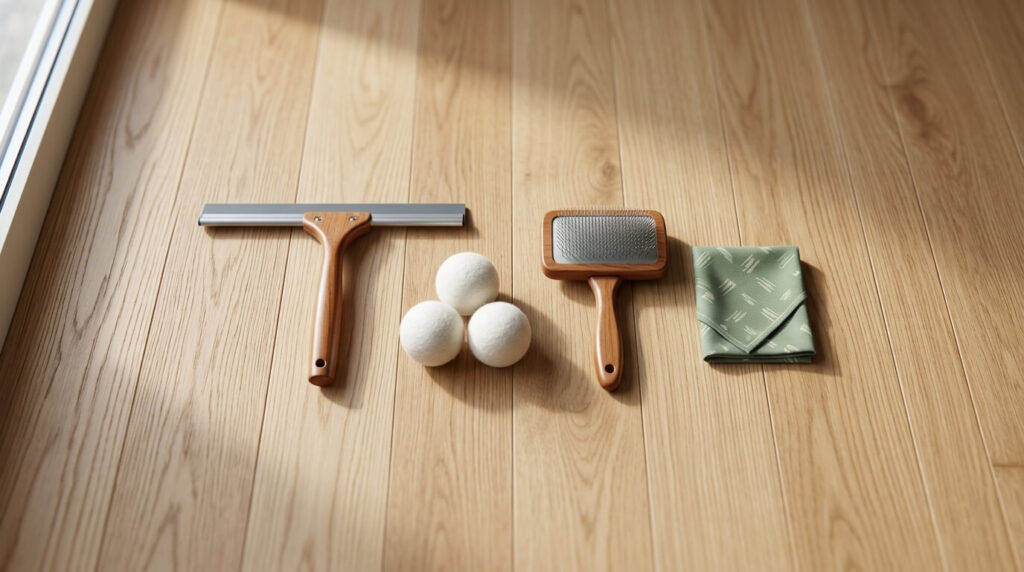
Match the tool to the coat. A short smooth coat may need a rubber curry or grooming mitt. A double coat may need an appropriate undercoat tool used gently. A long coat may need brushing plus combing to prevent mats. Curly coats often need professional grooming. If you are not sure, ask your groomer or veterinarian before buying a dramatic-looking tool that may be wrong for your dog’s coat.
Brush in one predictable place: bathroom floor, balcony-door mat, hallway towel, or a washable rug. Do not brush beside your bed or open closet. In a small apartment, the brushing location matters almost as much as the brush.
For a tool-by-tool setup, use best home dog grooming tools.
2. Use rubber before vacuuming fabric
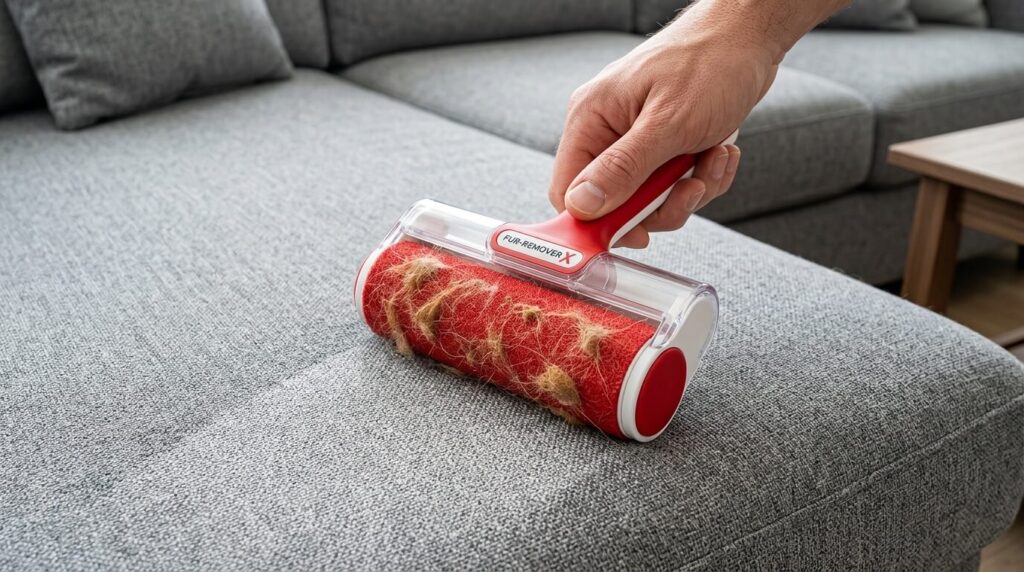
Vacuuming upholstery first can be frustrating because embedded hair may stay woven into the fabric. Rubber creates friction that pulls hair into clumps. Use a slightly damp rubber glove, rubber pet brush, rubber broom, or squeegee on sofas, chairs, rugs, stairs, and car seats. Pull in one direction, gather the hair, then vacuum the piles.
This is one of those tricks that feels almost too simple, but it works because dog hair often needs to be loosened before suction can remove it. Use gentle pressure. If your fabric pills, snags, or stretches, test a hidden area first.
For delicate upholstery, skip aggressive scraping. A fabric-safe pet hair brush may be better than a hard squeegee.
3. Vacuum slowly and clean the vacuum itself
Fast vacuuming makes the room look cleaner but often leaves embedded hair behind. Slow passes give the brush roll and suction time to lift hair. Change directions on rugs: north-south, then east-west. Use the upholstery attachment for cushions and the crevice tool along baseboards and sofa seams.
If automated daily pickup fits your routine, compare quiet robot vacuums for dog homes by brush design, mode-specific noise evidence, and dock footprint—not by anxiety claims.
The vacuum also needs maintenance. Hair wraps around brush rolls, clogs hoses, fills filters, and reduces suction. In an apartment, this is easy to ignore because storage is annoying and cleaning the vacuum feels like a second chore. But a pet-hair vacuum with a clogged brush is just a loud rolling object.
Empty the bin before it is packed. Wash or replace filters according to the manufacturer’s instructions. Cut hair from the brush roll carefully. If the vacuum smells like dog every time you turn it on, clean the bin, filter, and hose before blaming the apartment.
4. Fix the laundry order
Hairy laundry needs a different order than normal laundry. If you throw fur-covered clothes straight into the washer, hair can mat onto wet fabric, collect in the machine, or move to other items. Use the dryer first on an air-only or low/no-heat cycle for several minutes to loosen hair. Clean the lint trap. Then wash. Then dry again and clean the lint trap again.
Do not overload the washer. Clothes need room to move. Add a pet-hair laundry tool if you like, but do not expect it to solve a load that is packed too tightly. Wash dog blankets and bed covers separately from your own sheets and work clothes whenever possible.
After washing dog items, wipe visible hair from the washer drum, gasket, and door. If you live in a building with shared laundry, this is also basic neighbor courtesy. Nobody wants to find your dog’s undercoat on their black pants.
5. Put washable covers where your dog actually lives
Many owners try to clean the whole sofa instead of admitting the dog has one favorite corner. Cover that corner. Use a washable blanket, slipcover, pet throw, or designated dog bed cover. Choose something that can survive frequent washing and does not make your living room feel like a storage unit.
This is not about giving up on clean furniture. It is about choosing the battlefield. A cover can be shaken outside if allowed, rolled, washed, and replaced. A sofa cushion full of embedded fur is much harder.
If your dog needs a better place to rest, see small apartment dog beds. A good bed or cover in the right location can reduce how much fur lands on your furniture.
6. Clean hard floors with microfiber, not just sweeping
Dry sweeping can send hair and dander into the air, especially on hard floors. A microfiber mop or slightly damp microfiber cloth captures more instead of chasing hair from one side of the room to the other. Use it along baseboards, under the sofa edge, under the dog bowl area, and around the bed.
Hard floors make hair visible, which is annoying but useful. You can see where the hair migrates. Corners, door tracks, under radiators, and behind crates often become fur storage. A quick daily microfiber pass in those zones can prevent weekend cleaning from feeling impossible.
If your dog tracks in dirt with the hair, add the routine from portable dog paw washer after wet walks.
7. Treat the car like a second apartment
Dog hair in car seats becomes worse when it is pressed in by bodies, heat, and time. Use a seat cover if your dog rides often. If hair is already embedded, use a rubber glove or pet-hair brush before vacuuming. Work in short strokes toward one pile, then vacuum.
Keep a small towel or blanket in the car if your dog rides after walks. It is easier to wash one cover than clean hair from every seam. If you use public transit or carriers, clean the carrier regularly too. Hair and dander inside a carrier can build up fast in a small apartment closet.
8. Use air cleaning as support, not magic
Air cleaners can help with some airborne particles under the right conditions, but they do not remove hair from sofas, bedding, or carpets. EPA guidance notes that many larger allergen particles settle on surfaces and cannot be removed by an air cleaner unless disturbed and resuspended. That means the air purifier is support, not a replacement for brushing, vacuuming, and washing fabric.
If you use an air purifier, choose the right room size, keep doors and windows in mind, and change filters on schedule. Place it where the dog spends time but not where hair directly blocks the intake. If the filter is covered in fur, clean the surrounding area more often.
Dog-safe plants can make a room feel fresher, but they do not replace cleaning either. If you use greenery, choose from dog safe air purifying plants and keep plants away from dogs who chew leaves or soil.
9. Watch for abnormal shedding
Normal shedding varies by breed, coat, season, health, and indoor living. But sudden heavy shedding, bald spots, itching, red skin, scabs, greasy coat, constant licking, dull hair that pulls out easily, or a change in odor should not be treated as a cleaning problem only. ASPCA grooming guidance lists excessive hair loss, skin irritation, bald patches, scratching, and constant licking as signs that should be discussed with a veterinarian.
If your dog is shedding more than usual after a diet change, medication, stress, illness, or move, pay attention. Cleaning harder may hide the symptom but will not help the dog.
For nutrition context, see best diet for apartment dogs. Food is not a quick fur fix, but overall health affects coat quality.
A Room-by-Room Hair Plan
Living room
Start with the dog’s favorite sofa spot. Remove the cover, shake if allowed, and wash it. Use rubber on the exposed cushion, then vacuum seams. Microfiber the hard floor under the sofa. Put the cover back before the dog returns. This order matters because cleaning the floor first means you will drop sofa hair onto it again.
Bedroom
If allergies are an issue, the American Lung Association recommends keeping pets off furniture and out of bedrooms of anyone with allergies. If your dog does sleep in the bedroom, use washable layers. A top blanket on the bed is easier to wash than the full comforter. Keep dog bedding separate from human pillows.
Closet
Closets collect hair when clean clothes are exposed near the dog’s resting area. Keep work clothes behind a door, in garment bags, or on higher shelves. Do not fold clean laundry on the dog’s favorite sofa cushion and then wonder why it looks worn once.
Entryway
The entryway collects paw dirt, leash dust, loose coat, and outdoor debris. Keep a small washable mat near the door, wipe paws when needed, and shake or wash the mat weekly. Hair here often carries more grit than hair from the bed.
The 15-Minute Reset Before Guests
When a guest texts “I’m downstairs,” you do not have time for a deep clean. Use this order:
- Put the dog in a calm spot with a safe chew or behind a gate.
- Grab the visible sofa cover or blanket and shake or fold it hair-side inward.
- Use a rubber glove on the guest seating spot.
- Vacuum or microfiber the main walkway.
- Lint-roll your own shirt last, not first.
This is not fake cleanliness. It is triage. Guests notice the chair they sit on, the floor path they walk through, and whether they leave covered in fur. They do not inspect the underside of the sofa unless you have unusually curious friends.
The Weekly Apartment Hair Routine
A realistic weekly routine beats heroic monthly cleaning. Try this:
- Daily: quick microfiber pass in corners and around the dog’s bed.
- Twice weekly: brush your dog in the same washable spot.
- Weekly: wash the dog blanket or bed cover.
- Weekly: rubber-brush sofa and rugs before vacuuming.
- Monthly: clean vacuum filters, brush roll, and hidden fur zones.
If your dog is blowing coat seasonally, increase brushing and laundry temporarily. Do not redesign your whole life around the worst two shedding weeks of the year. Just tighten the routine until the coat settles.
Match the Cleanup to the Hair Type
Not all dog hair behaves the same. Short stiff hairs can weave into upholstery like tiny needles. Long silky hair tends to gather in visible strands and corners. Soft undercoat floats, clumps, and sticks to filters. Curly coat may shed less visibly but can create mats if grooming slips. If one method feels useless, the problem may be hair type, not effort.
Short stiff hair
Short hair from breeds with smooth coats can be surprisingly stubborn on couches and car seats. It does not always roll into fluffy clumps. Use rubber friction first, then vacuum. For clothes, lint rollers may help, but a fabric brush often lasts longer and creates less waste.
Long hair
Long hair is easier to see but can wrap around brush rolls, chair legs, and laundry. Check the vacuum brush often. Use washable covers on favorite resting spots and comb your dog before mats form. Long hair on bedding is usually easier to control with a top blanket than by washing the whole comforter constantly.
Double-coat undercoat
Undercoat can feel endless during seasonal shedding. This is where source grooming matters most. A few extra brushing sessions during shedding season can save hours of surface cleaning. Be gentle and use the right tool; over-brushing can irritate skin. If you are unsure, ask a groomer to show you the safest tool and pressure.
Curly or low-shedding coats
Low-shedding does not mean no grooming. Hair can stay in the coat and form mats instead of falling on the floor. That may make the apartment look cleaner while the dog becomes uncomfortable. Keep brushing and professional grooming on schedule, especially behind ears, under legs, around the collar, and near the tail.
This is where a human eye matters. If your apartment suddenly has more hair than usual, ask whether the coat changed, the weather changed, the dog’s routine changed, or your cleaning routine slipped. If the dog looks itchy, patchy, greasy, or uncomfortable, treat that as a dog problem first and a housekeeping problem second.
Common Mistakes
Mistake 1: Only using lint rollers
Lint rollers are fine for final touch-ups, but they are expensive and inefficient as your main system. Use rubber, brushing, covers, laundry order, and vacuuming first. Roll your clothes at the end.
Mistake 2: Washing hairy items without a dryer pre-step
Water can make hair cling harder. A short air-only dryer cycle before washing can pull loose hair into the lint trap before the washer gets involved.
Mistake 3: Ignoring the dog’s favorite spot
Most hair problems have a source location. Find the dog’s favorite sofa corner, bed edge, rug, or window spot and control that surface first.
Mistake 4: Forgetting filters
Vacuum filters, dryer lint traps, air purifier filters, and HVAC vents can all become hair reservoirs. If the tools smell or lose power, clean the tool before buying another product.
Mistake 5: Treating sudden shedding as normal
Normal shedding is one thing. Bald patches, itching, red skin, greasy coat, or sudden coat change is another. Call your veterinarian when the hair problem looks like a health problem.
FAQ
What is the fastest way to get dog hair off everything before guests arrive?
Focus on the guest seating area, main walkway, and your own clothes. Use a rubber glove or fabric brush on the sofa, vacuum or microfiber the visible floor, and lint-roll yourself last.
How do I get dog hair out of laundry?
Run hairy items through an air-only dryer cycle before washing, clean the lint trap, wash with enough room for items to move, then dry and clean the lint trap again. Wash dog blankets separately when possible.
Do air purifiers remove dog hair?
Air purifiers may help with some airborne particles, but visible dog hair and many allergens settle on surfaces. You still need brushing, washing, vacuuming, and surface cleaning.
What removes dog hair from couches?
A rubber glove, rubber brush, squeegee, or fabric-safe pet hair tool can pull hair into clumps. After loosening the hair, vacuum seams and cushions.
How often should I brush my dog to reduce hair at home?
It depends on coat type. Some short-coated dogs need weekly brushing. Long, dense, or double coats may need brushing several times per week, especially during shedding seasons.
Why is my dog suddenly shedding more?
Seasonal coat changes are common, but sudden heavy shedding, bald spots, itching, redness, dull coat, or constant licking should be discussed with your veterinarian.
A Fur-Control Routine You Can Keep
Pick one source, one surface, and one laundry habit this week. Brush your dog in the same washable spot, cover the favorite resting place, and use the dryer-before-washer trick for hairy clothes. Once those three pieces are working, the rest of the apartment becomes much easier to manage.