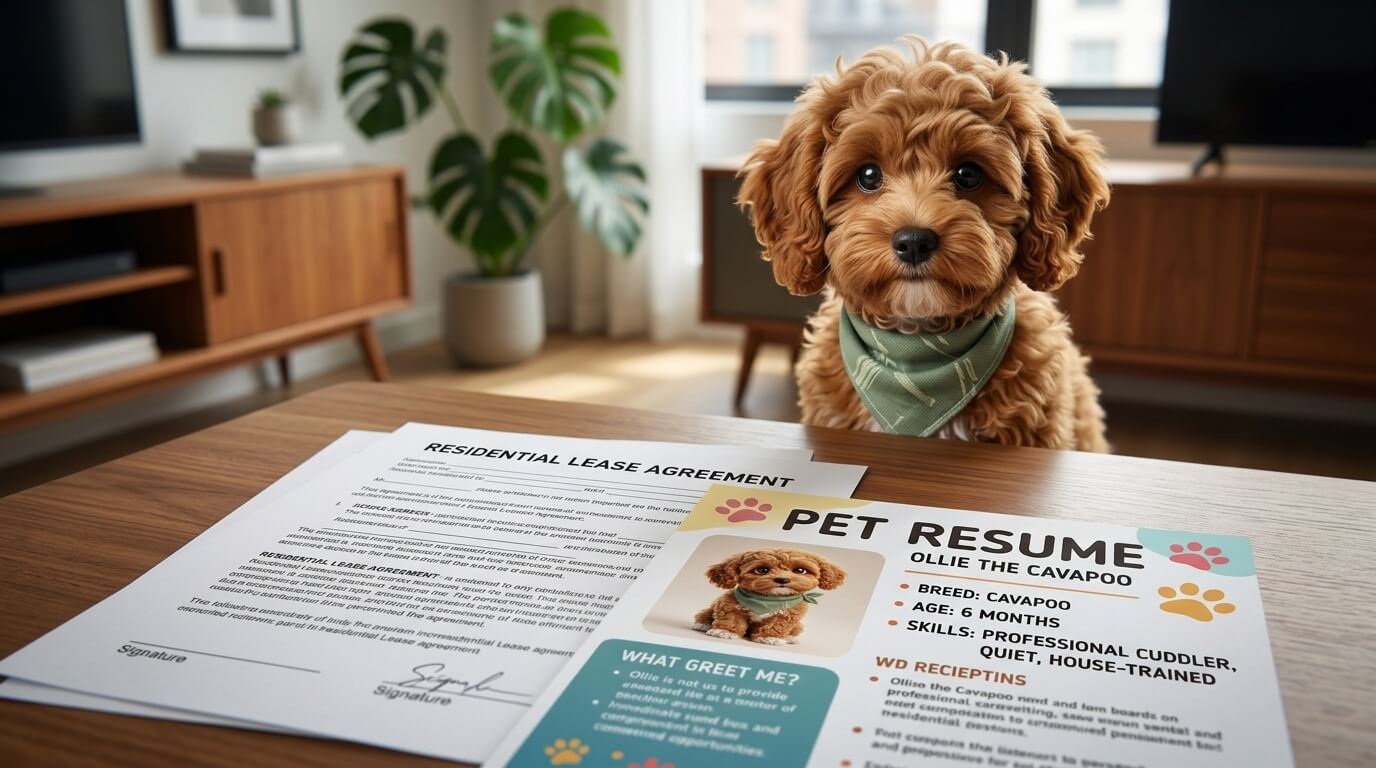
This renters guide to getting a dog is for the person who wants a dog but also has a lease, a deposit, neighbors, shared hallways, and a landlord or property manager to deal with. Getting a dog as a renter is not just an emotional decision. It is a housing decision.
A dog can fit apartment life beautifully when the lease, building, dog, and owner routine all match. Problems happen when people choose the dog first and check the pet policy later. Breed restrictions, weight limits, pet rent, deposits, noise rules, elevator expectations, and damage clauses can all change what is realistic.
This guide helps renters prepare before bringing a dog home. It covers pet addendums, fees, deposits, breed and weight rules, dog resumes, neighbor concerns, deposit protection, and the first week setup that makes you look like a responsible tenant.
Renters Guide to Getting a Dog: Quick Answer
Before getting a dog as a renter, read your lease and pet addendum, confirm written approval, understand pet rent and deposits, check breed and weight restrictions, prepare a dog resume if needed, choose a dog who fits your building, and set up your apartment to prevent noise, chewing, potty accidents, and neighbor complaints. Do not rely on verbal permission alone.
| Renter Question | Why It Matters | What to Do First |
|---|---|---|
| Does the lease allow dogs? | Permission controls everything | Read the lease and pet addendum |
| Are there breed or weight limits? | Some dogs may be restricted | Get rules in writing |
| What are the fees? | Pet rent and deposits change budget | Calculate monthly and move-in costs |
| Can the dog handle apartment life? | Noise and routine affect tenancy | Match dog to building and schedule |
| How will you protect the deposit? | Damage can be expensive | Dog-proof before arrival |
Table of Contents
1. Read the Pet Addendum Before Choosing a Dog
The pet addendum is the document that often decides what kind of dog is realistic. It may include weight limits, breed restrictions, vaccination requirements, pet rent, deposits, cleaning rules, noise rules, leash rules, waste rules, and consequences for damage or complaints.
Read the actual document, not just the apartment listing. Listings may say “pet friendly,” but the addendum may say dogs under 35 pounds, two-pet limit, no certain breeds, no puppies, or approval required before move-in. If anything is unclear, ask the property manager in writing.
This article is practical guidance, not legal advice. Lease rules vary by property and location. When money, housing, assistance animals, or disputes are involved, rely on your lease, local rules, and qualified professional guidance.
2. Understand Pet Rent, Fees, and Deposits
Renters often budget for adoption fees, food, and supplies but forget the housing costs. Pet rent may be monthly. Pet fees may be non-refundable. Pet deposits may be refundable only if there is no damage. Some buildings charge more for multiple pets.
Calculate the first-year cost before choosing the dog. Include pet rent, deposit, cleaning supplies, training, insurance if required, dog walker support, grooming, vet care, and damage prevention. A dog who is cheap to adopt can still be expensive to house responsibly.
Keep copies of receipts, pet agreements, move-in photos, and inspection notes. Good documentation helps if there is a deposit dispute later.
3. Check Breed and Weight Restrictions Early
Breed and weight restrictions can be frustrating, but renters need to know them before falling in love with a dog. Some rules come from property policy, insurance, local law, or owner preference. Even if you disagree with the rule, ignoring it can put your housing at risk.
Ask for the exact restriction in writing. Does the building restrict specific breeds, breed mixes, weight, shoulder height, age, number of dogs, or “aggressive behavior”? Are restrictions different for renewals versus new tenants? Are visiting dogs allowed?
If the building has a strict weight limit, do not choose a puppy whose adult size is unknown unless the lease allows it. If the building restricts certain breeds, do not assume a visual guess will be accepted. Clarify before adoption.
4. Prepare a Dog Resume
A dog resume can help when a landlord is open to dogs but wants reassurance. It does not override the lease, but it can show that you are organized and serious.
A simple dog resume may include:
- Dog’s name, age, breed or mix, and expected adult size.
- Vaccination and license status.
- Spay or neuter status if applicable.
- Training classes, crate training, or house-training status.
- References from a previous landlord, foster, trainer, or vet if available.
- Your plan for walks, alone time, noise, and waste cleanup.
- Proof of renter’s insurance if required.
Keep the resume honest. Do not claim a dog is silent, perfectly trained, or hypoallergenic unless you can support the claim. A realistic plan is more credible than a perfect-sounding promise.
5. Choose a Dog Who Fits the Building
A renter should choose for the building, not just the apartment unit. Think about elevators, stairs, lobby traffic, other dogs, thin walls, outdoor potty access, local weather, and how long the dog will be alone.
A quiet adult dog may fit a dense building better than a vocal puppy. A small dog may fit a weight limit but still bark at every hallway sound. A calm larger dog may be behaviorally easier but restricted by the lease. Match the dog to the written rules and the daily environment.
If you are still choosing a dog, compare the best apartment dogs guide and the narrower best dog breeds for small apartments guide before you commit.
6. Protect the Deposit Before the Dog Arrives
Deposit protection starts before adoption day. Most damage happens when the apartment is not ready: exposed cords, loose rugs, reachable trash, shoes by the door, open laundry, unprotected carpet, and no plan for potty accidents.
Set up a safe rest area, leash station, cleaning kit, trash control, washable rugs, cord management, and storage for shoes and bags. Take move-in photos if you have not already. Keep enzymatic cleaner available for accidents.
For a full setup plan, use the dog proof rental apartment guide and the new dog owner checklist.
7. Plan Noise, Alone Time, and Neighbor Risk
Noise is one of the biggest renter risks. Dogs bark for many reasons: hallway sounds, boredom, separation distress, window triggers, excitement, fear, or lack of exercise. The best time to solve barking is before complaints begin.
Set up the dog away from the door if possible. Use background sound. Build a walking and enrichment routine. Practice short alone-time sessions before full workdays. If the dog barks at hallway sounds, use the stop dog barking in apartment guide early.
If you work outside the home, also read how long can you leave a dog alone in an apartment. A dog who cannot handle your schedule may create noise, damage, and stress even if the lease allows dogs.
Apartment Owner Checklist Before Bringing the Dog Home
| Task | Why It Matters | Done? |
|---|---|---|
| Written pet approval | Protects your tenancy | |
| Pet fees and rent confirmed | Prevents budget surprises | |
| Breed and weight rules checked | Prevents adoption mismatch | |
| Potty route planned | Reduces accidents | |
| Noise plan prepared | Protects neighbor relationship | |
| Dog-proofing complete | Protects dog and deposit | |
| Workday care plan | Prevents distress and barking |
Approval Email Template
If your lease requires approval, keep the message clear and professional. Do not write a long emotional essay. Property managers usually need facts.
Example:
Hello, I am considering adopting a dog and want to confirm the pet approval process before moving forward. Could you please send the current pet policy, including any breed or weight restrictions, pet rent, deposits, required documents, vaccination requirements, and approval forms? I will not bring a dog into the apartment until I have written approval. Thank you.
If you already know the dog, add the dog’s age, estimated adult weight, breed or mix if known, vaccination status, training status, and your plan for noise, waste cleanup, and damage prevention. Keep the tone calm. You want to sound prepared, not defensive.

Rental Housing Types and Dog Risk
Different rental setups create different dog challenges. A good renters guide to getting a dog should account for the building, not just the lease.
Large Apartment Buildings
Large buildings usually have more people, more dogs, elevators, lobby traffic, and package deliveries. Noise and reactivity matter. A dog who barks at every hallway sound may struggle even if the unit is large.
Small Multi-Family Buildings
Small buildings may have fewer formal pet systems but closer neighbor relationships. One barking issue or shared-yard conflict can become personal quickly. Clear communication and waste cleanup matter.
Townhomes and Duplexes
These may offer more space but still share walls. Yard access may be limited or shared. Check fence rules, lawn damage rules, waste pickup expectations, and whether outdoor barking is allowed.
Studios
Studios require excellent organization. There is less room for separate feeding, sleeping, work, play, and potty supplies. Choose storage carefully and avoid dogs whose needs require more separation than the space can provide.
Deposit Protection Record
Keep a simple record from the beginning. This is not about expecting conflict. It is about being a responsible renter.
- Take move-in photos of floors, doors, baseboards, carpet, and walls.
- Save copies of pet approval, fee receipts, and pet addendum.
- Keep vaccination and license documents available.
- Document professional cleaning if required at move-out.
- Report maintenance issues that are not dog-related before they look like pet damage.
- Clean accidents quickly with appropriate cleaner.
If your dog has a chewing or scratching habit, address it early. Damage patterns are easier to prevent than explain later. For chewing furniture, use the dog chewing furniture apartment guide before the behavior spreads.
Day-One Apartment Setup
On the first day, keep the apartment simple. Do not give the dog full freedom immediately. Use a safe room, crate, pen, or gated area depending on the dog’s comfort and history. Let the dog learn one routine at a time: water, rest, potty route, leash station, feeding spot, and sleep area.
Do not invite everyone over on day one. Do not test the dog with long alone time immediately. Do not assume the dog understands elevators, lobbies, stairs, or hallway etiquette. If you live in a high-rise, start gentle dog elevator training early.
First 30 Days as a Renter With a Dog
The first month sets the tone for your dog, your neighbors, and your landlord. Do not aim for perfection. Aim for predictable routines and fewer surprises.
Week 1: Keep Life Small
Focus on potty route, sleep area, feeding spot, leash station, and short alone-time practice. Avoid flooding the dog with guests, dog parks, long absences, and constant new experiences.
Week 2: Watch Noise Patterns
Track barking, hallway reactions, window watching, and elevator stress. Fix small patterns before they become complaints. Add enrichment before known problem windows.
Week 3: Build Building Manners
Practice calm exits, elevator waiting, lobby movement, and passing people without pulling. Reward calm behavior in shared spaces. Avoid greetings in tight areas unless both sides clearly want it.
Week 4: Review the Lease Fit
Ask honestly: Is the dog handling the building? Are potty trips realistic? Is alone time working? Is noise improving? Are you protecting the apartment? Adjust now instead of waiting for a complaint or damage notice.
How to Choose Between a Puppy, Adult Dog, or Senior Dog
Renters often focus on breed, but age can matter just as much.
Puppies
Puppies are adorable but hard for renters. They need frequent potty trips, supervision, chewing management, socialization, and patience. In a high-rise, potty training may involve elevators, keys, hallways, and bad weather many times a day.
Adult Dogs
Adult dogs can be easier because their size, personality, and energy are more visible. A foster-based rescue may already know whether the dog barks, handles alone time, or settles indoors.
Senior Dogs
Senior dogs may be calmer and more predictable, but they can have medical needs, stairs issues, or more frequent potty needs. Check whether your building and budget can support that.
Special Note About ESAs and Assistance Animals
Emotional support animals and assistance animals involve rules that are different from ordinary pet policies, and the details can depend on location, documentation, housing type, and current regulations. Do not rely on social media claims or online certificate marketing.
If this applies to you, read official housing guidance, speak with your housing provider, and get qualified advice when needed. Be honest and careful. Misusing assistance-animal language can harm both renters and people with legitimate needs.
Questions Property Managers May Ask
Some property managers approve dogs routinely. Others ask detailed questions. Prepare calm, factual answers.
How big will the dog be?
Give the current weight and expected adult weight if known. If adopting a mixed-breed puppy, be honest that adult size is an estimate. Do not choose a dog who may exceed the lease limit unless the property confirms it is acceptable.
Will the dog be alone during the day?
Explain your plan: dog walker, lunch visit, daycare, remote work, gradual alone-time training, or other support. A clear schedule sounds more responsible than “the dog will be fine.”
What if the dog damages something?
Point to your prevention plan: crate or pen if appropriate, dog-proofing, cleaning supplies, training, supervision, and renter’s insurance if required. Do not promise zero accidents. Promise active management.
What if neighbors complain?
Explain that you will address noise quickly, track patterns, use training, and arrange support if needed. If you already know the dog has a barking issue, solve that before applying or be transparent about the plan.
Red Flags Before Getting a Dog as a Renter
Sometimes the responsible answer is to wait. A dog may be emotionally appealing but logistically risky right now.
- Your lease does not clearly allow dogs.
- You cannot afford pet rent, deposits, vet care, and emergency costs.
- Your work schedule leaves no realistic potty or care plan.
- Your building has thin walls and you are choosing a high-alert vocal dog.
- You want a puppy but cannot handle frequent potty trips.
- You are planning to hide the dog from the landlord.
- You cannot safely manage stairs, elevators, or outdoor potty access.
Waiting does not mean giving up. It may mean choosing a better building, saving more money, arranging dog care, or adopting an adult dog whose behavior is easier to evaluate.
Neighbor and Building Communication
You do not need to introduce your dog to every neighbor, but you do need to be aware that your dog affects shared spaces. Keep lobby greetings brief, avoid blocking elevators, clean up waste immediately, and do not let your dog approach people or dogs without permission.
If your dog is adjusting and may bark briefly, a simple note to direct neighbors can help: “I recently adopted a dog and am working on a quiet routine. If you notice a specific time when noise is an issue, please let me know so I can address it.” Keep it short. The goal is responsibility, not inviting a debate.
If your building has a front desk or property manager, ask whether there are preferred pet entrances, relief areas, elevator expectations, or waste rules. Following building norms makes you look like a lower-risk tenant.
Common Mistakes Renters Make
Mistake 1: Assuming Pet Friendly Means Any Dog
Pet friendly may still mean weight limits, breed rules, pet rent, deposits, and approval steps. Read the details.
Mistake 2: Getting Verbal Permission Only
Verbal permission is fragile. Get approval in writing before bringing the dog home.
Mistake 3: Choosing a Puppy Without a Schedule Plan
Puppies need frequent potty trips, supervision, and training. If you work long hours, plan help before adoption.
Mistake 4: Ignoring Noise Until a Complaint
Apartment barking is easier to prevent than repair after neighbors are already frustrated.
Mistake 5: Forgetting the Move-Out Deposit
Cleaning, carpet damage, door scratches, odor, and chewing can affect your deposit. Prevent damage early and document the apartment condition.

FAQ
Can renters get a dog in an apartment?
Yes, many renters can get a dog if the lease allows it and the dog fits the building rules. Always check the pet addendum, fees, restrictions, and written approval process before adoption.
What should I ask my landlord before getting a dog?
Ask about pet rent, deposits, non-refundable fees, breed restrictions, weight limits, required documents, vaccination rules, number of pets allowed, noise rules, and move-out cleaning requirements.
Do I need a dog resume for a rental?
Not always, but a dog resume can help when a landlord wants reassurance. Include honest details about the dog’s age, size, training, vaccination status, references, and your apartment management plan.
What dog is best for renters?
The best dog for renters is allowed by the lease and fits the building’s noise, size, potty, and routine demands. A calm adult dog may be easier than a vocal puppy in many apartments.
How do I protect my deposit with a dog?
Dog-proof early, use washable rugs, secure trash, clean accidents with enzymatic cleaner, manage chewing, protect doors, document move-in condition, and address barking or damage before it becomes a pattern.
Should I tell my landlord before getting a dog?
Yes. If your lease requires approval, get written permission before bringing the dog home. Bringing in a dog without approval can put your housing at risk.
Next Step
Before you choose a dog, open your lease and pet addendum. Write down the exact rules for pet rent, deposit, breed, weight, approval, cleaning, noise, and damage. Then choose a dog and apartment setup that fit those rules.
The strongest renters guide to getting a dog is not about convincing a landlord after the fact. It is about becoming the kind of renter who can show a realistic plan before problems begin. When the lease, dog, building, and daily routine all fit together, apartment dog life becomes much easier to defend and much easier to enjoy. Save your written approval, pet receipts, and move-in photos in one folder so they are easy to find later. Future-you will be grateful.