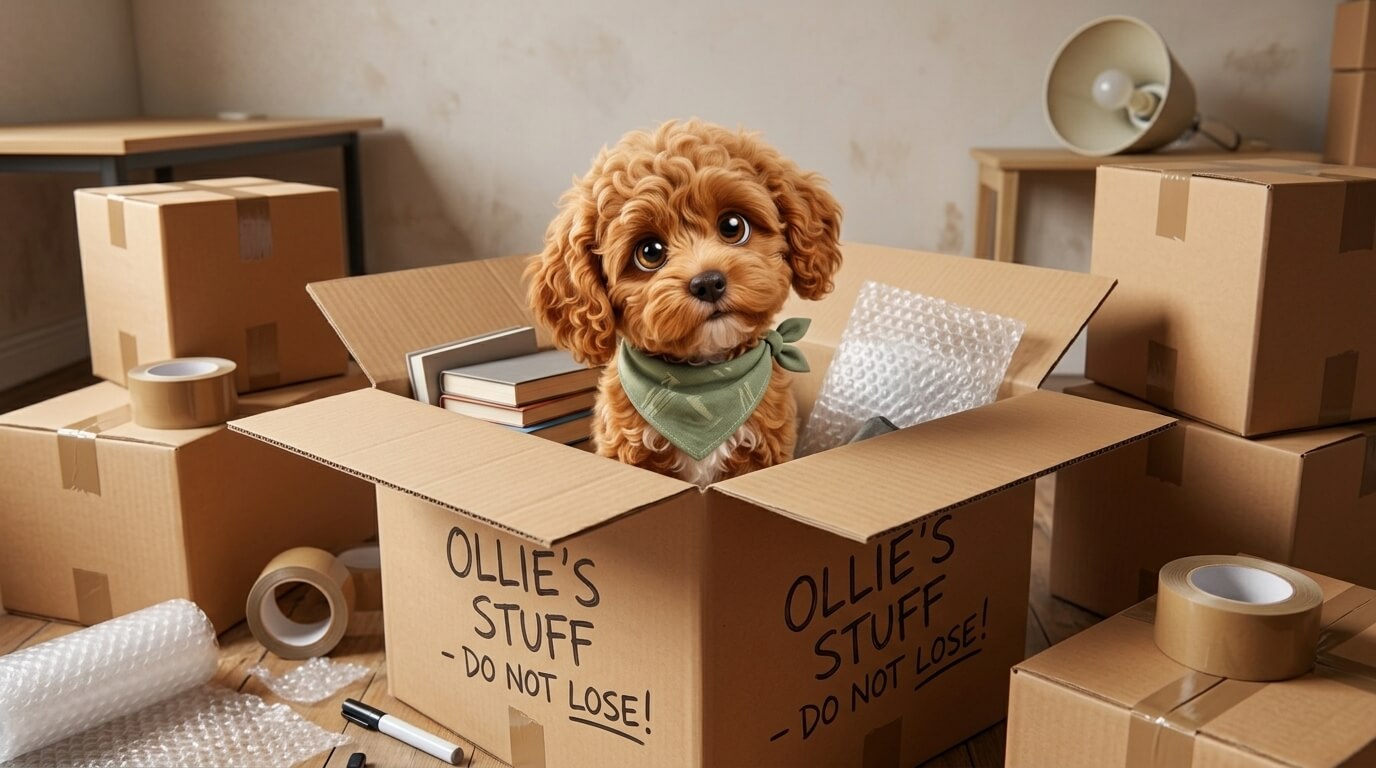
Moving to apartment with dog can feel simple on paper: pack boxes, sign the lease, carry the dog bed upstairs, and start fresh. In real life, your dog may be trying to understand a completely new world. The smells are different. The hallway echoes. The elevator opens and closes. Strangers pass the door. The old potty spot is gone. Even a confident dog can become clingy, barky, restless, or accident-prone after a move.
This guide is for renters and apartment dog owners who want a practical moving plan, not a generic moving checklist. The goal is to help your dog settle into the new apartment without creating new barking, potty, chewing, or alone-time problems during the first month.
If your dog already has separation anxiety, reactivity, fear of elevators, or a history of potty regression, use this plan more slowly. A move does not erase old patterns. It usually makes them louder for a while.
Moving to Apartment With Dog: Quick Answer
The best way to handle moving to apartment with dog is to keep your dog’s routine as familiar as possible, prepare a quiet safe zone before the movers arrive, take short structured potty trips from day one, introduce hallways and elevators gradually, delay long alone-time tests, and watch for stress signs during the first 30 days. Do not give your dog full apartment freedom on the first day if they are anxious, overstimulated, or not yet potty reliable in the new space.
Table of Contents
The 7 Calm Stress-Free Steps
1. Prepare Your Dog Before Moving Day
Start before the truck arrives. Dogs notice packing changes: boxes appear, furniture moves, routines shift, and people become tense. If you wait until moving day to think about your dog, the whole event may feel sudden and unsafe to them.
One to two weeks before the move, keep meals, walks, sleep, and play as predictable as possible. Let your dog sniff boxes, but do not allow chewing or climbing into packed areas. If your dog uses a crate, pen, or bed, keep that item available until the final packing stage. Familiar scent is useful in the new apartment.
Make a small dog moving bag with food, medication, leash, harness, poop bags, water bowl, treats, grooming wipes, a towel, vaccination records if needed by the building, and a favorite chew. Do not bury these items in a random box.
2. Set Up the New Apartment Before Exploration
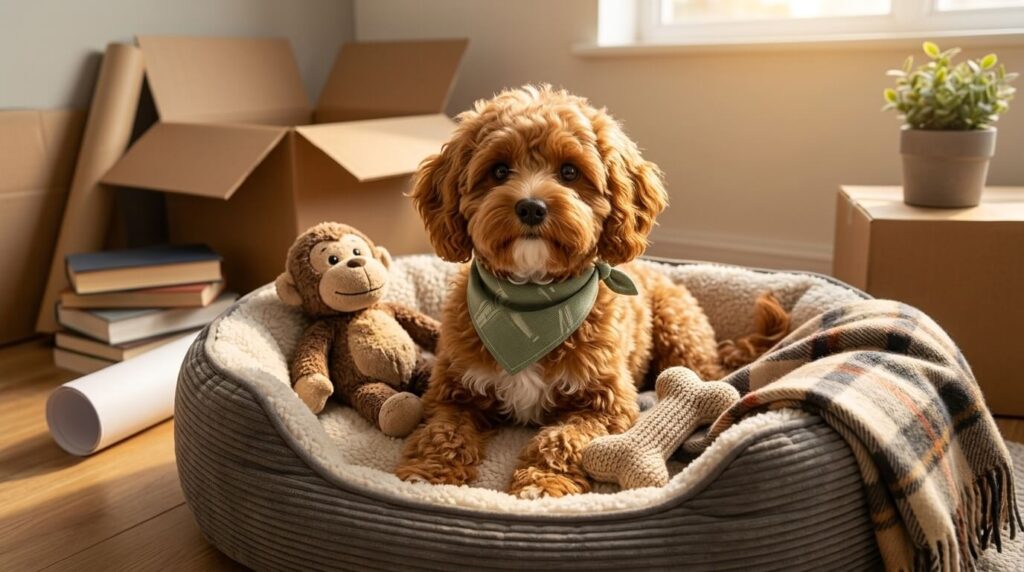
When you arrive, resist the urge to let your dog explore every room immediately. A full new apartment can be too much. Start with one calm area where your dog can see familiar items: bed, blanket, crate, water bowl, and a chew.
This safe zone can be a bedroom, quiet corner, gated living room area, or crate setup. It should be away from the main door if movers are still coming in and out. Door traffic is stressful and risky because a frightened dog can slip out quickly.
Before giving access to the rest of the apartment, check for open windows, balcony gaps, loose cords, cleaning supplies, pest traps, food scraps, sharp hardware, and low cabinets. If the home is not ready yet, your dog should not be loose yet.
Your dog proof rental apartment guide is a good companion here because moving day is when deposit-risk mistakes happen: chewing trim, scratching doors, marking rugs, or getting into trash while everyone is distracted.
3. Protect Moving Day With a Safe Zone
Moving day is not a normal training day. It has open doors, loud sounds, strangers, dollies, boxes, and owner stress. Even a friendly dog can become overwhelmed.
If possible, have your dog stay with a trusted friend, family member, daycare, or sitter during the most chaotic hours. If that is not possible, use a crate, pen, or closed room with a note on the door so movers do not open it by accident. Give your dog water, a safe chew, familiar bedding, and short calm check-ins.
Do not let your dog greet every mover or inspect every box. That may look social, but it often creates arousal and confusion. Your dog needs safety first, social time later.
4. Rebuild the Potty Routine Immediately
One of the most common problems after moving to apartment with dog is potty regression. Your dog may have been reliable in the old home and still have accidents in the new one. That does not mean they forgot everything. It means the cues changed.
Take your dog to the new potty spot immediately after arrival, after meals, after naps, after play, before bed, and first thing in the morning. Use the same exit door and the same route at first. Reward the correct potty moment outside, not after you return upstairs.
If your dog has an accident, clean it with an enzymatic cleaner and tighten the schedule. Avoid punishment. Stress, timing, and unfamiliar routes are usually the issue. For a more detailed reset, use your guide on how to potty train a dog in an apartment.
5. Introduce Hallways, Elevators, and Neighbors Slowly
Apartment buildings have shared-space pressure. Your dog may hear doors slamming, carts rolling, people talking, children running, and other dogs moving behind walls. The hallway is not just a walkway. It is a training environment.
For the first week, keep hallway trips short and purposeful. Use a secure harness or collar, carry treats, and avoid long greetings while your dog is still learning the building. If your dog barks at people, dogs, or elevator sounds, create more distance and reward calm attention.
If the elevator is new, practice when your dog does not urgently need to potty. Step in, reward, step out. Ride one floor, reward, return. Do not combine elevator fear with bladder pressure every time.
6. Delay Long Alone-Time Tests
A move can make a normally independent dog suddenly clingy. The new apartment does not yet smell like home, and your dog may not know whether you are coming back. Long absences during the first few days can trigger barking, scratching, pacing, or accidents.
Start with short departures. Pick up your keys, step out for a minute, return calmly. Build to five minutes, then ten, then longer. Use a camera if you have one, but do not rely on it to fix the problem. It is a monitoring tool, not a training plan.
If you work outside the home, arrange help for the first few days if possible: a dog walker, friend, neighbor, sitter, or flexible schedule. Your article on how long you can leave a dog alone in an apartment can help you choose a realistic workday plan.
7. Use a 30-Day Adjustment Plan
Many dogs do not fully settle in three days. Some need several weeks to understand the new rhythm. Treat the first month as an adjustment period, not a pass-fail test.
During the first week, focus on safety, potty routine, sleep, and calm exploration. During weeks two and three, add more neighborhood walks, short alone-time practice, and building manners. By week four, review what still needs work: barking, elevator stress, potty accidents, chewing, or neighbor sensitivity.
If your dog is getting worse instead of better, slow down. More exposure is not always better. Sometimes the dog needs smaller steps, more sleep, and less stimulation.
If you are still in the first two days after arrival and need a tighter day-by-day plan, read our first 48 hours after moving dog into a new apartment guide before expanding freedom, testing alone time, or introducing busy shared spaces.
Moving Timeline for Apartment Dog Owners
| Time | What to Do | Why It Helps |
|---|---|---|
| 2 weeks before | Keep routine steady and prepare dog supplies | Reduces stress before the disruption |
| 1 week before | Confirm pet rules, elevator access, and moving-day care | Prevents surprises with the building |
| Moving day | Use a safe zone or off-site care | Reduces escape risk and stress |
| First night | Keep bed, crate, and sleep routine familiar | Helps the dog recognize rest time |
| First week | Repeat the same potty and hallway route | Builds predictable building habits |
| First month | Gradually expand freedom and alone time | Prevents stress-based setbacks |
What to Pack in Your Dog’s First-Night Bag
Your dog’s first-night bag should be easier to find than your own kitchen plates. The first night is when owners usually discover that the food scoop, medication, poop bags, or favorite chew is buried under six boxes. That creates stress at the exact moment your dog needs predictability.
Pack these items in one clearly labeled bag:
- Regular food for at least three days.
- Medication and supplements, if used.
- Food and water bowls.
- Leash, harness, collar, and ID tag.
- Poop bags and cleaning wipes.
- Enzymatic cleaner for accidents.
- One familiar bed, blanket, or crate mat.
- Two safe chews or food puzzles.
- Vaccination or pet records required by the building.
- A towel for rain, muddy paws, or car sickness.
Do not wash every blanket right before the move. Familiar scent is useful. A clean apartment plus one familiar-smelling dog blanket is often more comforting than a perfectly fresh setup with no recognizable smell.
Signs Your Dog Is Stressed After Moving
Some stress is normal after a move. Watch for changes in appetite, sleep, barking, pacing, clinginess, hiding, panting, drooling, accidents, destructive chewing, or refusing walks. These signs do not always mean a serious problem, but they do mean your dog needs a calmer plan.
Common early stress signs include:
- Following you from room to room.
- Barking at hallway sounds.
- Refusing food for a meal or two.
- Having accidents despite previous reliability.
- Restless sleep or waking at night.
- Pulling hard toward or away from the building entrance.
- Chewing boxes, trim, doors, or furniture.
If symptoms are severe, sudden, or paired with illness, contact your veterinarian. If the problem is mainly fear, barking, reactivity, or panic when alone, a qualified force-free trainer or veterinary behavior professional can help you build a safer plan.
If You Moved From a House to an Apartment
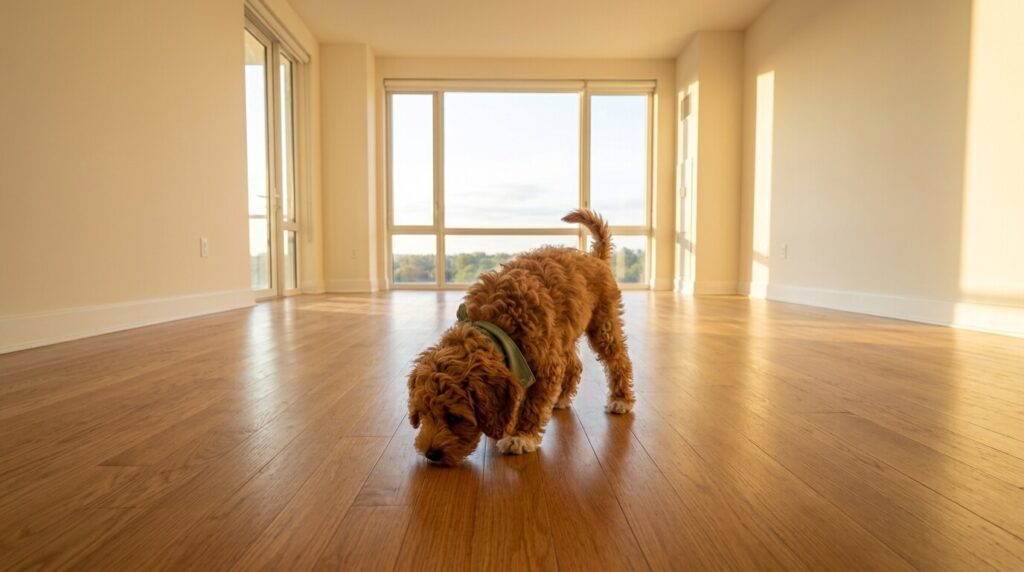
Dogs moving from a house to an apartment often struggle with the loss of a yard. They may be used to quick outdoor access and more distance from neighbors. In the new apartment, they have to wait for a leash, elevator, lobby, or sidewalk.
Start potty trips earlier than you think you need. Do not wait for your dog to signal at the door if they have never had to wait through an apartment route before. Also increase sniff walks. Dogs coming from yards often need more structured sniffing outside because they no longer have casual yard access.
For barking, remember that shared-wall sounds are new information. Do not yell at the dog for noticing them. Instead, reward quiet attention, use white noise where appropriate, and build a predictable rest area away from the hallway wall if possible.
If You Moved From Another Apartment
Even if your dog has lived in apartments before, this apartment is still new. The old elevator smell, lobby pattern, neighbor dogs, and walking route are gone. Your dog may adapt faster than a house dog, but they still need a reset period.
Use the same first-week structure: limited freedom, repeated routes, short alone-time practice, and calm hallway exposure. Do not assume previous apartment success means immediate new apartment success.
The First Night in the New Apartment
The first night should be boring in the best possible way. Give your dog a final potty trip, a calm drink of water, a familiar bed or crate, and a quiet sleeping area. Avoid hosting visitors, testing every room, or taking a long exciting neighborhood walk right before bed.
If your dog normally sleeps in a crate, use the crate if it has been introduced positively. Do not use moving night as the first time your dog is locked in a crate. If your dog normally sleeps near you, keeping that arrangement for the first few nights can reduce stress. You can adjust sleeping boundaries later, after the apartment feels familiar.
Some dogs wake during the first night because they hear elevators, pipes, footsteps, or doors. Keep your response calm. Take your dog out if you suspect a potty need, but do not turn every noise into play, snacks, or a full household event.
If your dog has just arrived and you need a tighter day-by-day plan, read our first 48 hours after moving dog into a new apartment guide before expanding freedom, testing alone time, or introducing busy shared spaces.
How Much Freedom Should Your Dog Have?
Start smaller than you think. A dog who had full freedom in the old home may still need temporary limits in the new apartment. This is not punishment. It is management while your dog learns where to rest, where to potty, and what is off limits.
Use a simple freedom ladder:
- Level 1: Crate, pen, or one gated room when unsupervised.
- Level 2: One main room with supervision.
- Level 3: Two rooms after several accident-free days.
- Level 4: Most of the apartment when chewing, potty, and barking are stable.
- Level 5: Full freedom only when your dog has proven reliable while you are home and away.
If your dog has accidents, chews door frames, barks at the hallway, or raids trash, go down one level. The goal is steady success, not fast freedom.
Common Moving Problems and Fixes
Barking at hallway sounds
Move your dog’s bed away from the front door, use a fan or white noise, reward quiet check-ins, and avoid letting your dog rehearse barking at every sound. If barking is intense, read your guide on how to stop dog barking in an apartment.
Potty accidents
Go back to a strict schedule for one week. Use the same route, reward outside immediately, clean accidents thoroughly, and reduce unsupervised freedom indoors.
Chewing after the move
Chewing may come from stress, boredom, teething, or lack of supervision. Put away loose packing materials, block access to trim and cords, and provide safe chew outlets. If chewing is damaging furniture, use your dog chewing furniture guide.
Refusing the elevator
Practice at quiet times. Reward approaching the elevator, standing near it, stepping in, stepping out, and taking short rides. Keep sessions short and do not force a frightened dog into repeated long rides.
Clinginess or panic when alone
Start tiny departures before long absences. If your dog vocalizes, scratches, drools, or panics when you leave, treat it as more than simple stubbornness. The VCA separation anxiety resource is a useful starting point for understanding the difference between normal adjustment and anxiety.
Moving With a Puppy
Puppies need more structure than adult dogs during a move. They may be learning potty habits, crate comfort, bite inhibition, leash walking, and sleep routines all at the same time. A new apartment adds elevators, hallways, neighbors, and building sounds to that list.
Keep the puppy’s world small at first. Use frequent potty trips, short exploration sessions, and predictable naps. Puppies who are overtired often look wild rather than sleepy, which can lead to zoomies, biting, barking, and accidents. If your puppy becomes frantic in the evening, the answer may be less stimulation, not more.
Be careful with shared outdoor areas if your puppy is not fully vaccinated. Follow your veterinarian’s guidance about safe potty locations, social exposure, and public areas.
Moving With a Senior Dog
Senior dogs may struggle with stairs, slippery floors, elevator timing, hearing changes, vision changes, or increased potty needs. They may also take longer to map the new apartment. Put beds in easy-access locations, use rugs or mats on slick floors, and keep nighttime routes simple.
If a senior dog starts having accidents after the move, do not assume it is only stress. The move may reveal an existing medical or mobility problem. Track timing, frequency, thirst, stool quality, and whether your dog seems painful. Share those notes with your veterinarian if the pattern continues.
Moving With a Reactive or Nervous Dog
A reactive dog needs a quieter introduction plan. Try to avoid peak hallway and elevator hours during the first week. Use distance generously. If another dog is waiting for the elevator, take the stairs if safe, wait farther away, or turn around and try again. Your goal is to prevent big reactions while your dog is still building confidence.
Do not introduce your dog to every neighbor dog immediately. Apartment friendships can wait. Calm neutrality is more valuable than forced greetings, especially in narrow halls where dogs cannot create natural distance.
The 30-Day Review
At the end of the first month, review what is working and what still needs support. Ask yourself:
- Can my dog settle in the apartment during normal hallway noise?
- Is the potty routine reliable?
- Can my dog ride the elevator or use the stairs calmly enough?
- Can my dog be alone for realistic periods without panic?
- Have any neighbors mentioned barking?
- Is my dog sleeping and eating normally?
- Are there repeated chewing, scratching, or door problems?
If most answers are positive, begin expanding normal life. If several answers are still shaky, keep the structure and solve one problem at a time. A slower first month is still a successful move if it prevents long-term apartment stress.
What to Tell Neighbors or Building Staff
You do not need to overshare, but a small amount of communication can prevent problems. If your dog is nervous, reactive, or adjusting after a move, you can tell building staff that your dog is new to the building and you are working on calm hallway routines.
If a neighbor mentions barking, respond calmly and take it seriously. Ask when it happens, how long it lasts, and whether it is tied to your departures or hallway noise. That information is more useful than guessing.
FAQ
How long does it take for a dog to adjust to a new apartment?
Many dogs improve within one to three weeks, but some need a full month or more. Puppies, senior dogs, anxious dogs, rescues, and dogs moving from a house to an apartment may need a slower adjustment plan.
What is the first thing to do when moving to apartment with dog?
Set up a safe zone with familiar bedding, water, leash, treats, and a quiet place to rest. Then take your dog to the new potty spot before giving full apartment access.
Why is my dog having accidents after moving?
The route, smells, timing, and stress level changed. Go back to a strict apartment potty schedule, reward outside immediately, limit freedom, and clean accidents with an enzymatic cleaner.
Should I leave my dog alone the first day after moving?
Avoid long absences if possible. Start with very short departures and build gradually. The first day is already stressful, so long alone time can trigger barking, panic, or accidents.
How do I stop my dog from barking in the new apartment?
Reduce hallway exposure, move rest areas away from the door, use background noise, reward calm behavior, and practice short sound-desensitization sessions. If barking is intense or neighbor complaints start, address it early.
Should I unpack my dog’s things first?
Yes. Your dog’s bed, crate, blanket, food, water, and chew items should be available before most household unpacking. Familiar scent helps the new apartment feel less strange.
When should I call a professional?
Call a veterinarian for illness signs, sudden severe behavior changes, or repeated accidents with possible medical causes. Call a qualified trainer or behavior professional for panic, aggression, severe reactivity, or persistent separation-related distress.
Next Step
For the first month, judge progress by calm routines, not perfection. A successful move means your dog knows where to rest, where to potty, how to move through the building, and how to be alone for realistic periods without panic.
After updating this article, request indexing in Google Search Console because the page is currently crawled but not indexed. Also add natural internal links from apartment dog-proofing, potty training, barking, and alone-time articles where moving stress is relevant.