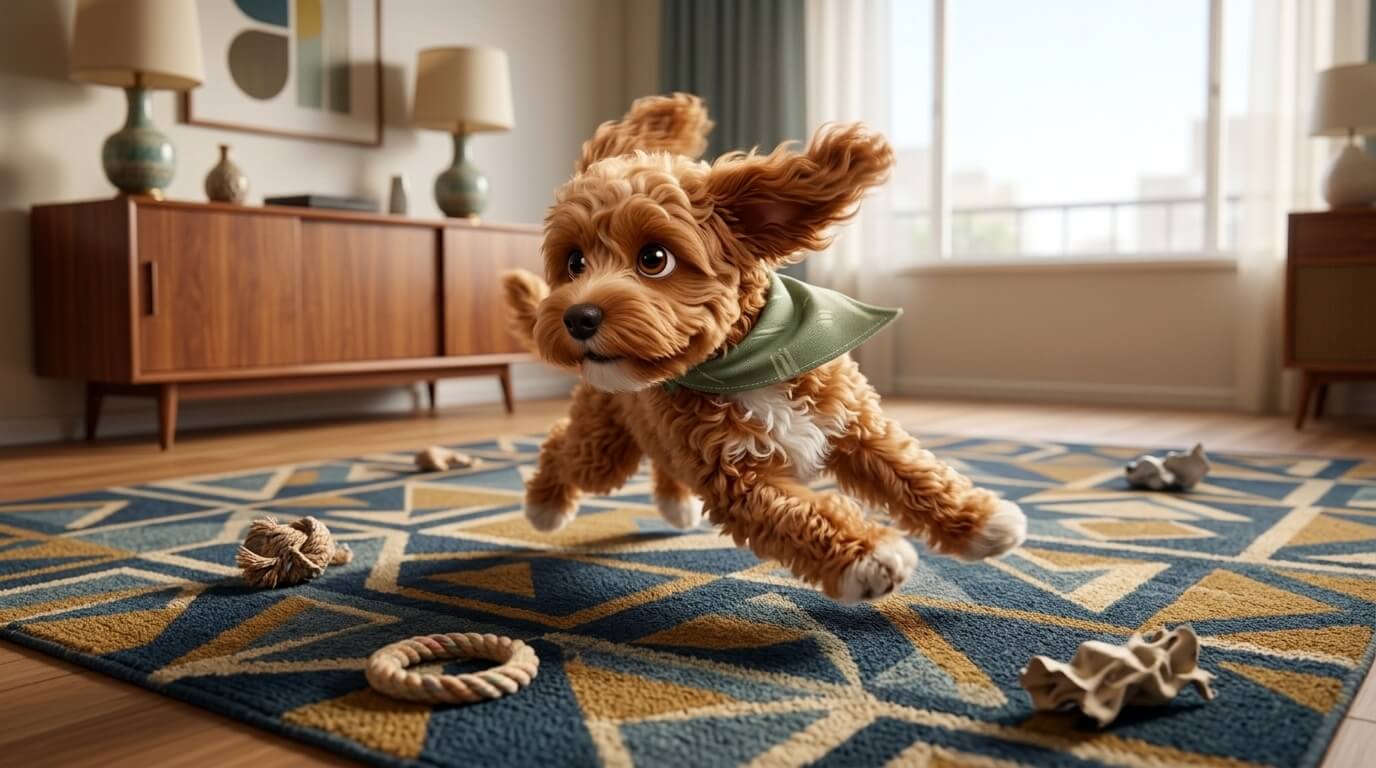
Dog zoomies in apartment rooms can be funny for about ten seconds. Then the dog launches off the sofa, skids across the floor, crashes into a rug, barks at you, and sounds like a tiny storm to the downstairs neighbor. Zoomies are often normal, but in a small apartment they can become unsafe, loud, and frustrating.
Zoomies are bursts of sudden running, spinning, play-bowing, and wild movement. Trainers often call them frenetic random activity periods. Dogs may get them after baths, after pooping, before bed, after being crated, after a stressful event, or after a day with too little appropriate activity.
This guide explains why apartment zoomies happen, when they are normal, when they may signal a bigger problem, and how to make them safer without punishing your dog for having energy.
Dog Zoomies in Apartment: Quick Answer
Dog zoomies in apartment spaces usually happen because of excitement, stress release, pent-up energy, overtiredness, or a predictable routine gap. To manage them safely, add traction, clear a safe path, schedule earlier exercise, use sniffing and scent games, avoid chase, build a calmer bedtime routine, and get veterinary help if zoomies are sudden, compulsive, painful, or paired with behavior changes.
| Zoomies Trigger | Common Apartment Pattern | Best First Fix |
|---|---|---|
| Evening energy | Running after dinner or before bed | Earlier sniff walk and calm routine |
| Stress release | Zoomies after guests, elevator, bath, or vet visit | Decompression and quiet recovery |
| Boredom | Wild bursts after a dull day | Food enrichment and training games |
| Puppy development | Short intense bursts, often when tired | Safe zone, potty, chew, nap |
| Unsafe floors | Sliding, crashing, jumping from furniture | Rugs, blocked paths, lower-impact games |
Table of Contents
Are Zoomies Normal?
Zoomies can be normal. Many dogs have short bursts of silly movement after excitement or relief. Puppies and adolescent dogs are especially prone to them. A healthy zoomies episode is usually brief, playful, and easy to recover from. The dog runs, shakes off energy, then settles.
Apartment owners do not need to panic every time a dog sprints around the living room. The issue is context. Zoomies become a problem when the dog is slipping, crashing, barking for long periods, jumping from furniture, upsetting neighbors, or using zoomies as the only outlet after a day with too little exercise and enrichment.
If your dog has zoomies every evening after a boring day, start with the broader signs apartment dog is bored guide. If the problem is specifically unsafe running in a small home, stay here and fix the zoomies pattern.
Why Zoomies Hit Harder in Apartments
In a yard, zoomies may burn off harmlessly. In an apartment, the same burst has walls, corners, rugs, furniture, hard floors, neighbors, balconies, and narrow hallways. The dog may not have enough runway to move safely, so they bounce off furniture or slide into objects.
Apartment zoomies also create sound. Running paws, barking, furniture bumps, and toy crashes can travel through floors and walls. Even a small dog can sound loud below you if the floor has poor insulation.
The solution is not to remove all joy from the dog. The solution is to move the energy earlier, add safer outlets, and create rules for what happens when zoomies start.
The 7 Safe Fixes
1. Add Traction Before You Add Training
Slippery floors make zoomies more dangerous. Dogs may strain muscles, crash into furniture, or become more frantic because they cannot control their movement. Before worrying about obedience, make the space safer.
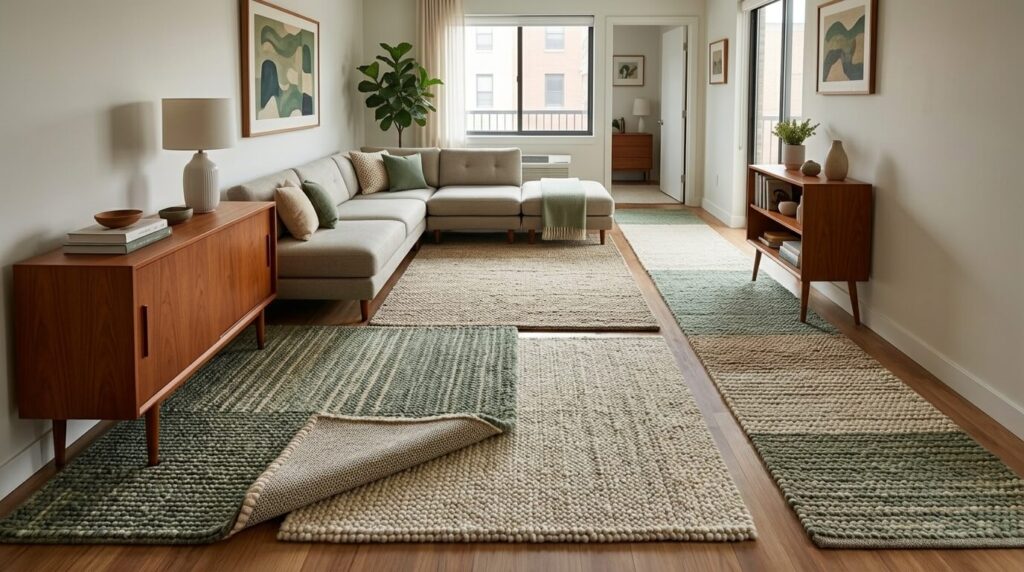
Add washable rugs, runners, yoga mats, or carpet tiles in the main running path. Block access to sharp corners, glass tables, balcony doors, and stairs during high-energy windows. Keep the play zone boring and open enough that the dog can move without launching from furniture.
This is especially important for puppies, senior dogs, long-backed dogs, giant breeds, and dogs recovering from injury. If your dog slides during normal walking, zoomies are not safe on that floor.
2. Schedule a Pre-Zoomies Walk
Many apartment zoomies happen at predictable times: after dinner, after work, before bed, or after being alone. Instead of reacting after the dog explodes, add a pre-zoomies walk 30 to 60 minutes earlier.
This does not need to be a marathon. A sniff-focused walk can be more calming than a fast march. Let your dog investigate safe smells, move their body, and decompress before the usual wild window. If you need a complete no-yard movement plan, use the exercise dog in small apartment guide.
3. Replace Running With Scent Work
Scent work is one of the best apartment-friendly zoomies alternatives. Hide a few treats around one room, scatter part of a meal on a clean mat, or ask your dog to find a toy. Sniffing slows the body and focuses the brain.
Use scent games before the normal zoomies window, not after the dog is already flying across the room. If the dog is too excited to sniff, start with easier finds and use calmer timing.
4. Stop Turning Zoomies Into Chase
Owners often make zoomies stronger by chasing the dog, laughing loudly, grabbing toys, or shouting the dog’s name. To the dog, this can feel like the best game in the world. The apartment becomes a racetrack, and you become part of the reward.
Instead, become boring. Step out of the path, keep your voice low, and cue a known behavior only if your dog can respond. If the dog cannot respond, the arousal is too high. Wait for a pause, then redirect to a sniff game, chew, or calm mat.
5. Build a Bedtime Routine
Bedtime zoomies are common in apartments. They can come from unused energy, overtiredness, attention-seeking, or an abrupt shift from a busy evening to “please sleep now.” Dogs often need a transition.
Try a predictable sequence: potty walk, water, quiet sniffing, dimmer lights, chew or lick activity, then bed cue. Keep rough play away from the last hour before sleep. If your dog consistently becomes wild at night, pair this page with the how to tire out dog before bed routine.
6. Use Calm Cues Outside the Zoomies Moment
Do not try to teach “settle” while your dog is sprinting. Teach it when your dog is already calm. Reward lying on a mat, checking in with you, taking a breath after play, and moving to a bed.
Useful cues include “find it,” “touch,” “place,” “with me,” and “all done.” Practice them daily in easy moments. Later, they become tools you can use when the dog is excited but not yet out of control.
7. Know When Zoomies Are Not Just Zoomies
Call your veterinarian if zoomies are sudden, extreme, compulsive, paired with pain signs, followed by limping, or happening in an older dog who never used to do it. Also look deeper if the dog cannot settle, seems panicked, or has other behavior changes.
Zoomies after stress may also indicate the dog needs decompression. If your dog explodes after every elevator ride, guest visit, or scary sound, the trigger may be stress, not simple joy. In that case, work on the underlying trigger instead of only managing the running.
Zoomies by Age
Puppy Zoomies
Puppy zoomies are often normal, but they can also mean the puppy is overtired. A puppy who bites, sprints, crashes, and ignores cues may need potty, water, a safe chew, and a nap more than more play.
Keep puppy zoomies areas safe. Block stairs and furniture jumps. Use traction. Keep sessions short. Do not let the puppy rehearse crashing around the apartment every night.
Adolescent Dog Zoomies
Adolescent dogs can have adult energy with teenage judgment. Their zoomies may be bigger, faster, and harder to interrupt. This is the stage where routines matter most.
Add more structured outlets: sniff walks, training games, tug with rules, food puzzles, and calm rest. If the dog gets zoomies after being alone, check whether they had enough activity before and after your workday. For alone-time planning, read how long can you leave a dog alone in an apartment.
Adult Dog Zoomies
Adult dogs may get zoomies after specific triggers: baths, rain, stressful walks, guests, grooming, or long inactivity. Because adult patterns are often predictable, prevention works well.
Track the trigger and place a calmer outlet before it. If baths cause zoomies, prepare traction and a towel game. If evening causes zoomies, adjust the walk and bedtime routine.
Senior Dog Zoomies
Senior dogs can still have playful bursts, but sudden wild running in an older dog deserves caution. Pain, cognitive changes, anxiety, vision changes, or medication effects can change behavior.
Make floors safe and keep movement lower impact. If the zoomies are new, intense, or followed by stiffness, ask your veterinarian.
What To Do During Zoomies
When zoomies start, your job is to reduce danger without adding excitement. Move breakable items, block unsafe exits if you can do so calmly, and stand still rather than chasing. Use a cue only if your dog is able to hear it.
If the dog pauses, toss a treat to the floor and say “find it.” Sniffing can interrupt the running pattern. If the dog continues, wait for the energy to drop and then redirect. Do not grab the collar unless there is immediate danger; grabbing can turn excitement into conflict.
After the episode, ask why it happened. Was the dog bored? Overtired? Stressed? Under-exercised? Excited after poop? The answer determines tomorrow’s plan.
Downstairs Neighbor Strategy
If you have downstairs neighbors, zoomies are not just your issue. Add rugs and runners in the main path. Keep high-energy play away from late-night hours. Move noisy toys off hard floors. Use outdoor or hallway-free exercise earlier in the day.
Do not wait for complaints before changing the setup. Apartment dog ownership is easier when you prevent noise patterns early. If your dog also barks during zoomies, treat the barking separately with the stop dog barking in apartment guide.
Room-by-Room Zoomies Prevention
Living Room
Clear the main path, add traction, remove sharp table corners where possible, and keep jumping from sofa to floor under control. If the living room is the only play space, make it intentionally safer.
Bedroom
Bedroom zoomies often happen before sleep. Keep laundry, shoes, cords, and small items off the floor. Use a calmer bedtime sequence and avoid rough play on the bed.
Hallway
Indoor hallway running can be loud and slippery. Use the hallway for calm leash drills or find-it games, not full-speed chasing.
Kitchen
Kitchens are risky because of hard floors, dropped food, trash, and sharp objects. If zoomies often move into the kitchen, block access during high-energy windows. If trash is part of the excitement, fix it with a safer dog proof trash can apartments setup.
Replacement Games
Replacement games should satisfy the same need without the same risk. If the dog wants to run, use controlled tug or a short outdoor burst where safe. If the dog wants to chase, toss treats into a rug for “find it.” If the dog wants your attention, use a two-minute training game before they start demanding it.
- Find it: Toss one treat at a time and let the dog sniff it out.
- Touch: Ask the dog to touch your hand, then reward.
- Place: Send the dog to a mat for a treat.
- Tug with rules: Use start and stop cues in a safe area.
- Towel roll: Roll kibble in a towel for easy scent work.
If replacement games make your dog more frantic, simplify. The goal is controlled engagement, not a louder indoor workout.
Common Zoomies Triggers in Apartments
Once you know the trigger, zoomies become easier to prevent. Most apartment zoomies are not random. They usually cluster around a few predictable moments.
After Potty Trips
Some dogs sprint after pooping because they feel relieved, excited, or suddenly lighter. This is usually normal, but in an apartment it can turn into a hallway or living-room race. After potty trips, keep the leash on until you are fully inside, then ask for a calm cue before releasing the dog. If your dog always explodes after the final potty trip, add a short find-it game immediately inside the door.
After Baths
Bath zoomies are common because the dog is wet, stimulated, and eager to shake off the experience. Prepare the apartment before the bath ends. Put down towels or rugs, close unsafe rooms, block sofa launches, and offer a towel game or sniffing activity after drying.
After Guests Leave
Guests can be exciting or stressful. Some dogs hold themselves together while people are present, then explode after the door closes. If this is your pattern, give your dog a quiet recovery activity after visitors leave instead of assuming the zoomies mean they had fun.
After Elevator or Lobby Stress
Elevators, lobbies, and shared hallways can create a pressure build-up. If your dog stays tense around other dogs or strangers, they may release that stress once back inside. In that case, the zoomies are a clue that the outside routine is too intense. Pair this plan with dog elevator training so the trip home is calmer.
When You Sit Down to Work
Some dogs get zoomies when the owner becomes unavailable. The laptop opens, the phone call starts, and the dog suddenly sprints or grabs toys. Plan a pre-work enrichment window. A short sniff game or food puzzle before your meeting can prevent the dog from inventing a louder activity.
The 20-Minute Evening Reset
If zoomies happen most evenings, try this 20-minute reset for one week. It is designed for apartments where late running annoys neighbors or creates slipping risk.
Minutes 1-8: Outdoor Sniffing
Take your dog outside for a short sniff-focused walk. Do not worry about distance. Let the dog gather smells safely. If the weather is bad, use an indoor find-it game instead.
Minutes 9-12: Water and Decompression
Come inside calmly. Offer water. Keep your voice low. Do not start tug, chase, or couch wrestling immediately after the walk.
Minutes 13-17: Low-Impact Brain Work
Do three to five minutes of easy training or scent work. Choose cues your dog already knows. This is not the time to teach something hard. You are helping the dog shift from outdoor excitement to indoor focus.
Minutes 18-20: Chew, Lick, or Mat
End with a safe chew, lick activity, or mat cue. Keep it calm and predictable. If your dog tends to guard chews, use lower-value food enrichment or a supervised lick activity instead of a high-value chew.
After a week, compare the pattern. If the zoomies are shorter, quieter, or easier to redirect, the routine is working. If nothing changes, the cause may be stress, pain, or a bigger exercise mismatch.
Dogs That Need Extra Caution
Some dogs are at higher risk during apartment zoomies. For these dogs, the safety setup matters even more than the behavior plan.
Long-Backed Dogs
Dachshunds, Corgis, Basset Hounds, and other long-backed dogs may be more vulnerable to injury from jumping, twisting, and launching off furniture. Block couch-to-floor sprint paths and use ramps or lower furniture access where appropriate.
Flat-Faced Dogs
French Bulldogs, Pugs, Boston Terriers, and other flat-faced dogs can overheat or struggle with intense exertion. Keep zoomies short, avoid hot rooms, and watch breathing. If breathing looks labored, stop the activity and contact your veterinarian if you are concerned.
Large Dogs in Small Rooms
A large dog can cross a small apartment in two strides. The risk is not just noise; it is impact. Clear the path, use outdoor outlets earlier, and avoid encouraging indoor chase.
Dogs With Previous Injuries
If your dog has a history of knee, hip, back, or shoulder problems, ask your veterinarian what movement is safe. Zoomies may look happy but still be risky on slippery floors.
The Zoomies Log
Track zoomies for one week. You are looking for patterns, not perfection.
| Time | What Happened Before? | Length | Risk Level | Next Fix |
|---|---|---|---|---|
| 8:30 p.m. | Dinner, no evening walk | 5 minutes | Slipping on floor | Add rug and earlier sniff walk |
| After bath | Towel drying | 3 minutes | Jumped from sofa | Block sofa and use find-it game |
Mistakes That Make Zoomies Worse
Mistake 1: Chasing the Dog
Chase often rewards zoomies. Unless there is immediate danger, avoid turning the episode into a game.
Mistake 2: Waiting Until Bedtime
If zoomies happen every night, the fix starts earlier. Add exercise, sniffing, or enrichment before the usual window.
Mistake 3: Ignoring Floors
Training cannot make slippery floors safe. Add traction first.
Mistake 4: Punishing Normal Energy
Dogs need outlets. Punishing energy without replacing it can create frustration and confusion.
Mistake 5: Missing Stress Triggers
Zoomies after scary events may be stress release. Help the dog recover instead of assuming they are simply being silly.
FAQ
Why does my dog get zoomies in my apartment?
Dogs get zoomies in apartments because of excitement, pent-up energy, stress release, overtiredness, or predictable routine gaps. The small space makes the behavior louder and less safe.
How do I stop dog zoomies in apartment rooms?
Do not rely on stopping them in the moment. Add traction, schedule earlier exercise, use scent work, stop rewarding chase, and create a calm bedtime routine. Redirect during pauses rather than chasing the dog.
Are puppy zoomies normal in an apartment?
Yes, puppy zoomies are common. Make the space safe, keep sessions short, and remember that wild behavior can mean the puppy is overtired and needs rest.
Are zoomies a sign my dog is bored?
Sometimes. Zoomies can be normal excitement, but frequent evening zoomies after low-activity days may point to boredom or routine mismatch.
Should I crate my dog during zoomies?
Do not use the crate as punishment. If your dog is crate trained and needs help settling after the energy drops, a calm crate or rest area can help. If the dog is still frantic, forcing confinement may increase stress.
When should I worry about zoomies?
Worry if zoomies are sudden, compulsive, unsafe, paired with pain, followed by limping, linked to panic, or appearing in an older dog with other behavior changes.
Next Step
Tonight, do not wait for the zoomies to start. Add traction in the main running path, schedule a short sniff walk before the usual zoomies window, and prepare a simple “find it” game. Then track whether the episode is shorter, quieter, or easier to redirect.
If your dog zooms because they are bored, build a better daily routine. If they zoom because they are stressed, work on the trigger. If they zoom in a way that looks painful, compulsive, or dangerous, ask your veterinarian. Dog zoomies in apartment life are manageable, but the safest fix starts before the sprint begins.