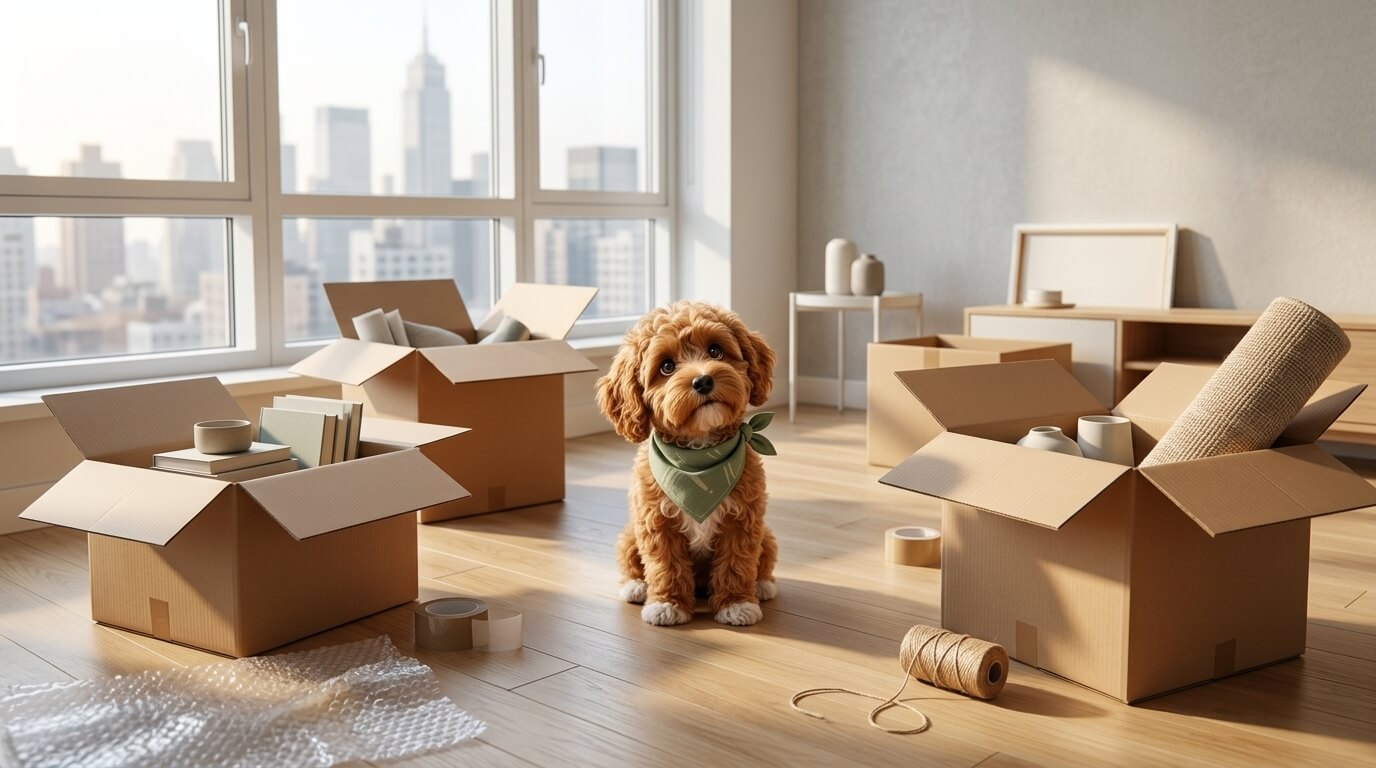
Moving dog into new apartment life is not just about carrying boxes and finding the leash. The first 48 hours shape how your dog understands the new home: where to rest, where to potty, what hallway sounds mean, how elevators work, and whether the apartment feels predictable or chaotic.
This page is a first-48-hours settling guide. For the full moving timeline before, during, and after the move, read the main moving to apartment with dog guide. Use this page when your dog has just arrived and you need a tighter plan for the first two days.
The goal is not to make your dog love the new apartment immediately. The goal is to prevent panic, accidents, escape, barking spirals, and over-exploration while your dog learns the new pattern. For the first 48 hours, keep routines simple: potty, food, water, rest, short sniff walks, quiet indoor time, and careful alone-time tests.
Quick Answer
When moving dog into new apartment spaces, set up one safe room or corner before giving your dog full access. Bring familiar bedding, food, bowls, medication, leash, harness, waste bags, and cleaning supplies in an easy-to-open essentials box. Walk the potty route early, keep hallway and elevator exposure short, keep meals familiar, and test alone time in tiny pieces rather than leaving for hours right away.
| First 48 Hours Priority | What to Do | Why It Matters |
|---|---|---|
| Safety | Set up a safe zone before exploration | Prevents escape, chewing, and moving-day overload |
| Bathroom routine | Walk the potty route early and often | Reduces accidents and helps your dog map the new route |
| Noise exposure | Keep hallway and elevator trips short | Prevents barking patterns from starting on day one |
| Sleep | Use familiar bedding and a predictable bedtime | Helps your dog recover from moving stress |
| Alone time | Test minutes before hours | A dog who was fine in the old home may panic in the new one |
Table of Contents
Why the First 48 Hours Matter
Dogs learn a new apartment through patterns. Where is the door? Where do we sleep? Where do I potty? Which sounds matter? Who appears when the elevator opens? A move throws all of those answers into the air at once.
Many apartment moving problems start because humans are understandably busy. Boxes are everywhere. The door stays open. Movers come in and out. The dog is moved from room to room. Someone says, “Let him explore,” while another person drops a box near the crate. Then the dog has an accident on the new rug, barks at hallway footsteps, or refuses to settle overnight. The dog is not being difficult. The dog is overloaded.
A new apartment also adds building-specific pressure: elevators, stairwells, shared lobbies, unfamiliar dogs, delivery carts, echoing hallways, neighbors on the other side of walls, and a new outdoor potty route. A house-to-apartment move can be especially confusing because your dog may no longer have a yard, back door, or quiet street.
Think of the first two days as a soft landing. You are not training every future skill yet. You are protecting sleep, safety, bathroom success, and calm observation. Once those are steady, you can build elevator manners, alone-time confidence, neighbor routines, and better enrichment.
Before You Arrive
The easiest moving day is the one you prepare before the dog enters the building. If possible, visit the apartment without your dog first. Check windows, balcony doors, loose screens, gaps behind appliances, exposed cords, low shelves, cleaning chemicals, pest traps, and any maintenance materials left behind.
Confirm the nearest potty spot and the safest exit route. If the building has an elevator, decide whether you will use the elevator, stairs, or a quieter side entrance for the first trip. The first entry should be boring and controlled, not a full tour with boxes, strangers, and open doors.
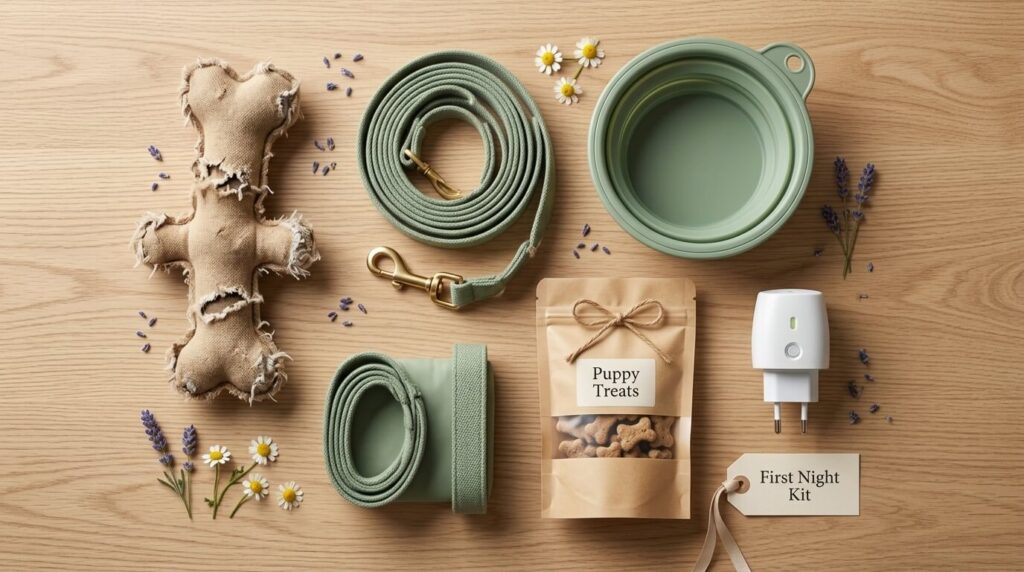
Pack a dog essentials box that stays with you, not in the moving truck. Include food, water bowl, medication, leash, harness, ID tags, vaccination or vet records if needed, waste bags, paper towels, enzymatic cleaner, a familiar blanket, a favorite toy, and any comfort item your dog already uses. If your dog is crate trained, keep the crate accessible. If your dog is not crate trained, use a gated area or quiet room instead of suddenly forcing a crate on moving day.
Update ID tags and microchip contact information before the move if your address or phone number changed. Moving day is one of the times dogs are more likely to slip through doors because everyone is distracted. A well-fitted leash setup and current ID are not optional details.
The 7 Safe First 48 Hours Tips
1. Set up the safe zone first
Before your dog gets a full tour, create one calm area. This might be a bedroom, office corner, crate area, or gated section of the living room. Put down familiar bedding, water, a chew or toy your dog already knows, and enough open floor for turning around comfortably. Keep the area away from the main moving path if possible.
A safe zone is not punishment. It gives your dog a predictable base while the rest of the apartment is still changing. Many owners allow too much freedom too early. The dog wanders through boxes, finds dropped tape, drinks from a mop bucket, barks at movers, and then cannot settle. A smaller area helps the dog understand where rest happens.
If your dog barks in the safe zone, do not assume the plan failed. Check whether the area is too close to the hallway, too isolated, too hot, too noisy, or lacking familiar scent. Adjust the setup before abandoning it.
2. Use familiar smell on purpose
Do not wash every dog item right before the move. Familiar bedding, a used blanket, and a known toy can help the new space smell less strange. This does not mean the apartment must smell like the old one forever. It means the first night should not be made harder by removing every familiar cue.
Place the familiar bedding in the safe zone, not in the middle of moving traffic. If your dog usually sleeps near you, consider keeping that pattern for the first nights rather than suddenly moving the dog far away. A big routine change on top of a new building can create unnecessary stress.
For dogs who chew bedding when stressed, use safe alternatives and supervise. Familiar scent should support calm, not become a choking or swallowing risk.
3. Walk the potty route before exploring
Do a short potty trip early, even if your dog went before the car ride. Show your dog the exit, elevator or stair route, building door, and outdoor potty area. Keep it simple. Do not turn the first trip into a long neighborhood tour. Your dog is learning the path from apartment to relief area.
Apartment potty routines are different from yard routines. There may be a hallway, elevator, lobby, sidewalk, traffic noise, other dogs, and people nearby. A dog who was reliable in the old home may have accidents during the first week because the new route is confusing or too exciting. Use more frequent potty breaks at first, especially after meals, naps, play, and unpacking commotion.
If your dog has a history of indoor accidents, review how to potty train a dog in an apartment before the move. If an adult dog regresses after the move, this guide on adult dog potty training regression may fit better than starting from puppy basics.
4. Control hallway and elevator exposure
Hallways and elevators are often the hardest parts of apartment adjustment. Your dog may hear footsteps behind the door, smell other dogs under the gap, see carts, meet neighbors in tight spaces, or get surprised by elevator doors. On day one, choose quiet times for short trips.
Stand to the side of elevator doors, keep the leash short but relaxed, and let crowded elevators pass if your dog is not ready. If your dog has never used an elevator, do not make the first ride a chaotic one with boxes, strangers, and a long delay. Use a calm one-floor ride later if possible.
For more detailed practice, use the dog elevator training guide. If your dog is fearful of elevators rather than simply inexperienced, see dog scared of elevators.
Hallway barking should be managed early. Use white noise, rugs, door draft blockers, distance from the door, and calm reward patterns. Do not let your dog rehearse barking at every sound all week and then try to fix it later. If barking is already the main problem, use stop dog barking in apartment as a separate training plan.
5. Keep meals normal but watch stress signals
Feed close to the usual schedule if your dog can eat comfortably. Use the same food at first unless your veterinarian has advised otherwise. Moving day is not the time to change diets, add a rich new topper, or test unfamiliar chews. Stress and diet changes together can upset the stomach.
Some dogs skip a meal after a move. That can happen. Offer food calmly and remove it after a reasonable time if your normal routine works that way. Make sure water is available. If your dog refuses food repeatedly, vomits, has diarrhea, seems painful, or acts unusually weak, call your veterinarian.
Do not use constant treats to solve every moving-day feeling. Treats are useful for training and reassurance, but a dog who receives snacks for every sound, box, hallway trip, and anxious look may end the day overstimulated or sick. Use small pieces and pair them with calm behavior you want repeated.
6. Test alone time in small pieces
Do not leave your dog alone for a full workday immediately after arrival if you can avoid it. A dog who was fine alone in the old home may panic in a new apartment because the sounds, smells, and door routine are unfamiliar. Start with short tests: step into the hallway, return calmly, then build to a few minutes. Use a camera if you already have one, but do not rely on a camera to fix distress.
Watch for barking, howling, door scratching, pacing, drooling, escape attempts, or destruction near exits. If those appear, slow down. Your dog may need a gradual alone-time plan. For more help, see dog separation anxiety in apartments.
For the first night, avoid making a dramatic goodbye out of bedtime. Keep the routine low-key. If your dog usually sleeps in a crate, set the crate near familiar human sounds if that helps. If your dog usually sleeps on a dog bed, keep that bed in a predictable place. The first night is about safety and sleep, not proving independence.
7. Introduce neighbors and building rules slowly
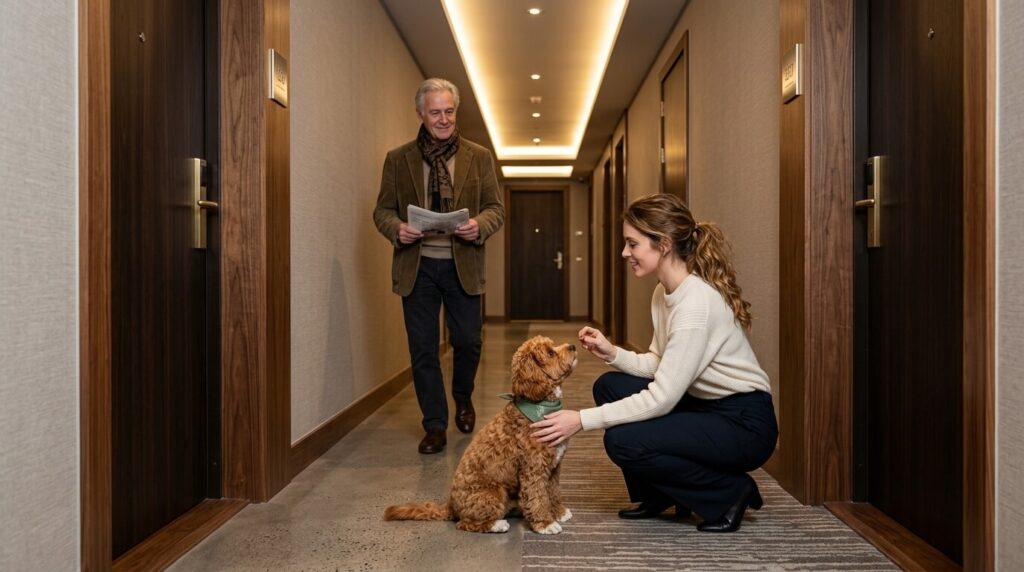
You do not need to introduce your dog to every neighbor immediately. A simple polite greeting without forcing contact is enough. Many dogs behave better when owners advocate for space: “We’re just moving in, so we’re keeping greetings calm today.” That sentence can prevent hallway crowding and awkward elevator moments.
Learn the building rules quickly: pet relief areas, elevator etiquette, quiet hours, waste disposal, leash requirements, balcony restrictions, and common-area expectations. The rules are not only for management. They help protect your dog from becoming the subject of early complaints. If your building is strict, this broader renter’s guide to getting a dog can help you think like a landlord or property manager.
If neighbor noise or complaints become an issue, document patterns and solve early. It is easier to adjust a routine in week one than after multiple complaints. For noise-specific conflict, see dog neighbor noise complaint.
The First 48 Hours Plan
Use this as a flexible guide. If your dog is overwhelmed, repeat an easier stage. If your dog is confident, you still do not need to rush introductions.
| Time | Main Goal | What to Do |
|---|---|---|
| Before arrival | Prevent chaos | Set up safe zone, check doors and windows, keep essentials box accessible |
| Hour 0-2 | Safety and bathroom | Leash entry, short potty route, water, calm rest area |
| Hour 2-8 | Reduce overload | Limited exploration, quiet meals, short hallway trips, no big greetings |
| Night one | Sleep | Familiar bedding, predictable bedtime, white noise if helpful |
| Hour 24-36 | Build routine | Repeat potty route, short sniff walk, small alone-time test |
| Hour 36-48 | Observe patterns | Note barking triggers, elevator reactions, appetite, accidents, and sleep |
It is tempting to unpack everything first and think about the dog later. Reverse that order for the basics. A stable dog area makes the rest of unpacking easier because your dog has somewhere safe to be while you work.
Keep a simple note on your phone during these two days. Record the first successful potty trip, the sounds that caused barking, whether your dog ate, where they chose to rest, and how they reacted when you stepped into the hallway. These notes are more useful than memory because moving days blur together.
Apartment Scenarios That Change the Plan
Studio apartment
In a studio, the safe zone may be a corner rather than a room. Use furniture, a pen, a crate, or a bed placement to create a clear rest area. Keep boxes away from that space. If the whole apartment is noisy, use white noise and visual barriers near the door.
High-rise building
High-rises add elevators, long hallways, and more neighbors. Plan extra potty time because each trip takes longer. Do not wait until your dog is desperate before leaving. A dog who urgently needs to go will have a harder time learning elevator manners.
Dog moving from a house
A dog moving from a house may expect direct outdoor access. Increase potty breaks and reward outdoor success. The dog may also react to shared walls and hallway sounds because those were not part of daily life before.
Newly adopted dog
If the move is also a new adoption, reduce expectations. The dog is learning you, the apartment, the routine, and the building at the same time. Keep visitors away for the first couple of days unless necessary. Use quiet observation instead of constant handling.
Senior dog
Senior dogs may struggle with slick floors, stairs, long elevator waits, or night confusion in a new layout. Use rugs for traction, keep water easy to find, use night lights if helpful, and ask your vet if sudden confusion, pain, or bathroom changes appear.
Red Flags to Watch
Some adjustment stress is normal. Your dog may sniff more, sleep lightly, pause at the door, or need extra bathroom trips. Red flags are different. Call your veterinarian or a qualified behavior professional if your dog will not eat for an extended period, has repeated vomiting or diarrhea, panics when left alone, injures themselves trying to escape, bites, redirects onto you, cannot settle at all, or shows sudden severe fear.
Also take sudden behavior changes seriously. If a normally steady dog becomes disoriented, painful, extremely lethargic, or unable to handle stairs or elevators, do not assume it is only the move. Stress can reveal medical problems, and medical discomfort can look like behavior trouble.
Common Moving Mistakes
Letting the dog roam during unloading
Open doors, tools, cords, strangers, and stacked boxes are too much freedom. Use a safe zone, leash, crate, or trusted helper.
Washing every familiar item
Clean is nice, but familiar smell can help on the first night. Wash items later after the dog has settled.
Skipping potty trips because the dog “just went”
Moving excitement can change bathroom timing. Offer more chances at first and reward outdoor success calmly.
Hosting visitors immediately
Friends may want to see the new place, but your dog may need quiet. Let the apartment become familiar before turning it into a social event.
Ignoring hallway rehearsals
If your dog barks at every hallway sound for the first week, that pattern can grow. Manage the door area early and reward quiet noticing.
FAQ
How long does it take a dog to adjust to a new apartment?
Some dogs relax within a few days, while others need several weeks. Age, temperament, previous housing, noise sensitivity, health, and the building environment all matter. Look for steady improvements in sleep, appetite, potty routine, and hallway reactions.
Should I let my dog explore the whole apartment right away?
Usually no. Start with a safe zone and supervised exploration. Full access can come later once your dog understands the layout and you have checked hazards.
What should I unpack first for my dog?
Unpack the essentials box first: leash, harness, food, water, bowls, medication, waste bags, cleaning supplies, familiar bedding, and a known toy. Then set the safe zone before major unpacking continues.
What if my dog has an accident in the new apartment?
Clean it with an enzymatic cleaner and increase supervised potty trips. Do not punish. Accidents during a move often come from confusion, stress, timing changes, or not knowing the new route yet.
Should I leave my dog alone on the first day?
If possible, avoid a long absence. Start with brief alone-time tests and build from there. If you must leave, make the area safe, remove hazards, and monitor if you can.
How do I stop my dog barking at new hallway sounds?
Reduce access to the door, use white noise, reward quiet noticing, and prevent rehearsals. If barking becomes intense or constant, use a dedicated barking plan rather than hoping the dog will simply get used to it.
Is moving harder for apartment dogs than house dogs?
It can be, because apartments add shared spaces, elevators, closer neighbors, and less direct outdoor access. But many dogs adjust well when the first days are structured and the routine becomes predictable.
Next Step
If you are moving dog into new apartment life this week, make the first 48 hours smaller than you think they need to be. Set up one safe area, walk the potty route, keep meals familiar, manage hallway exposure, and test alone time in tiny pieces. Do not measure success by how quickly your dog explores. Measure it by whether your dog can eat, sleep, potty, and recover from new sounds.
Once those basics feel steady, you can expand the routine: longer walks, more elevator practice, careful neighbor greetings, and better enrichment. A calm first two days gives your dog a clearer map of the new home, and that map is what makes apartment life easier.