
The signs apartment dog is bored can look like bad behavior at first. Your dog chews the rug, barks at hallway sounds, steals socks, pesters you at night, stares out the window for hours, or explodes into zoomies right when you want to relax. It is easy to think the dog is being stubborn, dramatic, or disobedient.
In many apartments, the real problem is simpler: the dog has too little appropriate work for their nose, mouth, body, and brain. Apartment life can be comfortable, but it also removes many natural outlets. There is no yard to sniff, no casual outdoor wandering, fewer surfaces to explore, and more rules about noise, chewing, jumping, and movement.
This guide helps you spot boredom in an apartment dog, separate boredom from separation anxiety or medical issues, and build a realistic boredom reset that works in a small space without bothering neighbors.

Table of Contents
Signs Apartment Dog Is Bored: Quick Answer
The most common signs apartment dog is bored include destructive chewing, attention barking, pacing, stealing items, window obsession, sudden evening zoomies, and difficulty settling after basic needs are met. Boredom usually improves with better exercise, sniffing, food enrichment, training games, toy rotation, and predictable rest. If the dog panics when alone, hurts themselves, or has sudden behavior changes, it may not be boredom and should be handled differently.
| Sign | What It May Mean | First Fix |
|---|---|---|
| Chewing furniture or rugs | Unmet mouth activity, stress, or puppy needs | Safe chew routine and dog-proofing |
| Barking at small sounds | Under-stimulation or alert rehearsal | Sound management and calm reward work |
| Pacing at night | Too little daytime enrichment or discomfort | Evening decompression routine |
| Stealing socks or trash | Attention-seeking, scent interest, or access problem | Storage, trade games, and enrichment |
| Zoomies indoors | Energy release, stress release, or routine gap | Earlier exercise and safe play outlet |
Boredom vs. Bad Behavior
Dogs repeat behaviors that work. If barking gets your attention, barking works. If stealing a sock starts a chase game, stealing works. If chewing the rug gives the dog something to do during a dull afternoon, chewing works. That does not mean the dog is trying to annoy you. It means the apartment environment is teaching the dog which behaviors pay.
A bored apartment dog often needs more legal outlets, not more scolding. The goal is to make the right behaviors easier than the wrong ones: safe chews instead of baseboards, sniff walks instead of hallway barking, puzzle feeding instead of stealing, and calm rest after appropriate activity.
If the home is full of temptations, fix that first. The dog proof rental apartment guide can help remove easy mistakes before you start blaming the dog for finding them.
The 7 Warning Signs
1. Destructive Chewing During Predictable Idle Times
Chewing is normal dog behavior. It becomes a problem when the dog chooses furniture, rugs, shoes, cords, baskets, baseboards, or door frames. In apartments, destructive chewing often appears when the dog has energy but no legal mouth activity.
Look at timing. Does chewing happen after long inactive days? During work calls? In the evening before bed? When you are home but busy? If so, the dog may need a planned chew, food toy, or short training game before the problem window.
For safety, remove access to dangerous items and use management. If your dog chews walls, wires, or doors, do not rely on correction alone. That can become a deposit problem and a medical risk.

2. Barking at Hallway Sounds
Apartment dogs hear life through the door: footsteps, elevators, keys, dogs, cleaners, carts, and delivery workers. A bored dog may turn those sounds into a full-time job. Every sound becomes something to monitor, bark at, and replay.
The first fix is to reduce rehearsal. Move the resting area away from the front door if possible. Add white noise. Block low window views if street watching causes barking. Reward your dog for hearing a sound and turning back to you. If barking is already a major issue, use the stop dog barking in apartment guide as the focused plan.
3. Pacing, Restlessness, or Constant Attention-Seeking
A bored dog may follow you from room to room, paw at you, drop toys repeatedly, whine, pace, or refuse to settle even after basic potty needs are met. This often happens in the evening, when owners are tired but the dog has not had enough meaningful activity.
Do not assume more running is always the answer. Many apartment dogs need a mix of sniffing, chewing, training, and quiet recovery. Ten minutes of scent work may calm some dogs more than another frantic indoor play session.
4. Stealing Socks, Tissues, Food Wrappers, or Trash
Stealing is exciting. It smells interesting, starts human movement, and often creates a chase. A bored dog learns quickly that stolen items make the apartment come alive.
Fix the setup first. Use closed hampers, covered bins, cabinet locks if needed, and a safer trash system. If trash is the main issue, read the dog proof trash can apartments guide. Then teach trade games with low-value objects so you are not chasing your dog through the living room.
5. Window Obsession
Some dogs spend hours watching the street, balcony, courtyard, or hallway gap. A little watching is normal. Obsession becomes a problem when the dog cannot disengage, barks repeatedly, stiffens at every movement, or seems more wound up after watching.
Windows can be enrichment, but they can also become stress television. If your dog is practicing alert barking all day, use curtains, privacy film, furniture placement, or timed access. Pair window time with calm check-ins and end the session before the dog becomes frantic.
6. Sudden Indoor Zoomies
Zoomies can be normal, but frequent apartment zoomies may signal pent-up energy, stress release, or a routine gap. If your dog sprints across the sofa, crashes into rugs, and barks after a quiet day, they may need earlier movement and safer outlets.
Do not turn every zoomie episode into chaos. Create safe play zones, use rugs for traction, and add short activity before the usual zoomie window. For a deeper plan, keep this page as the boredom diagnosis and use the dog zoomies in apartment guide for zoomie-specific causes and fixes.
7. Trouble Settling Even When Nothing Is Happening
Many adult dogs can rest for parts of the day after appropriate activity. If your dog cannot settle, the reason might be boredom, but it might also be anxiety, pain, needing to potty, hunger, overstimulation, or lack of sleep.
Watch the whole pattern. A dog who settles after a sniff walk and enrichment likely needed a better routine. A dog who cannot settle even after needs are met may need a vet check or a behavior plan.
Boredom vs. Separation Anxiety
Boredom and separation anxiety can overlap, but they are not the same. A bored dog may chew, bark, or steal because life is too dull. A dog with separation anxiety panics when separated from their person. The difference matters because the fixes are different.
Use video if the problem happens when you leave. A bored dog may engage with a food toy, nap, wander, and occasionally chew something inappropriate. A distressed dog may howl, drool, pace, scratch exits, ignore food, try to escape, or panic soon after departure.
If alone-time distress is the real issue, do not solve it with more puzzle toys alone. Use the dog separation anxiety apartments guide and consider professional help if the dog is panicking or damaging doors.
The 10-Minute Boredom Audit
Before changing everything, audit the day. Many owners overestimate how much stimulation their dog gets because the walk happened, but the walk may have been short, rushed, and low-sniff. The dog may have had physical movement without mental decompression.
- How many minutes did your dog sniff outside today?
- Did your dog chew something safe and appropriate?
- Did your dog use their brain for training, scent work, or a puzzle?
- Did your dog get calm rest without being interrupted?
- Did your dog spend hours watching the door or window?
- Did the problem behavior happen at the same time as usual?
- Did the dog improve after enrichment or stay distressed?
If the answers show very little sniffing, chewing, training, or rest, boredom is likely part of the picture. If the dog stays distressed despite appropriate activity, look beyond boredom.
7-Day Apartment Boredom Reset
Day 1: Add a Sniff Walk
Choose one walk where distance does not matter. Let your dog sniff safely. Sniffing is not wasted time; it is information gathering and mental work. If your dog pulls too much for relaxed sniffing, start with quieter routes and use your apartment dog harness setup to make walks easier to manage.
Day 2: Replace the Food Bowl Once
Use a simple food puzzle, scatter feeding on a clean rug, a towel roll, or a slow feeder. Do not make it too hard. The goal is calm problem-solving, not frustration.
Day 3: Rotate Toys
Put most toys away and leave out two or three. Rotate them every few days. Novelty matters. A toy that sits on the floor forever becomes furniture.
Day 4: Teach a Tiny Skill
Teach “touch,” “find it,” “place,” or “go to bed.” Five minutes is enough. Training gives the dog a job and gives you better tools for apartment management.
Day 5: Build a Chew Window
Offer a safe chew or lick activity during the time your dog usually pesters, steals, or paces. Supervise as needed. Avoid chews that are too hard, too messy, or likely to trigger guarding.
Day 6: Add a Calm Evening Routine
Many apartment dogs need help coming down at night. Try potty walk, sniffing, water, dimmer lights, chew or lick activity, and bed time. If your dog is most restless before sleep, the how to tire out dog before bed guide can help you build a calmer evening rhythm.
Day 7: Compare the Pattern
Look at the week. Did chewing decrease? Did barking reduce? Did the dog settle faster? Did zoomies happen less often? Keep the fixes that clearly helped and remove the ones that created more excitement.
Apartment Boredom Fixes by Problem
| Problem | Likely Need | Apartment-Safe Fix |
|---|---|---|
| Chewing furniture | Mouth activity and management | Safe chew, blocked access, short training breaks |
| Barking at hallway sounds | Sound plan and less alert rehearsal | White noise, door buffer, reward quiet check-ins |
| Evening pacing | Decompression and predictable routine | Sniff walk, lick mat, dim lights, calm bed cue |
| Stealing items | Storage and legal games | Closed bins, trade games, scent search |
| Zoomies | Earlier movement or stress release | Safe play zone, short training, outdoor sniffing |
Boredom by Age and Life Stage
Apartment boredom does not look the same in every dog. A puppy, adolescent dog, adult dog, and senior dog may all act “bored,” but the correct fix can be different. Matching the plan to life stage keeps you from overexercising one dog and under-stimulating another.
Puppies
Puppies explore with their mouths, need frequent potty trips, and have very short attention spans. A bored puppy may chew furniture, bite hands, grab clothes, or sprint around the apartment. The answer is not endless exercise. Puppies need short training sessions, safe chewing, naps, potty structure, and puppy-proofing.
If your puppy is chewing everything, ask whether they are overtired. Many puppies become wild when they need sleep. Use short play, potty, chew, and rest cycles rather than keeping the puppy active all evening.
Adolescent Dogs
Adolescent dogs can be the hardest apartment dogs to keep satisfied. They may have adult-sized energy with teenage impulse control. You may see demand barking, counter surfing, leash frustration, door rushing, indoor zoomies, or sudden interest in chewing again.
Adolescents need more structure, not just more freedom. Use training walks, sniffing, impulse-control games, food puzzles, and calm rest. This is also the age when hallway barking and elevator excitement can become habits if they are rehearsed daily.
Adult Dogs
Adult dogs often show boredom through patterns. They steal at the same time, bark during the same hallway traffic window, or pester every evening after dinner. Because adults are more predictable, a planned routine can work very well.
Look for the problem window and place enrichment before it. If your dog always gets restless at 8 p.m., do not wait until 8:15 to react. Add a sniff walk, training game, or chew at 7:30 and see whether the pattern changes.
Senior Dogs
Senior dogs can still get bored, but sudden restlessness in an older dog deserves caution. Pain, sensory decline, cognitive changes, urinary urgency, or medication effects can look like boredom. Gentle scent games, soft food puzzles, slow sniff walks, and predictable routines may help, but do not ignore medical changes.
If your senior dog starts pacing at night, staring, vocalizing, or seeming confused, call your veterinarian before assuming they simply need more stimulation.
Apartment Enrichment Menu
You do not need a large home to enrich a dog’s day. You need variety across five categories: sniffing, chewing, licking, thinking, and moving. A balanced day usually includes more than one category.
Sniffing
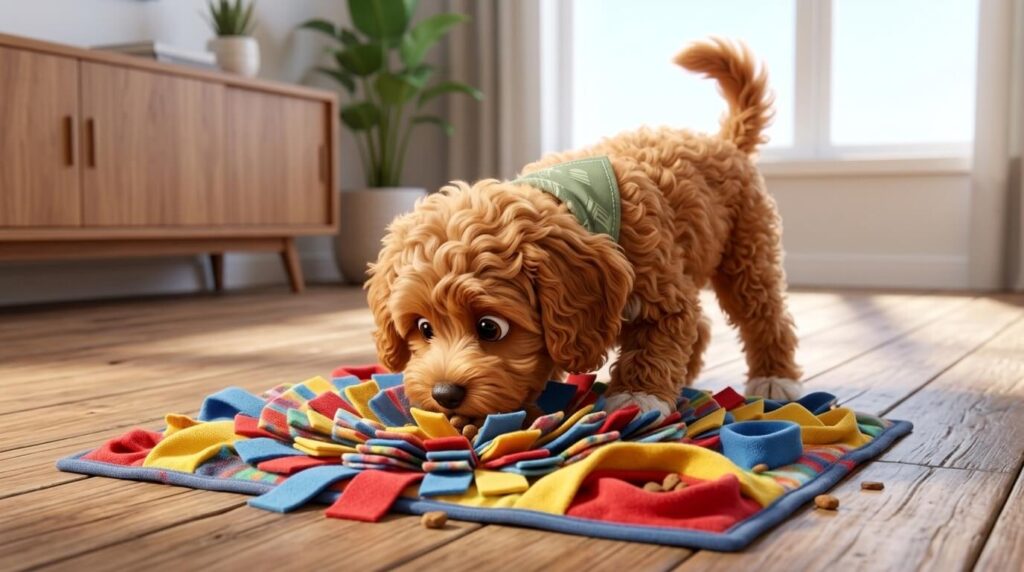
Sniffing is one of the easiest apartment-friendly boredom fixes. Hide a few treats around one room and release your dog to “find it.” Scatter part of a meal on a washable mat. Let your dog sniff one quiet outdoor strip instead of rushing the whole walk.
Keep searches easy at first. If the dog gives up, the game is too hard. Success builds confidence and calm focus.
Chewing
Chewing helps many dogs settle, but choose safe items for your individual dog. Avoid anything that splinters, breaks teeth, causes stomach upset, or triggers guarding. Supervise new chews and remove small pieces.
If your dog guards chews, do not use high-value chews casually in shared spaces. Use the dog resource guarding training guide first and keep chew sessions separated and calm.
Licking
Licking activities can be useful during transitions: after a walk, before bed, during a work call, or while hallway traffic is noisy. Use a lick mat, stuffed food toy, or spreadable dog-safe food in small amounts. Keep calories in mind and clean surfaces afterward.
Thinking
Thinking games include simple cues, trick training, toy names, hide-and-seek, and pattern games. Five minutes of training can tire some dogs more effectively than a chaotic 20-minute indoor chase.
For apartment dogs, useful skills include “place,” “touch,” “find it,” “drop,” “leave it,” “quiet,” and “settle.” These skills solve daily problems while also giving the dog mental work.
Moving
Movement does not have to mean indoor sprinting. Try controlled tug, hallway-free fetch alternatives, cushion stepping, leash walking drills, slow stair practice where safe, or short outdoor decompression walks. Avoid activities that create slipping, crashing, or neighbor noise.
If your dog needs a full no-yard exercise plan, use the exercise guide linked above. This boredom page should help you diagnose the need; the exercise page can carry the detailed routine.
A Simple Weekly Boredom Plan
If you do not know where to start, use a weekly rhythm instead of inventing something new every day.
| Day | Main Enrichment | Apartment Goal |
|---|---|---|
| Monday | Sniff walk plus food puzzle | Reduce workday restlessness |
| Tuesday | Training game and safe chew | Replace stealing or chewing |
| Wednesday | Find-it game indoors | Give the nose a job |
| Thursday | Longer decompression walk | Lower evening zoomies |
| Friday | Toy rotation and trick practice | Add novelty without chaos |
| Weekend | New route or quiet outdoor sniffing | Reset the dog’s environment |
The plan does not need to be perfect. It needs to be consistent enough that your dog stops inventing their own entertainment at your expense.
Common Mistakes That Keep Dogs Bored
Mistake 1: Only Adding More Exercise
Some dogs need more physical activity, but many need better activity. A fast walk around the block may not satisfy a dog who needs sniffing, problem-solving, chewing, or training.
Mistake 2: Leaving Every Toy Out
Too many always-available toys can become meaningless. Rotate toys and make some activities interactive so they stay valuable.
Mistake 3: Rewarding Pestering by Accident
If barking, pawing, or stealing always makes you jump up, the dog learns those behaviors work. Give attention before the problem window and reward calm behavior when it happens.
Mistake 4: Ignoring Rest
Overtired dogs can look bored. Puppies and high-energy dogs especially need structured rest after activity. More stimulation is not always the fix.
Mistake 5: Confusing Anxiety With Boredom
If the dog is panicking, drooling, shaking, or unable to eat, boredom is not the main issue. Treat distress as distress.
When It Might Not Be Boredom
Some behaviors that look like boredom have medical or emotional causes. Sudden chewing, restlessness, licking, pacing, irritability, house soiling, or sleep changes can be related to pain, digestive upset, skin problems, urinary issues, age-related changes, anxiety, or medication effects.
Call your veterinarian if the behavior is sudden, intense, paired with appetite changes, paired with limping or licking one body area, or happening in an older dog who used to be settled. Training works best when the dog is physically comfortable.
FAQ
What are the signs apartment dog is bored?
The common signs apartment dog is bored include destructive chewing, attention barking, pacing, stealing items, window obsession, frequent zoomies, and trouble settling after normal needs are met.
How do I fix dog boredom in an apartment?
Start with sniff walks, safe chewing, food enrichment, toy rotation, short training games, and a predictable rest routine. If your dog needs more structured movement, use the exercise dog in small apartment guide for no-yard options.
Is my dog bored or anxious?
A bored dog usually improves with appropriate enrichment and routine. An anxious dog may panic, drool, howl, refuse food, tremble, or try to escape, especially when alone or exposed to triggers. Video can help you tell the difference.
Can boredom cause barking in apartments?
Yes. Bored dogs may bark because hallway sounds become their main activity. However, barking can also come from fear, alerting, separation distress, or lack of training, so the cause matters.
Do puzzle toys stop apartment boredom?
Puzzle toys can help, but they are only one tool. Many dogs also need sniffing, movement, training, chewing, social contact, and rest. A puzzle toy cannot replace a complete routine.
Why does my dog get zoomies in my apartment?
Apartment zoomies can happen from excitement, stress release, unused energy, or an evening routine gap. If zoomies are frequent or unsafe, add earlier activity and create a safer play outlet.
Test One Problem Window This Week
Pick one problem window today: morning departure, afternoon hallway noise, evening pacing, or late-night zoomies. Add one appropriate outlet before that window, such as a sniff walk, food puzzle, training game, or chew. Then track whether the behavior improves.
If the dog settles faster, you are probably dealing with boredom or routine mismatch. If the dog stays distressed, panics, or shows sudden behavior changes, look beyond boredom and get veterinary or behavior support. The best boredom fix is not more chaos inside the apartment. It is the right kind of stimulation at the right time.
References
VCA Animal Hospitals: Introduction to Desensitization and Counterconditioning