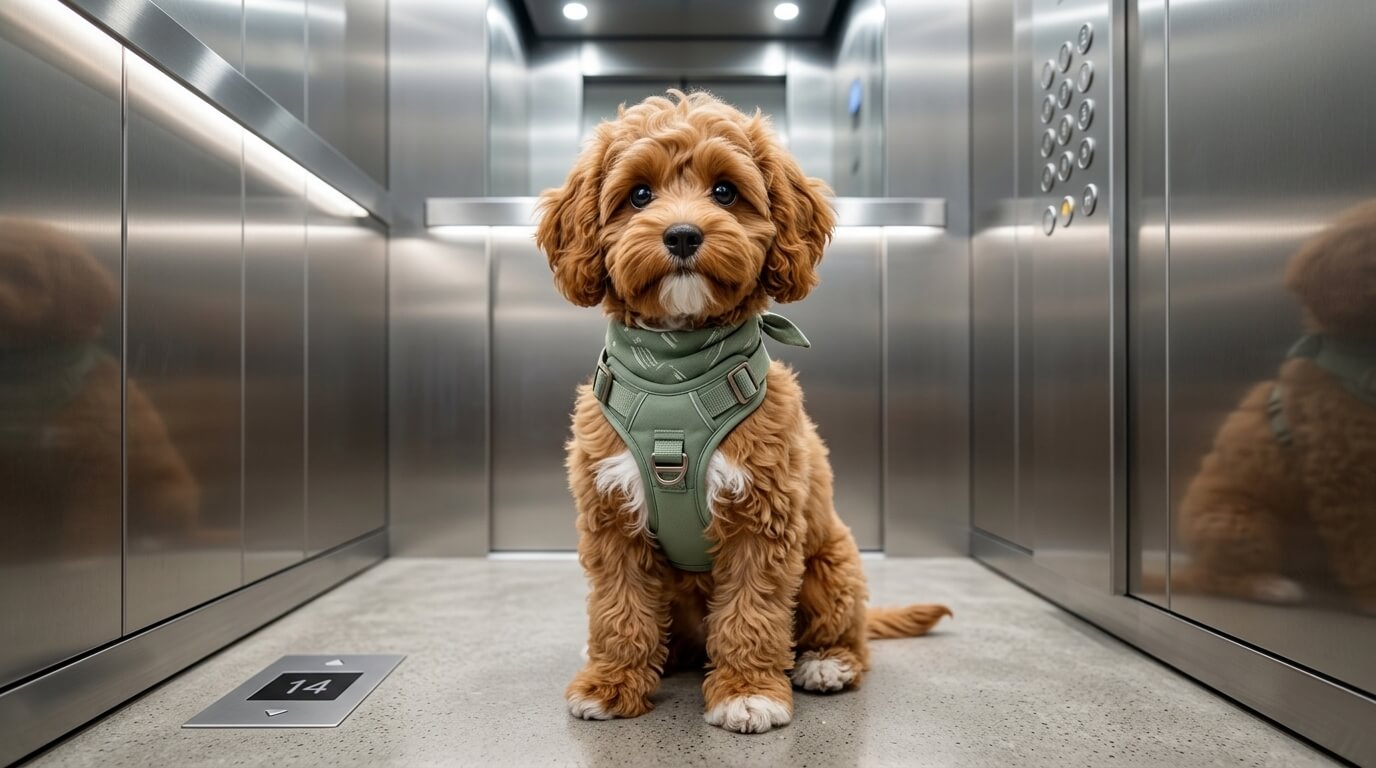
If you live in an apartment, the best dog harness is not just the one that looks good on a walk. It has to help you get through narrow hallways, elevator doors, lobby distractions, stairwells, package rooms, and crowded sidewalks without choking your dog or losing control.
That is why the best dog harnesses for apartment dogs and renters need a slightly different standard than ordinary walking harnesses. A renter-friendly harness should be easy to store, quick to put on before the apartment door opens, secure enough for sudden hallway triggers, and comfortable enough for multiple short potty walks every day.
For most apartment dog owners, I would start with a well-fitted Y-front harness with both a front clip and a back clip. The front clip helps reduce pulling in high-trigger areas like lobbies and sidewalks, while the back clip works better for calmer walks once your dog is settled. If your dog is anxious, narrow-bodied, or prone to backing out of gear, escape resistance matters more than style.
This guide compares seven harness types and picks based on real apartment-life problems: pulling toward neighbors, lunging at elevator doors, slipping out in the lobby, rubbing under the armpits, drying after rainy walks, and fitting into a renter’s small entryway setup.
The Best Dog Harnesses for Apartment Renters: Quick Answer
The best dog harnesses prioritize trachea safety with a Y-front design that leaves the sternum and shoulders free for natural movement. Top picks for apartment dogs include the Ruffwear Front Range for everyday walking, the Julius-K9 IDC for small breed control, and the escape-proof Ruffwear Web Master for anxious dogs. Always use the front-clip attachment to reduce pulling behavior.
| Apartment Problem | Best Harness Feature | Why It Matters for Renters |
|---|---|---|
| Pulling in hallways or lobbies | Front-clip attachment | Helps redirect your dog before they hit the end of the leash near neighbors or doors. |
| Elevator door lunging | Secure fit with a short leash option | Gives you better control in tight spaces where another dog may appear suddenly. |
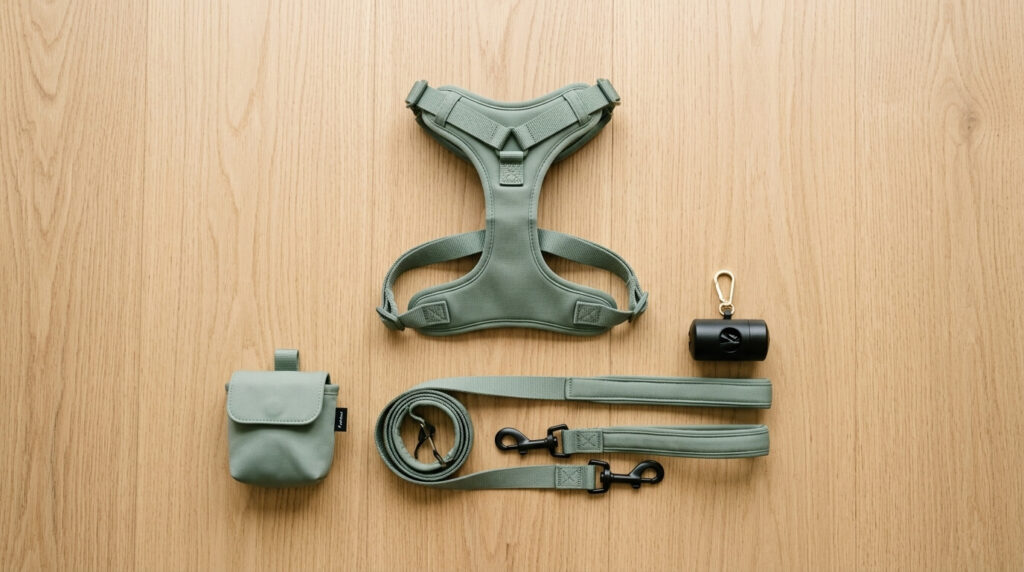
| Small apartment storage | Lightweight, quick-on design | Works better for renters who keep leash gear by the door or in a small entry basket. |
| Escape risk in busy buildings | Extra adjustment points or escape-resistant design | Important for anxious dogs, narrow-bodied dogs, and dogs who back out of harnesses. |
| Rainy potty walks | Fast-drying material | Prevents wet harness smell from taking over a small apartment. |
Table of Contents
How I Chose These Harnesses for Apartment Life
A harness that works beautifully on a wide suburban sidewalk can still be frustrating in an apartment building. Renters deal with tight turns, sudden elevator arrivals, people carrying groceries, other dogs appearing from blind corners, slippery lobby floors, and the awkward one-handed routine of holding a leash while locking a door.
For this article, I treated apartment use as the main filter. A harness had to make sense for at least one real small-space walking problem: hallway control, front-door management, city visibility, wet-weather potty trips, small-breed comfort, escape resistance, or quick storage near the apartment entrance.
I also avoided treating a harness as a replacement for training. A good harness can make pulling and lunging easier to manage, but it does not teach loose-leash walking by itself. For training fundamentals, pair the gear with calm leash work, reward timing, and gradual exposure to building triggers. The AKC’s loose-leash walking guidance is a useful starting point if you need a refresher on the training side: AKC loose leash walking guide.
The Lobby Problem: Why Collars Often Fail Apartment Dogs
Apartment walks begin before you reach the sidewalk. Your dog may already be excited when the leash comes out. Then the door opens, hallway sounds echo, the elevator dings, someone steps out with a delivery bag, and your dog hits the end of the leash before you have even left the building.
That moment is where collars become risky for many dogs, especially small breeds, flat-faced dogs, anxious dogs, and dogs who pull hard when startled. A flat collar puts leash pressure directly on the neck. A properly fitted harness spreads that pressure across the chest and torso instead.
This does not mean every collar is dangerous or every harness is automatically safe. Fit matters. Design matters. Training matters. But if your apartment dog regularly lunges toward doors, dogs, food scraps, neighbors, or elevator openings, a harness is usually the safer everyday walking tool.
Small and toy breeds deserve extra caution because they can be more vulnerable to tracheal issues. VCA Hospitals explains that tracheal collapse is common in some small breeds and can involve coughing, breathing trouble, and airway weakness. If your dog coughs after pulling, wheezes, or has a known airway condition, ask your veterinarian what walking equipment is safest: VCA: tracheal collapse in dogs.
Y-Front vs. Horizontal Harnesses
The first design choice is shape. Many apartment dog owners buy the first cute harness that fits, but the front shape can change how the harness sits on your dog’s shoulders.
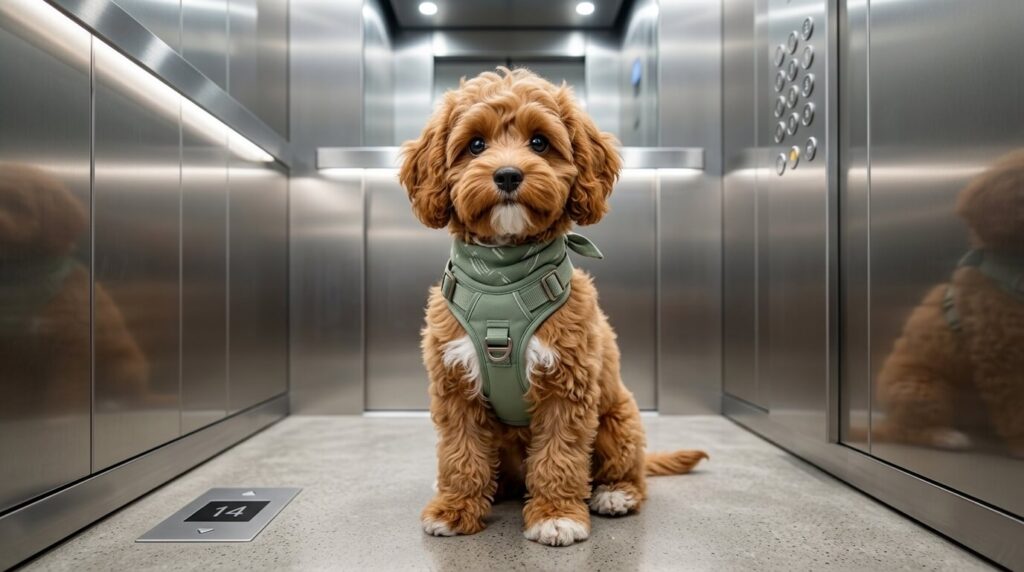
A Y-front harness has a front piece that forms a Y shape down the chest. It usually leaves the shoulder area more open and places pressure closer to the sternum. This is the style I would usually consider first for apartment dogs because it balances comfort, control, and daily practicality.
A horizontal-front harness has a strap that runs across the chest. Some dogs tolerate this perfectly well, especially for short walks, but on other dogs it can sit across the shoulder area and restrict movement. If your dog takes short choppy steps, rubs under the front legs, or resists walking in the harness, the shape may be part of the problem.
Quick fit check: after putting the harness on, watch your dog walk away from you. The shoulders should move freely, the straps should not dig into the armpits, and the harness should not twist sideways when the leash tightens.
The 7 Best Dog Harnesses for Apartment Dogs and Renters
1. Best Overall: Ruffwear Front Range Harness
The Ruffwear Front Range is the best overall style for many apartment dogs because it checks the most boxes at once: Y-front shape, front and back leash clips, padded panels, multiple adjustment points, and a compact design that does not feel excessive for everyday potty walks.
For renters, the biggest advantage is versatility. You can use the front clip when your dog is still learning not to pull through the lobby, then switch to the back clip for calmer sidewalk walks. That matters if your daily walk includes both tight building spaces and more relaxed outdoor sections.
It is especially useful for small-to-medium apartment dogs who need better control without a heavy tactical harness. It is not the cheapest choice, and some very narrow-bodied dogs may still need an escape-resistant option, but as a general first pick it is one of the safest recommendations.
Best for: everyday apartment walks, renters who want one harness for most situations, dogs who need both front and back leash clips.
Skip it if: your dog backs out of harnesses, has an unusual body shape, or needs a handle for urgent close control.
2. Best for Pulling: PetSafe 3-in-1 Harness
The PetSafe 3-in-1 is a practical pick for apartment owners dealing with pulling, especially when the dog explodes forward at the apartment door, lobby, or sidewalk transition. The front-clip option helps redirect the chest when the dog pulls, which can reduce the feeling of being dragged straight ahead.
This kind of harness works best when you pair it with training. When your dog pulls, stop, redirect, reward attention, and move again when the leash softens. The harness gives you better leverage, but your timing teaches the behavior.
For renters, the value is that it is not overly bulky. It can live on a hook by the door, dries reasonably well, and does not require a complicated setup before every potty break.
Best for: dogs who pull in building exits, renters who want a training-friendly front clip, and owners who need an affordable everyday option.
Skip it if: your dog is a serious escape artist or panics when gear goes over the head.
3. Best Escape-Resistant Option: Ruffwear Web Master Harness
If your dog has ever backed out of a harness in a hallway, lobby, parking garage, or elevator area, escape resistance becomes the priority. The Ruffwear Web Master style is built with more body coverage and a more secure fit than a simple walking harness.
This is not the harness I would choose for every renter. It is more substantial, takes a little more time to put on, and may feel like too much for a calm dog who only needs short potty walks. But for anxious dogs, narrow-bodied dogs, rescue dogs, and dogs who reverse suddenly when frightened, that extra security can be worth it.
Apartment buildings create many escape triggers: rolling carts, maintenance workers, elevator sounds, children running, unfamiliar dogs, and slick floors. If your dog tends to freeze and back up, do not choose a harness only because it looks minimal.
Best for: anxious dogs, narrow-bodied dogs, newly adopted dogs, and dogs with a history of slipping out of gear.
Skip it if: your dog is calm, easy to fit, and you need the fastest possible on-off routine.
4. Best for Small Toy Breeds: Puppia Soft Harness
Very small apartment dogs need a different balance. A tiny dog may not need heavy-duty control hardware, but they do need comfort, neck protection, and a harness that does not rub under the front legs during frequent short walks.
The Puppia-style soft vest harness can work well for toy breeds because it spreads pressure gently and feels less harsh than thin straps. It is also easy to store, which is helpful in studios and small entryways.
The tradeoff is control. A soft vest harness is not always the best choice for strong pullers, escape artists, or dogs who need front-clip training. If your tiny dog is calm but delicate, it can be a good fit. If your tiny dog launches at every hallway sound, you may need something more adjustable and secure.
Best for: calm toy breeds, delicate small dogs, short potty walks, and owners who prioritize comfort.
Skip it if: your dog pulls hard, backs out of harnesses, or needs a front clip.
5. Best Budget Pick: PetSafe Easy Walk Harness
The PetSafe Easy Walk style is a budget-friendly no-pull harness that many owners try first when leash pulling becomes a daily problem. Its main advantage is simple: the front attachment can make forward pulling easier to interrupt.
For apartment renters, this can be useful in the exact places where pulling causes the most stress: building exits, crosswalks, lobbies, and narrow sidewalks. It is also less bulky than many padded harnesses, which makes it easier to keep near the door.
The downside is that fit can be more sensitive than people expect. If it sits too low or shifts sideways, it may rub or restrict movement. Take time to adjust it, check the armpit area, and watch your dog’s stride for the first few walks.
Best for: budget-conscious renters, dogs who pull straight ahead, and owners who want a simple front-clip tool.
Skip it if: your dog has sensitive skin, unusual proportions, or needs more padding.
6. Best Control Handle: Julius-K9 IDC Powerharness
A top handle can be useful in apartment life because sometimes you need close control for three seconds, not a full training session. Think elevator doors, narrow stair landings, crowded sidewalks, lobby greetings, or a surprise maintenance cart.
The Julius-K9 IDC style is known for its handle and sturdy build. That handle can help you keep your dog close while stepping aside, waiting for an elevator, or preventing a greeting from becoming a jump. For larger apartment dogs, that extra control can be reassuring.
However, this is not the most movement-friendly design for every dog, and it may be more harness than a calm small dog needs. If you choose a handle-style harness, check shoulder movement carefully and avoid using the handle to lift or drag your dog.
Best for: medium-to-large apartment dogs, elevator control, stairwell management, and owners who need a sturdy handle.
Skip it if: your dog needs a lightweight Y-front design or has shoulder sensitivity.
7. Best for Rainy Potty Walks: Hurtta Active Harness
Rain feels different when you live in an apartment. A wet harness does not dry in a mudroom or garage. It hangs near your door, drips onto the floor, and can make a small entryway smell damp after repeated potty walks.
A weather-friendly harness should dry quickly, resist odor, and stay comfortable when your dog has to go outside in rain or snow. Hurtta-style active harnesses are useful for renters who walk in bad weather and need gear that can handle daily wet use without becoming unpleasant indoors.
This category matters most for city dogs who do not have a yard. If every bathroom break requires a leash walk, wet-weather gear is not optional. It is part of your apartment cleaning system.
Best for: rainy climates, snow, repeated potty walks, and renters with limited drying space.
Skip it if: you live in a dry climate or need a front-clip no-pull harness first.
Best Harness Type by Apartment Scenario
| Scenario | Best Choice | Reason |
|---|---|---|
| Dog pulls toward neighbors | Front-clip Y-front harness | Better redirection before your dog reaches the end of the leash. |
| Dog lunges at elevator doors | Secure harness plus short traffic leash | Lets you keep your dog close while waiting beside the door. |
| Dog slips backward out of gear | Escape-resistant harness | More body coverage can prevent backing out during panic moments. |
| Tiny dog with delicate neck | Soft vest or well-fitted lightweight Y-front | Spreads pressure more gently than a collar. |
| Rainy daily potty walks | Fast-drying active harness | Reduces wet gear smell in a small apartment. |
| Large dog in tight hallways | Harness with handle or dual-clip setup | Helps with close control in narrow shared spaces. |
How to Fit a Dog Harness in a Small Apartment
A good harness can still fail if it is fitted badly. Do the first fitting indoors, before your dog is excited about going out. Use treats, keep the session short, and avoid forcing the harness over the head if your dog is nervous.
Use the two-finger rule as a starting point: you should usually be able to fit two fingers under the straps, but the harness should not slide around when your dog turns. Check the neck, chest, belly, and armpit areas. After the first walk, remove the harness and look for red marks, hair flattening, or rubbing.
Apartment dogs often take more frequent short walks than yard dogs, so small friction points matter. A strap that seems fine for one 10-minute walk may irritate your dog after five potty trips a day.
Elevator and Hallway Etiquette
The right harness makes elevator etiquette easier, but you still need a routine. Before opening your apartment door, clip the leash, ask for a pause, and make sure your dog is not already pulling. In the hallway, keep your dog on the side away from passing neighbors.
At the elevator, stand to the side instead of directly in front of the doors. Shorten the leash before the doors open. If another dog is inside, step back and wait for the next elevator. This is not overreacting. It is how you avoid face-to-face pressure in a small moving box.
If elevator reactions are already a major problem, read the dedicated training guide here: dog elevator training. If barking is part of the issue, pair this gear change with the apartment barking guide: how to stop dog barking in an apartment.
Common Harness Mistakes Renters Make
Mistake 1: Buying for looks before fit
A stylish harness is fine, but apartment dogs need function first. If the harness rubs, twists, restricts movement, or takes too long to put on, you will hate using it during real morning routines.
Mistake 2: Using a back clip for a strong puller
Back clips are comfortable for calm walks, but they can make pulling feel easier for some dogs. If your dog drags you through the lobby, try a front clip while you work on loose-leash training.
Mistake 3: Ignoring escape risk
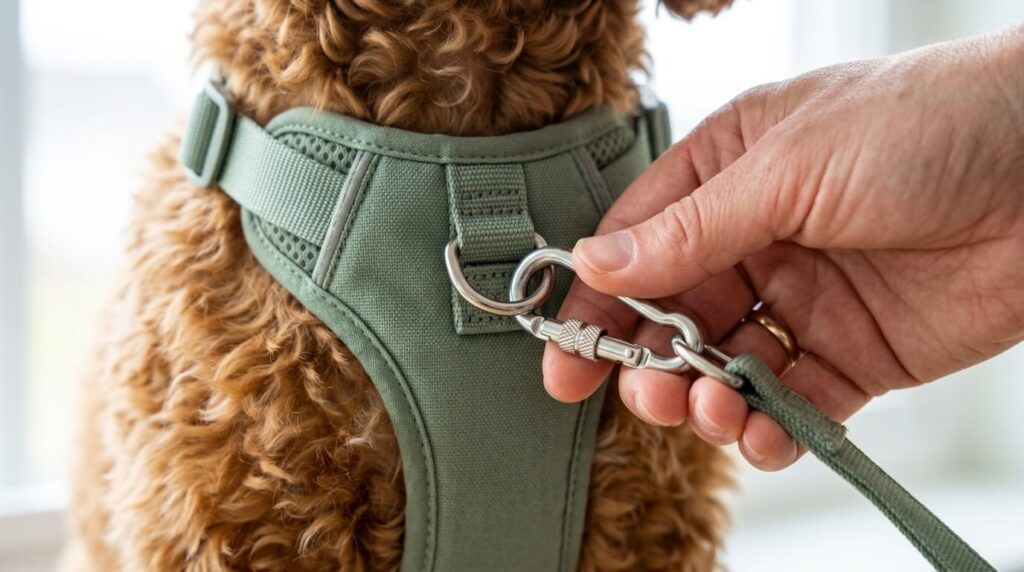
Many dogs can back out of a poorly fitted harness. This is especially dangerous near elevators, parking garages, and busy streets. If your dog has escaped once, treat that as a serious equipment warning.
Mistake 4: Leaving a wet harness by the door
In a small apartment, wet gear becomes an odor problem quickly. Hang the harness where air can circulate, wipe buckles after rain, and wash it according to the manufacturer’s instructions.
Mistake 5: Expecting gear to replace training
A harness helps you manage pulling. It does not teach your dog what to do instead. Keep treats near the door, reward check-ins, and practice calm exits when you are not in a rush.
My Recommendation
If you are unsure where to start, choose a dual-clip Y-front harness with several adjustment points. That gives most apartment renters the best balance of safety, comfort, and control. Use the front clip for lobby exits and high-trigger walks, then use the back clip when your dog is calm and moving nicely.
If your dog is tiny and delicate, prioritize softness and neck protection. If your dog is anxious or narrow-bodied, prioritize escape resistance. If your dog is large and strong, prioritize close-control features and training support. The best dog harnesses for apartment dogs are not one-size-fits-all; they match the building, the dog, and the daily walking routine.
For a safer apartment setup overall, pair the harness with a renter-friendly leash station, a door routine, and clear boundaries inside the home. You may also want to read how to dog proof a rental apartment and how long you can leave a dog alone in an apartment.
FAQ
What is the best dog harness for renters?
The best dog harness for renters is usually a lightweight, secure, dual-clip Y-front harness. It should be easy to store near the apartment door, quick to put on, comfortable for frequent potty walks, and secure enough for hallways, elevators, and city sidewalks.
Are no-pull harnesses good for apartment dogs?
Yes, a no-pull or front-clip harness can be helpful for apartment dogs who pull in lobbies, hallways, stairwells, or sidewalks. It should be used as a training aid, not a complete solution. Reward loose-leash walking and calm exits so your dog learns what behavior you want.
Should apartment dogs wear a collar or a harness?
Many apartment dogs do better on walks with a harness because it reduces direct pressure on the neck. Your dog can still wear a collar for ID tags, but if they pull, cough, or lunge, ask your veterinarian whether a harness is safer for daily walks.
What harness is safest for elevator walks?
For elevator walks, choose a secure harness that does not slip, twist, or loosen when your dog turns. A front clip or short traffic leash can help you keep your dog close while waiting beside the elevator doors.
Can a dog escape from a harness?
Yes. Dogs can back out of loose or poorly fitted harnesses, especially when frightened. If your dog has a narrow chest, anxiety, or a history of slipping out, choose an escape-resistant harness and test the fit indoors before using it near streets or elevators.
How tight should a dog harness be?
A harness should be snug but not restrictive. As a general starting point, you should be able to fit two fingers under the straps. The harness should not rub the armpits, restrict shoulder movement, or slide sideways when the leash tightens.
Do small apartment dogs need harnesses?
Small dogs often benefit from harnesses because many are delicate around the neck and trachea. This is especially important if the dog pulls, coughs, or gets excited around neighbors, elevators, or other dogs.
Next Step
If you are choosing only one harness, start with a secure dual-clip Y-front harness that fits your dog’s body shape and your building routine. For most renters, the safest choice is the harness that helps you manage elevator doors, hallway distractions, and short daily potty walks without putting pressure on your dog’s neck.
After you update the harness, practice calm exits from your apartment door and short loose-leash sessions in the hallway before testing it in the lobby or on a busy sidewalk.
References
Apartment Dog Expert: How to Stop Dog Barking in an Apartment
VCA Hospitals: Tracheal Collapse in Dogs