.png)
Dog chewing furniture apartment problems are easiest to change when you stop the next rehearsal, identify what the dog is getting from the behavior, and provide a safer outlet. Covering a sofa corner or closing a door is not “giving up on training.” It prevents damage and possible ingestion while the dog learns a different habit.
Chewing is normal dog behavior, but the reason and risk vary. A puppy may seek pressure on sore gums. A young dog may have too much unsupervised freedom. A dog who chews only after you leave may be under-stimulated, reacting to hallway noise, or experiencing separation-related distress. A dog who suddenly begins chewing unusual materials may have pain, nausea, anxiety, nutritional or medical problems, or another change that needs veterinary assessment.
Start with safety. If pieces are missing, do not wait for vomiting to decide whether ingestion matters. Call your veterinarian or an emergency veterinary service with the dog’s weight, item, material, estimated amount, and time. Do not induce vomiting or give a home remedy unless a veterinary professional specifically instructs you to do so.
-1024x576.png)
Table of Contents
Dog Chewing Furniture Apartment: Quick Answer
Block access to the damaged area, collect loose pieces, photograph what is missing, and inspect the dog’s mouth only if it is safe to do so. Contact the veterinarian when material may have been swallowed, a tooth may be damaged, or the dog has drooling, repeated swallowing, gagging, vomiting, abdominal pain, appetite loss, lethargy, difficulty passing stool, or any sudden behavior change.
For training, choose one safe replacement the dog already uses well, keep the dog within view or in a dog-proof area, and reward interaction with that replacement. Add an appropriate toilet break, sniffing, movement, rest, and social contact to the day. Record when chewing happens. The pattern will tell you more than the damaged object alone.
| Pattern | Possible explanation | Best first response |
|---|---|---|
| Puppy mouths many reachable edges | Exploration, teething, limited impulse control | Close supervision, restricted area, appropriate chew options |
| Adult dog chews during long quiet periods | Unmet activity or foraging needs, habit | Improve routine and prevent access |
| Chewing begins near departure and targets doors or exits | Possible separation-related distress | Record departures and seek behavior guidance |
| Chewing follows hallway sounds or window activity | Trigger-related arousal | Move rest zone and reduce trigger exposure |
| Sudden chewing with ingestion or physical signs | Medical, dental, gastrointestinal, or behavioral concern | Veterinary assessment |
| Dog stiffens or guards a chew | Resource guarding risk | Stop grabbing items and use a safety plan |
Chewing Is Not the Same as Swallowing
Some dogs strip upholstery, wood, foam, fabric, drywall, carpet, plastic, or paint and spit most of it out. Others swallow pieces. You may not see the ingestion happen. Compare the damage with what you can recover, inspect stools only as your veterinarian advises, and watch the dog’s behavior and appetite.
Furniture can contain more than wood or cloth. Staples, nails, springs, zippers, foam, glue, paint, coatings, batteries in powered furniture, and stuffing can create different hazards. Older painted surfaces may raise additional concerns. Electrical cords and powered recliner mechanisms add shock and crushing risks. Treat access prevention as urgent, not cosmetic.
The VCA overview of destructive chewing in dogs describes chewing as a behavior with multiple possible causes and emphasizes management and appropriate outlets. No online page can determine whether a specific swallowed material will pass safely. That decision belongs to a veterinary professional with the relevant details.
Find the Trigger Before Choosing the Fix
For three to five ordinary days, record the time, location, who was home, what happened during the previous hour, the last toilet break, the last meal, and any building noise. Use a camera for periods when the dog is alone, but do not wait for more destruction when there is a known ingestion risk.
Ask these questions:
- Does chewing happen only when nobody is home?
- Does it begin immediately after departure or several quiet hours later?
- Is the target near the door, window, food area, or owner’s usual seat?
- Does the dog take a safe chew and settle, or remain frantic?
- Is the dog teething, newly adopted, recovering from illness, or taking medication?
- Has the work schedule, building noise, household, food, exercise, or sleep changed?
- Are pieces swallowed, guarded, or carried away?
A dog who takes a food toy and later nibbles a sofa corner may need better management and a more complete routine. A dog who ignores food, pants, vocalizes, scratches the exit, and damages the door soon after departure may be distressed. Use the guide to separation anxiety in apartment dogs when chewing is part of a departure-linked pattern.
The 7 Essential Renter-Safe Fixes
1. Prevent Access Before You Test Training
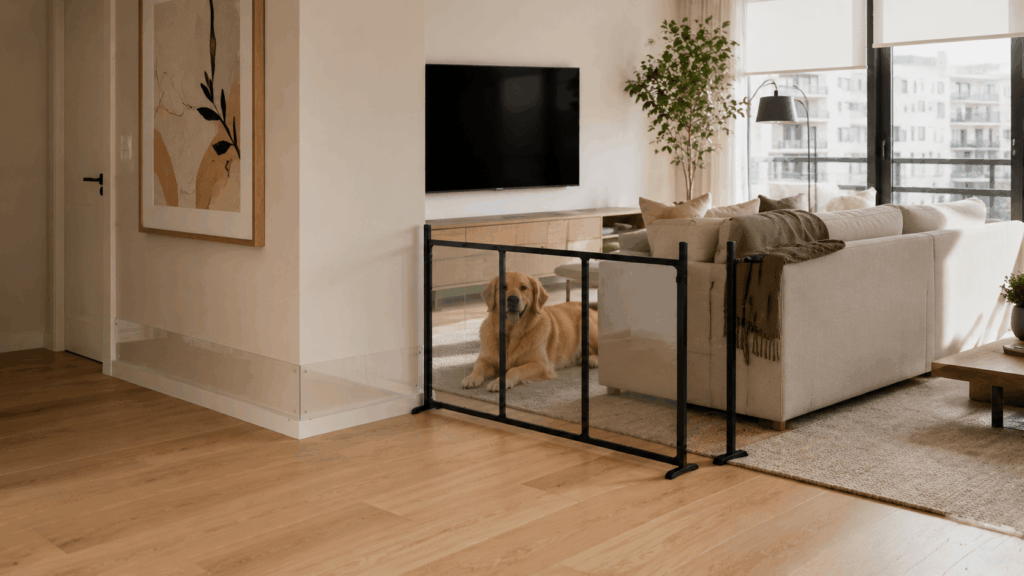
Every successful chewing episode strengthens familiarity with the target. Management changes what the dog can practice. Move the sofa away from the wall, rotate the vulnerable arm toward a blocked corner, close a room, use a stable freestanding gate, place an exercise pen where appropriate, or keep the dog attached to an adult with a lightweight indoor leash while actively supervised.
Choose barriers the dog cannot climb, push over, become trapped in, or chew apart. Do not leave a dog tethered while unsupervised. Pressure-mounted gates can shift, and improvised furniture stacks can fall. Test the setup with you present and remove collars or equipment only according to a safe confinement plan appropriate for that dog.
Use reversible surface protection that complies with the lease. Clear guards, rigid corner covers, washable throws, furniture placement, cord channels, and rugs may help, but adhesives can damage paint or finish. Obtain written permission before drilling, attaching permanent barriers, painting, or altering trim. The rental dog-proofing guide covers other removable protections.
2. Build a Small Menu of Tested Chew Options
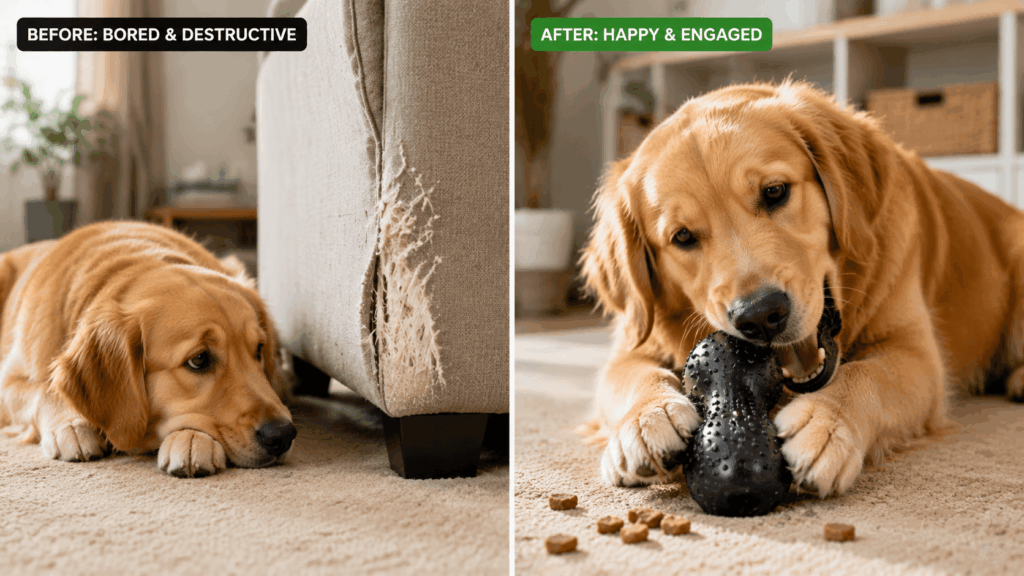
A replacement must satisfy the dog and be reasonably safe for that individual. Offer different appropriate textures under supervision and observe how the dog uses them. Some dogs lick and compress rubber. Others shear pieces, crack very hard materials, swallow fabric, or consume edible chews too quickly.
No chew is risk-free or permanently indestructible. Size the item to the dog, follow manufacturer guidance, inspect it before and after use, and remove it when damaged or small enough to swallow. Ask the veterinarian about dental condition, diet, allergies, gastrointestinal disease, and the suitability of edible chews. Very hard items can damage teeth.
Rotate two or three known options rather than scattering a large pile. Reserve a particularly valued safe item for times when the dog normally approaches furniture. Count food-filled items within the daily diet. If the dog destroys or swallows every option, use chews only under direct supervision and shift unsupervised enrichment toward schedule and environment.
3. Teach the Choice You Want
When the dog approaches an allowed chew, mark the choice with calm praise or a reward. Occasionally place the safe item near you and reward relaxed chewing. The dog learns that appropriate items predict access, comfort, and interaction.
If the dog touches furniture while you are present, interrupt without frightening them, guide them away, and offer the safe alternative. Reward engagement with it. Do not chase the dog around the apartment or turn the furniture piece into a game. Repeated failure means the setup provides too much freedom; make management easier.
Teach “leave it” with low-value items in planned training sessions, not during an emergency involving a swallowed object. Teach “drop” or “trade” using safe objects and worthwhile exchanges. Avoid prying the mouth open or grabbing a guarded item unless immediate emergency handling is necessary and safe. For stiffness, freezing, growling, snapping, or guarding, use the resource-guarding safety guide and seek qualified help.
Scolding after you return home does not teach what happened hours earlier. A dog may crouch because your posture and voice predict conflict, not because the dog understands a retrospective accusation. Clean up, secure the area, review the timeline, and change the next setup.
4. Meet Daily Needs Without Trying to Exhaust the Dog
Chewing often rises when the daily routine becomes thin: a rushed toilet trip, a long workday, little sniffing, and an intense burst of attention at night. Build a repeatable mix of bathroom access, walking, sniffing, short training, foraging, social time, and sleep. The plan should fit the dog’s age, health, and temperament.
More exercise is not always the complete answer. Pain, heat, brachycephalic airway limits, age, and fitness affect safe activity. Frantic fetch before leaving can increase arousal in some dogs. Use the small-apartment exercise guide for quieter movement and scent options.
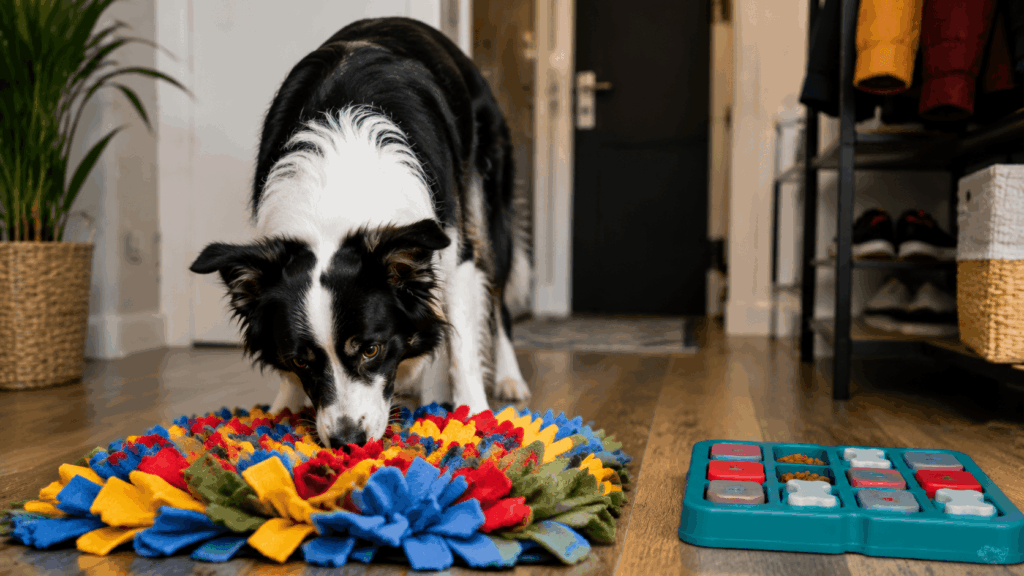
Food searches, simple training, and puzzle activities can help, but not every DIY idea is safe for an unsupervised chewer. A dog who eats towels, cardboard, plastic, or paper should not be left with rolled-fabric or box puzzles. Supervise new activities and use the workday enrichment guide to balance activity with rest and human support.
5. Treat Alone-Time Chewing as Its Own Investigation
Set up a camera before a normal departure and review the beginning rather than only the damaged room at the end. Note whether the dog eats, rests, responds to hallway sounds, watches the door, or becomes increasingly agitated. The timing and body language help distinguish later boredom from distress beginning at departure.
If the dog settles and chewing appears after several hours, the workday may exceed comfortable toilet, activity, or social needs. Compare the schedule with the guide to leaving a dog alone in an apartment and arrange a walker, sitter, trusted visitor, or other suitable support when needed.
If chewing begins immediately around doors, windows, trim, or confinement barriers and occurs with panting, drooling, vocalization, pacing, elimination, escape attempts, or refusal of food, do not make the dog “cry it out.” Contact the veterinarian and a qualified behavior professional. The VCA introduction to desensitization and counterconditioning explains why behavior work must stay at an intensity the animal can handle.
6. Adjust for Puppies, Seniors, and Sudden Changes
Puppies explore with their mouths and may chew more during teething, but they do not automatically grow out of every practiced habit. Use close supervision, frequent toilet breaks, sleep, age-appropriate activity, safe chew choices, and a limited puppy-proof area. Ask the veterinarian about dental development and appropriate materials.
A senior dog who suddenly chews furniture needs a different response. Dental pain, gastrointestinal discomfort, cognitive change, anxiety, medication effects, sensory decline, or other health problems may alter behavior. Schedule a veterinary examination rather than assuming the dog has become bored or defiant.
Adult dogs also warrant assessment when chewing appears suddenly, includes non-food ingestion, or occurs with appetite, thirst, stool, vomiting, weight, energy, sleep, skin, or behavior changes. Pica describes persistent eating of non-food materials, but it is a sign requiring investigation, not a diagnosis to make from a website.
7. Repair the Environment and Track the Result
Take photographs of damage before cleaning or moving items. Recover loose pieces and note what seems missing. For rental surfaces, review the lease and communicate promptly when damage affects safety, wiring, structure, doors, or building systems. Do not conceal a chewed electrical cable, damaged fire door, or exposed sharp hardware.
Ask before making permanent repairs. A property manager may require a particular contractor, material, color, or reporting method. An improvised patch can create more damage or violate the lease. Keep written communication, estimates, receipts, and before-and-after photographs.
Track behavior, not only damage. Record the dog’s access area, chew items, morning activity, alone time, camera observations, and any incidents. Success means the dog repeatedly chooses appropriate outlets and rests safely while barriers remain effective. Do not remove all management after two good days. Expand freedom slowly and test one area at a time.
Room-by-Room Apartment Protection
Living Room: Sofas, Chairs, and Rugs
Sofa arms concentrate scent from human hands and offer an easy edge. Block the preferred corner, use a fitted washable cover, and keep a safe chew station where you sit. Check beneath reclining furniture before operating it. Keep remote controls, batteries, blankets, and loose cushion zippers out of reach.
For rugs, prevent access to loose fringe and curled corners. A dog who unravels and swallows fibers should not remain unsupervised with that rug. A heavy mat over the corner can help only if the dog cannot lift, chew, or become trapped under it.
Entryway: Door Trim and Baseboards
Damage near the exit often deserves camera review. It may occur after hallway sounds or departure, not simply because wood is attractive. Move the rest area away from the door, reduce the visible approach path, and use a stable barrier that leaves safe emergency access.
Baseboard guards must cover the full target without sharp edges or reachable adhesive. Do not apply unknown substances to painted surfaces. If the building may contain old paint or other hazardous material, stop access and ask the property manager and veterinarian how to proceed.
Bedroom: Bedding, Bed Frames, and Personal Items
Laundry, socks, hair ties, medication, glasses, and charging cables may be more dangerous than the furniture. Close drawers and hampers, route cords, and remove items from under the bed. If the frame is the target, restrict bedroom access until training and management are reliable.
Work Area: Cords and Rolling Furniture
Use cord channels and block access behind the desk. Unplug portable items when not in use. Keep the dog away from rolling-chair wheels and height-adjustable desk mechanisms. A chew toy beside the desk is useful only if you can notice when it becomes damaged.
What About Bitter Spray?
A taste deterrent may reduce contact with one surface, but it does not address the reason for chewing and it does not make a toxic, electrical, sharp, or swallowable object safe. Some dogs ignore it; others may lick more. Products can stain or damage furniture finishes, and ingredients or aerosols may be inappropriate around a particular dog or household member.
Ask the veterinarian about product safety, follow the label, patch-test the surface with the owner’s or manufacturer’s guidance, and prevent licking until the product is used as directed. Never use hot sauce, household chemicals, essential oils, or homemade irritants. Pair any deterrent with access control and reinforcement of an appropriate choice.
Should You Use a Crate, Gate, or Exercise Pen?
These tools can support management when the dog has been gradually trained to relax in the space. They should not be introduced for a full workday after destruction begins. A dog who bends bars, bites doors, climbs, panics, or injures the mouth or paws needs a different immediate plan and professional assessment.
A crate is not a substitute for bathroom breaks or treatment of separation distress. A gate is not safe if the dog clears it or becomes caught. An exercise pen needs stable placement and sufficient distance from reachable furniture, cords, curtains, and counters. Test every setup while present, then during a brief departure, before relying on it.
When to Call the Veterinarian or a Behavior Professional
Contact the veterinarian promptly for possible ingestion, mouth injury, broken tooth, bleeding, drooling, gagging, vomiting, appetite loss, abdominal discomfort, lethargy, stool changes, repeated non-food eating, or sudden onset. Seek urgent care when advised or when the dog has severe signs, trouble breathing, collapse, repeated unproductive retching, or known exposure to a dangerous material.
Behavior help is appropriate when chewing persists despite management, when the dog guards objects, when destruction occurs with distress, or when the household cannot keep the dog and property safe. Look for a professional who uses humane, evidence-based methods and works with the veterinary team when medical or anxiety concerns exist.
The ASPCA common dog behavior resources provide general background. They do not replace an individual assessment, especially when the behavior creates a swallowing, injury, or housing risk.
Material-Specific Risks in a Rental Apartment
Wood, Paint, and Baseboards
Wood splinters can injure the mouth or gastrointestinal tract, and painted or treated surfaces may contain substances that cannot be identified from appearance. Do not sand, heat, scrape, or coat a rental surface simply to discourage the dog. Those actions can spread dust, alter the property, or create a new exposure.
Photograph the damaged area and keep the dog away. Ask the property manager what the material is and how repairs must be handled. Tell the veterinarian what you know about the age, coating, amount missing, and whether the dog swallowed fragments. “It was only baseboard” is not enough information to judge risk.
Upholstery, Foam, and Fabric
Foam can expand, clump, or contribute to obstruction; fabric and thread can create serious gastrointestinal problems when swallowed. Long strands are especially concerning. Do not pull string, thread, or fabric protruding from the mouth or rectum unless a veterinarian directs you, because it may be anchored internally.
Remove loose covers, exposed zippers, torn seams, and stuffing from the dog’s access area. A blanket over a damaged sofa is not protection if the dog eats blankets. Use a rigid barrier or close the room while arranging repair and veterinary advice.
Electrical Cords and Powered Furniture
A chewed cord can cause burns, electrical injury, fire, and damage that is not visible from the outside. Disconnect power without touching exposed wiring or a dog still in contact with a live source. Follow emergency guidance and seek veterinary care promptly after a suspected electrical injury, even when the dog initially seems normal.
Powered recliners, adjustable beds, and desks contain cables and moving mechanisms. Block the entire mechanism rather than covering one wire. Inspect beneath furniture before operating it, and do not rely on bitter spray near electrical equipment.
Drywall, Carpet, and Flooring
Wallboard, joint compound, insulation, carpet fibers, backing, underlay, adhesives, and floor coatings present different risks. Damage may also expose wiring, sharp fasteners, moisture, or mold. Prevent access and notify the property manager when the building material or safety of the unit is affected.
Carpet chewing often begins at an edge, doorway, seam, or previously damaged patch. A loose temporary mat may hide the target but can also become another chew item or trip hazard. Use a stable barrier and repair process instead of layering swallowable material over the problem.
Use a Behavior Log That Produces Decisions
A useful log is short enough to complete and specific enough to change the plan. Do not write only “bad chewing day.” Record the moment, context, target, response, and result. Include days without chewing, because they reveal what conditions support success.
| Field | Example | Decision it supports |
|---|---|---|
| Time and location | 2:20 p.m., sofa arm near front window | Shows timing and environmental target |
| Previous hour | Owner on video call; no midday break | Identifies routine pressure |
| Trigger | Delivery cart and hallway voices | Suggests moving rest zone or masking trigger |
| Dog behavior | Alert barking, pacing, then chewing | Distinguishes arousal from quiet exploration |
| Management | Window blocked; sofa gated; safe chew offered | Documents the exact change |
| Result | Chewed replacement for six minutes, then slept | Shows whether the alternative worked |
Review the log after several comparable situations. If chewing consistently follows a missed break, change the schedule. If it follows hallway noise, relocate the dog and work on trigger response. If it occurs immediately after departure with distress, stop treating it as simple boredom. If the pattern is sudden or medically unusual, take the record to the veterinarian.
Do not use the log to delay safety action. A known swallowing risk requires immediate prevention. The log helps refine the longer-term plan after the environment is secure.
Restore Freedom in Small, Measurable Steps
Once chewing is under control, keep the successful routine and increase access gradually. Begin when the dog has had an appropriate toilet break and is likely to settle. Open one previously blocked area for a short supervised period. Keep the safe chew available and interrupt early interest in furniture before the dog begins tearing material.
Next, test the area while you are nearby but not actively engaging the dog. Then try a very brief absence with a camera. Do not jump from ten calm minutes to a full workday. Duration, room access, and distance from you are separate variables; change one at a time.
Move back a step when the dog repeatedly returns to furniture, becomes agitated, destroys a barrier, or stops using the safe option. That is not failure. It means the current level asks for more skill or comfort than the dog has. Strengthen management, review the trigger, and seek help when progress stalls.
Some protection may remain permanently. A cord channel, closed laundry hamper, gate at a utility area, or sofa placement that works for the household does not need to disappear to prove training succeeded. Good management is part of responsible ownership, especially in a rental where one mistake can create a safety hazard and a large repair bill.
When Chewing and Apartment Noise Feed Each Other
In shared buildings, chewing can be the final behavior in an arousal chain. The elevator arrives, a dog barks in the hall, your dog runs to the door, vocalizes, paces, and then bites the nearest trim or sofa edge. Providing a chew without changing the trigger may help briefly but leaves the chain intact.
Move the resting place away from the door, block window views that provoke scanning, and use moderate predictable background sound if video shows it helps. Schedule walks for quieter periods while training develops. Reward calm orientation back to you and movement away from the trigger when you are home.
If a neighbor reports noise, ask for dates and times and compare them with camera footage. Avoid promising an instant cure. Explain the immediate management change and review the result. The goal is not to disclose private behavioral or medical details; it is to respond responsibly with a concrete plan.
Common Mistakes
Giving the Dog Full Access Too Soon
Freedom should grow after the dog demonstrates safe choices, not because the owner feels guilty about a smaller dog-proof area. Increase one room or one short period at a time.
Buying Harder and Harder Chews
Hardness is not the same as safety. Very hard materials can damage teeth, and determined dogs may still swallow fragments. Match the item to the individual with veterinary guidance.
Punishing the Dog Near the Damage
Intimidation may suppress behavior while you are present without teaching a safe alternative. Delayed punishment adds fear without clear information.
Assuming More Exercise Will Cure Everything
A complete routine matters, but exercise does not treat pain, ingestion, guarding, or separation distress. Use the pattern to choose the intervention.
Removing Barriers After a Short Good Streak
Management is part of treatment. Keep protection in place while the new behavior becomes reliable across different days and schedules.
Frequently Asked Questions
How do I stop my dog chewing the couch?
Block access, provide a tested appropriate chew, reward the correct choice, and identify when and why the behavior happens. Review alone-time video and daily routine. Contact the veterinarian if pieces may be swallowed or the behavior begins suddenly.
Will my puppy grow out of chewing furniture?
Teething-related chewing changes with development, but repeatedly practiced furniture chewing can become a habit. Puppy-proof the area, supervise closely, provide appropriate outlets, and teach choices now rather than waiting.
Can bitter spray stop furniture chewing?
It may reduce contact with a specific surface for some dogs, but it is not enough by itself and may damage finishes. Use only an appropriate labeled product with veterinary and manufacturer guidance, while also blocking access and teaching an alternative.
Why does my dog chew only when I leave?
The dog may encounter a long period without support, react to building triggers, or experience separation-related distress. Record departures and look for pacing, panting, vocalizing, drooling, refusal of food, exit-focused damage, or inability to rest.
Should I crate my dog to protect the apartment?
Only when the dog has been positively trained to rest comfortably in the crate and the duration and physical needs are appropriate. Do not crate a dog who panics or attempts to escape; seek professional help.
What if my dog swallows wood or fabric?
Contact your veterinarian with the material, amount, timing, and dog’s size and symptoms. Do not wait for the material to appear in stool or induce vomiting unless directed by a veterinary professional.
How many chew toys should be available?
There is no ideal number. A small rotation of safe, familiar options is usually easier to inspect and manage than a large pile. Quality of use and individual safety matter more than quantity.
Can a dog be trusted again after furniture damage?
Yes, many dogs improve, but trust should be built from observed behavior. Maintain barriers, train under supervision, use short tests, and expand access gradually. A previous ingestion or anxiety pattern warrants extra caution and professional guidance.
What Success Looks Like
Progress is not merely a sofa that survives because the dog was confined somewhere unsafe. The dog should be comfortable, able to meet physical needs, capable of choosing appropriate items, and able to rest. The apartment should be protected without creating a new escape, entrapment, or ingestion hazard.
Keep the first goal modest: one safely managed room, one or two appropriate options, a realistic daily routine, and clear evidence about what happens when you leave. When those pieces work together, furniture chewing becomes a solvable behavior pattern rather than a recurring surprise.
References
ASPCA: Common Dog Behavior Issues
VCA Animal Hospitals: Destructive Chewing in Dogs
VCA Animal Hospitals: Introduction to Desensitization and Counterconditioning