
Dog resume for rental applications is not a magic document that makes a landlord say yes. It is a calm, organized way to answer the questions many landlords are already worried about: Will the dog bark? Damage floors? Bother neighbors? Have accidents? Break pet rules? Create insurance or cleaning problems?
That can feel personal when you love your dog. You know the sweet side: the couch naps, the polite sits, the little face waiting by the door. A landlord sees risk first. A good dog resume helps translate your dog from “unknown risk” into “responsible applicant with a plan.”
This guide is written for renters and apartment dog owners. It does not encourage hiding pets, faking documents, exaggerating training, or confusing pets with assistance animals. It helps you present truthful, useful information in a way that makes a housing provider’s decision easier.
Quick Answer
A dog resume for rental applications should include your dog’s basic details, a clear photo, training history, apartment behavior, vaccination and veterinary care summary, grooming and cleanliness routine, references, pet insurance or renter responsibility notes if applicable, and a short cover note explaining how you manage your dog in rental housing. Keep it honest, specific, and easy to scan.
| Section | What to Include | Why It Helps |
|---|---|---|
| Dog profile | Name, age, breed mix, size, spay/neuter if relevant | Answers basic screening questions quickly |
| Apartment habits | Potty routine, barking plan, crate or alone-time routine | Shows you understand rental concerns |
| Training | Classes, CGC, trainer notes, skills | Shows effort and predictability |
| Health records | Vaccination status and vet care summary | Shows responsible ownership |
| References | Previous landlord, neighbor, trainer, walker, vet if available | Adds third-party trust |
If you are still deciding whether your current lifestyle fits dog ownership, read renters guide to getting a dog. If you are preparing for a first dog in an apartment, use new dog owner checklist alongside this document.

Table of Contents
What a Dog Resume Can and Cannot Do
A dog resume can make you look prepared. It can help a landlord understand your dog, your routine, and your willingness to protect the property. It can set you apart from applicants who simply write “I have a friendly dog” and attach nothing else.
It cannot override every lease restriction, insurance rule, local law, property policy, breed policy, weight limit, or no-pet rule. It also should not be used to pressure a landlord with emotional language. The stronger approach is calm evidence: here is my dog, here is our history, here is our routine, here are references, and here is how I prevent common apartment problems.
Assistance animals are different from pets. HUD explains that assistance animals may be part of a reasonable accommodation request for a person with a disability and are not treated the same as ordinary pets. If your situation involves a service animal or emotional support animal, use official guidance and appropriate documentation rather than a standard pet resume. This article is not legal advice.
The 9 Easy Essential Sections
1. Basic dog profile
Start with simple facts. Include your dog’s name, age, breed or best-known mix, weight, sex, and whether the dog is spayed or neutered if that is relevant to the application. Keep this section short. The goal is to remove uncertainty, not write a biography.
Example:
Name: Milo
Age: 5 years
Size: 28 pounds
Breed mix: Small poodle mix
Home history: Lived in apartments for four years
If your dog’s breed mix is unknown, say that plainly. Do not invent a more acceptable breed label. If a policy asks for specific breed information, answer honestly and provide additional behavior context where allowed.
2. Clear, calm photo
Use one friendly, well-lit photo where the landlord can see your dog’s size and appearance. Avoid chaotic action shots, costume photos, messy backgrounds, open mouths that look intense, or images with your dog jumping on furniture.
A simple photo of your dog sitting on a mat, standing beside you, or resting calmly indoors works better. You are not trying to make a viral profile. You are trying to communicate stability.
If your dog is large, do not hide scale. Include one photo with you beside the dog or the dog near a normal household object. Surprise is not your friend in rental applications.
3. Apartment behavior summary
This is the most important section. Landlords care less about how adorable your dog is and more about how the dog behaves in rental housing. Mention the habits that reduce property and neighbor risk.
- Potty trained and on a consistent bathroom schedule
- Uses a crate, pen, or bed routine if relevant
- Does not roam shared hallways off leash
- Managed around elevators, other dogs, and guests
- Has a barking management plan if needed
- Receives regular walks and enrichment
Be specific. “Quiet” is weaker than “Typically settles during work hours after a morning walk and uses a white noise machine near hallway sounds.” If barking has been a past issue and you have improved it, be careful. You can say you have a management routine without oversharing every old problem.
If barking is still a concern, your actual plan matters more than pretty wording. See stop dog barking in apartment before promising silence you cannot maintain.
4. Training history
Include completed classes, private training, shelter training notes, puppy class, Canine Good Citizen, Urban CGC, or other relevant manners work. AKC describes Canine Good Citizen as a program built around a 10-skill test for good manners and responsible ownership, and it is open to mixed-breed dogs as well as purebred dogs.
You do not need fancy credentials to have a useful section. A dog who knows leash manners, wait at doors, settle on mat, leave it, drop it, and polite elevator behavior may be more relevant to apartment housing than a long trick list.
Write this section honestly:
“Completed a beginner manners class. Practices sit, down, wait at door, mat settle, leave it, and loose-leash walking. We use reward-based training and do not allow off-leash behavior in shared building areas.”
If your dog struggles with a specific issue, do not fake perfection. Instead, focus on management. For example, “Does not greet unknown dogs in elevators; we wait for an empty elevator or take the stairs when needed.”
5. Veterinary care and health records
Provide a concise veterinary summary. You do not need to share your dog’s entire medical file with every landlord, but you can state that vaccinations are current and that records are available upon request. Include flea, tick, or parasite prevention if relevant and appropriate.
For example:
“Current on core veterinary care. Vaccination records available upon request. Receives regular preventive care through [clinic name].”
Do not include sensitive medical details that are unnecessary for housing. If your dog has a condition that affects behavior or care, discuss only what is relevant to responsible tenancy.
6. Cleanliness and property care plan
This section is underrated. A landlord may worry about odor, hair, scratching, urine, damaged doors, and common-area mess. Show that you already have systems.
- Washable dog bedding
- Regular grooming or brushing
- Paw wiping after wet walks
- Prompt waste pickup
- Rugs or mats in high-traffic areas if allowed
- Trash kept secured
- Cleaning supplies stored safely
If dog hair and cleaning are part of your routine, link your own behavior to concrete habits: bedding washed weekly, paws wiped after rain, shared laundry machines cleaned after dog loads. For your site readers, remove dog hair from laundry and clean apartment with dog support this section.
7. References
References can make a dog resume more credible. The strongest reference is often a previous landlord or property manager who can say there were no pet-related problems. Other useful references may include a dog walker, trainer, neighbor, pet sitter, daycare provider, or veterinarian where appropriate.
Ask permission before listing anyone. Do not surprise a former landlord or trainer with calls. Include name, role, phone or email, and one short note about what they can confirm.
If you do not have a previous landlord reference, say that plainly and use what you do have. A first-time renter with a dog can still present training records, vet records, a responsible routine, renter references, and a willingness to follow pet policies.
8. Pet policy agreement notes
Show that you understand leases are documents, not casual promises. You can state that you are willing to follow written pet policies, including leash rules, waste rules, pet rent or deposits where applicable, noise expectations, common-area rules, and cleaning responsibilities.
Do not offer terms you cannot afford or maintain. Do not write, “I will pay for any damage no matter what” without understanding the lease and local rules. Keep it reasonable: “I understand pet-related responsibilities should be included in the lease or pet agreement, and I am happy to review written rules before signing.”
HUD’s tenant guidance reminds renters to review pet policies, clarify pet fees and deposits, and ensure pet responsibilities are included in the lease or pet agreement when pets are allowed.
9. Short cover note
The cover note should be brief. Think of it as the human part of the application. It should not beg, overshare, or sound defensive. It should say who you are, who your dog is, why you are prepared, and that you respect the property.
Example:
“Hi [Name], I am applying for [unit/address] and wanted to include a short pet resume for my dog, Milo. He has lived in apartments for four years, follows a consistent bathroom and walking routine, and is managed carefully in shared areas. I understand the importance of protecting the property and being considerate of neighbors. Veterinary records and references are available on request.”
That is enough. Confidence is quieter than pressure.
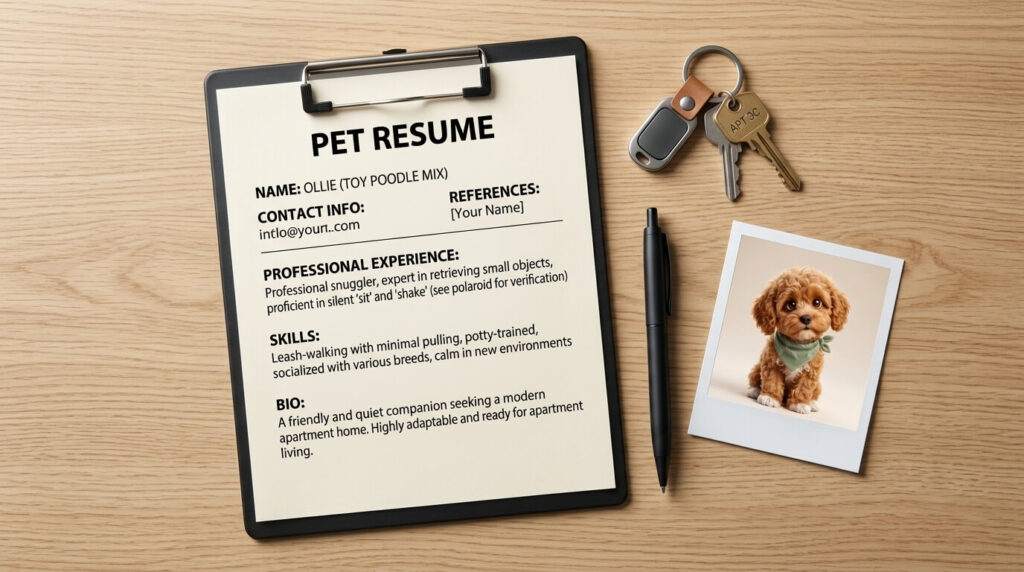
Free Dog Resume Template Structure
You can build the resume as a one-page PDF or a clean document. Keep it readable on a phone because many leasing agents review applications quickly.
| Resume Area | Suggested Text |
|---|---|
| Header | Dog’s name, owner’s name, contact information |
| Photo | One calm, clear image |
| Profile | Age, size, breed mix, apartment history |
| Behavior | Potty routine, barking plan, shared-space manners |
| Training | Classes, skills, CGC or other programs if applicable |
| Health | Vaccination and veterinary care summary |
| Care Plan | Cleaning, grooming, exercise, waste pickup |
| References | Previous landlord, trainer, walker, neighbor, sitter |
Keep the design simple. A landlord does not need paw-print graphics, jokes, or a long story about how your dog rescued you emotionally. They need clear evidence that you are responsible and that the dog is manageable in rental housing.
What Not to Put in a Dog Resume
Do not include fake certificates, fake ESA letters, edited vaccination records, exaggerated training claims, misleading breed labels, or promises you cannot control. Do not write that your dog “never barks” unless that is genuinely true in apartment conditions. Even then, “rarely barks and is managed around hallway noise” sounds more believable.
Do not use guilt as the main argument. “He is my baby” may be true, but it does not answer the landlord’s practical concerns. The resume should make the decision feel lower risk, not emotionally harder.
Do not include too many photos. One or two are enough. Too many cute images can make the document feel less professional.
How to Adjust the Resume for Your Situation
If you have a strong previous landlord reference
Put that reference near the top or mention it in the cover note. A previous landlord who can confirm no pet-related damage, no repeated complaints, and clean move-out history may answer the property owner’s biggest concern faster than any training certificate.
Keep it simple: “Previous landlord reference available and can confirm no pet-related property damage or noise complaints.” Only write this if it is true and the person has agreed to be contacted.
If you do not have a previous landlord reference
Do not apologize for the missing reference for half the page. Replace it with other evidence: training records, vet records, a dog walker reference, a trainer note, a pet sitter reference, renter references for yourself, and a clear written routine.
This is where specificity helps. “I clean up after my dog” is ordinary. “I wash bedding weekly, wipe paws after wet walks, use rugs in high-traffic areas, and keep a written walking and potty routine” sounds like someone who has thought about rental life.
If your dog is large
Do not try to make the dog seem smaller. A landlord will find out. Instead, focus on calm behavior, apartment history, floor protection, leash manners, and references. A large quiet adult dog with good routines may feel less risky than a small dog with constant barking and no structure.
Include a full-body photo and weight. If allowed, mention habits that matter: no off-leash building behavior, waits at doors, managed around elevators, nails maintained, and no history of property damage.
If your dog is newly adopted
Be careful with claims. You may not know the dog’s full apartment behavior yet. Say what you do know and what management you have in place. A newly adopted dog resume might include shelter notes, foster notes, trainer plan, crate or pen setup, and a conservative first-month routine.
This can actually sound responsible. A landlord may trust “We are using a gradual transition plan” more than “He is perfect already” from someone who adopted the dog last week.
If your dog has a past issue you have managed
You do not need to write a confession letter, but you should not make false claims. If the issue is relevant to rental housing, focus on the current management plan. For example, “We do not allow balcony access unsupervised” is more useful than a long story about one barking episode on a balcony.
If the issue involved biting, repeated aggression, severe separation distress, or major property damage, get professional guidance before applying and before making claims. Housing, safety, and liability are too important for optimistic wording.
How to Send the Resume
Send the dog resume with your rental application when pets are allowed or when the listing asks for pet information. If the listing says no pets, read it carefully before applying. Do not hide the dog and hope to negotiate later.
If pets are considered case by case, send the resume early with a short note. Ask what pet policies, deposits, fees, size limits, insurance requirements, or building rules apply. Keep the tone collaborative.
If your dog is an assistance animal, follow the appropriate reasonable accommodation process instead of presenting the animal as an ordinary pet. HUD provides official information on assistance animals and housing provider obligations. For legal questions, speak with a qualified local housing professional or attorney.
Apartment Behaviors Landlords Care About Most
Barking
Noise complaints are a major fear in apartment buildings. If your dog has a real barking plan, mention it briefly. Examples: white noise near hallway sounds, no balcony barking, enrichment during work hours, and not leaving the dog alone past their tolerance.
Potty reliability
State that your dog is potty trained if true, and mention the routine. If you use pads, turf, or porch potty systems, explain cleaning and odor control carefully. For renters, a vague potty setup can raise more concerns than it solves.
Shared-space manners
Elevator and hallway behavior matter. A dog who is polite in shared spaces feels less risky. If your dog does not greet unknown dogs in elevators, say that as a positive management choice. Link readers to apartment dog social etiquette for broader behavior routines.
Property protection
Mention rugs, nail care, crate or bed routines, chew management, secure trash, and cleaning habits where relevant. If furniture chewing is an issue you are managing, your real plan should be in place before applying. See stop dog chewing furniture.
Common Mistakes
Making the resume too cute
A little warmth is fine. Too much cuteness can distract from the purpose. Keep the document friendly but useful.
Writing like approval is owed
Landlords may have rules, insurance limits, building policies, or owner instructions. A good resume asks for consideration. It does not demand trust.
Skipping references
If you have a landlord or trainer reference, use it. Third-party confirmation can carry more weight than your own description.
Hiding the dog until later
Surprising a landlord after approval can damage trust and possibly put your housing at risk. Be honest and follow the application process.
Overpromising behavior
Specific management sounds more believable than perfect claims. “We take the next elevator when another dog is inside” is better than “He is always perfect with dogs.”
The Emotional Side of Applying With a Dog
Applying for housing with a dog can feel surprisingly vulnerable. You may feel judged before anyone meets you. You may worry that one breed label, one weight number, or one past landlord experience will close the door. It is frustrating when you know you are responsible but have to prove it in a market that already feels difficult.
A dog resume gives you something steadier to stand on. It turns worry into preparation. You cannot control every landlord’s decision, but you can control how clearly you present your dog, your routine, and your respect for the property.
Try to write from that place. Not desperate. Not defensive. Just prepared.

FAQ
Do landlords actually read dog resumes?
Some do, some do not. But a clear dog resume can help when pets are considered case by case, when the landlord is unsure, or when you need to show that you take pet responsibilities seriously.
What should a dog resume for rental include?
Include basic dog details, photo, apartment behavior, training, vet care, cleanliness routine, references, pet policy awareness, and a short cover note. Keep it honest and easy to scan.
Should I mention my dog’s breed?
If the application asks for breed or breed mix, answer honestly. If unknown, say unknown or best-known mix. Do not invent a breed label to avoid a policy.
What if my dog has no training certificates?
List real skills and routines instead: potty trained, waits at doors, settles on a mat, walks on leash, does not greet dogs in elevators, or attends private training. Certificates help, but daily manners matter too.
Is a dog resume the same as ESA documentation?
No. A pet resume is for an ordinary pet application. Assistance animals involve disability-related reasonable accommodation processes. Use official HUD guidance and appropriate documentation for that situation.
Should I send the dog resume before or after applying?
If pets are allowed or considered, send it with the application or when pet information is requested. If the listing has strict pet restrictions, ask about the policy before assuming a resume will change it.
Next Step
Create a one-page draft with your dog’s photo, basic profile, apartment behavior, training, vet summary, care routine, and references. Then remove anything that sounds exaggerated. A strong dog resume for rental housing should feel calm, truthful, and easy for a busy landlord to trust.