
Dog barking at window passersby is one of the most frustrating apartment problems because the trigger repeats all day. A person walks past, your dog barks, the person disappears, and your dog may learn that barking worked.
This is window reactivity: barking, lunging, whining, growling, or rushing toward the glass when your dog sees people, dogs, bikes, delivery workers, or cars outside. It is not the same as every kind of apartment barking. For the broader noise problem, use the main how to stop dog barking in apartment guide. This page focuses only on visual triggers through windows and glass doors.
The best fix is not yelling from the kitchen. It is a mix of management, distance, reward-based training, and a calmer daily routine.
Dog Barking at Window Passersby: Quick Answer
To stop dog barking at window passersby, first reduce the visual trigger with privacy film, curtains, furniture changes, or a calmer room. Then train at a distance where your dog can still think. Reward your dog for noticing the passerby and turning back to you, teach a positive interrupt cue, and give another job such as a mat, chew, or sniff activity. If your dog panics, redirects, or cannot recover, get help from a qualified trainer or behavior professional.
| Problem | Likely Cause | First Fix |
|---|---|---|
| Barks at every person | Visual trigger loop | Block lower window view |
| Barks harder at dogs | Frustration or fear | Increase distance and train below threshold |
| Charges the glass | High arousal | Move furniture and add barrier |
| Barks only when alone | Unmanaged access or anxiety | Use camera and restrict window access |
| Cannot stop after trigger leaves | Over-arousal | Calm landing routine |

Table of Contents
Why Window Barking Gets Worse
Window barking is self-reinforcing. Your dog sees a person, barks, and the person keeps walking away. From your dog’s point of view, barking may seem to make the intruder leave. That makes the next bark more likely.
Glass also creates frustration. Your dog can see movement but cannot investigate, sniff, greet, or move away. Some dogs become territorial. Some are scared. Some are bored and use the window as entertainment. Some become frustrated because they want to reach dogs or people outside.
In apartments, the triggers are close and frequent: sidewalks, parking lots, courtyards, balconies, mail rooms, delivery drivers, children, other dogs, and shared lawns. A dog who spends hours watching the window may rehearse the barking loop dozens of times a day.
Fix 1: Block the Rehearsal Loop
Training is harder if your dog practices barking all day. Start with management. This is not giving up. It is stopping rehearsal so the brain has room to learn.
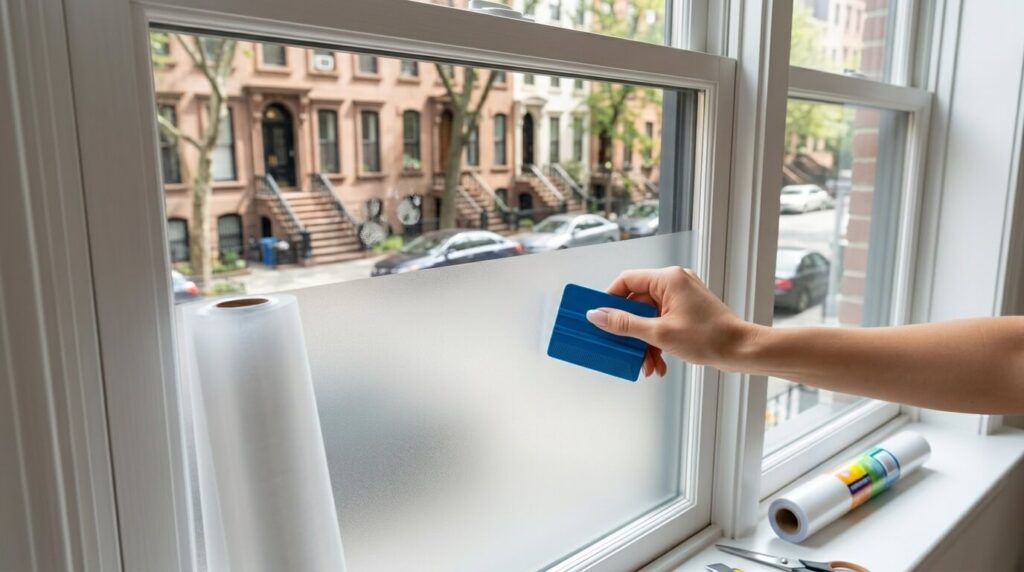
- Use renter-friendly privacy film on the lower part of windows.
- Close blinds during high-traffic times.
- Move sofas, chairs, and dog beds away from trigger windows.
- Use a baby gate to block the window room when you are gone.
- Create a rest zone away from the glass.
- Use white noise or soft background sound if outside noise adds arousal.
Privacy film is often effective because it blocks the visual trigger while still letting light in. For renters, choose removable options and test a small area first.
Fix 2: Find Your Dog’s Threshold
Your dog’s threshold is the point where they can still notice the trigger without exploding. Training works below threshold. It fails when the dog is already barking, lunging, and unable to eat.
Stand farther from the window, use a partially blocked view, or train during quieter times. If your dog can see a passerby and then take a treat, you are close to the right level. If your dog cannot hear you, you are too close or the trigger is too intense.
Window reactivity is not a contest of control. It is a practice of making the trigger easier until your dog can succeed.
Fix 3: Use the Look-at-That Game
The Look-at-That game teaches your dog that seeing a trigger predicts a reward and a return to you. It can be useful for dogs who bark because the trigger feels exciting, suspicious, or frustrating.
- Start far enough from the window that your dog can still think.
- When your dog notices a person outside, calmly mark with “yes” or a click.
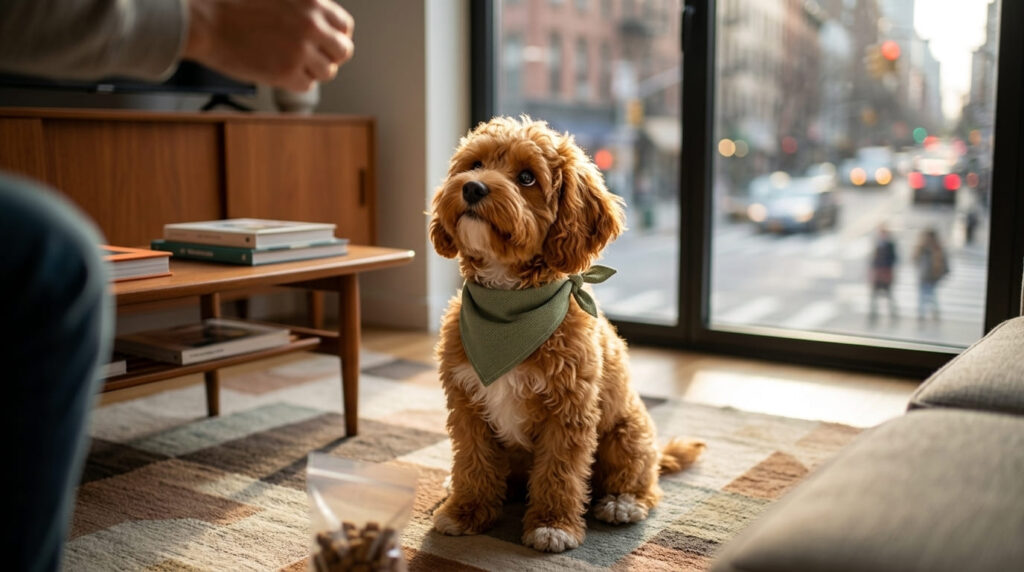
- Give a treat near you, away from the window.
- Repeat with easy triggers.
- End before your dog gets overloaded.
Do not wait for barking to start. Reward the moment your dog notices the passerby and stays under control. You are changing the meaning of the visual trigger.
Fix 4: Teach a Positive Interrupt Cue
A positive interrupt cue is a friendly sound or phrase that means “turn away and come get paid.” It is not a scolding word. It should be built before you need it.
Practice away from windows first. Say your cue, such as “this way,” then toss a treat on the floor near you. Repeat until your dog turns happily when they hear it. Then use it for mild window moments before the barking begins.
If the cue stops working, the trigger is too hard or you have used the cue too late. Go back to easier setups.
Fix 5: Give a Better Job
Some dogs need an alternate job because “do nothing” is too vague. After your dog turns away from the window, send them to a mat, treat scatter, chew, puzzle, or sniffing activity.
Choose a job that lowers arousal. A wild game of indoor fetch may make barking worse. A slow scatter on a rug, a simple chew, or a mat routine is often better.
If your dog barks because the day is too boring, connect this with signs your apartment dog is bored and keep dog entertained while at work.
Fix 6: Manage When You Are Not Home
Dogs can practice window barking for hours when alone. If you are not there to train, manage access.
- Close the window room.
- Use privacy film or curtains.
- Move furniture that lets your dog perch at the window.
- Leave safe enrichment away from the glass.
- Use a camera to see whether barking starts after you leave.
If barking happens only when you are gone and comes with pacing, howling, scratching, drooling, or panic, read dog separation anxiety apartments. Window barking can mix with alone-time distress.
Fix 7: Build a Calm Window Routine
Once your dog improves, do not give full window access all day. Reintroduce it in short, supervised sessions. A calm window routine might look like this: dog lies on a mat several feet from the window, sees a person, gets a treat, turns back to you, then returns to rest.
The goal is not to make your dog never notice the outside world. The goal is to teach them that people passing by are normal background information, not an emergency.
Window Trigger Ladder
Train from easiest to hardest. Do not start with the most exciting trigger at the busiest time of day.
| Level | Trigger | Training Setup |
|---|---|---|
| 1 | No one outside | Reward calm mat near covered window |
| 2 | Distant person | Partially blocked view, high-value treats |
| 3 | Person walking closer | More distance from window |
| 4 | Dog outside | Very short exposure, easy exit |
| 5 | Delivery worker or running child | Management first, training later |
If your dog fails at level 4, go back to level 2. Progress is not linear. The apartment environment changes every day.
10-Day Window Reactivity Reset
This plan is for dogs who bark at visual triggers but can still eat, think, and recover. If your dog is panicking, redirecting, or trying to break through glass, get professional help before trying a home plan.
Days 1-2: Stop Unsupervised Window Practice
Block the lower window view and move furniture away from the glass. Do this before training. If your dog practices barking all afternoon, a five-minute evening session will not be enough to change the habit.
Days 3-4: Build the Interrupt Cue Away From Windows
Practice your cue in an easy room. Say the cue, then drop a treat near your feet. Repeat until your dog turns quickly and happily. Do not test it at the window yet.
Days 5-6: Train With Easy Triggers
Use the quietest time of day. Stand far enough from the window that your dog can notice a person and still eat. Mark, reward away from the glass, and end after a few successful repetitions.
Days 7-8: Add the Mat or Alternate Job
After your dog turns away, send them to a mat, scatter a few treats, or offer a chew. The goal is a full behavior chain: notice, turn, move away, settle.
Days 9-10: Review and Adjust
If barking is shorter or easier to interrupt, keep going. If barking is the same, the setup is too hard. Add more visual blocking, train farther away, or use quieter times.
Progress Signs
Progress is not silence on day one. Watch for smaller signs that the plan is working.
- Your dog notices a passerby before barking.
- Your dog can take food after seeing movement.
- The first bark comes later than before.
- Barking stops faster.
- Your dog turns away from the window more easily.
- Your dog settles after the trigger leaves.
- You need less management during quiet times.
These small wins matter. Window barking usually improves in layers: first less rehearsal, then faster recovery, then calmer noticing, then more normal window access.
Apartment Layout Fixes
Ground-Floor Apartment
Ground-floor units often have the hardest window barking because triggers are close. Use privacy film on the lower glass and create a rest area away from the front windows.
High-Rise Apartment
High-rise dogs may react to balconies, courtyard movement, or people in nearby windows. Avoid letting the window become the dog’s full-time job. Use supervised viewing and breaks.
Glass Door or Patio Door
Glass doors are intense because they go all the way to the floor. Use removable film, curtains, or barriers. If the dog rushes the door, move furniture and create more distance.
Home Office by the Window
If your desk is beside the window, your dog may spend your workday scanning for triggers. Move the dog bed to the other side of the room and use a chew or puzzle away from the glass.
Specific Trigger Scenarios
Delivery Drivers
Delivery drivers are hard triggers because they approach the building, pause, make noise, and leave. Use management first. Close the window view during expected delivery windows and give your dog an alternate job before the person arrives.
Children Running Past
Fast movement can trigger chasing, excitement, or alarm. Do not start training with running children as the first trigger. Practice with slower, farther movement first.
Dogs Walking Outside
Dogs outside may be more difficult than people because they add social frustration. Your dog may want to greet, chase, warn, or move away. Use more distance and shorter sessions.
People Standing Near the Window
A person who stands still near the building can be harder than someone who walks by. Your dog may stare and escalate. Block the view or move your dog away before barking builds.
Night Reflections
At night, dogs may react to reflections in the glass or moving shadows. Close curtains after dark if your dog barks at unclear movement. Do not train with confusing triggers until the basic pattern is better.
When You Cannot Use Privacy Film
Some rentals limit window film, or you may not want to change the glass. You still have options.
- Use tension rods with curtains.
- Move furniture away from the window.
- Use a freestanding room divider.
- Put a dog bed in a quieter room.
- Use a crate or pen away from the view if your dog is crate comfortable.
- Schedule window access only during supervised calm times.
The goal is visual control, not a specific product. Any renter-safe setup that reduces rehearsal can help.
If Barking Happens Only When You Are Gone
Use a camera or old phone recording to see the pattern. Does your dog go straight to the window after you leave? Do they bark at the first person and then settle? Or do they pace, howl, scratch, and bark even when no one is outside?
If the dog is mainly watching and barking at passersby, manage window access before departures. If the dog looks distressed even without triggers, the issue may be alone-time anxiety. The fix is different, so the video matters.
For workdays, place enrichment away from the glass. A dog should not have to choose between a food toy and a window full of moving triggers. Make the calm option easier.
How to Maintain Progress
Once barking improves, keep some management in place. Many owners remove all window blocking too soon and the habit returns. Add access slowly.
| Stage | Window Access | Goal |
|---|---|---|
| Early reset | Mostly blocked | Stop rehearsal |
| Training phase | Short supervised sessions | Reward calm noticing |
| Improving | Partial view during quiet times | Build tolerance |
| Maintenance | Managed access by trigger level | Prevent relapse |
Busy delivery hours, school pickup times, and dog-walking rush hours may always need more management than quiet mornings. That is normal.
What Not to Do
Do Not Yell From Across the Room
Yelling can sound like you are joining the barking. It can also add stress. Go to management and training instead.
Do Not Let the Dog Practice All Day
Every rehearsal strengthens the loop. If you cannot train, block the view.
Do Not Punish the Dog for Noticing
Noticing is normal. You want to change the response after noticing, not make the outside world scarier.
Do Not Start Training at the Hardest Window
Start with the quietest window, greatest distance, or lowest traffic time.
Adjust the Plan by Dog Type
The Fearful Dog
A fearful dog may bark with a low body, tucked tail, wide eyes, or quick retreat after the trigger leaves. For this dog, distance and safety matter most. Block the view more often, train with very easy triggers, and avoid forcing them to stay near the window.
The Frustrated Greeter
Some dogs bark because they want to reach people or dogs outside. They may wag, whine, jump, and paw at the glass. These dogs still need management because frustration can turn loud and intense. Reward turning away and give them legal social outlets elsewhere.
The Territorial Watchdog
A territorial dog may station themselves at the window and scan for movement. The key is to remove the job. Give them a different resting place, block the view when unsupervised, and reward calm disengagement.
The Bored Window Watcher
A bored dog may use the window as television. If barking decreases when the day includes sniffing, chewing, training, and walks, the window problem is partly an enrichment problem. Do not make the window the most interesting part of the apartment.
Common Mistakes
Mistake 1: Waiting Until the Dog Is Barking
The best training moment is before the bark. Reward noticing, blinking, turning, or staying loose. Once barking starts, your job is usually management and recovery.
Mistake 2: Opening the Blinds Too Soon
Progress disappears quickly if full access returns before the new habit is strong. Reopen the view gradually and only during easier times.
Mistake 3: Using the Window as Entertainment
Some dogs can calmly watch the world. Reactive dogs cannot. If the window creates daily barking, it is not enrichment yet.
Mistake 4: Training During Peak Traffic
Do not start during school pickup, delivery rush, or evening dog-walking time. Start when the world is quieter.
Mistake 5: Forgetting the Dog’s Body Needs
A dog with too little sleep, exercise, or sniffing will have a harder time staying calm. Window training works better when the rest of the day supports regulation.
When to Get Help
Get help from a qualified trainer, behavior consultant, or veterinarian if your dog redirects onto people, bites at the glass, injures themselves, cannot calm down, barks for long periods, or seems fearful rather than alert.
Also seek help if you live in a building where barking could create lease problems. Neighbor risk matters, and early support is easier than waiting for complaints.
How This Page Fits With Other Window Content
This page is about barking at passersby through windows. It should not compete with every window-related article. The future or separate dog looking out window behavior page should focus on why dogs watch out windows, not barking fixes. The main barking article should cover broader apartment barking causes, including hallway noise and alone-time barking.
FAQ
Why is my dog barking at window passersby?
Your dog may be reacting to movement, territorial feelings, fear, frustration, boredom, or the learned pattern that barking makes people disappear.
How do I stop dog barking at window passersby when I rent?
Use renter-friendly management such as removable privacy film, curtains, furniture changes, gates, and training at a distance. Avoid permanent changes without landlord approval.
Should I let my dog look out the window?
Some dogs can watch calmly. Others become reactive. If window time leads to barking, rushing, or stress, limit access and train calm viewing gradually.
Does privacy film really help?
It can help because it reduces visual triggers. It works best when paired with training and a better routine, not as the only solution.
Will my dog grow out of window barking?
Not reliably. Many dogs get better at barking if they practice daily. Management and training are safer than waiting.
What if my dog barks at dogs but not people?
Dog triggers may be more exciting or stressful. Start farther from the window, use shorter exposures, and reward calm noticing before barking begins.
Can window barking be anxiety?
Yes, it can involve fear, frustration, or anxiety. If your dog seems panicked, cannot recover, or also struggles when alone, get professional guidance.
Next Step
Today, block the lower part of the most triggering window and move your dog’s bed away from the glass. Then practice one minute of calm noticing at a distance your dog can handle.
Dog barking at window passersby improves when you stop the rehearsal loop and teach a different response. Start with the environment, then train below threshold, then rebuild window access slowly.