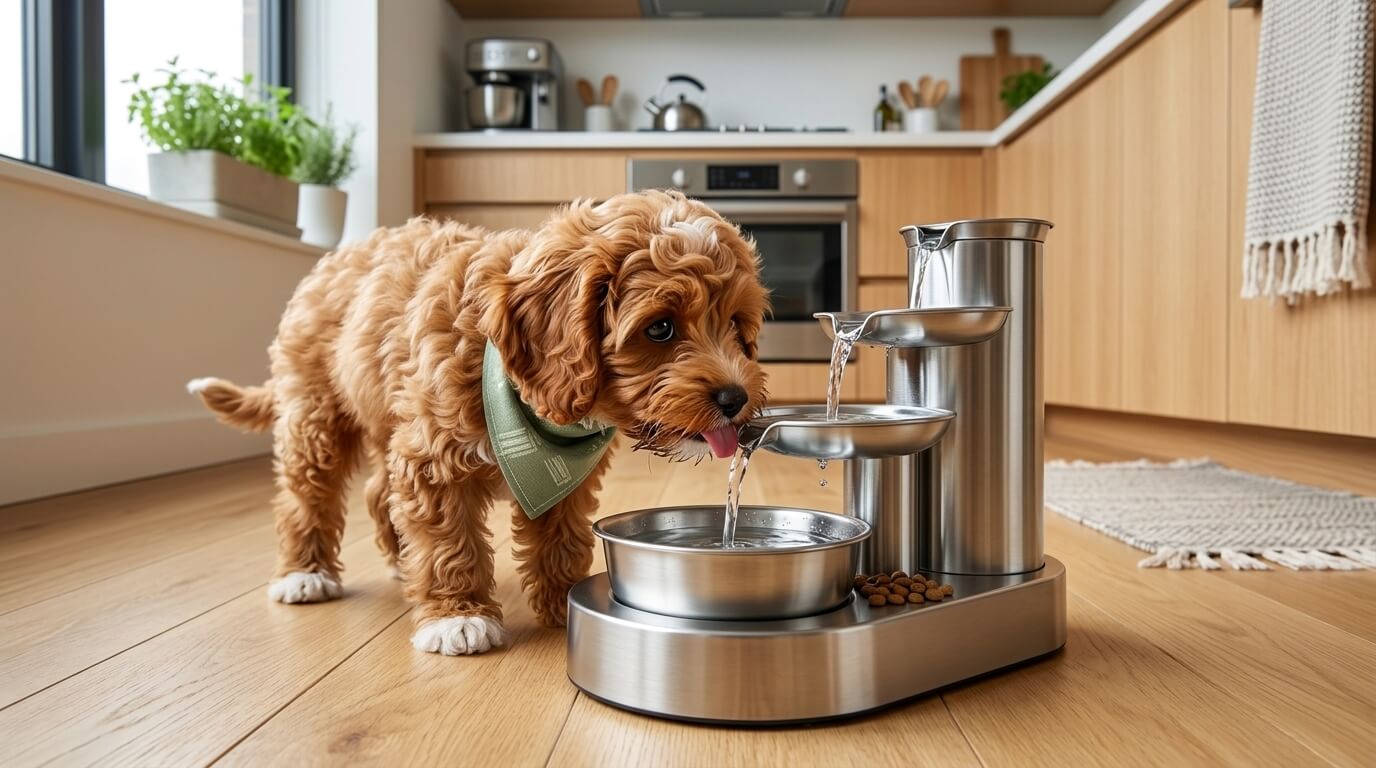
The best dog water fountain for an apartment is not only the one that looks nice beside the kitchen cabinet. It has to be quiet enough for shared walls, easy enough to clean every week, stable enough for daily use, and made from materials that do not make biofilm harder to manage.
This buying guide does not pretend that one fountain works for every apartment dog. Instead, it explains how to choose a fountain by material, pump noise, filter cost, cleaning difficulty, apartment placement, dog size, and the real maintenance you will need to do after the first week.
A fountain can encourage some dogs to drink more because moving water is more interesting than a still bowl. But a fountain is not a medical treatment, and it is not automatically cleaner than a bowl. A poorly cleaned fountain can become worse than a simple stainless steel bowl. The real goal is clean, accessible water your dog will actually use.
If your main problem is apartment odor or dirty floors, solve the cleaning routine first. A fountain helps only one part of the home. For the bigger hygiene picture, use clean apartment with dog and control dog odor apartment alongside this guide.
Best Dog Water Fountain: Quick Answer
For most apartment dog owners, the best dog water fountain is a quiet stainless steel or ceramic model with a removable pump, replaceable filters, a stable base, and dishwasher-safe non-pump parts. Stainless steel and ceramic are easier to keep smooth and clean than scratched plastic. Choose a capacity that fits your dog, but do not buy a huge reservoir if it tempts you to leave water unchanged for too long.
Table of Contents
Why Biofilm Matters
Biofilm is the slick layer that can form inside pet bowls, fountains, and water reservoirs. It develops when bacteria attach to a wet surface and build a protective film. You may notice it as a slippery feeling on the bowl or fountain basin.
Biofilm is one reason material and cleaning matter. Plastic can scratch over time, and tiny scratches can make cleaning harder. Stainless steel and glazed ceramic are usually more conservative choices because their smooth surfaces are easier to scrub thoroughly when maintained well.
A fountain does not prevent biofilm by itself. Flowing water, filters, and fresh refills can help, but the pump, basin, filter housing, spout, and corners still need regular cleaning.
The 7 Best Dog Water Fountain Options
1. Top Apartment Default: Stainless Steel Fountain
A stainless steel fountain is the safest first choice for many apartment dog owners. It is durable, usually easy to clean, and less likely than plastic to develop deep scratches. Stainless steel also tends to look cleaner in a small kitchen or dining area.
Look for a removable pump, simple basin shape, low splash design, and parts that can be washed easily. The fewer tiny grooves and hidden corners, the better.
Best for: Most apartment dogs, owners concerned about biofilm, and households that want a practical long-term fountain.
Skip it if: You dislike visible water spots or your dog is frightened by metal reflections or sound.
2. Best for Quiet Homes: Ultra-Quiet Pump Fountain
In a studio or small apartment, pump noise matters. A gentle hum that seems minor in a large house can become annoying when your bed, desk, and kitchen are all close together. A quiet pump fountain should have low vibration, stable water flow, and a design that does not gurgle loudly when the water level drops.
Studio owners should be extra picky about placement. If your desk, bed, and kitchen share one room, even a small pump hum can become part of your day. The layout advice in dog in studio apartment tips can help you choose a water station that does not sit in the main walking path.
Before choosing one, read reviews for noise after several weeks, not only first-day silence. Pumps often become louder when hair, mineral scale, or low water levels interfere with flow.
Best for: Studios, bedrooms near kitchens, sound-sensitive owners, and dogs who startle easily.
Skip it if: The quiet design requires complicated cleaning that you will not keep up with.
3. Best Material Upgrade: Ceramic Fountain
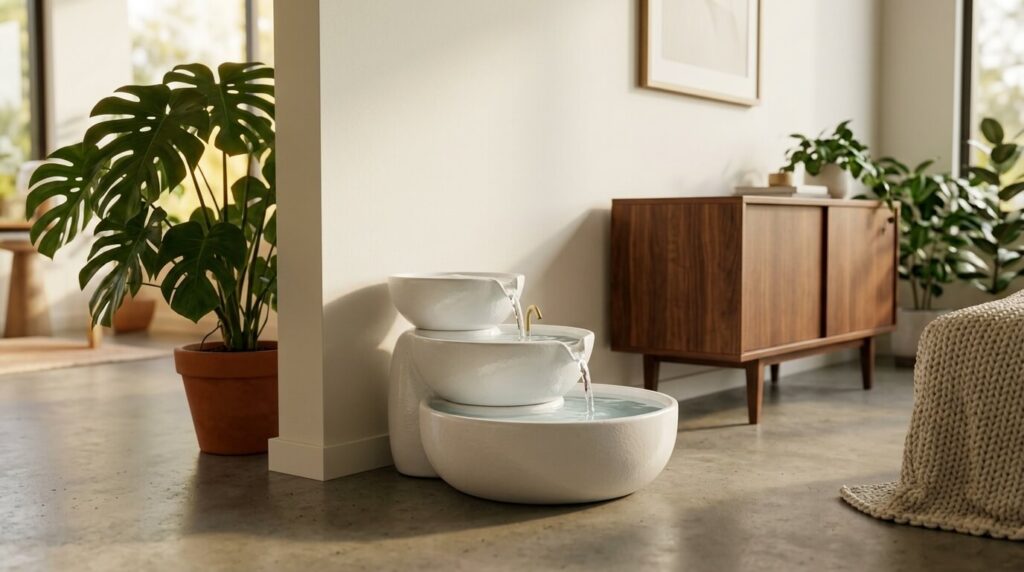
Ceramic fountains are heavy, attractive, and usually smooth enough for good cleaning. The weight can help prevent sliding, and many ceramic models blend better with home decor than plastic fountains.
The tradeoff is fragility. Ceramic can chip or crack if dropped during cleaning. A chipped surface may become harder to clean, so inspect it regularly.
Best for: Design-conscious apartment owners, small to medium dogs, and owners who want a non-plastic basin.
Skip it if: You need a lightweight fountain or you are likely to drop heavy parts in the sink.
4. Best for Large Dogs: High-Capacity Fountain
Large dogs and multi-dog homes need more water capacity and a wider drinking area. A tiny fountain can run low quickly, make more pump noise, and require constant refilling.
Capacity is useful, but it should not become an excuse to leave water unchanged. A large reservoir still needs fresh water and cleaning. Choose a high-capacity fountain only if the basin, pump, and filter area are still easy to wash.
Best for: Large breeds, multiple dogs, warm apartments, and dogs who drink heavily after walks.
Skip it if: Your apartment kitchen is tiny or the fountain is too heavy to carry to the sink when full.
5. Best for Outlet Problems: Cordless or Battery Fountain
Some apartments have awkward outlet placement. A cordless or battery fountain can let you place water where your dog naturally drinks, not only where a cord reaches. This can be helpful in rentals where cords across the floor are unsafe or ugly.
The downside is charging. A dead battery turns the fountain into a standing bowl, and some dogs may drink less if the flow stops. If you choose cordless, set a charging schedule.
Best for: Apartments with limited outlets, open layouts, and owners who want flexible placement.
Skip it if: You do not want to monitor battery life or charge the unit regularly.
6. Best Budget Choice: Simple Filtered Fountain
A budget fountain can be reasonable if it is easy to clean and replacement filters are affordable. Do not judge only by the purchase price. A cheap fountain with expensive proprietary filters can cost more over time than a sturdier model.
For budget fountains, prioritize simple shapes, available filters, and a pump that can be removed and cleaned. Avoid models with many decorative corners, narrow tubes, or unclear filter availability.
Best for: First-time fountain buyers and owners testing whether their dog likes moving water.
Skip it if: The fountain is mostly plastic, hard to clean, or has filters that are difficult to replace.
7. Best Alternative: Stainless Steel Bowl Plus Strict Cleaning
Not every dog needs a fountain. A simple stainless steel bowl washed daily may be better than a fountain you rarely clean. If your dog drinks well from a bowl, your apartment is small, and you dislike maintenance, a bowl may be the smarter option.
This is important because fountains are often marketed as automatically cleaner. They are only cleaner if you maintain them. For some owners, the best dog water fountain is no fountain at all.
Best for: Dogs who drink normally, owners who prefer simple cleaning, and apartments with very limited space.
Skip it if: Your dog ignores still water or you need a larger shared water station for multiple pets.
Comparison Table
| Option | Best For | Main Advantage | Main Tradeoff |
|---|---|---|---|
| Stainless steel fountain | Most apartments | Durable and easier to clean | Shows water spots |
| Ultra-quiet fountain | Studios and quiet homes | Less pump noise | Can get louder if neglected |
| Ceramic fountain | Design-conscious spaces | Heavy, smooth, attractive | Can chip or break |
| High-capacity fountain | Large or multiple dogs | Less frequent refilling | Bigger footprint |
| Cordless fountain | Awkward outlets | Flexible placement | Battery management |
| Budget filtered fountain | Trying a fountain first | Lower entry cost | Filter and cleaning quality varies |
| Stainless bowl | Low-maintenance homes | Simplest cleaning | No flowing water |
What to Check Before Buying
A fountain should make daily water care easier, not turn it into a complicated project. Check these details before you buy:
- Material: Stainless steel or ceramic is usually easier to keep clean than scratched plastic.
- Pump access: You should be able to remove and clean the pump without tools.
- Filter availability: Replacement filters should be easy to find and reasonably priced.
- Capacity: The fountain should hold enough water for your dog without becoming too heavy to clean.
- Noise: Look for quiet operation and low-water noise warnings.
- Splash control: A fountain that sprays or splashes can damage floors in rentals.
- Shape: Simple basins are easier to scrub than decorative channels and hidden corners.
Material Guide: Stainless Steel vs. Ceramic vs. Plastic
Material is one of the most important buying decisions because it affects cleaning, durability, weight, noise, and long-term appearance.
Stainless steel is the practical default. It is durable, usually lighter than ceramic, and can often go through the dishwasher if the product instructions allow it. It may show water spots and nose marks, but those are cosmetic issues rather than functional problems.
Ceramic is smooth, heavy, and attractive. The weight can help prevent movement, and many ceramic fountains look better in visible apartment spaces. The risk is breakage. If a ceramic basin chips, the damaged area may become harder to clean.
Plastic is lightweight and affordable, but it is the least conservative choice for owners worried about biofilm. Plastic can scratch through normal use, and scratches can make the surface harder to clean thoroughly. If you choose plastic, choose a simple design and be stricter about cleaning.
Filter Cost and Replacement Reality
Many owners compare fountain prices and forget filter cost. That is a mistake. Filters are a recurring cost, and some fountains use proprietary filters that are harder to find or more expensive than expected.
Before buying, check:
- How many filters come with the fountain.
- How often the manufacturer recommends replacing them.
- Whether third-party filters exist.
- Whether the fountain uses one filter type or multiple filter types.
- Whether replacement filters are easy to buy in multi-packs.
A fountain with inexpensive parts may become annoying if replacement filters are constantly out of stock. For apartment owners, friction matters. If maintenance supplies are hard to get, maintenance gets postponed.
Cleaning Schedule for Dog Water Fountains
Maintenance is the real difference between a good fountain and a slimy one. Use this basic routine unless your product instructions say otherwise:
- Refill with fresh water daily or whenever the level drops.
- Wash the basin and non-pump parts at least weekly.
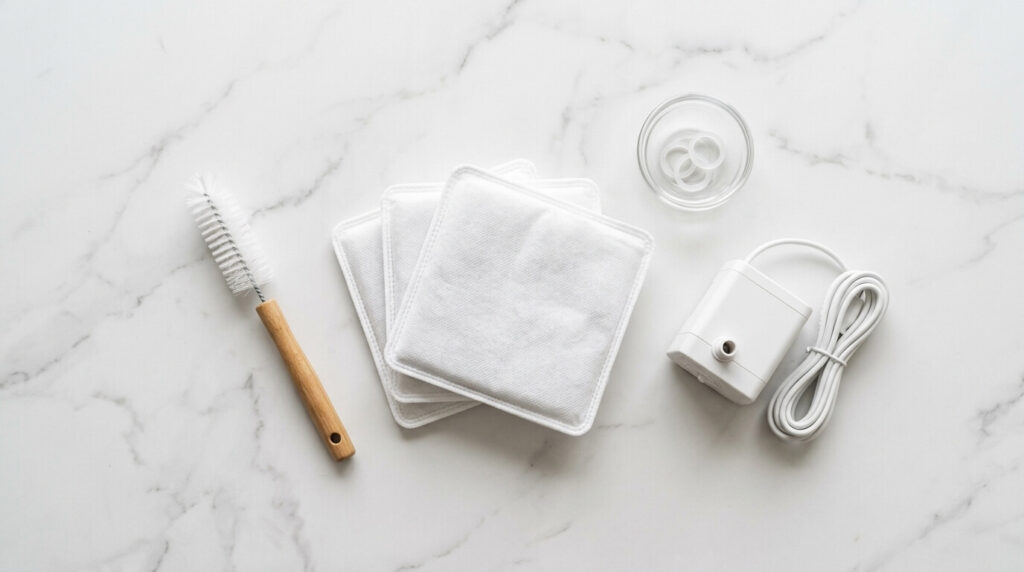
- Disassemble and clean the pump regularly.
- Replace carbon filters on the schedule recommended by the manufacturer.
- Rinse foam pre-filters if your fountain uses them.
- Clean more often for heavy droolers, multi-dog homes, warm apartments, or hard water.
The FDA’s general pet food and treat handling advice is a useful reminder that pet feeding and drinking areas should be handled like hygiene zones, not decorative corners. Wash your hands after cleaning dirty fountain parts, and keep the fountain away from food prep surfaces when possible.
Hard Water, Pump Noise, and Mineral Scale
If your apartment has hard water, mineral scale can build up on the pump and fountain channels. This can reduce water flow, make the pump louder, and shorten the life of the fountain. You may notice white crust, slower flow, rattling, or a pump that sounds louder than it did when new.
Hard water does not mean you cannot use a fountain. It means you need a maintenance routine. Follow the manufacturer’s instructions for descaling. Many owners use a vinegar-water soak for removable non-electrical parts, but always keep electrical components and pump instructions in mind.
If the pump becomes noisy, check water level first. Many pumps become loud when the reservoir is low. Then check for trapped hair, food crumbs, mineral buildup, or a clogged filter. Replacing the entire fountain is often unnecessary if the pump simply needs cleaning.
Best Fountain by Dog Type
| Dog Type | Best Fountain Feature | Why It Matters |
|---|---|---|
| Small apartment dog | Compact, quiet, easy to clean | Fits tight kitchens and studio layouts |
| Large dog | Higher capacity and wide drinking area | Reduces constant refills and awkward drinking posture |
| Heavy drooler | Pre-filter and easy pump cleaning | Saliva and debris can clog filters faster |
| Sound-sensitive dog | Low-vibration pump | Encourages use instead of avoidance |
| Cord chewer | Protected cord route or no fountain | Safety is more important than flowing water |
If your dog is nervous, introduce the fountain gradually. Let the dog inspect it while it is off, then turn it on at a low-stress time. Do not remove the regular water bowl until you know your dog is drinking from the fountain comfortably.
Where to Put a Fountain in an Apartment
Placement affects whether your dog uses the fountain. Many dogs prefer water slightly away from the food bowl. A separate water location can feel cleaner and more appealing.
Good apartment locations include:
- On tile, vinyl, or sealed floor rather than a rug.
- Against a wall with enough room for the dog to stand comfortably.
- Away from the front door if hallway activity distracts the dog.
- Near an outlet only if the cord can be routed safely.
- On a silicone mat to catch splash and protect flooring.
Avoid placing the fountain where people kick it, where a cord crosses a walkway, or where the pump noise will bother you at night. In small apartments, usability matters as much as capacity.
Apartment Safety Checklist
Before leaving a fountain running while you are out, check the setup like a renter. Water and electricity are both involved, and small leaks can become floor problems.
- Use a grounded outlet where appropriate.
- Route cords behind furniture or cord covers so the dog cannot chew them.
- Place the fountain on a waterproof mat.
- Keep the fountain level so the pump works correctly.
- Do not overfill past the marked line.
- Check for slow leaks after every deep clean.
- Keep a plain water bowl available during the first trial week.
If your dog plays with water, paws at bowls, or flips containers, choose a heavier design and test it while you are home. A fountain should not create a new flooring or electrical risk.
Apartment Owner Reality Check
A water fountain seems like a small purchase, but in an apartment it becomes part of the daily floor plan. You hear the pump while you work. You step around the cord at night. You notice splash marks on rental flooring. You carry the basin to a small sink for cleaning. If the fountain is annoying to live with, it will not stay clean for long.
Before buying, picture the least glamorous version of maintenance: you are tired, the filter is slimy, the pump has dog hair inside it, and the kitchen sink is already full. The best choice is the fountain you will still clean on that day. Simple parts, smooth surfaces, and easy pump access matter more than a stylish product photo.
If your dog shares the apartment with another dog, watch for crowding around the water station. Some dogs block access without obvious aggression. A second plain bowl in another location may be kinder than one large fountain everyone has to negotiate.
In multi-dog homes, water access is a management issue, not just a product choice. If one dog hovers, blocks, or empties the fountain before the other dog drinks, use the routines in two dogs in small apartment and add a second water location.
When a Fountain May Not Be the Right Choice
Skip or delay a fountain if your dog chews cords, tips bowls aggressively, is frightened by moving water, or already drinks well from a simple clean bowl. Also skip a fountain if you know you will not clean the pump and filters. A neglected fountain is not an upgrade.
If your dog is suddenly drinking much more or much less than usual, contact your veterinarian. Changes in thirst can be health-related. A fountain may make water more appealing, but it should not be used to explain away sudden changes in drinking habits.
Common Buying Mistakes
Buying for looks first
A beautiful fountain is not useful if it has narrow channels, hidden corners, or a pump that is hard to remove. Cleaning should come before aesthetics.
Ignoring filter availability
If filters are expensive or hard to find, the fountain becomes harder to maintain. Check replacement filter access before you buy.
Choosing a huge reservoir to avoid refills
A larger reservoir is helpful for large dogs, but it should not encourage stale water. Fresh water still matters.
Putting the fountain beside food
Some dogs drink better when water is placed away from food. Try a separate water station if your dog ignores the fountain.
Skipping pump cleaning
The basin may look clean while the pump is not. Pump cleaning is often the step that keeps flow strong and noise low.
FAQ
What is the best dog water fountain for apartments?
The best dog water fountain for most apartments is a quiet stainless steel or ceramic model with simple parts, easy pump access, available filters, and a stable base. Quiet operation and easy cleaning matter more than decorative features.
Do dog water fountains prevent biofilm?
No fountain fully prevents biofilm. Material, water changes, pump cleaning, and regular washing matter most. Stainless steel and ceramic can be easier to keep clean than scratched plastic.
Are dog water fountains better than bowls?
They can be better for dogs who prefer moving water or drink more from a fountain. A bowl may be better for owners who want the simplest cleaning. A clean bowl is better than a neglected fountain.
How often should I clean a dog water fountain?
Wash the basin and non-pump parts at least weekly, refill with fresh water frequently, and clean the pump regularly. Clean more often for drooly dogs, multiple pets, warm rooms, or visible slime.
Are plastic dog fountains safe?
Plastic fountains are common, but plastic can scratch and become harder to clean. If biofilm control is a priority, stainless steel or ceramic is usually the more conservative choice.
Do vets recommend water fountains for dogs?
Some veterinarians may recommend fountains for individual dogs who drink poorly, but not every dog needs one. Ask your veterinarian if your dog has urinary issues, kidney concerns, or sudden changes in thirst.
What size fountain does my dog need?
Choose enough capacity for your dog’s normal daily drinking plus a margin, but do not buy such a large reservoir that you stop changing the water often. Large dogs and multi-dog homes need more capacity than small single-dog apartments.
My Recommendation
For most apartment homes, start with a stainless steel fountain if you want the best balance of durability, cleanability, and daily practicality. Choose ceramic if appearance and weight matter more, and choose cordless only if outlet placement is truly the problem. If you do not want pump maintenance, keep a stainless steel bowl and wash it daily.
Next Step
Choose the fountain type that matches your real maintenance habits first: stainless steel for practical cleaning, ceramic for weight and appearance, cordless only when outlet placement is the real problem, or a simple stainless steel bowl if pump cleaning will not happen reliably.
References
CDC: Hygiene Practices Around Animals