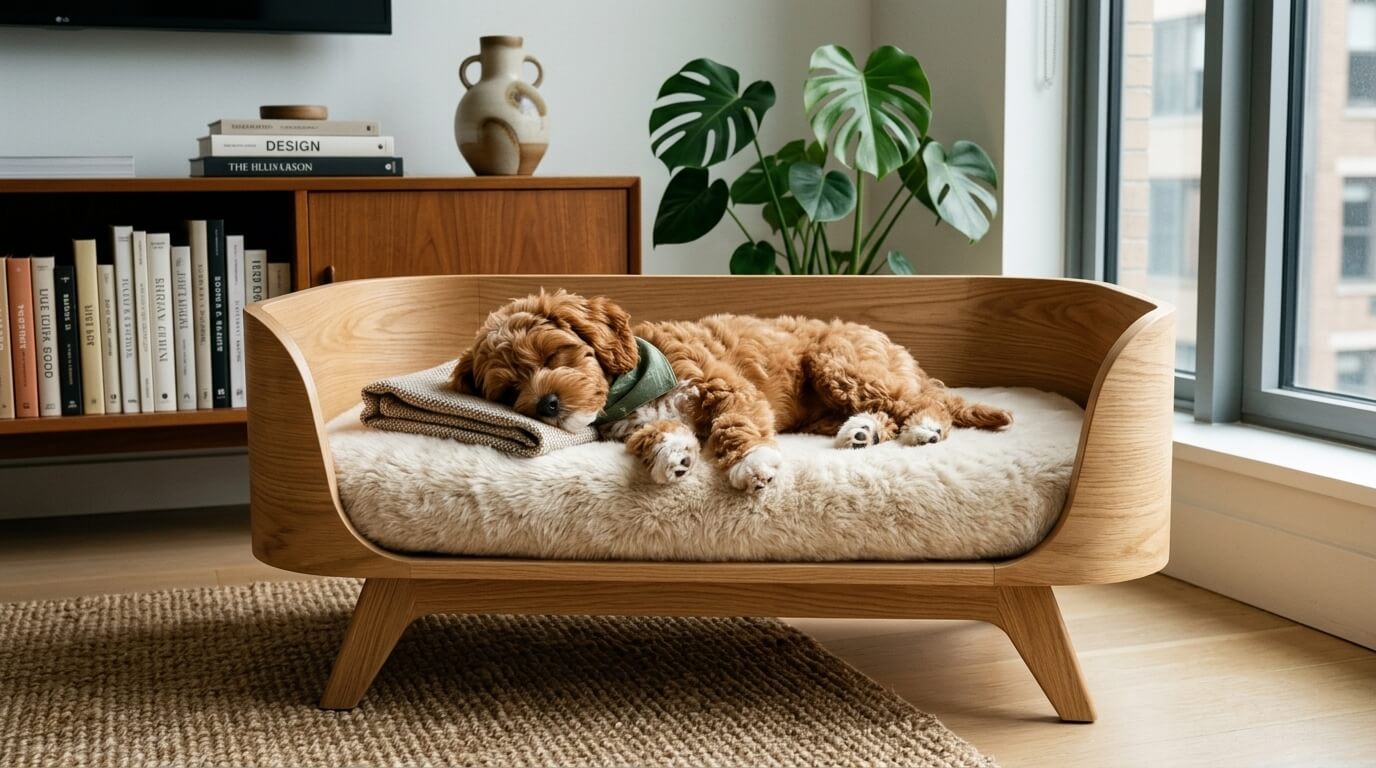
Small apartment dog beds have to do more than look cute in a corner. In a small rental, the bed becomes part of your floor plan, your odor-control routine, your cleaning schedule, your dog’s safe zone, and sometimes your strategy for keeping the sofa, human bed, or front-door area from becoming the default sleeping spot.
The right bed depends on your dog’s body, sleep style, age, coat, chewing habits, and the way your apartment actually works. A donut bed can be comforting for a tiny dog who curls up under your desk. A flat orthopedic mat may be better for a senior dog who needs easy entry. A washable cover may matter more than thick padding if your dog comes in wet from rainy potty walks. A beautiful bed that blocks the closet, traps hair, or cannot fit in your washer will quickly become a problem.
This guide does not pretend that one product is best for every dog. Instead, it shows you the seven bed types that usually make sense in small apartments, how to choose between them, where to place them, and which mistakes make dog beds feel oversized, smelly, noisy, or ignored.
Quick Answer
For most renters, the best small apartment dog bed is a washable, low-profile bed that fits your dog’s sleeping position without taking over a walkway. Choose a bolstered bed for dogs who curl and lean, an orthopedic mat for seniors or long-bodied dogs, a crate-compatible bed for dogs who already settle in a crate, and a slim flat mat for studios, offices, or tight bedroom corners.
| Bed Type | Best For | Apartment Advantage |
|---|---|---|
| Bolster bed | Dogs who curl, lean, or like edges | Creates a defined cozy zone without needing a huge footprint |
| Flat orthopedic mat | Seniors, long dogs, and joint-sensitive dogs | Easy entry and easier placement under desks or beside beds |
| Crate-fit bed | Dogs who already like their crate | Doubles the crate as a sleep area without adding another bed |
| Washable cover bed | Shedding dogs, damp-weather routines, odor-prone homes | Fits apartment laundry realities better than delicate beds |
| Corner bed | Awkward living room corners or bedroom nooks | Uses dead space instead of stealing walking paths |
| Elevated cot | Warm apartments and dogs who overheat | Improves airflow and is easy to vacuum under |
| Travel-style roll mat | Flexible spaces and dogs who move rooms with you | Easy to fold, store, wash, and reposition |
If you are choosing your first apartment dog setup, pair the bed decision with the new apartment dog owner checklist. A bed works best when it fits the whole routine: crate, leash storage, potty supplies, cleaning tools, toys, and feeding area.
Table of Contents
Why Dog Beds Are Harder in Small Apartments
In a larger house, an imperfect dog bed can disappear into a spare room. In a small apartment, it becomes part of the main room immediately. If the bed is too large, you walk around it all day. If it is too plush, it may hold odor. If it slides on hard flooring, your dog may avoid it. If it is placed in a noisy traffic path, your dog may choose the sofa instead.
Small apartments also compress dog behavior. Your dog may nap beside your desk, watch the hallway from the living room, hear neighbors through the door, and follow you into the kitchen because every zone is close. A good bed gives your dog a predictable place to rest without blocking the normal flow of the apartment.
The ASPCA’s general dog care guidance notes that dogs need a warm, quiet resting place and that bedding should be washed often. That advice sounds simple, but it becomes very practical in a rental. You need a bed that can be cleaned easily, placed away from drafts, and used daily without turning the room into a pet supply showroom.
How to Measure Before You Buy
Measure your dog in the position they actually sleep in. A curled sleeper needs enough diameter to tuck comfortably. A side sleeper needs length from nose to tail base with room for legs. A sprawler needs more surface area than their weight category suggests. A dog who sleeps with their head hanging off the couch may appreciate a bolster or edge.
Then measure the apartment spot. Do not guess. Use painter’s tape or a towel on the floor to mark the bed size for a full day. Walk past it while carrying laundry, opening cabinets, turning your desk chair, or cooking. If the outline annoys you before the bed arrives, the real bed will be worse.
Check these five measurements:
- Dog length while stretched out
- Dog width while curled or side-sleeping
- Available floor space without blocking a walkway
- Washer drum size if the whole bed or cover must be washed
- Door swing, closet swing, and chair movement near the bed
For dogs who are still growing, avoid buying a huge adult-size bed too early if your apartment is tight. You can use a simple washable mat first, then upgrade once your dog’s adult size and sleep style are clearer.
The 7 Best Bed Types for Small Apartments
1. Bolster Bed for Curlers and Leaners
A bolster bed has raised edges around part or all of the bed. It works well for dogs who like to curl, press their back against something, or rest their chin on an edge. In an apartment, a bolster bed can make a small corner feel more defined, which helps some dogs understand, “This is my spot.”
Choose a bolster that is supportive but not so tall that your dog has to climb awkwardly. For short-legged breeds, seniors, and dogs with back or joint concerns, look for a lowered entry point. If your dog runs hot, avoid overly deep, fluffy beds that trap heat.
Bolster beds are not ideal for every dog. Some sprawlers find them cramped. Heavy shedders can pack hair into seams. Chewers may target the raised edge. If your dog destroys soft edges, use management and chew outlets before investing in a more expensive version. The guide on dog chewing furniture apartment problems is also useful for dogs who chew bedding or cushions.
2. Flat Orthopedic Mat for Seniors and Long Dogs
A flat orthopedic mat is often the most underrated apartment bed. It does not look dramatic, but it can fit beside a human bed, under a desk, next to a crate, or along a wall without swallowing the room. It also allows easy entry because there is no raised wall to step over.
This type is especially practical for senior dogs, dogs with mobility changes, long-backed dogs, and dogs who prefer to stretch out. VCA’s guidance on dogs sleeping in human beds notes that dogs with musculoskeletal issues may have trouble climbing and may need comfortable padding on a solid surface with easy access. That same logic applies to apartment dog beds: low, stable, supportive, and easy to reach is often better than deep and fluffy.
Look for a removable washable cover, a non-slip bottom, and enough firmness that the dog does not sink to the floor. Very soft foam may feel cozy to your hand but collapse under your dog’s weight.
3. Crate-Compatible Bed for Dual-Purpose Spaces
If your dog already likes their crate, a crate-fit bed can save space because the crate becomes the sleeping area instead of a separate metal box plus a separate bed. This works best for dogs who enter the crate voluntarily, settle calmly, and do not chew bedding when unsupervised.
Do not use a plush crate bed to force crate comfort. If your dog pants, drools, claws, howls, or tries to escape confinement, the bed is not the problem. The ASPCA notes that crate training can help some dogs when the crate is a safe place, but for other dogs crate confinement can add stress. In that case, a small room behind a gate or a different rest zone may be better.
For apartment crate planning, pair this with crate training for apartment dogs. The goal is a calm rest space, not just a tidy corner.
4. Washable Cover Bed for Odor Control
If your apartment is small, odor has nowhere to hide. A washable cover bed is usually more useful than a bed with fancy fabric that cannot handle real life. Rainy potty walks, shedding, drool, food crumbs, anal gland odor, puppy accidents, and city dust all end up in bedding eventually.
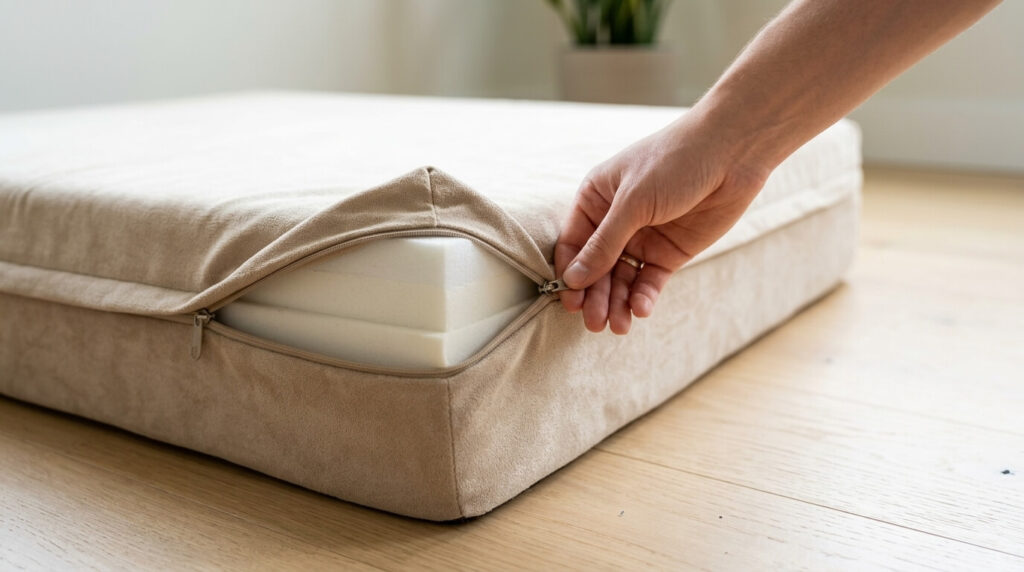
Look for a cover that removes easily, zips securely, and can go through a normal wash cycle. If the inner cushion is not washable, consider using a washable waterproof liner under the cover. This is especially helpful for puppies, seniors, and dogs who nap after outdoor walks.
Odor is not always a bed problem. If your whole apartment smells like dog, bedding is only one layer. Use the larger plan in how to control dog odor in a small apartment so the bed does not carry the entire burden.
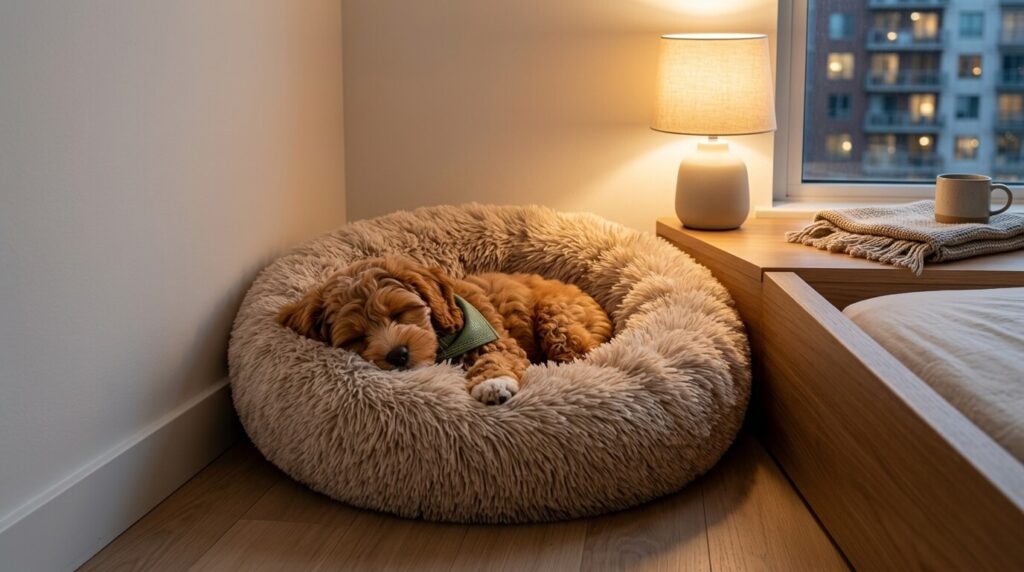
5. Corner Bed for Awkward Floor Plans
A corner bed uses space that may otherwise sit empty: beside a sofa, near a bookcase, at the foot of the bed, or in a quiet bedroom nook. This can be ideal for apartments where rectangular beds stick out into traffic lanes.
The risk is that some corners are not actually restful. Avoid placing the bed next to the front door if hallway noise makes your dog bark. Avoid tight corners where a dog could feel trapped by people walking past. Avoid spots directly under heating vents, cold drafts, or windows that get strong afternoon sun.
A good corner bed should be easy for your dog to enter and leave. If your dog guards resting spaces, do not tuck the bed into a dead-end where people or other pets must approach head-on.
6. Elevated Cot for Warm Apartments
An elevated cot lifts the dog off the floor and allows air to move underneath. This can work well in warm apartments, for dogs with thick coats, or for homes where vacuuming under the bed is a constant issue. Cots are often easier to wipe down than plush beds.
The tradeoff is comfort and noise. Some cots make sounds when dogs step on them. Some dogs dislike the hammock feel. Some small dogs or seniors may not enjoy stepping up. Test whether your dog naturally chooses raised resting spots before committing.
An elevated cot can also be useful as a training “place” mat, especially for dogs who need to settle during cooking, visitors, or work calls. Keep it away from narrow walkways so it does not become a shin-height obstacle.
7. Roll-Up Mat for Flexible Apartments
A roll-up or travel-style mat is not the plushest choice, but it solves a real apartment problem: flexibility. You can move it from living room to bedroom, take it to a balcony door while supervised, use it during a hotel stay, or put it away when guests visit.
This type is best for dogs who already settle easily and do not need thick orthopedic support. It is also helpful for teaching a “go to your bed” cue because the bed can travel with the routine. If your dog follows you from room to room, a portable mat may reduce the need for multiple beds.
For dogs adjusting after a move, a familiar mat can become an anchor. The article on moving dog into new apartment explains how a familiar home base can make the first days calmer.
Where to Put the Bed
The best bed location is quiet enough for real rest but close enough that your dog still feels included. Most apartment dogs do not want to sleep in an isolated corner they never otherwise use. They want a place near household life without being stepped over.
Good locations include:
- Beside your desk, if your dog naps while you work
- At the foot of your bed, if nights are calm there
- Near the sofa but outside the main walking path
- Inside an open crate, if the crate is already positive
- In a bedroom corner away from the front door
Risky locations include:
- Directly behind the apartment entry door
- Under a drafty window or beside a heater
- In a hallway where people step over the dog
- Beside the trash can or food prep area
- In a tight corner where the dog may feel trapped
If barking is a problem, do not place the bed where your dog can rehearse hallway monitoring all day. If your dog reacts to elevator noise, keep the bed away from the front door and pair the change with the plan in dog elevator training.
How to Keep a Dog Bed Fresh in a Small Apartment
A bed that cannot be cleaned is not apartment-friendly. Even a high-quality bed becomes unpleasant if it holds odor, dander, and outdoor grime. Build a simple routine instead of waiting until the bed smells obvious.
A practical schedule:
- Shake or vacuum the bed two or three times per week
- Wash the cover weekly or every other week, depending on shedding and odor
- Air the cushion when weather and space allow
- Use a washable blanket on top if your dog drools or comes in damp
- Replace flattened foam when your dog is resting on the floor through it
Use mild detergent and rinse well. Heavy fragrance may smell clean to humans but can be irritating or unpleasant for some dogs. If your dog suddenly refuses a bed after washing, the scent, texture, static, or location may have changed.
If your dog sheds heavily, bedding is only part of the solution. Use the cleaning routine in how to get dog hair off everything so the bed does not become the only place fur collects.
Common Mistakes
Mistake 1: Buying the biggest bed that fits the dog
Your dog needs enough space to rest comfortably, but your apartment also needs to function. A huge bed that blocks a cabinet or walkway will be moved repeatedly, and that inconsistency can make the dog less likely to use it. Choose the smallest comfortable size, not the largest possible one.
Mistake 2: Choosing looks over laundry
A bed can match your decor and still fail apartment life. If the cover is hard to remove, the seams trap hair, or the insert cannot be protected from moisture, the bed may become a smell source. Washability is not glamorous, but it matters every week.
Mistake 3: Putting the bed in the dog’s alert zone
If the bed faces the front door, elevator wall, or busy window, some dogs never fully rest. They lie there because the location is interesting, not because it is calming. For barky dogs, choose a quieter place first and use front-door training separately.
Mistake 4: Ignoring senior access
Older dogs may need lower entry, firmer support, and a non-slip path to the bed. A deep plush bed can be hard to exit. If your dog hesitates before lying down, circles excessively, slips while standing, or avoids a bed they once liked, ask your veterinarian whether pain or mobility changes could be involved.
Mistake 5: Expecting the bed to replace training
A bed can support a settle cue, but it does not teach one by itself. Reward your dog for choosing the bed during calm moments. Add a chew or food puzzle when appropriate. Keep sessions short. Over time, the bed becomes a reliable place because the routine around it makes sense.
When to Ask Your Veterinarian
Ask your veterinarian for guidance if your dog suddenly changes sleeping locations, avoids lying down, struggles to rise, licks joints, cries when touched, soils the bed, or seems restless at night. A bed upgrade can improve comfort, but it should not hide a medical issue.
AAHA’s senior care guidance discusses home modifications and accessories, including appropriate beds, as part of supporting mobility and quality of life for senior pets. For older dogs, bed choice is not just decor. It can affect how easily they rest, stand, and move around the apartment.
FAQ
What size dog bed is best for a small apartment?
The best size is the smallest bed that still lets your dog sleep in their natural position. Measure your dog while they are curled and stretched out, then test the bed footprint on the floor with a towel or tape before buying.
Are orthopedic beds worth it for apartment dogs?
They can be worth it for seniors, large dogs, long-bodied dogs, thin dogs, and dogs with joint sensitivity. Look for support rather than just softness. If your dog has pain or mobility changes, ask your veterinarian what type of surface is appropriate.
How many dog beds should I have in a small apartment?
Many small apartments only need one main bed plus a portable mat or crate pad. If your dog moves between rooms with you, a lightweight mat can be more practical than adding multiple bulky beds.
Where should a dog sleep in a studio apartment?
Choose a spot near you but outside the main walking path. A desk-side mat, foot-of-bed mat, open crate, or quiet corner can work. Avoid the front door if hallway noise triggers barking.
How often should I wash a dog bed?
Wash the cover weekly or every other week for most apartment dogs, and more often after accidents, rain, heavy shedding, or skin issues. Vacuum or shake out hair several times per week.
Why does my dog ignore the new bed?
The bed may be too warm, too soft, too unstable, too scented, or placed in the wrong spot. Try moving it near a place your dog already rests, adding a familiar blanket, and rewarding calm use without forcing them onto it.
Next Step
Before choosing a bed, mark the planned footprint on your floor for one day and watch where your dog naturally rests. Then choose the bed type that fits both realities: your dog’s body and your apartment’s traffic pattern. For most renters, a washable low-profile bed or supportive mat in a quiet, included location beats a giant designer bed that looks good online but does not work in daily life.
References
AAHA: Senior Care Guidelines, Pain Management