The best dog breeds for small apartments are not always the smallest dogs. A tiny dog with a sharp alert bark, intense energy, or constant need for stimulation can be much harder in a studio than a larger calm dog who sleeps indoors and walks politely outside.
For apartment living, the better question is not “How much does the dog weigh?” It is “Can this dog stay calm indoors, handle hallway sounds, tolerate elevators, recover after walks, and live close to neighbors without constant barking?”
This guide compares 15 apartment-friendly breeds and dog types based on the realities of small-space living: noise, energy, potty logistics, grooming, stairs, elevators, rental rules, and first-time owner difficulty. It also explains which popular breeds may be harder in apartments and how to choose the right individual dog, not just the right breed label.
Best Dog Breeds for Small Apartments: Quick Answer
If you want the short version, calm adult dogs with moderate exercise needs, manageable barking, and strong indoor settling skills usually do best in small apartments. Many toy companion breeds can work well, but some larger low-key dogs can also be surprisingly apartment-friendly when their exercise and health needs are met.
| Breed or Dog Type | Why It Can Work in Small Apartments | Watch Out For |
|---|---|---|
| Cavalier King Charles Spaniel | Gentle, people-focused, often adaptable to small homes | Separation issues and breed health concerns |
| Greyhound | Often calm indoors despite athletic ability | Prey drive, stairs, and safe outdoor exercise |
| Shih Tzu | Small companion breed with moderate exercise needs | Grooming and heat sensitivity |
| French Bulldog | Compact and usually lower exercise indoors | Breathing, heat, stairs, and ethical breeder concerns |
| Havanese | Small, social, and often trainable for apartment routines | Grooming and alone-time tolerance |
| Maltese | Small footprint and companion temperament | Barking and coat care |
| Senior rescue dog | Adult personality and energy level are easier to evaluate | Medical needs and history vary |
Table of Contents
What Actually Makes a Dog Good for a Small Apartment?
A good apartment dog is not just quiet. They need a combination of traits that work in shared housing. The best dog breeds for small apartments usually score well in these five areas.
1. Calm Indoor Energy
The dog should be able to relax after appropriate exercise. A dog who needs constant movement, constant jobs, or constant stimulation may struggle in a small layout even if they are physically small.
2. Manageable Barking
Apartment barking is different from yard barking. Hallway voices, elevators, door knocks, delivery carts, and other dogs may happen all day. The ideal apartment dog notices sounds without staying activated for minutes at a time.
3. Social Resilience
Apartment dogs share elevators, sidewalks, stairwells, lobbies, and narrow hallways. A dog does not need to love everyone, but they need enough composure to pass people and dogs without constant lunging or panic.
4. Potty Practicality
Small apartments rarely have yards. Every potty break may require a leash, elevator, stairs, weather, and shared outdoor space. Tiny puppies, senior dogs, and breeds with special bathroom needs may require more planning.
5. Renter Compatibility
Weight limits, breed restrictions, pet deposits, stairs, flooring, and neighbor tolerance all matter. Before choosing a breed, read your lease and ask management for rules in writing.
Apartment Breed Scorecard
Use this scorecard before falling in love with a photo. Rate each category from 1 to 5. A great apartment match is not perfect in every category, but the weak areas should be manageable for your schedule, building, and experience level.
| Trait | Good Apartment Sign | Warning Sign |
|---|---|---|
| Indoor energy | Settles after walks and enrichment | Paces, demands activity, or needs constant jobs |
| Barking style | Brief alerts, easy to redirect | Long alert barking or sound sensitivity |
| Alone time | Can nap calmly when needs are met | Panic, destruction, or nonstop vocalizing |
| Potty routine | Can follow a predictable schedule | Needs very frequent breaks you cannot provide |
| Building fit | Handles elevators, stairs, and neighbors | Struggles with tight spaces and shared entrances |
15 Best Dog Breeds for Small Apartments
1. Cavalier King Charles Spaniel
The Cavalier King Charles Spaniel is one of the strongest classic apartment choices because many Cavaliers are affectionate, people-oriented, and comfortable with a calmer indoor routine. They are small enough for studios, usually manageable on leash, and often fit well with first-time owners who want a companion dog rather than a high-drive working breed.
The caution is health and alone time. Cavaliers can be prone to breed-specific health problems, and many are very attached to their people. If you work long hours away from home, plan gradual alone-time training and support.
Best for: renters who want a gentle companion and can provide attention, grooming, and health care.
2. Greyhound
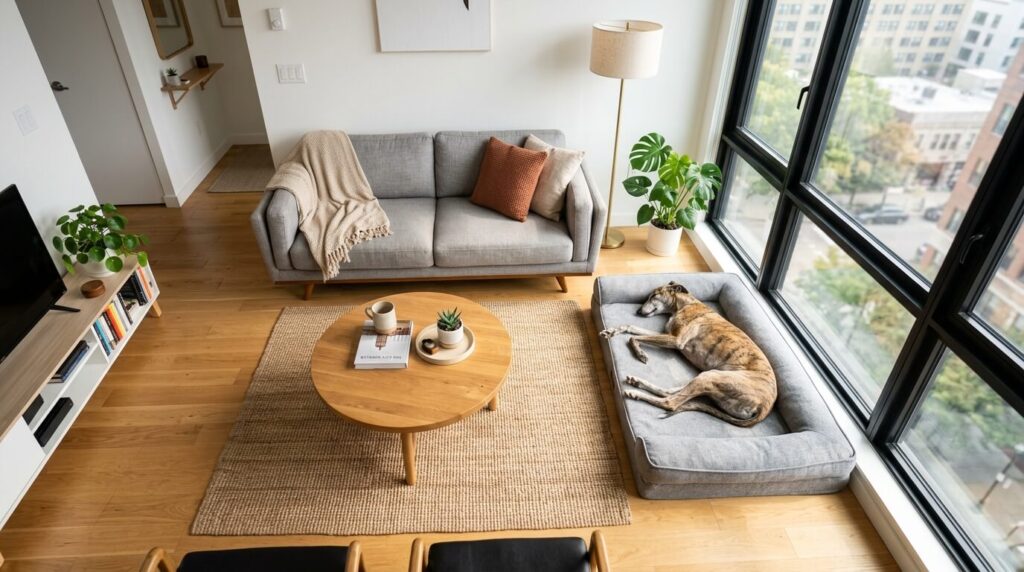
Greyhounds surprise many renters. They are large, but many retired racing Greyhounds are calm indoors and enjoy long naps after suitable walks. This is why the “small dog only” rule fails. A calm larger dog can sometimes be easier in an apartment than a small dog with intense energy.
Greyhounds still need secure outdoor exercise, careful leash handling, and awareness around small animals because prey drive can be strong. They may also need help with stairs, slick floors, and cold weather.
Best for: renters with enough room for a large bed, predictable walks, and a building that allows larger dogs.
3. Shih Tzu
Shih Tzus were developed as companion dogs, which can make them a natural fit for apartment life. They are small, often affectionate, and do not usually need intense athletic exercise to feel satisfied.
They do need grooming. Their coat can mat if neglected, and their flat faces mean heat and breathing comfort should be taken seriously. In high-rise apartments, keep summer potty walks short and avoid overheating.
Best for: renters who want a small companion and are willing to maintain grooming.
4. Havanese
Havanese are small, social, and often adaptable to apartments when given training and attention. They can be playful without requiring the kind of constant job that many herding breeds need.
The main issue is that a Havanese may not love being alone for long stretches. If you work outside the home full time, build alone-time tolerance gradually and consider a dog walker or sitter.
Best for: renters who want a cheerful small dog and have time for training, grooming, and companionship.
5. Maltese
The Maltese has the small footprint many apartment owners want, but size is only part of the story. A well-trained Maltese can be a lovely small-space companion, especially for owners who want a portable, people-focused dog.
Barking and grooming are the two watch points. In buildings with thin walls, alert barking needs early training. The coat also needs regular care, whether you keep it long or clipped short.
Best for: small apartments where the owner can handle grooming and barking prevention.
6. French Bulldog
French Bulldogs are popular apartment dogs because they are compact, sturdy, and often lower-energy indoors than many athletic breeds. They can fit well with city routines and shorter walks.
The health cautions are serious. French Bulldogs are brachycephalic, meaning their flat-faced anatomy can make breathing and heat tolerance more challenging. Stairs, heat, humidity, and overexertion require care. Choose ethical sources and talk with a veterinarian before assuming this breed is easy.
Best for: renters who want a compact companion and are prepared for health-aware care.
7. Pug
Pugs can be affectionate, funny, and small enough for apartment life. Like French Bulldogs, they may not require intense exercise, which makes them appealing to renters with limited indoor space.
The same flat-faced caution applies. Heat, weight gain, breathing, and stairs all matter. A Pug is not a low-maintenance dog just because it is small and charming.
Best for: owners who can manage weight, temperature, and veterinary care carefully.
8. Bichon Frise
The Bichon Frise can be a strong choice for renters who want a cheerful small dog with a manageable size and companion temperament. Many Bichons are playful but not overwhelming when trained and exercised appropriately.
Grooming is non-negotiable. Their coat needs regular maintenance, and they can be vocal if not trained early. For allergy-sensitive households, remember that no breed is truly hypoallergenic for everyone.
Best for: renters willing to budget for grooming and basic training.
9. Boston Terrier
Boston Terriers are compact, social, and often city-friendly. They can be a good match for apartment owners who want a small dog with a little more playful energy than a lap-only breed.
Because they are also flat-faced, watch heat, breathing, and overexcitement. Some Boston Terriers are more energetic than people expect, so daily walks and play still matter.
Best for: renters who want a compact, playful companion and can manage heat carefully.
10. Japanese Chin
The Japanese Chin is a small companion breed that can fit beautifully into quiet apartment homes. Many are catlike in their habits, preferring comfortable indoor routines and close companionship.
They are delicate, so rough stairs, small children, or chaotic multi-dog households may not be ideal. Grooming and careful handling matter.
Best for: calm homes, smaller households, and owners who want a gentle companion.
11. Tibetan Spaniel
Tibetan Spaniels are small, alert companion dogs. They can work in apartments when their alert barking is managed and they are given a comfortable window-free resting area if outdoor movement triggers them.
The caution is that they may notice everything. If your building has constant hallway activity, focus on training and sound management early.
Best for: renters who like an alert small dog and are willing to train quiet routines.
12. Basset Hound
Basset Hounds are not tiny, but many have lower indoor energy and a relaxed home style. Their short legs and calm personality can make them appealing to apartment owners who want a slower-paced dog.
They can be stubborn, vocal, and heavy to carry. Stairs may be a challenge. Their scent drive also means leash walks can be slow and sniff-heavy.
Best for: ground-floor renters or buildings with elevators, and owners who like slow walks.
13. English Bulldog
English Bulldogs can be calm indoors and compact enough for many apartments, but they come with significant health considerations. Heat, breathing, skin folds, weight, and stairs all need thoughtful management.
This is not a breed to choose only because it seems low-energy. It is a breed to choose only if you are prepared for health-aware ownership and veterinary costs.
Best for: owners who want a calm companion and understand the breed’s health needs.
14. Pekingese
Pekingese are small companion dogs that can fit apartment life when handled gently and trained calmly. They often prefer indoor comfort and do not require extreme exercise.
They can be independent, heat-sensitive, and delicate around rough handling. Stairs and jumping from furniture may also need management.
Best for: quiet apartment homes with owners who respect a small dog’s limits.
15. Senior Rescue Dog
A senior rescue dog may be the best apartment choice of all for many renters. Instead of guessing what a puppy will become, you can often evaluate the dog’s adult size, energy, barking tendencies, and social style before adoption.
Senior dogs may need medical care and more potty planning, but many are grateful for a calm routine, soft bed, and predictable walks. If your building allows it, adopting an older calm dog can be a very smart apartment decision.
Best for: renters who want a known personality and are open to medical and comfort needs.
Quiet Dog Breeds for Apartments: What “Quiet” Really Means
When people search for quiet dog breeds for apartments, they usually mean “a dog that will not get me noise complaints.” Breed can influence barking tendencies, but training, environment, exercise, and individual temperament matter just as much.
A quiet apartment dog is usually one who can recover after hearing a trigger. They may bark once when someone knocks, but they do not spend ten minutes yelling at the hallway. That recovery skill is more important than whether a breed is described as quiet online.
Before choosing a dog, ask the breeder, rescue, or foster home specific questions: Does this dog bark at hallway sounds? How do they react to doorbells? Have they lived near other dogs? Can they settle after excitement? Those answers are more useful than a generic breed label.
Breeds That Can Be Difficult in Small Apartments
Some breeds can live in apartments with the right owner, but they are easier to get wrong. This does not mean they are bad dogs. It means their needs often conflict with small-space renter life.
Siberian Husky
Huskies are athletic, vocal, and independent. They can be wonderful dogs, but their exercise needs and howling tendencies can be hard in shared housing.
Border Collie
Border Collies are brilliant working dogs. In a small apartment without enough mental and physical work, that intelligence can turn into frustration, barking, and destructive habits.
Australian Shepherd
Australian Shepherds often need jobs, training, and significant activity. Some individuals adapt to apartments, but they are not an easy default choice for casual owners.
Jack Russell Terrier
Jack Russells are small but intense. Their energy, prey drive, and alertness can overwhelm a quiet apartment routine.
Beagle
Beagles are friendly and lovable, but their scent drive and vocal style can be difficult in buildings with shared walls.
Best Breed by Apartment Situation
| Apartment Situation | Better Match | Why |
|---|---|---|
| First-time dog owner in a studio | Cavalier, Havanese, senior rescue dog | Often easier to manage than high-drive breeds. |
| Thin walls and noise-sensitive neighbors | Adult calm dog with known barking history | Individual behavior matters more than breed marketing. |
| High-rise with elevators | Dog comfortable with people, dogs, and tight spaces | Elevator tolerance affects daily life. |
| No car and city sidewalks | Small-to-medium dog with good leash tolerance | Vet visits, grooming, and travel are easier. |
| Owner works full time | Adult dog with proven alone-time comfort | Puppies and anxious dogs need more support. |
Questions to Ask Before Choosing an Apartment Dog
Use these questions before you adopt or buy. They will protect you from choosing a dog based only on looks, size, or internet breed lists.
- Does my lease have breed or weight restrictions?
- Can this dog handle elevators, stairs, or shared hallways?
- How often does this dog bark, and what triggers it?
- Can this dog be left alone for my actual schedule?
- How much exercise does this dog need before settling indoors?
- Can I afford grooming, insurance, medical care, and pet deposits?
- Does this dog have heat, breathing, joint, or stair concerns?
- Is this individual dog already proven in an apartment or foster home?
Common Mistakes When Choosing an Apartment Dog
Mistake 1: Choosing by Weight Limit Only
A weight limit tells you what the building allows. It does not tell you whether the dog is calm, quiet, or easy to live with in a small space.
Mistake 2: Assuming Small Means Easy
Some small dogs are intense, vocal, or difficult to house-train. Some larger dogs are calm and quiet indoors. Look at energy and behavior, not just size.
Mistake 3: Ignoring Barking Style
A breed that barks at every sound can create apartment stress quickly. Ask about alert barking before you commit.
Mistake 4: Getting a Puppy Without a Potty Plan
Puppies in apartments need frequent breaks. If you live on a high floor or work away from home, plan potty logistics before adoption day.
Mistake 5: Choosing a High-Drive Dog for a Low-Activity Life
High-drive dogs need work. Without it, they may create their own jobs: barking, chewing, pacing, or reacting to every sound.

FAQ
What are the best dog breeds for small apartments?
Some of the best dog breeds for small apartments include Cavalier King Charles Spaniels, Greyhounds, Shih Tzus, Havanese, Maltese, Bichons, and calm senior rescue dogs. The best choice depends on barking, energy, health, and your building rules.
What is the quietest dog breed for apartments?
No breed is guaranteed quiet, but many renters do well with calm adult companion breeds or senior dogs with known behavior. Always ask about the individual dog’s barking triggers before choosing.
Are Greyhounds good apartment dogs?
Many Greyhounds can be good apartment dogs because they are often calm indoors after appropriate exercise. They still need leash safety, soft bedding, and attention to prey drive, stairs, and building rules.
Are small dogs always better for apartments?
No. Small dogs can be vocal, energetic, or difficult to manage. A calm larger dog may be easier in an apartment than a small high-drive dog.
What dog breeds should renters avoid?
Renters should be cautious with high-energy, high-vocal, or high-drive breeds unless they can meet those needs. Huskies, Border Collies, Australian Shepherds, Jack Russells, and Beagles can be difficult for many apartment owners.
What is the best apartment dog for first-time owners?
A calm adult dog or senior rescue with known behavior is often the safest first-time choice. Among breeds, companion breeds such as Cavaliers, Havanese, Shih Tzus, and Bichons may work well when sourced responsibly.
Can a big dog live in a small apartment?
Yes, if the dog is calm indoors, gets appropriate exercise, and is allowed by the lease. Size matters less than energy, barking, training, and daily routine.
Next Step
Before choosing a breed, write down your building limits, daily schedule, noise tolerance, grooming budget, exercise routine, and elevator or stair situation. Then choose the dog whose needs match that reality.
The best dog breeds for small apartments are not the breeds that look best in photos. They are the dogs who can live calmly, safely, and kindly in the exact small-space life you can provide.