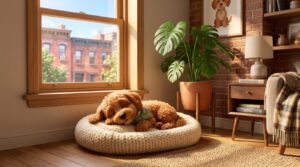
The night before I brought Ollie home, I sat on my mid-century modern sofa and stared at my pristine hardwood floors with genuine dread. My hands were literally shaking.
I had just signed a lease renewal with a $2,000 security deposit sitting in my landlord’s account. Those gleaming oak floors? Original to the building. Those crisp white baseboards? Freshly painted. That vintage apartment door? Irreplaceable. And I was about to introduce a 12-week-old Cavapoo puppy into this equation.
I knew I had to figure out how to dog proof rental apartment layouts immediately, but every article I found assumed I owned the place (yeah, let me just install custom wainscoting) or gave useless advice like “just watch your dog 24/7.”
Two years and zero security deposit deductions later, I’m sharing exactly what worked.
If you are still deciding on which puppy to bring home to your rental, make sure to read our guide on the [best dog breeds for small apartments] first.
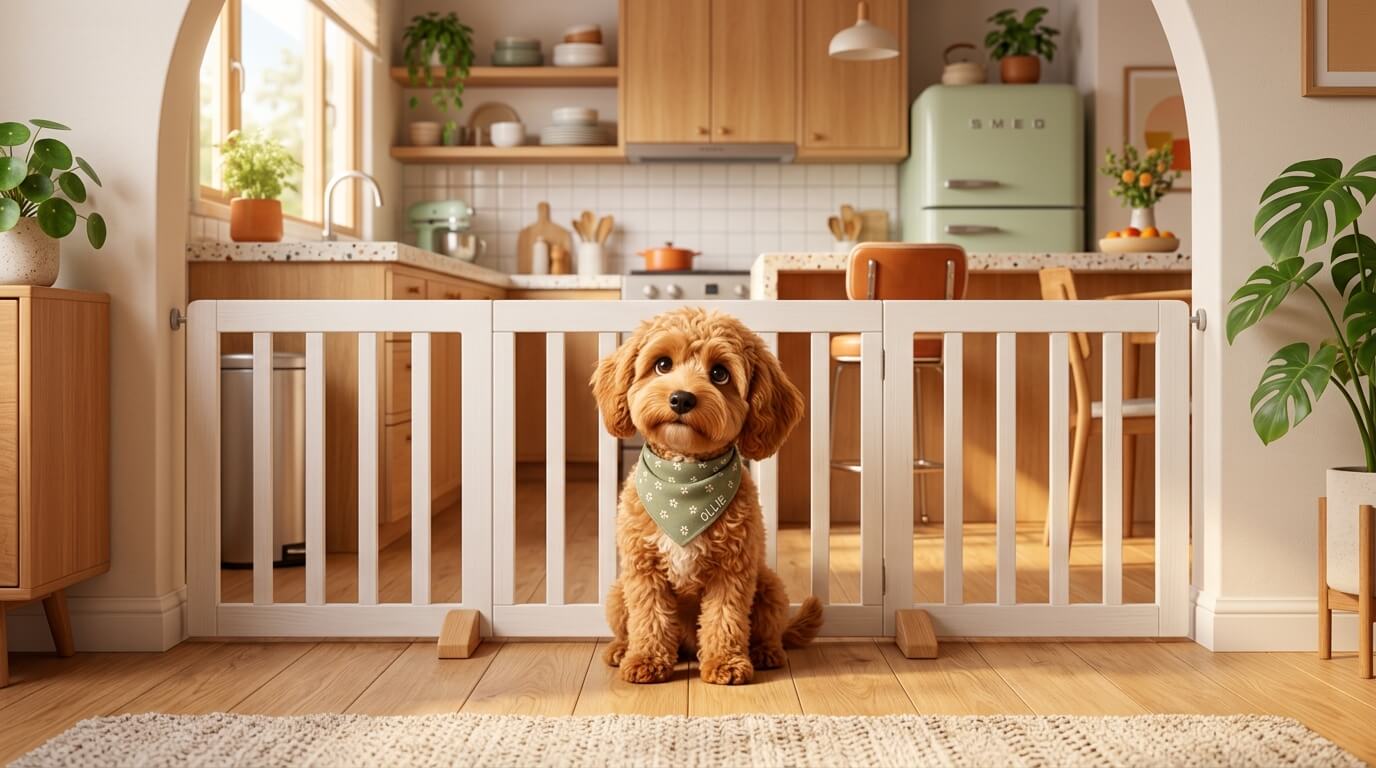
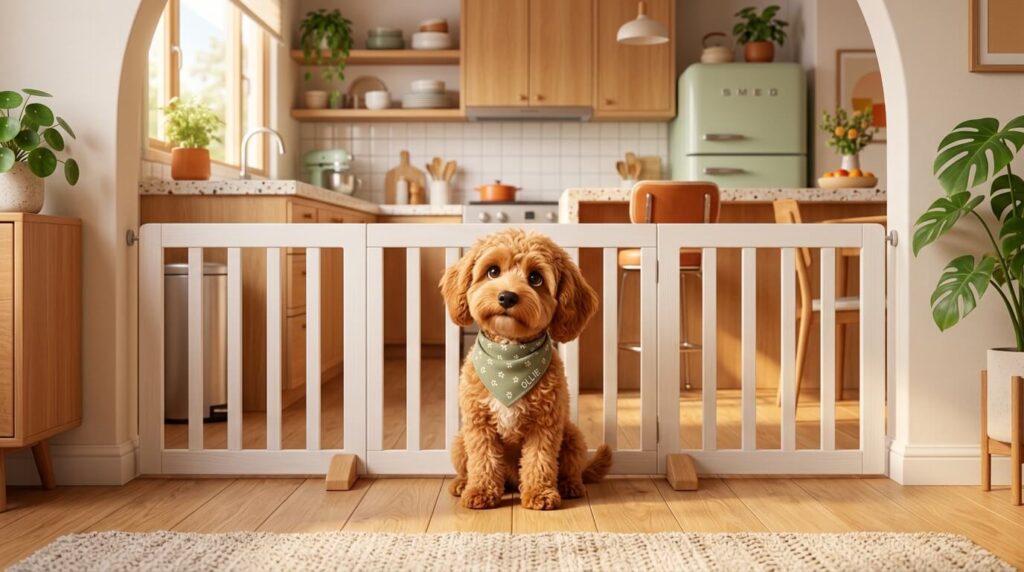
Here is how I protected my apartment—and my wallet—from my caramel-colored roommate in his sage green bandana.
How To Dog Proof Rental Apartment Spaces (Quick Answer)
To successfully dog proof a rental apartment, use clear vinyl scratch protectors on doors, cover high-traffic hardwood floors with washable area rugs, secure trash cans with locking lids, hide electrical cords behind furniture, and install renter-friendly tension baby gates. Focus entirely on reversible, no-drill solutions that prevent physical damage without altering the landlord’s property permanently.
1. Protecting Hardwood Floors & Carpets
Let me tell you about the first scratch Ollie made on my beautiful hardwood floor. It happened on Day 2, exactly where he’d spin in excited circles before mealtime. My heart sank.
The solution wasn’t to stop him from being a dog—it was strategic floor coverage.
- Washable area rugs: I placed them in high-traffic zones (entryway, feeding area, by the sofa).
- Non-slip rug pads: Placed underneath to prevent sliding and add cushioning.
- Consistent nail trimming: Every two weeks, without fail.
I chose machine-washable rugs specifically because accidents happen. Pro tip: Don’t buy expensive rugs for your first year with a dog. Get functional ones you won’t cry over.
For carpeted apartments, the challenge is different but equally real. The nightmare scenario of a dog destroying the landlord’s cheap carpet through digging can cost you hundreds in replacement fees. You can learn exactly how to stop a dog from digging the carpet here: [Internal Link to ID: 22].
2. Saving Your Doors and Baseboards
This was my biggest fear. Ollie’s “I need to go out RIGHT NOW” scratches at the front door could have cost me serious money. Instead, they cost me about $25.
The Door Protection Strategy:
Clear vinyl scratch protectors changed everything. I bought heavy-duty sheets (the kind designed for protecting walls from furniture) and cut them to size.
- Measured the door area Ollie could reach.
- Cut the clear vinyl to size.
- Applied with removable adhesive strips (Command strips work perfectly).
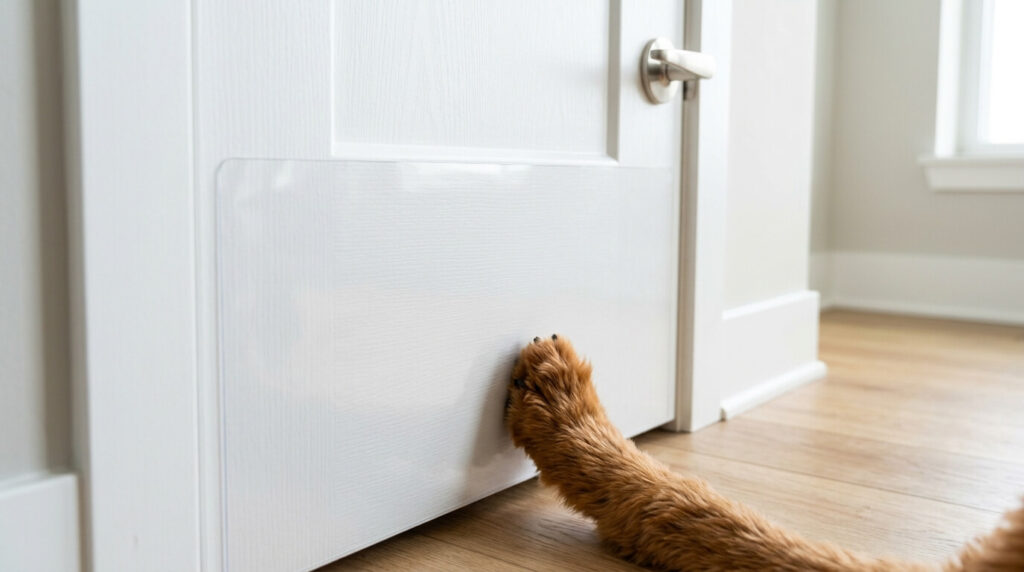
The vinyl takes the abuse, not the door. When I moved out for a brief apartment switch last year, I peeled everything off—zero damage.
For baseboards, I used clear corner guards at vulnerable edges and strategically placed my furniture to block “target zones.” Once I moved my console table to block a corner Ollie loved, that baseboard stayed pristine.
3. Kitchen Hazards & The Trash Can Solution
Ollie discovered the kitchen trash can on Week 2. I discovered him, covered in coffee grounds and shredded tissues, looking absolutely thrilled with himself. That cannot happen in a rental. Spilled garbage leads to stains, and stains lead to lost deposits.
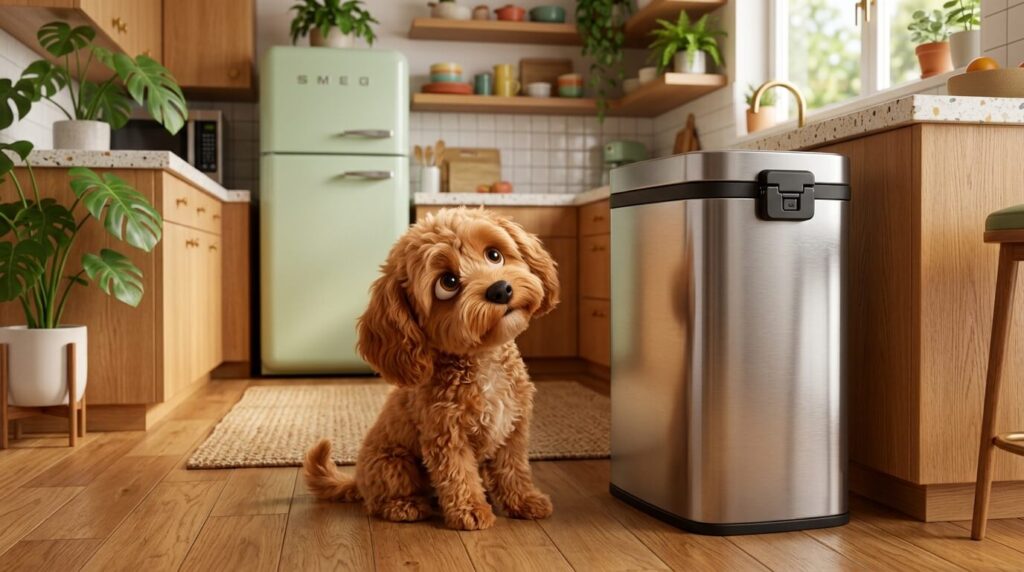
After trying three different bins, I finally found the winner: a heavy stainless steel can with a locking lid. It’s easy for humans to open, but impossible for clever paws. I also moved all cleaning supplies from under the sink into a high cabinet just to be safe.
4. Cords & Toxic Houseplants
Puppies explore the world with their mouths. This is adorable until they’re chewing your laptop charger or chomping on an expensive fiddle leaf fig.
Because I couldn’t drill holes for in-wall cord routing, I got creative:
- Cord covers: Plastic channels that stick to baseboards with removable adhesive.
- Cable management boxes: Used to hide power strips entirely.
- Bitter apple spray: Applied directly to any exposed cords.
As for plants, I researched every single one I owned against the ASPCA’s toxic plant list. The casualties included my pothos, peace lily, and philodendrons. I donated them to non-dog-owning friends and replaced them with dog-safe options like spider plants and Boston ferns. One emergency vet visit for plant poisoning costs way more than your security deposit.
5. Creating Safe Boundaries (Without Drilling)
Open floor plans are gorgeous until you need to keep a puppy out of the bathroom while you shower. But drilling pressure-mounted baby gates into my rental’s door frames? Absolutely not.
Freestanding pet gates became my best friend. They’re weighted and require zero installation. My mid-century modern apartment didn’t need an ugly plastic baby gate, so I found stylish wooden options that looked intentional.
Preparing the space with these barriers before bringing Ollie home was honestly just as stressful as actually moving to a new apartment with a dog, but the upfront effort saved me countless headaches later. [Internal Link to ID: 9]
6. Window Sill & Wall Protection
Ollie loves watching the world from our window. Except his paws on the white-painted window sill left daily scuff marks.
My incredibly simple fix was draping a washable throw blanket over the sill when he’s in “watch mode.” I also keep a small container of wall touch-up paint (matched perfectly to my apartment’s walls) for the occasional dent caused by a bouncing Kong toy. That touch-up paint has been worth its weight in gold.
7. The Front Door Barking Situation
Dog proofing isn’t just about preventing physical damage to your space—soundproofing your front door is equally important to stop dog barking and prevent neighbor complaints that could threaten your lease.[Internal Link to ID: 12]
I added a simple draft blocker to the bottom of the front door (which dampens sound) and started running a white noise machine near the entryway during peak hallway traffic times. It masked footsteps and neighbor conversations that used to trigger Ollie’s alert barking perfectly.
The Security Deposit Reality Check
Here is exactly what I spent to dog proof my rental apartment:
| Item | Cost | Deposit-Saving Value |
| Vinyl door protectors | $25 | Prevented $200+ in door refinishing |
| Washable area rugs (3) | $180 | Prevented floor scratches worth $500+ |
| Locking trash can | $45 | Prevented countless stain cleanings |
| Renter-friendly gates (2) | $120 | Prevented access to vulnerable areas |
| Corner guards & cord covers | $65 | Prevented electrical & trim damage |
| Total Investment | $435 | Protected $2,000 deposit |
That $435 investment protected my deposit through two lease renewals. I got every penny back when I switched units last year.
Frequently Asked Questions
How do I dog proof a rental apartment on a tight budget?
Start with the absolute essentials: DIY door protection using cheap vinyl sheets, second-hand washable rugs, and cord management using binder clips. Focus your budget on a good locking trash can (worth every penny). Functionality matters more than aesthetics when you’re just trying to protect your deposit.
What is the best way to dog proof a rental apartment without making permanent changes?
Ensure all your solutions are 100% reversible. Use adhesive solutions rated for temporary application (like Command strips), choose freestanding barriers instead of mounted gates, and opt for strategic furniture placement. Test any adhesive in a hidden spot first to ensure it won’t peel the landlord’s paint.
Can landlords charge for normal wear and tear from dogs?
No, landlords cannot legally charge for normal “wear and tear”—but the definition of “normal” is tricky. Light floor scuffs might pass, but deep gouges from digging or chewed baseboards won’t. This is why proactive dog proofing matters. Always document your apartment’s condition with photos before your dog arrives.
References
- ASPCA Animal Poison Control Center:Toxic and Non-Toxic Plants List – A comprehensive database of household plants and their toxicity levels for dogs.
- Journal of Veterinary Behavior: Environmental management for preventing destructive behavior – Academic insights into spatial management in confined living situations.