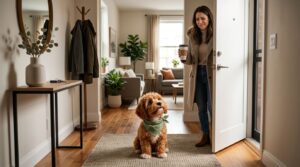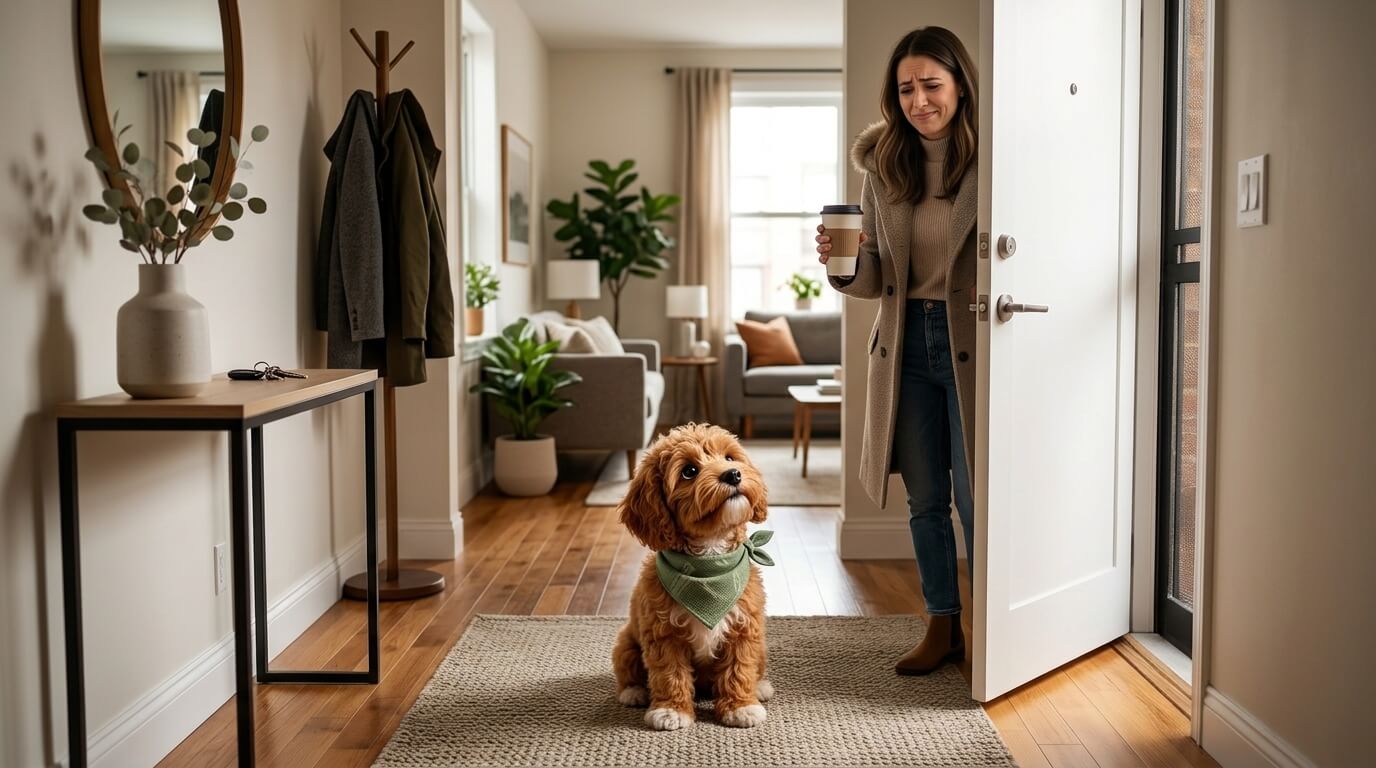
It started with my friend Maya standing in my doorway last October, coffee cup in hand, doing that thing where she smiled just a half-second too late. She stepped inside, glanced around at my mid-century modern apartment — the carefully chosen walnut credenza, the boucle armchair, the gallery wall I spent three weekends hanging — and I watched her nostrils do something involuntary.
That was the moment I understood nose blindness on a deeply personal level. I had been living with Ollie, my caramel Cavapoo in his sage green bandana, for eight months, and I had completely lost the ability to smell my own home.
If you are desperate to control dog odor apartment life has handed you, the first thing you need to accept is the same thing I had to accept standing in that doorway watching Maya’s face: the smell is real, it is layered, and lighting a candle is not going to fix it.
How To Control Dog Odor Apartment (Quick Answer)
To effectively control dog odor apartment dwellers must eliminate the source, not just mask it. Use enzymatic cleaners on hidden accidents, run a true HEPA air purifier continuously, wash dog beds weekly, and maintain your dog’s dental hygiene. Remove shed fur first, as it traps smelly skin oils deep in fabric fibers, making everything worse over time.
The “Nose Blindness” Wake-Up Call
Olfactory adaptation is the scientific name for nose blindness, and it is genuinely brutal.
Your brain is wired to stop registering constant background smells within a few hours of exposure — it is an evolutionary feature designed to help you notice new threats, not catalog familiar ones. For dog owners, this means the ambient Frito-and-wet-fur smell of your apartment becomes completely invisible to you while remaining completely apparent to every single person who walks through your door.
The smell has three main sources, and they compound each other:
- Sebum — the natural skin oil your dog’s body produces, which coats every shed hair and transfers to every fabric surface it touches
- Oral bacteria — the primary driver of dog breath, which Ollie generously shares with my sofa cushions, my face, and my guest pillow
- Microsporum and Malassezia yeast — naturally occurring organisms on dog skin that produce volatile fatty acids, which is what you are actually smelling when you think a dog smells “doggy”
The Frito paw smell, by the way, has its own cause. We will get to that.
Once I understood what I was smelling and why, fixing it became a lot more logical and a lot less like spraying Febreze into the void.
Masking vs. Neutralizing (Why Candles Fail)
I want to gently say this to every dog owner who keeps a collection of expensive candles near the front door: you are not solving the problem, you are building a perfume layer on top of it.
Candles, plug-in air fresheners, and spray deodorizers work by introducing a competing scent molecule into the air. They do not chemically interact with the odor molecules already present. They do not penetrate fabric fibers. They do not touch the sebum that is embedded in your rug.
What you end up with is the smell of “Warm Vanilla Sandalwood Dog.”
True odor elimination requires one of two things:
- Physical removal of the source material (the fur, the bacteria, the accident residue)
- Chemical neutralization using enzymatic or oxidizing cleaners that break down the odor molecule at its structural level
Everything else is temporary. If you want to control dog odor apartment strategies need to be built on neutralization, not fragrance layering.
The Fur-to-Odor Connection
This is the link that most dog odor guides completely skip over, and it is the most important one to understand.
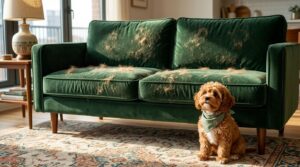
Every strand of Ollie’s caramel fur is coated in sebum, the oily secretion produced by his skin’s sebaceous glands. Sebum is not inherently foul-smelling, but it oxidizes over time — and as it sits embedded in your sofa fabric, your rug fibers, and your throw blanket, it slowly breaks down into the fatty acids that produce that specific, unmistakable dog smell.
This is why you must first learn [How To Get Dog Hair Off Everything (7 Best Hacks)] before tackling the smell. Deodorizing a surface that is still full of fur is like mopping around a puddle. You are treating the symptom while the cause is physically still there, still oxidizing, still releasing odor compounds into the air in your apartment.
My personal protocol now: fur removal happens first, always. Deodorizing is step two.
7 Steps To Eliminate the Smell
Step 1: Run a True HEPA Air Purifier (Non-Negotiable)
Not an “air purifier.” A true HEPA filter purifier, which is a specific certification meaning the filter captures 99.97% of particles 0.3 microns or larger — including pet dander, mold spores, and the airborne particulates that carry odor compounds.
I run mine continuously in the living room, which is where Ollie spends 90% of his time. The difference within the first 48 hours was measurable.
What to look for:
- True HEPA certification (not “HEPA-type” or “HEPA-style” — these are marketing terms)
- An activated carbon pre-filter specifically for odors and VOCs
- A CADR (Clean Air Delivery Rate) appropriate for your room size
- A quiet mode for overnight running
For a New York apartment under 800 square feet, one well-placed unit in the main living area handles most of the work.
Step 2: Use Enzymatic Cleaner on Every Accident — Including Old Ones
Old, hidden urine accidents are the single worst odor offender in a dog owner’s apartment. Urine soaks through rugs and into the padding, into grout lines, and if you are in a rental, into the subfloor itself. Regular cleaners do not touch the urea crystals that cause the ammonia smell — they clean the surface and leave the crystals behind.
Enzymatic cleaners work differently. They contain specific bacterial cultures that produce enzymes targeting the proteins in urine, feces, and vomit. The enzymes break the odor compounds down at a molecular level rather than just masking or diluting them.
This is also why this makes it critical to master exactly how to potty train a dog in an apartment so accidents do not soak into the subfloor — because once urine reaches the subfloor of a rental, you are dealing with a problem that is genuinely difficult to reverse and potentially expensive when you move out.
Application method for enzymatic cleaners:
- Blot up any fresh accident completely before applying
- Saturate the area — do not just mist the surface
- Cover with plastic wrap and allow to dwell for 10–15 minutes
- Blot, do not scrub
- Allow to air dry completely before assessing
For old accidents, use a UV black light in a darkened room to locate every spot you cannot see in normal light. They will glow yellow-green. It is horrifying and extremely useful.
Step 3: Wash All Soft Surfaces Weekly
Ollie sleeps on the sofa. Ollie sits on the armchair. Ollie has claimed a specific corner of my bed that I have simply accepted as his.
Every soft surface he contacts regularly is accumulating sebum, dander, and oral bacteria. Washing frequency matters more than washing thoroughness — a weekly light wash beats a monthly deep clean for odor control.
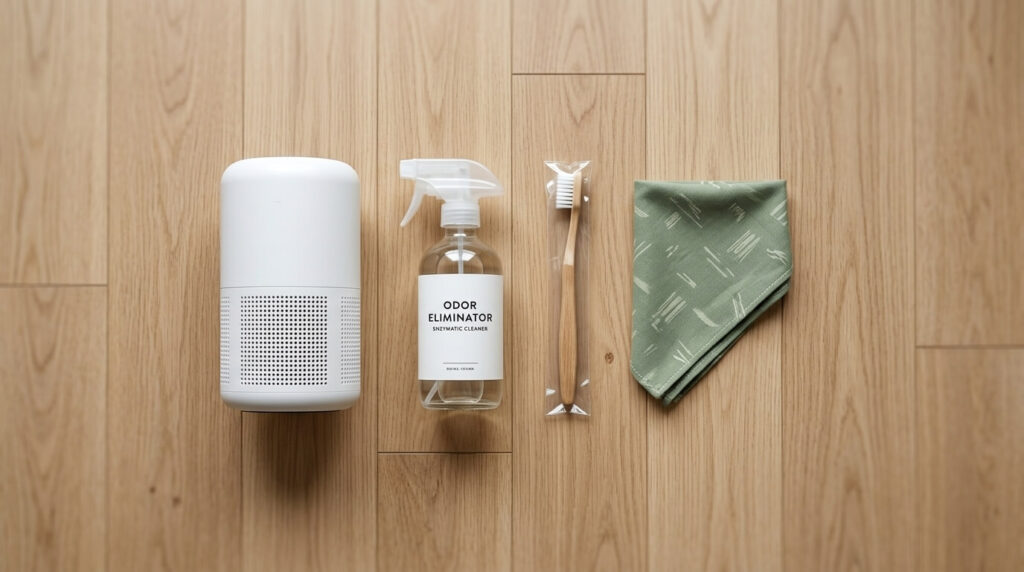
Weekly washing checklist:
- Dog bed cover and any inner cushion that fits in the machine
- Throw blankets Ollie uses
- Slipcovers or removable cushion covers
- Any fabric collar or harness (these get extremely funky)
Wash on the hottest setting the fabric tolerates. Add half a cup of white vinegar to the rinse cycle — it acts as a fabric softener and a mild deodorizer that rinses out clean with no scent residue.
Step 4: Address Dental Health Seriously
Dog breath is not just unpleasant. It is a delivery mechanism.
Every time Ollie pants on my sofa cushion or greets my face with enthusiasm, he is transferring oral bacteria to every fabric surface in range. Those bacteria produce hydrogen sulfide and other volatile sulfur compounds — genuinely the same family of chemicals that makes things smell rotten.
Dental hygiene for Ollie:
- Daily brushing with a dog-safe enzymatic toothpaste (never human toothpaste — xylitol is toxic to dogs)
- Weekly dental chews as a supplement to brushing, not a replacement
- Professional dental cleaning as recommended by his vet (usually annually)
I use a small finger brush because Ollie tolerated it faster than a handled toothbrush. Four minutes every evening. The difference in his breath within two weeks of starting daily brushing was dramatic enough that I genuinely apologized to my sofa.
Step 5: Neutralize the Dog Bed Itself
The dog bed is the epicenter of dog odor in any apartment. It is where body heat, sebum, dander, and mouth contact are concentrated for eight or more hours every night.
Washing the cover is not enough on its own.
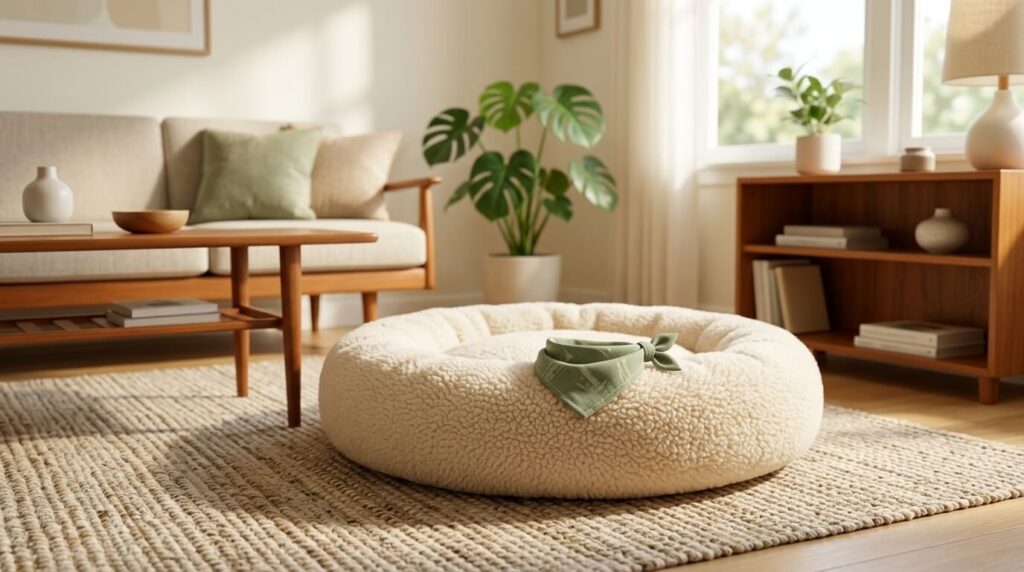
Full dog bed protocol:
- Wash the cover weekly on hot
- Sprinkle baking soda directly on the foam insert, leave for 30 minutes, then vacuum thoroughly
- Spray the insert with diluted white vinegar, allow to air dry completely before replacing the cover
- Replace the bed entirely every 12–18 months — foam absorbs odor compounds that eventually cannot be washed out
If your dog bed does not have a removable, washable cover, that is the single most important upgrade you can make.
Step 6: Clean Floors and Hard Surfaces With the Right Products
Hardwood and tile floors in a New York apartment feel easy to clean but are sneaky odor holders. Sebum-coated fur drifts into floor gaps, under baseboards, and into the corners that vacuums do not reach.
My floor cleaning routine:
- Vacuum daily with a soft roller attachment (stiff brush heads fling fur rather than collecting it)
- Mop weekly with a diluted enzymatic cleaner mixed into the mop water — not a scented floor cleaner, which again only masks
- Wipe baseboards monthly with a damp microfiber cloth, because fur accumulates there invisibly
For grout lines in the bathroom and kitchen, use a stiff brush with enzymatic cleaner. If Ollie has ever had an accident near tile, the urine has almost certainly penetrated the grout.
If you want a step-by-step routine, read my complete daily schedule on how to maintain a [clean apartment with dog] messes without losing your mind.”
Step 7: Establish a Post-Walk Wipe-Down Routine
Ollie comes inside from every walk carrying whatever the sidewalks of New York have offered him that day. In winter, that includes road salt. In summer, it includes everything else.
A post-walk wipe-down takes 45 seconds and eliminates a significant source of tracked-in odor:
- Keep a stack of old towels or pet-specific wipes near the front door
- Wipe all four paws, paying attention to the webbing between the toes
- Wipe the belly and groin area in wet or muddy weather
- In high-humidity months, dry the face folds if your dog has them
This single habit reduced the ambient smell in my apartment noticeably within the first week of consistent practice.
The Danger of Essential Oils
I want to address this directly because the “natural” odor remedy space is full of advice that ranges from mildly ineffective to genuinely dangerous for dogs.
Many essential oils are toxic to dogs, including some that are commonly recommended for pet odor control:
- Tea tree oil (melaleuca) — toxic to dogs at relatively low concentrations
- Eucalyptus oil — causes drooling, vomiting, and central nervous system issues
- Pennyroyal — a traditional flea deterrent that is hepatotoxic to dogs
- Citrus oils — cause skin irritation and, in larger amounts, systemic toxicity
Dogs are exposed to essential oils through three routes: skin contact with diffused oil droplets that settle on surfaces, direct skin contact with diluted topical applications, and ingestion while grooming. All three are real risks in an apartment where a dog lives in close quarters with a diffuser.
The ASPCA Animal Poison Control Center maintains an active list of toxic substances for pets. If you want to freshen your apartment air safely, a true HEPA purifier with an activated carbon filter does the job without any toxicity risk.
FAQ
Why do my dog’s paws smell like corn chips?
The Frito paw smell comes from two naturally occurring bacteria — Pseudomonas and Proteus — that live on dog paws and between the toes. Both produce yeast-like byproducts with a distinctly corn chip or popcorn aroma.
It is completely normal and generally harmless, though a sudden intensification of the smell can indicate a yeast overgrowth that warrants a vet visit. Regular post-walk wipe-downs reduce but usually do not eliminate it entirely.
What is the best way to control dog odor apartment guests will actually notice?
If you want to control dog odor apartment visitors can detect before you can, focus on the three highest-impact areas: the dog bed (wash weekly, treat the foam insert), the main upholstered furniture (fur removal followed by enzymatic spray), and air quality (true HEPA purifier running continuously). These three changes alone will produce a noticeable improvement within one week.
Is it safe to use baking soda directly on my dog for odor?
A light dusting of plain baking soda on your dog’s coat between baths is generally considered safe for short-term use, but it should never be left on for extended periods and should not be applied near the face or inhaled.
It is far more effective and safer to use baking soda on your dog’s bed and furniture rather than directly on the dog. For between-bath freshening on the dog itself, look for vet-formulated dry shampoos with pH-balanced, dog-safe ingredients.
References
- Meason-Smith, C., Diesel, A., Patterson, A. P., Older, C. E., Mansell, J. M., Suchodolski, J. S., & Hoffmann, A. R. (2015). What is living on your dog’s skin? Characterization of the canine cutaneous mycobiota and fungal dysbiosis in canine allergic dermatitis. FEMS Microbiology Ecology, 91(12), fiv139. https://doi.org/10.1093/femsec/fiv139
- ASPCA Animal Poison Control Center. (2023). Essential oils and the risks they pose to pets. American Society for the Prevention of Cruelty to Animals. https://www.aspca.org/pet-care/animal-poison-control/toxic-and-non-toxic-plants
Maya came back for coffee last month. She walked in, looked around, and said “it smells really clean in here.” I accepted this as the highest compliment I have ever received. Ollie was wearing his sage green bandana and smelled like a dog who gets his teeth brushed every day, which, honestly, is the best outcome available to any of us.