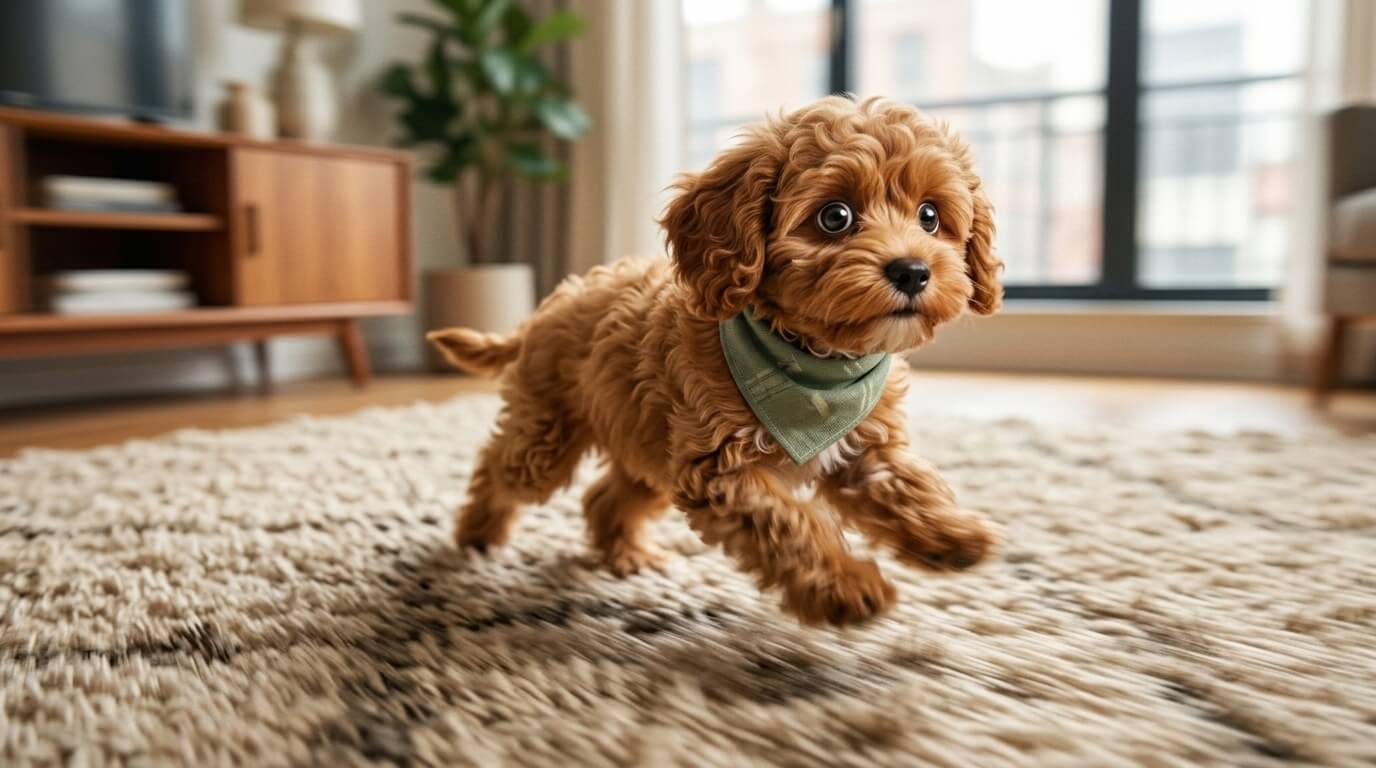
Dog apartment zoomies can look dramatic: your dog launches from the rug, loops around the coffee table, bounces off the sofa, and sprints down the hallway like the apartment has become a tiny racetrack. Most short zoomie bursts are normal, but small spaces make them louder, riskier, and easier to misunderstand.
This page is not the main “how to stop zoomies” guide. That job belongs to the broader dog zoomies in apartment article. This support page has a narrower purpose: help you decode the trigger. If you know why your dog gets zoomies, you can choose the right response instead of reacting with panic, punishment, or random extra exercise.
The key question is not “Are zoomies good or bad?” The better question is: what happened right before the zoomies, and does the dog recover normally afterward?
Dog Apartment Zoomies: Quick Answer
Dog apartment zoomies are usually short bursts of excited running, often called FRAPs, or frenetic random activity periods. In apartments, common triggers include post-bath relief, evening energy spikes, post-potty celebration, stress discharge, and not enough sniffing or mental enrichment. Most zoomies are harmless if the space is safe and the dog settles afterward. Worry if the behavior is frantic, repetitive, injury-prone, aggressive, paired with panic, or a sudden change for your dog.
| Trigger | What It Looks Like | First Response |
|---|---|---|
| Post-bath relief | Running after drying or grooming | Clear a safe path before release |
| Evening energy | Same time most nights | Add earlier sniffing and calm routine |
| Post-potty excitement | Sprints after outdoor break | Use calm re-entry routine |
| Stress discharge | After guests, noise, or pressure | Reduce trigger and allow decompression |
| Low enrichment | Zoomies after boring day | Add sniffing, chewing, and puzzle work |
Table of Contents
Why Zoomies Feel Bigger in Apartments
In a house with a yard, zoomies may happen outside. In an apartment, they happen between furniture, walls, rugs, doors, and neighbors. The same playful burst can suddenly involve floor noise, sliding paws, barking, table corners, and a worried downstairs neighbor.
Small spaces also compress the pattern. Your dog cannot run in a long open line, so they loop, pivot, jump onto furniture, and rebound through the same path. That makes the behavior look more intense than it might look in a yard.
This is why trigger decoding matters. If your dog has a predictable two-minute zoomie after bath time, you can manage the room. If your dog has frantic nightly zoomies after a day with no walk, you may need a better routine. If your dog sprints after every hallway noise and cannot settle, stress may be part of the picture.
Trigger 1: Post-Bath or Grooming Relief
Many dogs get zoomies after a bath, wipe-down, nail trim, brushing session, or rain walk. The body has been restrained, touched, wet, or handled. When the handling ends, the dog releases energy in a burst.
In apartments, post-bath zoomies are risky because floors may be wet and paws may slip. Before you release your dog from the bathroom, clear the path. Close bedroom doors, move small tables, put down a rug or towel path, and keep the first minute calm.
What Helps
- Dry paws before your dog runs onto hard floors.
- Use a non-slip mat outside the bathroom.
- Give a calm treat scatter on a rug after grooming.
- Keep furniture corners out of the zoomie path.
- Do grooming earlier in the evening, not right before quiet hours.
If grooming always leads to frantic behavior, the handling itself may be stressful. Go slower and build cooperative care. Do not assume the zoomies are only “happiness.”
Trigger 2: Evening Energy Peaks
Evening zoomies are common in apartment dogs, especially puppies and young adults. The dog has rested, waited, watched you work, and stored energy. Then dinner, owner attention, lights, sounds, or a change in household rhythm creates a predictable burst.
The answer is usually not a wild game right at bedtime. That can teach your dog that evenings are the time to explode. Instead, move energy outlets earlier: sniff walk, short training, food puzzle, tug with rules, or a calm chew.
If bedtime is the main problem, use how to tire out a dog before bed. That page should handle the full evening routine. This page simply identifies evening arousal as a likely trigger.
Trigger 3: Post-Potty Celebration
Some dogs sprint after they pee or poop. This can be relief, excitement, habit, or the joy of returning home. In apartments, the sprint may start in the hallway, elevator, lobby, or living room.
The fix is not to punish the celebration. The fix is to control the transition. After the potty break, use a calm re-entry pattern: short leash, slow elevator, treat for eye contact, quiet door entry, and a small scatter on a rug if your dog tends to launch indoors.
If post-potty zoomies happen after your dog waited too long, review alone-time and potty schedules. A dog who barely made it outside may come back overloaded.
Trigger 4: Stress Discharge
Not all zoomies are carefree. Some dogs run after a stressful event: visitors, construction noise, a tense dog encounter, a scary elevator ride, or a grooming session. The running may be a release after pressure.
Stress-discharge zoomies often look sharper. The dog may have wide eyes, a tucked tail, frantic turns, barking, jumping, or trouble settling afterward. They may crash into furniture or ignore you completely.
When stress is involved, adding more excitement can backfire. Instead, lower pressure. Give space, dim the room, offer a simple chew or sniff activity, and avoid chasing the dog. If anxiety is frequent, connect this with dog separation anxiety apartments or a qualified behavior professional depending on the trigger.
Trigger 5: Not Enough Sniffing or Mental Enrichment
Apartment dogs may get physical walks but not enough sniffing, chewing, problem-solving, or novelty. A rushed block walk can leave the body moved but the brain unsatisfied. Zoomies then appear later as excess arousal.
Sniffing is especially important because it gives dogs information. If every walk is a hurry-up bathroom trip, the dog may return home still mentally hungry. Add sniff time, food puzzles, cardboard searches if safe, or simple training games.
For the broader boredom pattern, use signs your apartment dog is bored. For a small-space exercise plan, use how to exercise a dog in a small apartment.
Trigger Log: Find Your Dog’s Pattern
Use a simple log for one week. You are looking for patterns, not perfection.
| Log Item | Example | What It Tells You |
|---|---|---|
| Time | 8:30 p.m. | Evening routine or fatigue pattern |
| Before event | Bath, potty, visitor, boring day | Likely trigger |
| Duration | 90 seconds or 15 minutes | Normal burst or concern |
| Body language | Loose and playful or frantic | Happy energy or stress |
| Recovery | Settled after water and chew | Whether the dog can regulate |
After a week, you should see the likely cause. A predictable post-bath burst needs safety planning. A nightly 20-minute sprint needs routine changes. A frantic burst after every noise trigger needs stress management.

Make the Zoomie Path Safer
You may not stop every zoomie, so make the room safer. Apartment zoomies often follow the same loop. Watch the route once, then improve that route.
- Use rugs or runners on slippery floors.
- Move sharp coffee table corners out of the loop.
- Close doors to unsafe rooms.
- Keep toys, cords, and plant stands out of the path.
- Avoid chasing your dog during zoomies.
- Do not let dogs jump on and off high furniture repeatedly.
- Use a calm cue or treat scatter after the first burst slows.
If floor noise is the issue, add a rug path where your dog naturally runs. This helps paws and neighbors at the same time.
When Dog Apartment Zoomies Are Normal
Normal zoomies are usually short, playful, and self-limiting. The dog looks loose, not panicked. They can recover afterward. They do not injure themselves, threaten people, or continue endlessly.
Normal does not mean you ignore safety. It means you manage the environment instead of treating the dog as bad. A young dog doing two happy laps after a bath is different from a dog who cannot stop pacing for an hour.
Zoomies by Age and Life Stage
Puppies
Puppy zoomies are often tied to immature self-control, tiredness, and sudden bursts of energy. A puppy may sprint after a nap, after potty success, after a visitor leaves, or when they are actually overtired. In apartments, puppies also learn quickly that running gets attention.
For puppies, prevention matters more than correction. Use predictable potty breaks, short training sessions, safe chewing, and enough sleep. If the puppy gets wild at the same time every evening, plan a calmer routine before that time arrives.
Adolescent Dogs
Adolescent dogs may have bigger bodies, stronger muscles, and less judgment than adult dogs. Their apartment zoomies can be louder and riskier because they can knock into furniture, people, and other pets.
Adolescents usually need a mix of physical movement and mental work. A leash walk around the block may not be enough. Add sniffing, training, tug with rules, and food enrichment before the usual zoomie window.
Adult Dogs
Adult dogs may still get zoomies, but the pattern should be easier to predict. If your adult dog’s zoomies are brief, loose, and tied to clear triggers, they are usually manageable with safety and routine. If they suddenly become more intense or frequent, look for changes in schedule, stress, pain, sleep, or exercise.
Senior Dogs
New or intense zoomies in a senior dog deserve more attention. A senior dog may be at higher risk of slipping, pain, vision changes, or confusion. If the behavior is new, paired with accidents, disorientation, pain, or nighttime restlessness, talk with your veterinarian.
Apartment Scenarios and Better Responses
Zoomies in a Studio
Studios need a clear zoomie lane. Move the coffee table, add rugs, and keep cords and plant stands away from the loop. Because there are fewer doors to close, management matters before the zoomies start.
Zoomies With Downstairs Neighbors
If floor noise is the biggest problem, use rugs, earlier enrichment, and quieter evening routines. Do not wait until quiet hours to give your dog the first real outlet of the day. A 10-minute sniff walk before dinner can prevent a much louder sprint later.
Zoomies After Visitors Leave
This often points to social arousal or stress release. Give your dog a decompression plan after guests: water, potty break, quiet chew, dimmer room, and less talking. Avoid turning the guest departure into a party.
Zoomies After Crate Time
Some dogs burst out after resting or waiting in a crate. If the crate time was fair and calm, a short release burst may be normal. If the dog exits frantic, barking, or desperate, check whether crate time was too long, too stressful, or poorly timed. The crate training apartment dogs guide can help with that routine.
Zoomies After Walks
Zoomies after walks can mean relief, excitement, or incomplete decompression. Try a slower final five minutes outside, a calm entry, and a treat scatter on a rug. If the walk was all speed and no sniffing, add sniff time next time.
7-Day Zoomie Prevention Plan
This plan is not about eliminating every burst. It is about making dog apartment zoomies safer, shorter, and easier to predict.
| Day | Action | Goal |
|---|---|---|
| Day 1 | Log time and trigger | Find the pattern |
| Day 2 | Clear the zoomie path | Reduce injury and noise |
| Day 3 | Add a sniff walk before the usual time | Lower stored arousal |
| Day 4 | Use a calm treat scatter after the burst slows | Teach a landing routine |
| Day 5 | Move exciting play earlier | Protect bedtime and quiet hours |
| Day 6 | Replace one trigger with a calmer transition | Improve re-entry or post-bath routine |
| Day 7 | Review duration and recovery | Decide if more help is needed |
If the burst becomes shorter and your dog settles faster, the plan is working. If zoomies become more frantic or your dog seems unable to recover, shift from normal management to professional guidance.
Calm Landing Routine
A calm landing routine teaches your dog what to do after the burst. Wait until the speed drops. Then use a low voice, scatter a few treats on a rug, offer water, and guide your dog to a chew, mat, or bed. Do not ask for hard obedience cues while your dog is still flying through the room.
The landing routine should be boring in the best way. Same rug, same calm voice, same easy reward. Over time, your dog learns that the zoomie loop ends with sniffing, chewing, or resting rather than more chaos.
Trigger-to-Fix Cheat Sheet
If you are not sure where to start, match the most likely trigger to one simple change. Keep the change in place for several days before judging it.
| If Zoomies Happen… | Likely Meaning | Try This First |
|---|---|---|
| After a bath | Relief and handling release | Dry paws, clear a rug path, scatter treats |
| At the same time nightly | Predictable arousal window | Add sniffing and training earlier |
| After guests leave | Social stress or excitement | Quiet decompression routine |
| After a boring workday | Low mental enrichment | Food puzzle, chew, and sniff walk |
| After scary hallway noise | Stress discharge | Reduce exposure and build confidence slowly |
This table is also useful for deciding which internal guide to use next. If the issue is boredom, go to the boredom and exercise pages. If the issue is evening timing, go to the bedtime page. If the issue is stress, slow down and consider behavior support.
Do not change every part of the routine at once. One clear change makes it easier to see whether the trigger was real. If you change the walk, the food puzzle, the bedtime routine, and the furniture layout on the same day, you will not know which part helped.
Multi-Dog Zoomies
Two dogs can turn a small apartment into a collision course. Play zoomies may be fine when both dogs are loose, bouncy, and taking turns. It becomes a problem when one dog is chasing, body-blocking, pinning, or ignoring the other dog’s attempts to stop.
If multi-dog zoomies get too rough, interrupt before the peak. Use barriers, separate mats, or leashes if needed. Give each dog a decompression activity. Do not let one dog practice bullying in the name of play.
Watch older dogs and small dogs carefully. They may tolerate the first lap but become overwhelmed by the fifth. Safety is more important than letting play run until someone yelps.
When to Worry
Call your veterinarian or a qualified professional if zoomies are sudden, extreme, or paired with other concerning signs.
- Your dog crashes into walls or furniture repeatedly.
- The behavior seems compulsive or impossible to interrupt.
- Your dog growls, snaps, or redirects onto people or pets.
- Zoomies appear with panic, drooling, trembling, or hiding.
- Your dog suddenly becomes hyperactive after a health or medication change.
- Your dog limps, yelps, or seems painful afterward.
- The pattern is new for a senior dog.
Behavior can be connected to pain, anxiety, sleep, routine, or health. This article can help you identify patterns, but it cannot diagnose your dog.
What Not to Do
Do Not Chase
Chasing can turn zoomies into a game or make a stressed dog more frantic. Step aside, clear the path, and wait for the burst to slow.
Do Not Yell
Yelling can add arousal or fear. Use management and prevention rather than shouting during the fastest moment.
Do Not Punish Afterward
Your dog will not connect punishment with the energy trigger. They may only learn that you become unpredictable after they run.
Do Not Assume More Exercise Always Fixes It
Some zoomies need more exercise. Others need better sleep, less stress, more sniffing, or a calmer evening routine. Match the fix to the trigger.
How This Page Fits With the Main Zoomies Guide
This page should not compete with the main dog zoomies in apartment page. Use this page when the search intent is “why is my dog doing this?” Use the main page when the intent is “how do I manage or reduce it?”
FAQ
What causes dog apartment zoomies?
Dog apartment zoomies are often triggered by relief after grooming or potty breaks, evening arousal, stress discharge, under-stimulation, or not enough sniffing and enrichment during the day.
Are zoomies bad in apartments?
Not always. Short playful zoomies can be normal. They become a problem if the space is unsafe, the dog cannot settle, the behavior is frantic, or neighbors are affected by repeated noise.
Should I stop my dog during zoomies?
Do not chase or yell. Clear the path and wait for the burst to slow. Then redirect with a calm cue, treat scatter, chew, or rest routine.
Do zoomies mean my apartment is too small?
Not automatically. Dogs can get zoomies in large homes too. But small apartments make zoomies noisier and riskier, so safety setup and daily enrichment matter more.
Why does my dog get zoomies every night?
Nightly zoomies often point to evening arousal, stored energy, boredom, or a routine that gets exciting too late. Add sniffing, training, and calm enrichment earlier in the evening.
Can anxiety cause zoomies?
Stress can contribute to frantic running in some dogs. If the zoomies happen after scary events or pair with panic signs, treat them as stress information rather than simple play.
How do I make apartment zoomies safer?
Add rugs, clear furniture corners, close unsafe doors, remove cords and plant stands from the loop, avoid chasing, and give your dog calmer outlets before the usual zoomie time.
Next Step
For the next seven days, write down when your dog’s zoomies happen and what came right before them. Then choose one fix that matches the pattern: safer bath exit, earlier evening enrichment, calmer post-potty entry, stress reduction, or more sniffing.
Dog apartment zoomies are easier to manage when you stop treating them as random chaos. Decode the trigger, make the path safe, and use the main zoomies guide when you need a broader management plan.