DIY dog enrichment ideas are most useful when they fit real apartment life: thin floors, small kitchens, work calls, rainy sidewalks, limited storage, and a dog who somehow becomes bored the moment you finally sit down. The goal is not to build a perfect toy shelf. The goal is to give your dog safe little jobs that use their nose, mouth, brain, and body without turning your living room into a mess you regret.
Good enrichment is not just “keep the dog busy.” It should make the day feel more predictable and satisfying. A sniffing game can help a restless dog settle after a walk. A licking activity can make grooming practice easier. A towel puzzle can turn part of breakfast into quiet mental work. A cardboard box game can be wonderful for one dog and completely wrong for another dog who eats cardboard.
This guide is written for apartment owners who want low-cost ideas that still feel thoughtful. You will not need a craft room, a backyard, or a pile of expensive puzzle toys. You will need supervision, common sense, and a willingness to notice whether your dog is actually calmer afterward or just more wound up.
Quick Answer
The best DIY enrichment for apartment dogs is quiet, supervised, easy to clean, and matched to your dog’s habits. Start with simple sniffing games, towel searches, treat scatters, lick mats, cardboard search boxes, muffin tin puzzles, and calm mat work. Avoid DIY items your dog chews into pieces, swallows, guards, or throws loudly across the floor.
| Apartment Moment | Best DIY Game | Why It Fits |
|---|---|---|
| Before a work call | Towel food search | Quiet, quick, and easy to reset |
| Rainy day | Find-it scent trail | Uses the nose without hallway running |
| After a walk | Licking mat or stuffed toy | Helps shift from movement to rest |
| Budget enrichment | Muffin tin puzzle | Uses common kitchen items |
| Gentle destruction need | Cardboard search box | Allows ripping only if your dog does not eat cardboard |
| Evening restlessness | Mat settle with hidden treats | Teaches calm rather than excitement |
If you want purchased puzzle options too, use best dog puzzle toys. This article focuses on homemade activities and the judgment needed to use them safely.
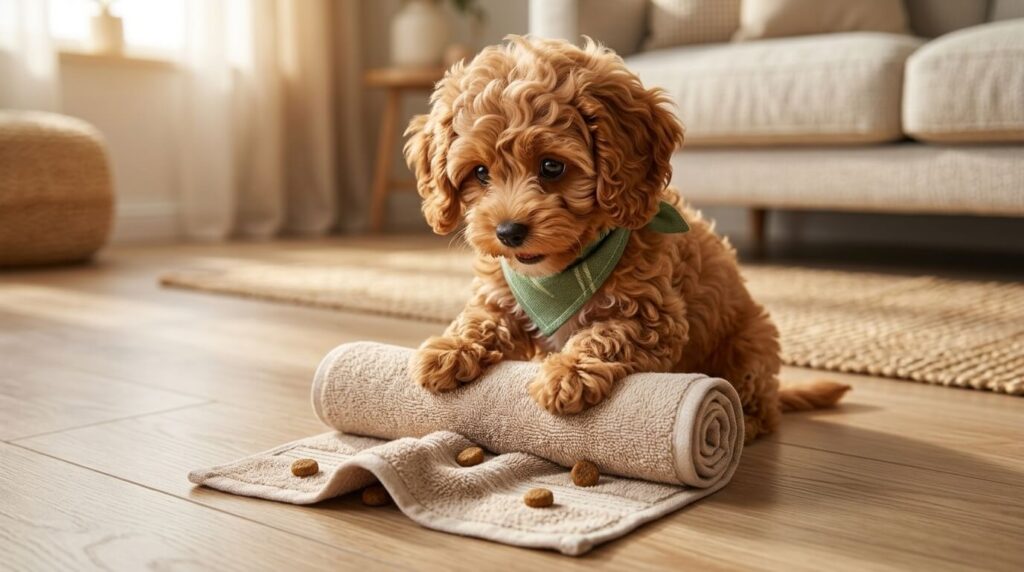
Table of Contents
What Enrichment Actually Means
Enrichment means giving your dog appropriate ways to do normal dog things: sniffing, searching, chewing, licking, problem solving, playing, moving, resting, and interacting. ASPCA’s enrichment guidance explains that dogs who do not receive enough stimulation often find their own outlets, which can become unwanted behavior. In apartments, those outlets may be barking at hallway sounds, digging carpet, chewing furniture, jumping at people, or stealing laundry.
That does not mean every bored dog needs harder puzzles. Sometimes they need a walk. Sometimes they need sleep. Sometimes they need a predictable routine. VCA’s enrichment and scheduling guidance emphasizes that predictability helps emotional comfort and can reduce frustration. This matters in apartments because dogs often pester, bark, or paw at owners when they do not know when attention, food, play, or rest is coming.
So think of DIY enrichment as one part of the day, not a constant entertainment channel. The right game at the right time can be lovely. Too many food games all day can create calorie problems, obsession, or a dog who never learns to be quietly bored.
Safety First: The Uncute Part
DIY enrichment uses household objects, which means you have to be honest about your dog. Some dogs sniff a toilet paper roll and politely extract kibble. Others shred it, swallow it, and turn your clever idea into a vet call. Some dogs delicately nudge a muffin tin. Others flip it into the wall. Some dogs relax with licking. Others guard the mat if a person walks by.
Use these rules before any DIY game:
- Supervise new activities closely.
- Remove the item if your dog eats paper, cardboard, fabric, plastic, or rubber.
- Use part of your dog’s regular food when possible.
- Avoid small pieces that can be swallowed.
- Keep games quiet if you have downstairs neighbors.
- Separate dogs for food games.
- Stop if the game creates barking, frantic chewing, guarding, or frustration.
ASPCA specifically warns that dogs should be actively supervised when DIY items are accessible and that items should be removed if a dog attempts to ingest them. That is not a tiny footnote. It is the difference between enrichment and an avoidable emergency.
11 DIY Apartment Enrichment Ideas
1. The Towel Search
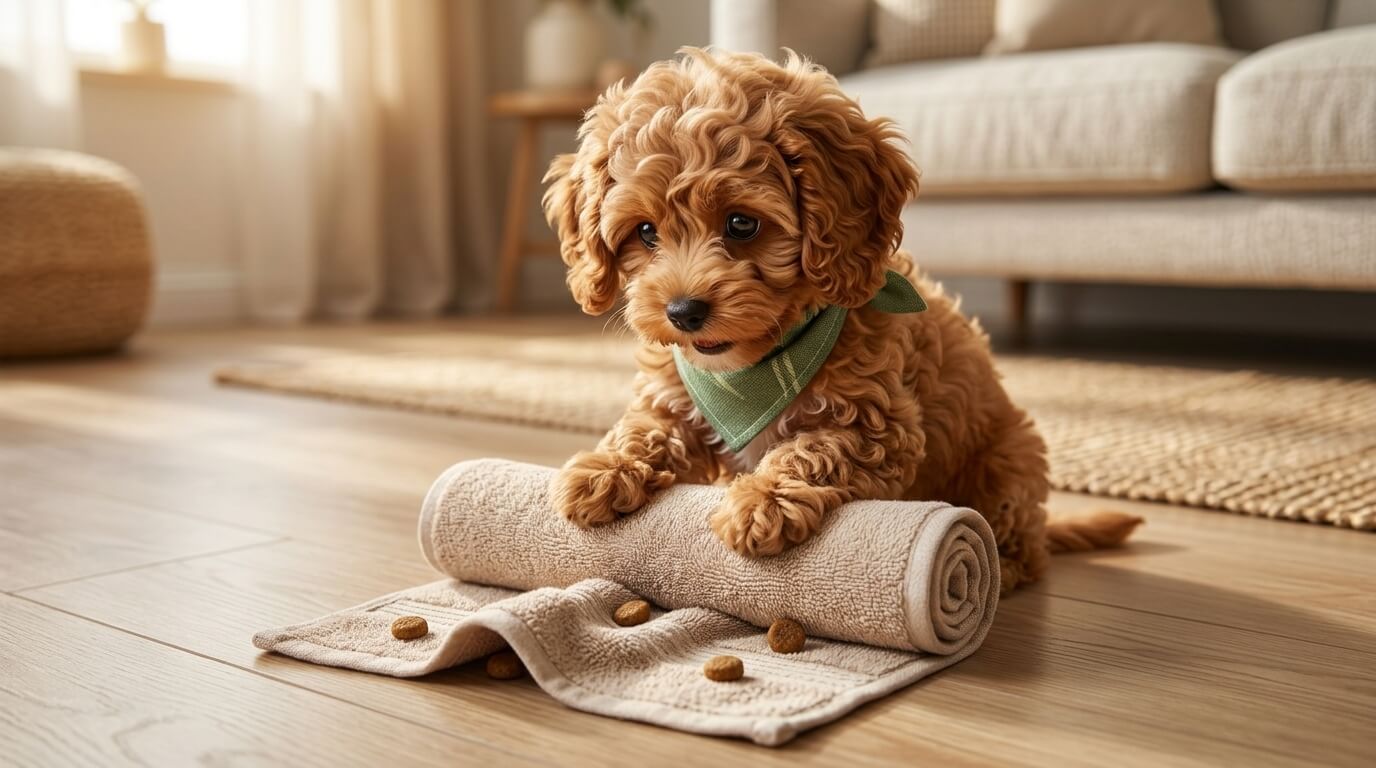
Scatter a small portion of kibble or treats on a towel, fold it loosely, and let your dog sniff the food out. Start very easy. One fold is enough for a beginner. If your dog paws gently and sniffs, you can make it slightly harder over time. If your dog grabs the towel and shakes it like a party trick, make it easier or switch games.
This is a good work-call game because it is quiet and fast to set up. Use it on a washable floor or mat so crumbs do not disappear into carpet. Do not use it for dogs who eat fabric.
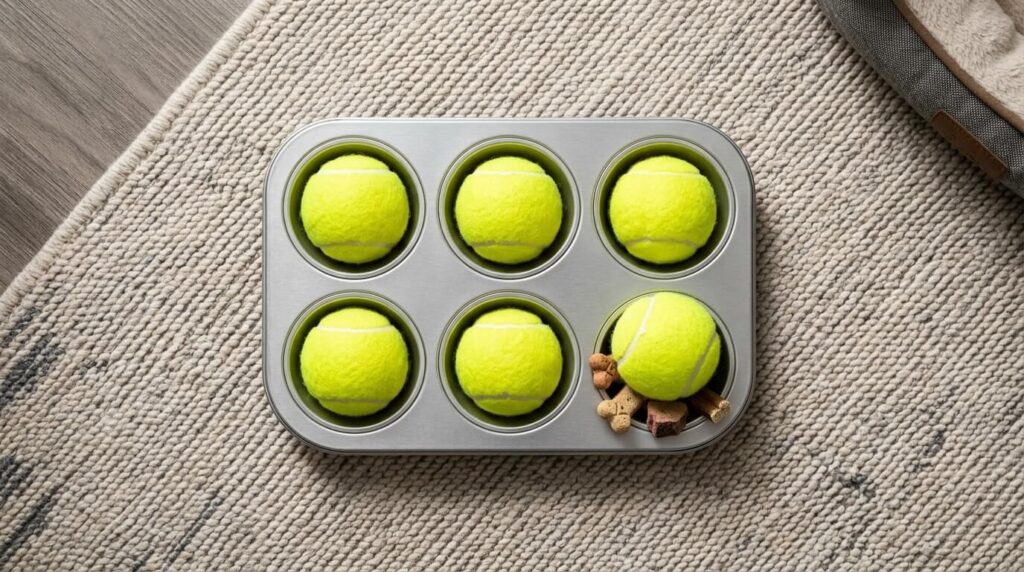
2. The Muffin Tin Puzzle
Put kibble in a few muffin tin cups and cover some cups with tennis balls or safe toys. Let your dog move the objects to reach the food. ASPCA includes a muffin tin puzzle in its DIY enrichment examples, and it is popular because many homes already have the materials.
Apartment note: place the tin on a rug or towel so it does not scrape or clatter on hard floors. For noise-sensitive neighbors, this is a daytime game, not a midnight solution.
3. The Find-It Trail
Ask your dog to wait, then place tiny food pieces in a short trail around one room. Say “find it” and let them search. Start with visible pieces. Later, hide them behind chair legs, under the edge of a washable mat, or near a bed.
This is one of the most underrated apartment games because sniffing is mentally satisfying without requiring running. It is especially useful on rainy days when the walk was shorter than your dog wanted.
4. The Cardboard Search Box
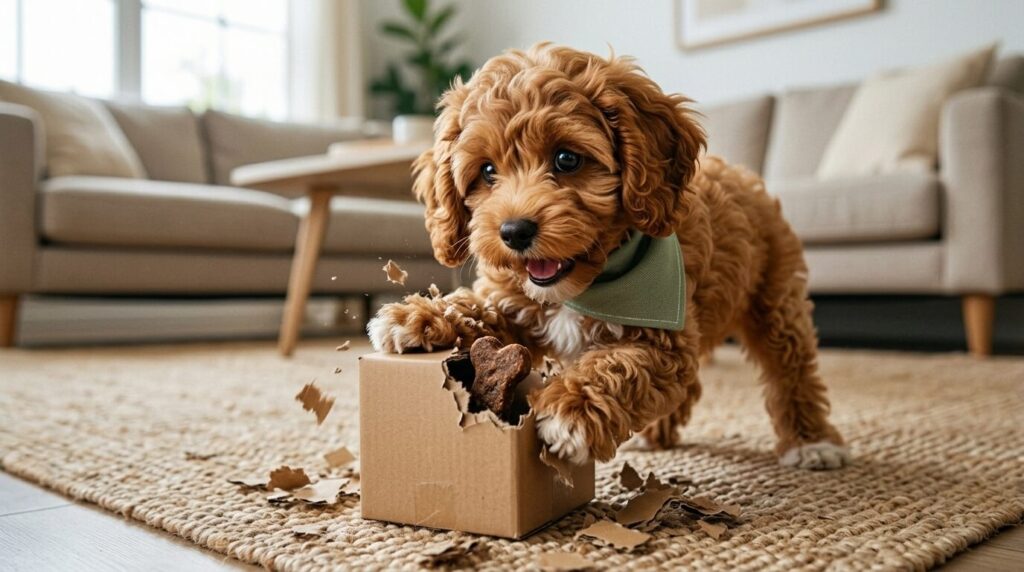
Place a few treats inside a cardboard box with crumpled paper. Let your dog sniff and search. For dogs who enjoy legal destruction, this can feel deeply satisfying. For dogs who eat cardboard, it is a bad idea. Watch closely the first time.
Use clean cardboard without staples, tape, food residue, or glossy coatings your dog may chew. Keep the box small enough that cleanup does not become a second hobby. If you already feel tired, this is not the game to choose.
5. The Lick Plate
Spread a thin layer of dog-safe wet food, softened kibble, plain pumpkin if appropriate, or another veterinarian-approved option on a lick mat or flat plate. Licking can help some dogs settle, especially after a walk, during nail practice, or while you handle paws gently.
Keep it thin. More food is not always better. A heavy layer adds calories and cleanup. If your dog guards food, use the lick activity in a separate zone and avoid walking close while they work.
6. The Rolled Blanket Sniff Game
Use a small blanket or washable throw. Sprinkle food along one edge, roll it once, add a few more pieces, and roll again. Let your dog unroll it with their nose. This can be easier than a tightly folded towel and more satisfying for dogs who like to push fabric around.
Do not use delicate blankets, weighted blankets, or anything with fringe. This is not a good choice for dogs who chew fabric or swallow threads.
7. The Apartment “Go Find Your Toy” Game
Choose one toy your dog knows. Let them watch you place it nearby. Say “find your toy” and celebrate when they get it. Over time, hide it slightly harder: beside the sofa, behind a cushion, near the bed, then in another room.
This game uses scent and memory without adding calories. It is also a nice way to give dogs a job when you do not want to use more food. Keep the tone light. If your dog gets frustrated, make the hiding place obvious again.
8. The Two-Cup Choice Game
Place two plastic cups upside down on the floor, hide a treat under one, and let your dog sniff to choose. Use cups that are too large to swallow and not brittle. Start with the treat partly visible. Reward calm investigation.
This is a tiny game, but it can be lovely for small spaces. It gives your dog a thinking moment without rolling toys across the floor. Stop before your dog starts pawing hard or chewing the cups.
9. The Quiet Obstacle Path
Use pillows, a broom laid flat, a yoga mat, or a low stable object to create a slow movement path. Ask your dog to step over, go around, pause on the mat, or weave through two chairs. Keep it slow and controlled. This is not indoor agility at full speed.
For apartments, avoid jumping, sliding, or racing. The point is body awareness, not chaos. Dogs with orthopedic issues, seniors, puppies, or slippery floors need extra caution. When in doubt, ask your veterinarian what movement is appropriate.
10. The Dinner Scatter Mat
Instead of serving the whole meal in a bowl, scatter part of it across a washable mat or snuffle-safe surface. Let your dog search slowly. This works well for dogs who eat too quickly and dogs who need a calmer mealtime routine.
Do not scatter food directly into deep carpet. You will lose pieces, attract odor, and possibly teach your dog to forage in places you do not want. Use a mat you can shake and wash.
11. The Settle-and-Sniff Routine
This is less flashy than a puzzle, but often more useful. Place your dog’s mat near you. Reward them for lying down. Then occasionally drop a treat between their paws or hide one in the mat folds. The dog learns that resting can still be rewarding.
This is excellent for apartment dogs who pester during work, bark when ignored, or struggle to be calm while you cook. VCA’s guidance on enrichment and scheduling describes teaching dogs to rest on a mat during periods when the owner is unavailable. That is the spirit here: enrichment that teaches calm, not constant demand.
If your dog struggles when you leave, pair this with how long you can leave a dog alone in an apartment. Enrichment helps, but it should not mask true separation distress.
Choose the Game by Mood, Not Just Energy
A common mistake is thinking every restless dog needs to be “tired out.” Some do. Others are overtired, anxious, frustrated, or unsure what happens next. The wrong enrichment can add fuel. A treat ball that clatters around the room may make an already frantic dog louder. A hard puzzle may make a sensitive dog quit. A cardboard box may excite a dog who needs sleep.
Use this quick read:
- Restless but able to sniff: find-it trail or towel search.
- Coming down after a walk: lick plate or settle mat.
- Rainy-day bored: toy search or quiet obstacle path.
- Frustrated and barking: make the game easier or switch to a calm routine.
- Destructive chewing mood: use safe chews or supervised cardboard only if your dog does not swallow pieces.
- Sleepy but pestering: mat settle, not a high-energy game.
This is where a human expert eye matters. The best enrichment is not always the cleverest object. It is the activity that meets the emotional moment in front of you.
A Realistic Weekly Rotation
You do not need eleven games every week. Pick three. Rotate by purpose:
- One sniffing game: towel search, find-it trail, or dinner scatter.
- One calming game: lick plate or settle-and-sniff routine.
- One novelty game: cardboard search box, muffin tin, or cup choice.
This keeps enrichment from taking over the apartment. It also prevents the dog from seeing the same puzzle every day until it becomes furniture. RSPCA notes that repeating the same toys day after day is unlikely to remain beneficial and that poorly planned enrichment can even cause problems. Rotation matters, but rotation does not need to be complicated.
Noise, Mess, and Neighbor Reality
Apartment enrichment should respect the building. A game can be wonderful for your dog and still wrong at 10 p.m. above a downstairs neighbor. Rolling bottles, hard plastic cups, metal muffin tins, and treat balls can be louder than owners realize.
Use mats under noisy objects. Choose sniffing and licking games for evenings. Save box destruction for daytime. Clean crumbs before they become odor. If your dog is a dramatic shredder, do the cardboard game in a contained area and stop before the apartment looks like a recycling accident.
If indoor energy regularly turns into running, barking, or zooming, read dog zoomies in apartment. Enrichment is one tool; it should not become permission for indoor chaos.
Pick by the Time You Actually Have
One reason DIY enrichment plans fail is that they assume you are in a calm, creative mood. Real apartment life is usually less charming. You may have ten minutes before a meeting, a tired dog after a wet walk, or a rainy Saturday where the whole apartment feels too small. Choose the game for the time you have, not the version of yourself who owns labeled bins and pre-cut fleece strips.
If you have 2 minutes
Do a tiny find-it scatter on a washable mat or drop a few pieces of kibble into a loosely folded towel. Keep it easy. This is not the moment to build a box puzzle. The goal is to give your dog a quick sniffing job while you reset your own brain too.
If you have 10 minutes
Use the muffin tin puzzle, toy search, or settle-and-sniff routine. Ten minutes is long enough to set up, watch, and clean. It is also short enough that your dog should finish before frustration appears.
If you have a rainy afternoon
Rotate one sniffing game, one calm licking activity, and one tiny training session with rest between them. Do not run game after game until your dog becomes overstimulated. Rainy-day enrichment should make the apartment feel more peaceful, not turn it into a carnival.
If you are exhausted
Choose the easiest safe option. A short towel search counts. A few treats hidden around the room count. A calm mat with food dropped between the paws counts. Enrichment is not supposed to become another way for owners to feel guilty.
When DIY Enrichment Is Not Enough
DIY games are not a treatment plan for every behavior problem. If your dog destroys doors when alone, injures themselves, guards food games, cannot settle after enrichment, becomes frantic around puzzles, or suddenly changes behavior, look deeper. More games may not be the answer.
For chewing furniture, use dog chewing furniture apartment. For repeated barking, use stop dog barking in apartment. For anxiety-related products and limits, see best calming products for dogs.
Also remember calories. If every game uses food, reduce bowl meals accordingly and talk with your veterinarian if your dog is overweight, on a medical diet, or has digestive issues. Enrichment should support health, not quietly create another problem.
Common Mistakes
Making the game too hard
A dog who barks at the puzzle, bites the container, or walks away may not be stubborn. The game may be too difficult. Make it easier. Visible food and quick wins build confidence.
Using unsafe household items
Not every household item belongs in a dog’s mouth. Avoid staples, tape, sharp plastic, stringy fabric, tiny pieces, brittle containers, scented materials, and anything your dog tries to swallow.
Leaving DIY toys out all day
DIY enrichment is usually a supervised activity, not a permanent toy. Put the item away when the game is over. This keeps it safer and more interesting.
Adding too much food
A tablespoon of kibble can power a game. A bowl of peanut butter is not necessary. Use small amounts and think about the whole day’s calories.
Expecting enrichment to replace walks
Indoor games can help during weather, illness, or workdays, but most dogs still need outdoor sniffing, movement, and social information. Enrichment is not a substitute for a life.
FAQ
What are the best DIY dog enrichment ideas for apartments?
The best apartment-friendly ideas are towel searches, find-it trails, lick plates, muffin tin puzzles on a mat, toy searches, dinner scatter mats, and settle-and-sniff routines. They are quiet, affordable, and easy to clean when supervised properly.
Are toilet paper rolls safe for dog enrichment?
They can be safe for some dogs under supervision, but they are not safe for dogs who eat cardboard or paper. Remove the roll if your dog starts swallowing pieces.
How often should I give my dog enrichment games?
Many apartment dogs do well with one or two short enrichment sessions per day, often around meals or predictable busy times. Watch your dog’s body language and avoid turning every moment into a food game.
Can DIY enrichment help with barking?
It can help if barking is partly boredom or demand for attention. If barking is fear, hallway reactivity, separation distress, or guarding, enrichment alone is not enough.
What if my dog destroys every DIY game?
Use safer food puzzles, supervised chewing options, mat training, or scent games that do not involve shreddable materials. If destruction is intense or happens when alone, look for anxiety or under-stimulation.
Can I use DIY enrichment for two dogs?
Yes, but separate dogs for food-based games unless you are certain there is no guarding, stealing, or tension. In small apartments, separate zones prevent small misunderstandings from becoming fights.
Next Step
Choose one quiet sniffing game and one calming game for this week. Use tiny amounts of food, supervise closely, and write down what your dog looks like afterward: calmer, satisfied, frustrated, louder, or sleepy. That observation matters more than the game list. The best enrichment plan is the one your dog’s body language says is actually helping.