Trying to keep dog entertained while at work is one of the hardest parts of apartment dog life. You want your dog to be safe, calm, and occupied, but you also have neighbors, a lease, floors, doors, and a work schedule that may not bend easily.
The goal is not to keep your dog busy every minute. Healthy dogs should be able to rest for much of the day. The goal is to prevent boredom, reduce unsafe behaviors, support normal alone time, and notice when the problem is actually separation anxiety rather than simple entertainment.
This guide gives you seven apartment-safe ideas for workdays: pre-work exercise, food enrichment, safe chews, toy rotation, cameras, midday support, and after-work decompression. It also explains what not to leave unsupervised and when enrichment is not enough.
Keep Dog Entertained While at Work: Quick Answer
To keep dog entertained while at work, prepare before you leave: give a potty walk, add sniffing or light exercise, use safe food enrichment, rotate toys, leave a calm rest area, consider a camera, and arrange midday support if your dog cannot comfortably wait. If your dog panics, howls, drools, scratches exits, or ignores food when alone, treat it as possible separation anxiety, not boredom.
| Workday Problem | Possible Cause | First Fix |
|---|---|---|
| Chewing while alone | Boredom, stress, unsafe access | Dog-proofing and safe enrichment |
| Barking after departure | Hallway noise, boredom, or anxiety | Video check |
| Restless evenings | Too little daytime stimulation | Morning sniffing and midday support |
| Ignoring food toys | Stress or too much difficulty | Simplify and check for distress |
| Accidents during work | Schedule, age, health, or training | Potty plan and vet check if sudden |
Table of Contents
First: Is It Boredom or Separation Anxiety?
Before buying toys or setting up puzzles, find out what happens when you leave. Use a pet camera or an old phone recording for one normal departure. You need to know whether your dog relaxes, barks briefly, plays, sleeps, or panics.
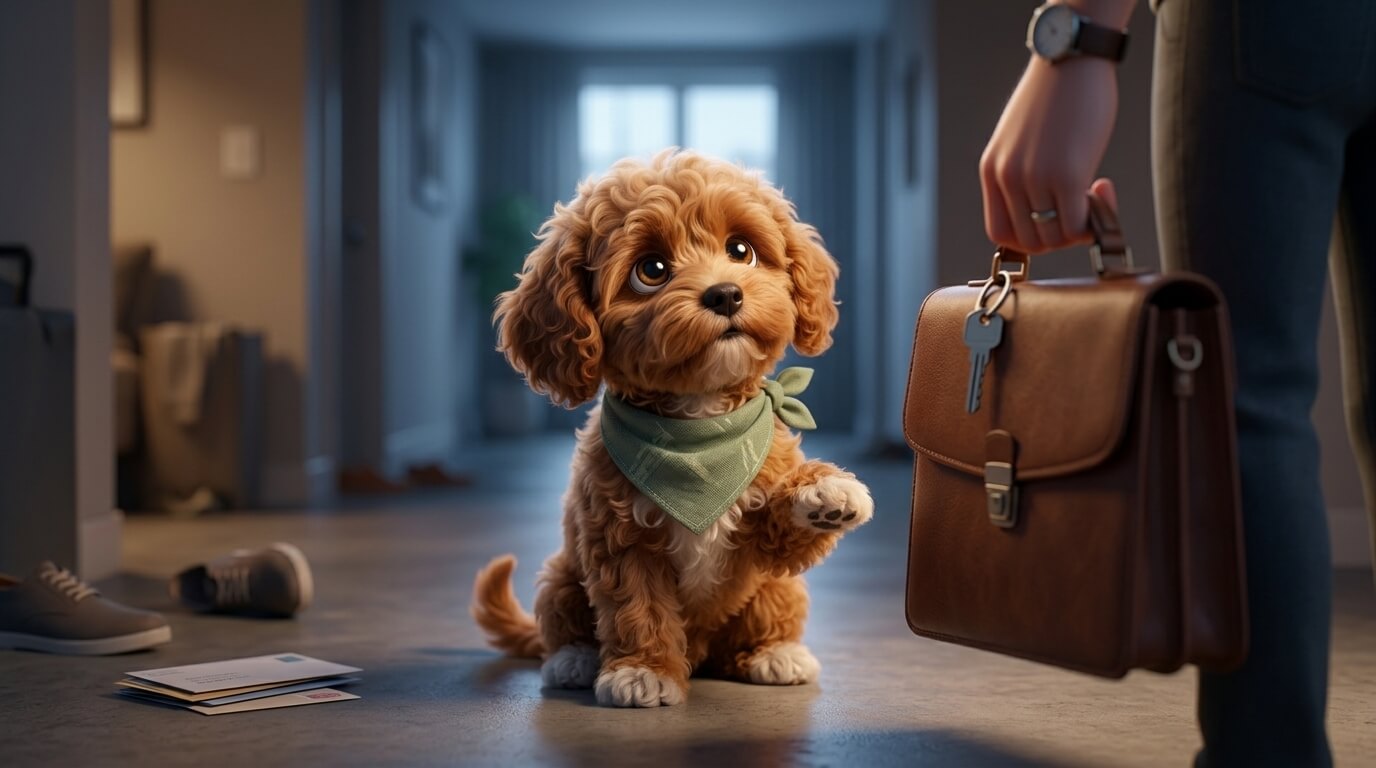
A bored dog may finish a puzzle, nap, wander, chew something inappropriate, or bark at hallway sounds. A dog with separation anxiety may howl, pace, drool, scratch the door, ignore food, tremble, or panic soon after you leave.
If the problem is panic, enrichment alone will not fix it. Use the dog separation anxiety apartments guide and consider professional help. If the dog is bored but not distressed, the ideas below can help.
The 7 Safe Workday Ideas
1. Start Before You Leave
The best workday enrichment starts before the door closes. Give your dog a potty break, a few minutes of sniffing, and a calm transition. A rushed goodbye after a boring morning creates a harder day.
For many apartment dogs, a sniff-focused walk is better than a frantic sprint. Let the dog gather smells, move their body, and return home ready to rest. If your dog needs more structure, use the exercise dog in small apartment guide.
2. Use Safe Food Enrichment
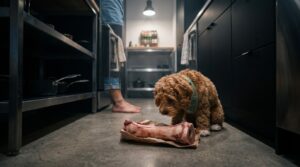
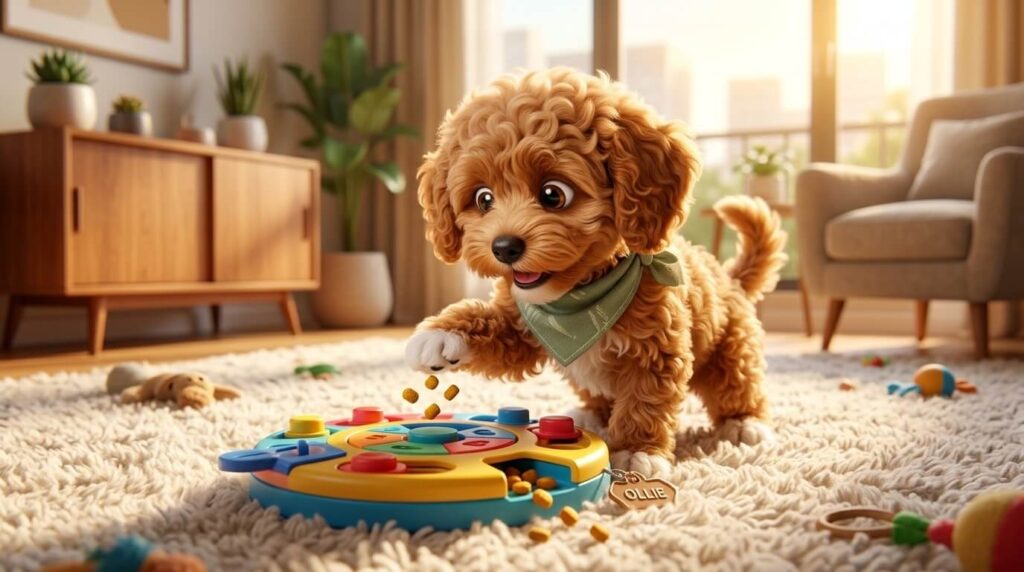
Food enrichment can give your dog a quiet job after you leave. Use part of breakfast in a slow feeder, stuffed food toy, towel roll, or simple puzzle. Keep it easy enough that the dog succeeds without barking or destroying the item.
Test every enrichment item while you are home before leaving it unsupervised. Some dogs chew pieces, swallow fabric, guard food toys, or become frustrated. Safety comes before cleverness.
3. Rotate Toys Instead of Leaving a Toy Pile
A floor full of toys often becomes boring. Rotate a few safe toys every couple of days. Novelty matters more than quantity.
Choose toys that are safe for your dog alone. Avoid anything with parts your dog may swallow, hard items that can damage teeth, or toys that create loud banging on the floor. If your dog is destructive, leave fewer items and use supervised enrichment instead.
4. Create a Calm Rest Zone
Your dog does not need constant entertainment. They need a place where rest feels normal. Set up a bed, crate, pen, or gated area depending on your dog’s comfort and training. Keep it away from the front door if hallway sounds trigger barking.
Add water, safe bedding, and sound buffering if needed. Avoid placing the dog where they can watch the hallway, street, or balcony all day if that creates barking. If barking is a workday issue, use the stop dog barking in apartment guide.
5. Use Cameras Wisely
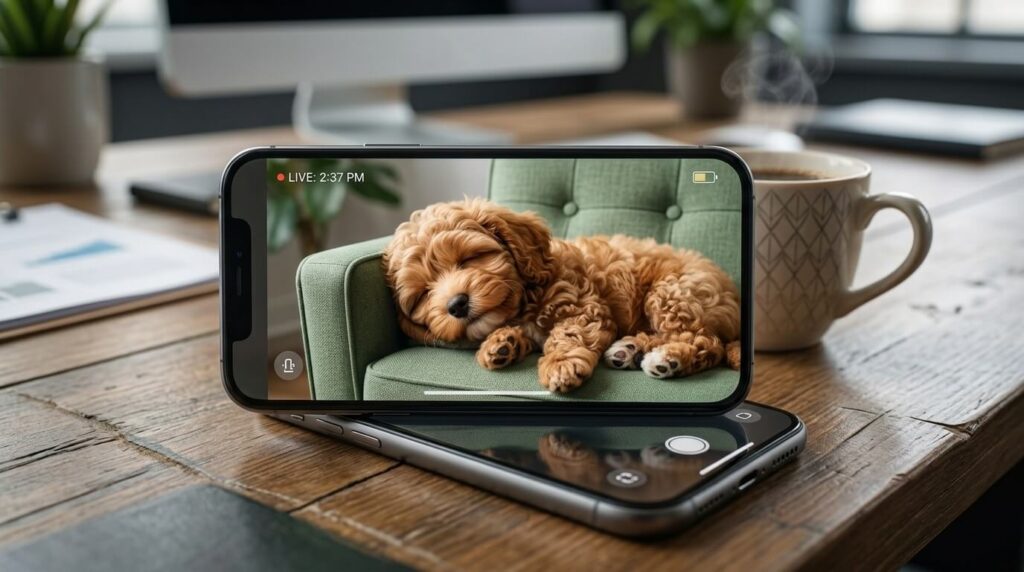
A camera can help you learn, but it can also make owners anxious. Use it to identify patterns: when barking starts, whether food is eaten, whether the dog sleeps, and whether triggers are inside or outside the apartment.
Be careful with two-way audio. Some dogs become more distressed when they hear the owner’s voice but cannot reach them. Test it before relying on it.
6. Add Midday Support
Some dogs cannot comfortably wait a full workday, especially puppies, seniors, small dogs with tiny bladders, newly adopted dogs, and dogs with medical needs. Entertainment does not replace potty access.
Consider a dog walker, sitter, trusted neighbor, lunch visit, daycare, or flexible work arrangement. If you are unsure what is reasonable, read how long can you leave a dog alone in an apartment.
7. Plan the After-Work Reset
Many workday problems show up after work. The dog sleeps all day, then explodes into barking, zoomies, or demand behavior when you come home. Plan a decompression routine: potty, sniffing, water, training, dinner, and calm rest.
If your dog gets wild at night, use the dog zoomies in apartment guide or the how to tire out dog before bed routine.
What Not to Leave While You Are Gone
Unsupervised items should be chosen carefully. Do not leave anything your dog can shred, swallow, choke on, guard, or use to damage the apartment.
- Avoid cooked bones, splintering chews, and unknown hard items.
- Avoid toys with small parts if your dog destroys toys.
- Avoid fabric puzzles if your dog eats fabric.
- Avoid high-value food toys if your dog resource guards around other pets.
- Avoid anything that rolls loudly across hard floors if neighbors are below.
If your dog is a strong chewer, test everything under supervision first. If chewing furniture is already a problem, use the dog chewing furniture apartment guide too.
Workday Plan by Dog Type
Puppies
Puppies are not good candidates for long unsupervised workdays without help. They need potty trips, feeding, socialization, naps, and safe chewing. A midday plan is usually necessary.
Adult Dogs
Many adult dogs can handle workday routines if alone time is built gradually and their needs are met before and after work. Adult dogs still need enrichment, potty access, and monitoring during transitions.
Senior Dogs
Senior dogs may sleep more, but they may also need more frequent potty breaks, medication, softer bedding, and temperature comfort. Sudden workday accidents or restlessness deserve a vet check.
High-Energy Dogs
High-energy dogs need structured morning and evening outlets. A puzzle toy alone may not be enough. Use sniff walks, training, tug with rules, and planned outdoor exercise.
Plan by Workday Length
If You Are Gone 2 to 4 Hours
Many healthy adult dogs can learn to handle this window with a potty break first, a calm setup, and a safe enrichment item. Still, test gradually. A new dog may not be ready right away.
If You Are Gone 5 to 6 Hours
This is where morning preparation matters more. Use a sniff walk, measured food enrichment, water, and a quiet rest zone. Watch video to see whether your dog sleeps or becomes restless halfway through.
If You Are Gone 7 to 9 Hours
Entertainment alone is usually not enough for every dog. Consider a midday walker, sitter, lunch visit, daycare, or schedule adjustment. Puppies, seniors, small dogs, and dogs with medical needs may need help much sooner.
If Your Schedule Changes Every Week
Unpredictable schedules are harder for dogs. Build flexible support before you need it. Have a backup walker, friend, or sitter so a long workday does not become a crisis.
Morning, Midday, and Evening Routine
Morning
Start with potty and sniffing. Feed in a way that supports calm rather than chaos. If your dog gets excited by food puzzles, use them after a walk, not before the dog has had a chance to go outside.
Keep departures boring. Do not make a dramatic goodbye. Give the enrichment, make sure the dog has water and a safe space, and leave calmly.
Midday
Midday is where many workday routines succeed or fail. If video shows your dog wakes up and becomes restless halfway through the day, add a walker or sitter before barking, chewing, or accidents become habits.
For some dogs, a ten-minute potty visit and sniff break changes the entire evening. The dog is not “spoiled.” The schedule simply fits the dog’s body better.
Evening
After work, resist the urge to create instant chaos. Take the dog out, let them sniff, then add play or training. If the dog has been resting all day, they may need movement. If they have been anxious all day, they may need decompression first.
Safe Apartment Enrichment Menu
Use this menu to rotate ideas without creating a toy pile.
| Enrichment | Best For | Safety Note |
|---|---|---|
| Slow feeder | Meal pacing and routine | Choose easy-to-clean designs |
| Towel roll | Simple sniffing work | Do not use if dog eats fabric |
| Scatter feeding | Quiet search game | Use a clean mat or safe floor |
| Stuffed food toy | Longer licking or chewing | Test for chewing and guarding |
| Rotated soft toy | Gentle novelty | Avoid if dog shreds and swallows |
| Background sound | Hallway noise buffer | Keep volume comfortable |
Workday Red Flags
Some signs mean the plan is not enough. Do not keep adding toys if your dog is clearly distressed.
- Howling or barking for long periods.
- Scratching, chewing, or digging at doors and windows.
- Drooling, trembling, or pacing after you leave.
- Ignoring food until you return.
- Repeated accidents despite appropriate potty breaks.
- Destructive chewing that seems frantic, not playful.
- Self-injury or escape attempts.
These signs deserve a different plan. Start with video, then talk with a veterinarian, trainer, or behavior professional if distress is clear.
Solutions by Apartment Constraint
Thin Walls
If your walls are thin, avoid squeaky toys, hard toys that bang against floors, and games that trigger barking. Use sniffing, licking, slow feeders, and background sound. Put the rest zone away from shared walls if possible.
Downstairs Neighbors
Choose quiet enrichment. Avoid toys that roll, bounce, or drop loudly. Add rugs in the dog’s main area. Do not leave a toy that turns into a floor-drumming session while you are away.
Studio Apartment
Studios need careful zones. Create a sleep area, food area, and enrichment area even if they are only a few feet apart. Keep trash, shoes, laundry, and cords secured because the dog can access everything quickly.
Multiple Pets
Do not leave high-value food toys loose with multiple pets unless you know it is safe. Separate dogs for meals and chews. If there is tension around food, use management instead of hoping they share.
No Midday Walker Budget
If a walker is not affordable every day, use a hybrid plan. Hire help on the longest days, trade favors with a trusted neighbor, come home at lunch when possible, or choose an adult dog whose needs fit your schedule. Do not adopt a puppy if you cannot provide midday care.
Low-Budget Workday Enrichment
You do not need expensive gadgets to keep dog entertained while at work. You need safe, tested routines.
- Use part of breakfast for scatter feeding on a clean mat.
- Roll kibble in a towel if your dog does not eat fabric.
- Hide a few treats in easy places before leaving.
- Rotate two safe toys instead of buying many new ones.
- Use a cardboard box search only if your dog does not shred and swallow cardboard.
- Play a five-minute training game before work.
- Take a sniff walk instead of a rushed block walk.
Free enrichment still needs safety testing. Cheap is good. Unsupervised risk is not.
What Success Looks Like
A successful workday routine does not mean your dog plays all day. It usually means your dog settles after you leave, uses enrichment calmly, naps, drinks normally, and greets you without extreme distress.
Look for practical improvements: less barking, fewer destroyed items, calmer evenings, fewer accidents, and faster settling. If your dog spends most of the day sleeping peacefully, that is not failure. Rest is part of a healthy dog day.
7-Day Workday Enrichment Test
Use this plan to test what actually helps your dog.
| Day | Test | What to Watch |
|---|---|---|
| Day 1 | Record a normal departure | Boredom or distress? |
| Day 2 | Add sniff walk before work | Does settling improve? |
| Day 3 | Use easy food enrichment | Does the dog eat calmly? |
| Day 4 | Move rest area away from door | Does barking reduce? |
| Day 5 | Rotate toys | Does interest return? |
| Day 6 | Add midday support if needed | Does evening behavior improve? |
| Day 7 | Review video and behavior | Keep only what helped |
Common Mistakes
Mistake 1: Using Enrichment to Avoid Potty Needs
A puzzle cannot replace a bathroom break. If your dog cannot comfortably wait, arrange support.
Mistake 2: Leaving Hard New Toys Untested
Always test new toys and food items while you are home. Safe for one dog does not mean safe for yours.
Mistake 3: Talking Through the Camera Too Much
Two-way audio can help some dogs, but it can confuse or upset others. Use it carefully.
Mistake 4: Ignoring Separation Anxiety
If your dog panics when alone, more toys are not the answer. You need an alone-time behavior plan.
Mistake 5: Creating a Huge After-Work Energy Spike
Greeting your dog with chaos can make evenings harder. Keep the first few minutes calm, then go outside for a structured outlet.
Before-You-Leave Safety Checklist
A good enrichment plan should make the apartment calmer, not more dangerous. Before you leave anything with your dog during work, do a two-minute safety check. This is especially important in small apartments because a dog can reach the kitchen, trash, sofa, desk, and front door in one short loop.
- Pick up shoes, socks, laundry, mail, and plastic packaging.
- Move cords, chargers, and headphones out of reach.
- Close bathroom doors if your dog explores trash cans or toiletries.
- Secure food, medication, cleaning products, and trash.
- Check that windows, balcony doors, and baby gates are secure.
- Remove toys that have loose seams, broken pieces, or exposed stuffing.
- Leave water in a stable bowl that your dog is unlikely to tip over.
If your dog is still learning alone time, keep the environment boring in the safest way. Boring is better than a room full of tempting hazards. You can always add more enrichment later after you know what your dog does when unsupervised.
If Your Dog Destroys Enrichment
Some dogs do not calmly solve puzzles. They flip them, chew the edges, rip fabric, swallow cardboard, or guard the item. That does not mean enrichment has failed. It means the item is not a safe unsupervised match yet.
Start by lowering the difficulty. Use a simpler feeder, fewer moving parts, softer food, or a larger safe item that your dog cannot break apart. If the dog destroys towels, skip towel rolls. If the dog swallows cardboard, do not leave cardboard searches. If the dog breaks plastic puzzles, use enrichment only while you are home.
For strong chewers, the safest workday plan may be less about objects and more about schedule: a longer sniff walk, breakfast training, a midday walker, background sound, and a quiet sleep zone. A dog does not need a pile of toys to have a better day. They need a plan that fits their real behavior.
Plans by Dog Personality
The Food-Motivated Dog
Food-motivated dogs often do well with breakfast enrichment, but portion control matters. Use part of the daily food instead of adding extra calories. If your dog eats too fast, choose slow, easy enrichment rather than a hard puzzle that causes frustration.
The Noise-Sensitive Dog
A noise-sensitive dog may struggle more with hallway sounds than boredom. Move the bed away from the front door, close blinds if window traffic causes barking, and use quiet background sound. For these dogs, the best way to keep dog entertained while at work may be to reduce triggers first.
The High-Energy Young Dog
Young dogs often need a mix of movement, chewing, sniffing, and sleep. Do not try to exhaust them with wild indoor play right before leaving. That can raise arousal instead of helping them settle. Use a potty walk, sniffing, a short training game, and a predictable calm-down routine.
The Senior Dog
Senior dogs may need comfort more than challenge. Keep paths clear, provide a supportive bed, avoid slippery floors, and make water easy to reach. If a senior dog suddenly becomes restless, has accidents, or cannot settle while you are gone, check for health issues before assuming boredom.
Sample Workday Setups
| Dog Type | Morning Setup | Workday Support | After Work |
|---|---|---|---|
| Calm adult dog | Potty walk and easy food puzzle | Quiet rest zone | Sniff walk and simple training |
| Young active dog | Sniff walk, training, safe chew | Midday walker if the day is long | Exercise, dinner enrichment, calm rest |
| Noise-sensitive dog | Calm routine away from front door | Background sound and covered window view | Low-stress walk route |
| Dog with mild boredom chewing | Dog-proof room and tested enrichment | Camera check and limited access | Chewing outlet and management review |
These setups are starting points, not rules. The right plan is the one your dog can use safely and calmly. If the camera shows that your dog sleeps most of the day, keep the routine simple. If the camera shows stress, change the support plan instead of adding more objects.
FAQ
How do I keep dog entertained while at work?
Use a pre-work potty and sniff walk, safe food enrichment, toy rotation, a calm rest zone, video monitoring, and midday support if needed. Test all items before leaving them unsupervised.
Can I leave puzzle toys with my dog while I work?
Sometimes. Puzzle toys can help, but only if your dog uses them safely and calmly. Test first while you are home and count the food as part of the daily diet.
What if my dog barks while I am at work?
Use video to identify the cause. Barking may come from hallway noise, boredom, or separation anxiety. The right fix depends on the trigger.
How long can a dog be alone while I work?
It depends on age, health, bladder control, training, and emotional comfort. Puppies and seniors usually need more frequent breaks. Many dogs need a gradual alone-time plan.
Is a pet camera enough for a dog home alone?
No. A camera helps you observe, but it does not provide potty breaks, exercise, comfort, or training. Use it as information, not as the whole plan.
What should I do if my dog ignores food when I leave?
Ignoring food can be a sign of stress. Record the departure and look for pacing, howling, drooling, or scratching. If you see distress, treat it as possible separation anxiety.
Next Step
Before your next workday, record one normal departure. Then choose one safe change: a sniff walk before work, an easy food puzzle, a calmer rest zone, or midday support. Do not add five new things at once.
The best way to keep dog entertained while at work is not constant stimulation. It is a routine that helps your dog feel safe, use their brain, rest comfortably, and get support when the workday is too long.
References
VCA Animal Hospitals: Introduction to Desensitization and Counterconditioning