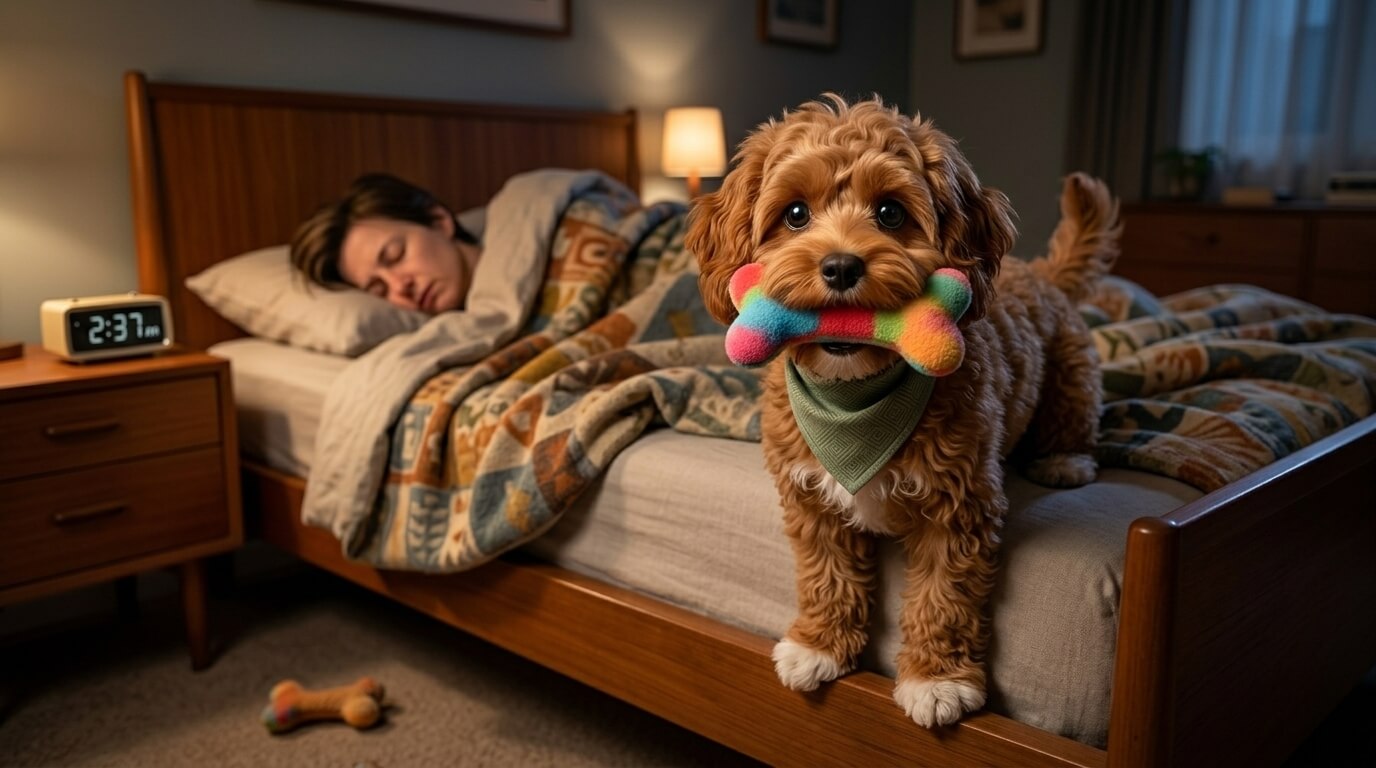
If you are trying to learn how to tire out dog before bed in an apartment, the first thing to know is this: the goal is not to make your dog collapse from exhaustion. The goal is to help your dog come down from the day in a way that is quiet, predictable, and safe for a small home.
That difference matters. A dog who races around the living room at 10 p.m. may look like they need more exercise, but sometimes they are overstimulated, overtired, anxious, uncomfortable, or waiting for a routine that has never been made clear. A late game of wild fetch can accidentally create a second wind. A short sniff walk, a few easy cues, and a calm chewing or licking activity often works better.
Apartment dogs have their own bedtime problems. There may be hallway noise outside the door, neighbors below you, no yard for a final romp, slippery floors, elevators, shared stairs, delivery sounds, and a human who is already tired. This guide gives you a realistic bedtime routine that fits small spaces without turning the last hour of the night into a workout class.
How to Tire Out Dog Before Bed: Quick Answer
To tire out a dog before bed, use a calm sequence instead of one intense activity. Start with a short potty walk or sniff break, add five minutes of easy training, offer a quiet food puzzle or sniffing game, then end with licking, chewing, dim lights, and the same sleep cue each night. Save intense running, wrestling, tug, and fast fetch for earlier in the day.
| Bedtime Problem | Best Calm Fix | Why It Works in an Apartment |
|---|---|---|
| Evening zoomies | Sniff walk, scatter feeding, then a chew | Uses nose and brain without loud running. |
| Puppy biting at night | Potty break, short training, nap routine | Prevents overtired chaos from becoming a habit. |
| Barking at hallway sounds | Move bed away from door and add white noise | Reduces shared-building triggers. |
| Restless pacing | Lick mat, chew, or calm mat work | Gives the dog a quiet job that leads toward stillness. |
| Dog wakes after bedtime | Earlier exercise plus final potty break | Separates real needs from bedtime excitement. |
Table of Contents
What “Tired” Should Mean Before Bed
A useful bedtime routine creates a dog who is soft-eyed, slower, and ready to lie down. It should not create a dog who is panting hard, barking, grabbing sleeves, crashing into furniture, or staring at you as if the night has just begun.
Think of bedtime tiredness in three layers:
- Body tired: the dog has had enough appropriate movement during the day.
- Brain tired: the dog has used their nose, made simple choices, and solved small problems.
- Nervous system calm: the lights, sounds, owner behavior, and sleeping area all tell the dog the day is winding down.
Many owners only focus on the first layer. They ask, “How can I tire my dog out more?” Then they add more speed at the exact wrong time. In an apartment, that often creates three new problems: noise, injury risk, and a dog who expects exciting attention right before bed.
A calmer approach is more sustainable. VCA’s behavior guidance emphasizes predictability, enrichment, and scheduled routines as part of helping dogs settle and understand what is expected of them. That is exactly what a bedtime routine should do: meet real needs, then make the next step obvious.
The 45-Minute Apartment Bedtime Reset
If your dog is restless most nights, do not start with a complicated plan. Use the same 45-minute reset for one week and watch what changes. It is long enough to give your dog a real transition, but short enough that a tired owner can actually do it.
| Time | What to Do | What You Are Watching For |
|---|---|---|
| 45 minutes before bed | Final outdoor potty break or quiet sniff walk | Does your dog relax after sniffing, or pull harder? |
| 30 minutes before bed | Water check, settle area prepared, lights slightly lower | Does your dog start following the routine? |
| 20 minutes before bed | Five minutes of easy cues: touch, down, place, find it | Can your dog think, or are they too wired? |
| 15 minutes before bed | Small food puzzle, scatter feeding, or snuffle mat | Does searching calm them or frustrate them? |
| 10 minutes before bed | Lick mat, safe chew, or stuffed toy | Does chewing lead to lying down? |
| Bedtime | Same cue, same bed or crate area, less talking | Can your dog stay settled without more entertainment? |
The order is important. Movement comes first, then thinking, then self-soothing. If you reverse it and start with rough play, your dog may be too activated to make good choices. If you skip the potty break, your dog may settle for twenty minutes and then wake up because they still needed to go out.
If your dog is already over the top before you begin, make the first step easier. Do not march outside into the busiest dog-walking hour if your dog reacts to every leash and elevator door. Pick a quieter exit, give more sniffing time, and keep your own pace boring on purpose.
7 Calm Ways to Tire Out a Dog Before Bed
1. Take a Sniff Walk Instead of a Power Walk
A power walk uses your dog’s legs. A sniff walk uses their nose and brain. Before bed, that is usually what you want. Let your dog investigate safe smells, pause at grass edges, and move slowly enough that they are not pulling in a straight line of frustration.
In a city apartment, a sniff walk may be only eight to twelve minutes. That is fine. The point is not distance. The point is decompression. If your dog spends the whole walk scanning for other dogs, trucks, or people, choose a quieter route or use a smaller “sniff zone” near your building.
A good sniff walk ends with a dog who walks back inside a little looser. A bad bedtime walk ends with lunging, barking, pulling, and a dog who is now more awake than before. If your route does that every night, the route is part of the problem.
2. Use Scatter Feeding on a Washable Surface
Scatter feeding is one of the easiest apartment tools because it does not need a yard or expensive equipment. Take a small portion of kibble and scatter it across a washable rug, snuffle mat, towel, or clean section of floor. Your dog has to lower their head, search, pause, and use their nose.
Keep it simple. Do not hide food under furniture, near electrical cords, around shoes, or anywhere your dog might learn to search for trouble later. If your dog guards food, has another pet nearby, or gets frantic around dropped food, skip scatter feeding and use a controlled puzzle or hand-delivered training treats instead.
For small apartments, this is often better than throwing toys down the hallway. It is quieter, safer on joints, and less likely to bother the person living below you.
3. Do Five Minutes of Easy Training
Bedtime training should feel familiar. This is not the moment to teach a brand-new trick that makes your dog frustrated. Use cues your dog already knows: touch, sit, down, place, find it, leave it, look at me, or go to bed.
Do a few repetitions, reward calm effort, and stop before your dog starts guessing wildly. The best sign is not perfect obedience. It is a dog who can listen, breathe, and move from one small task to the next without spinning up.
If your dog does not have an indoor exercise routine yet, build that earlier in the day with our guide to how to exercise a dog in a small apartment. Bedtime should be the cool-down, not the only enrichment your dog gets.
4. Give Your Dog a Legal Chewing Job
Chewing can help many dogs settle because it gives them something normal and satisfying to do with their mouth. The key word is safe. Choose chews based on your dog’s size, chewing strength, dental health, swallowing habits, and supervision needs.
A chew that is too hard, too small, or easily splintered can create real risk. A chew that excites your dog may not be a bedtime tool. Watch the first few sessions. If your dog lies down and chews steadily, it may be useful. If they leap around, growl over it, try to hide it, or gulp pieces, choose a different activity.
For dogs who chew furniture at night, the bedtime plan should also remove access to tempting items. Give a legal chew before your dog starts hunting for table legs, couch corners, or baseboards. Once they are practicing the wrong behavior every evening, the routine has to become more structured.
5. Use Licking to Shift Into Rest
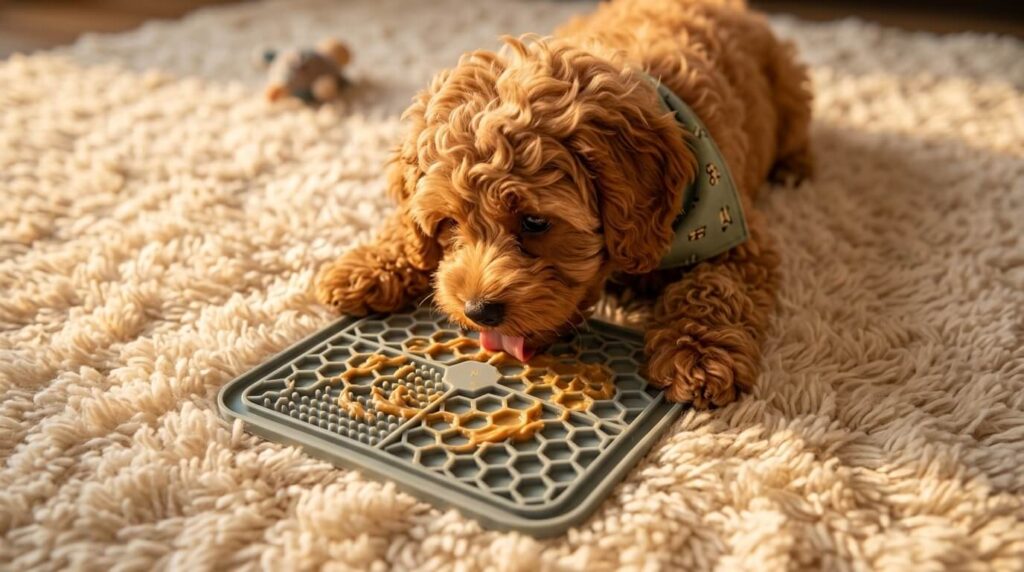
Licking is quiet, repetitive, and often easier for tired owners than running another training session. A lick mat, stuffed rubber toy, or small amount of dog-safe wet food can help a dog move from “What are we doing next?” to “I can settle here.”
Keep portions small. If your dog is on a weight plan, has pancreatitis risk, gets diarrhea easily, or has allergies, ask your veterinarian what kind of bedtime food is appropriate. A nightly lick mat should not quietly become an extra meal.
Also pay attention to cleanup. In a small apartment, food residue on rugs, bedding, or crate pads can create smells and pests. Use washable items and pick them up after your dog is done.
6. Practice Mat Work in the Actual Sleep Area
A mat cue gives your dog a place to go when the household is done for the night. Put a bed, crate pad, or washable mat where you actually want your dog to relax. Reward your dog for stepping on it, lying down, shifting a hip, resting their chin, and staying calm for short periods.
This is especially useful in studios and one-bedroom apartments where the same room is used for work, meals, TV, and sleep. Your dog may not know which version of the room is happening unless you make the pattern clear.
If your dog sleeps in a crate, keep bedtime crate work gentle. A crate should not be used as punishment for being energetic. If crate training is still shaky, review our crate training guide for apartment dogs and keep alone-time practice separate from your sleep-deprived frustration.
7. Lower the Triggers Around the Front Door
Sometimes the dog is not under-exercised. The apartment is simply too alerting. Hallway footsteps, elevator chimes, people talking outside, late food delivery, balcony sounds, and bright windows can keep a dog mentally on duty.
Try changing the sleep setup before adding more activity. Move the bed away from the front door. Close blinds. Use soft white noise. Place a draft stopper or towel near a gap under the door if hallway noise pours in. Keep the TV lower in the final half hour. Put toys away so bedtime does not look like another play session.
For noise-sensitive dogs, the location of the bed can matter more than the brand of the bed. A dog who sleeps with one ear aimed at the hallway may never fully switch off.
How to Tire Out a Puppy Before Bed
Puppies are not just small adult dogs. If you are wondering how to tire out a puppy before bed, be careful with forced exercise. Puppies can get wild when they are overtired. They bite, race, bark, grab clothing, and look as if they need more activity when they actually need help settling.
A good puppy bedtime routine is short and boring in the best way:
- Final potty break
- Three to five minutes of simple cues
- A tiny sniffing or scatter-feeding game
- A safe chew or lick activity
- Crate, pen, or bed with the same cue each night
If the puppy is biting hard after 9 p.m., do not automatically add more play. Try reducing light, sound, and handling. Many puppies need a human to kindly end the party for them.
Also check timing. A puppy who has been awake for hours may be past the point where more activity helps. A puppy who had no daytime outlet may need a better daytime schedule, not a bigger bedtime event.
Match the Routine to Your Dog
The right bedtime routine depends on the dog in front of you. A sleepy senior, a teenage herding mix, a toy breed puppy, and a recently adopted rescue do not need the same final hour.
| Dog Type | Best Bedtime Choice | What to Avoid |
|---|---|---|
| Puppy | Potty, short cues, lick mat, predictable sleep area | Long forced walks, rough play, late exciting visitors |
| High-energy adult | Earlier exercise, evening sniffing, food puzzle, chew | Saving all activity for the last hour |
| Anxious dog | Predictable routine, lower stimulation, safe resting spot | Scolding, surprise changes, intense games before sleep |
| Senior dog | Gentle potty walk, soft bedding, pain-aware routine | Stair running, slippery floors, hard chews |
| Noise-reactive dog | Bed away from door, white noise, calm mat work | Sleeping beside hallway, windows, or elevator noise |
If your dog spends the whole evening alone while you work outside the home, their bedtime restlessness may also reflect schedule imbalance. Dogs need chances to move, sniff, and interact before the final hour. If the problem mostly happens after long workdays, our guide on how to keep a dog entertained while at work may help you move some enrichment earlier.
When Exercise Makes Bedtime Worse
Some activities look productive because they make a dog breathe hard. That does not mean they help sleep. A dog can be physically tired and emotionally wired at the same time.
Be careful with these late-night choices:
- Fast hallway fetch: loud, slippery, and easy to turn into barking.
- Rough wrestling: exciting for many dogs and confusing if you suddenly expect calm.
- Stair running: risky for puppies, seniors, long-backed dogs, and dogs with joint concerns.
- Dog park right before bed: socially intense and not always relaxing.
- Hard training drills: frustrating when the dog is already tired.
If your dog gets more intense after exercise, move the physical activity earlier and make bedtime more sensory and predictable. Give the body a workout before dinner, then use the evening for sniffing, gentle choices, and rest signals.
Quiet Bedtime Activities for Small Apartments
Here are apartment-friendly options that do not require much space:
| Activity | Best For | Apartment Tip |
|---|---|---|
| Treat-in-towel roll | Dogs who like searching | Use a towel you can wash and supervise the first time. |
| Find it with 5 treats | Dogs new to nose games | Hide treats in easy places, not under furniture. |
| Two-minute touch cue | Dogs who need focus | Keep rewards small and stop while it is still easy. |
| Mat settle | Dogs who follow people around | Reward calm body language, not constant movement. |
| Lick mat | Dogs who need a slow landing | Use a tray or washable mat underneath. |
| Calm chew | Dogs who chew to relax | Choose size and hardness carefully. |
Rotate activities, but do not make every night a surprise party. Dogs often settle better when the outline stays the same: outside, sniff, small job, self-soothing, bed. The details can change while the shape remains predictable.
What If Your Dog Barks After the Routine?
If barking starts after the routine, first decide what kind of barking it is. A single alert bark at a hallway sound is different from ten minutes of demand barking, and both are different from panic.
For alert barking, change the environment. Move the bed, cover the window, lower hallway sound, and avoid letting your dog rehearse guarding the front door from the sleep area.
For demand barking, check whether you have accidentally made barking part of the routine. If the dog barks and then gets a second chew, another training session, or your full attention every night, the barking may be working. Calmly meet real needs earlier, then keep the final cue consistent.
For panic, do not treat it as stubbornness. Dogs with separation-related distress may vocalize, pace, destroy items, or have accidents when separated. If your dog’s bedtime problem connects to being left alone, review our dog separation anxiety in apartments guide and consider professional help.
When Night Restlessness May Be Medical
A routine can help many dogs, but it cannot fix pain, urinary discomfort, digestive trouble, medication side effects, itching, coughing, or age-related changes. If your dog used to sleep normally and suddenly cannot settle, take that seriously.
Call your veterinarian if you notice any of these signs:
- Sudden pacing, panting, whining, or trembling at night
- New accidents indoors, especially with frequent drinking or urination
- Difficulty getting comfortable, stiffness, limping, or reluctance to jump
- Coughing, gagging, heavy breathing, or exercise intolerance
- Confusion, staring, wandering, or disrupted sleep in a senior dog
- Digestive upset, vomiting, diarrhea, or appetite changes
Indoor dogs still need regular care and symptom checks. If you are not sure whether the problem is behavior or health, our guide to indoor dog vet visits can help you decide what to document before calling the clinic.
A 7-Day Bedtime Reset Plan
Use this if bedtime has become messy and you need a clean restart. Keep notes for a week. You are looking for patterns, not perfection.
| Day | Focus | What to Record |
|---|---|---|
| Day 1 | Remove late wild play | Does your dog settle faster or protest? |
| Day 2 | Add a slow sniff walk | Which route leaves your dog calmer? |
| Day 3 | Add five minutes of easy cues | Can your dog focus before bed? |
| Day 4 | Try scatter feeding or a snuffle mat | Does searching calm or excite your dog? |
| Day 5 | Test a lick mat or safe chew | Does your dog lie down afterward? |
| Day 6 | Adjust the sleep location | Are hallway, window, or elevator sounds reduced? |
| Day 7 | Keep the best three steps | What routine is easiest to repeat? |
Do not change everything at once. If you add a new chew, move the bed, start white noise, lengthen the walk, and change crate rules all on the same night, you will not know what helped. Pick one or two changes, observe, then adjust.
Common Bedtime Mistakes Apartment Dog Owners Make
Mistake 1: Waiting Until the Dog Is Already Wild
Start the routine before the zoomies. Once a dog is fully activated, everything takes longer. If your dog usually erupts at 9:30 p.m., begin the wind-down at 8:45 or 9:00.
Mistake 2: Using Exercise as the Only Solution
More exercise is not always the answer. Some dogs need more mental enrichment, a clearer schedule, fewer triggers, or medical attention. If you keep adding activity and the dog gets worse, step back.
Mistake 3: Making the Last Hour Too Social
Guests, video calls, excited greetings, rough play, and constant talking can keep a social dog switched on. Make the final hour quieter than the rest of the evening.
Mistake 4: Ignoring the Front Door
In many apartments, the front door is the loudest and most emotionally loaded part of the home. If your dog sleeps facing it, they may spend the night monitoring the building instead of sleeping.
Mistake 5: Confusing Anxiety With Energy
A dog who cannot settle when separated, panics in a crate, scratches doors, or vocalizes for long periods may not need to be “tired out.” They may need a behavior plan, veterinary guidance, or both.
Best Bedtime Routine by Schedule
If You Work From Home
Your dog may be near you all day but still under-enriched. Build small breaks earlier: a midday sniff walk, a food puzzle after lunch, and mat time while you work. Then bedtime can stay calm instead of carrying the whole day’s needs.
If You Work Outside the Home
Do not wait until 10 p.m. to give your dog their main outlet. Try a real walk after work, dinner in a puzzle feeder, a rest period, then a short bedtime routine. Dogs who sleep all day may need connection and movement before the final hour, but they still need a cool-down.
If You Have a Puppy
Plan for more potty breaks and shorter awake windows. Puppies often look naughty when they are exhausted. Keep the bedtime routine kind, repetitive, and brief.
If You Have a Senior Dog
Prioritize comfort. A senior dog may need a gentle walk, easier access to water, a non-slip path, a softer bed, and a vet check if night waking is new. Do not solve senior restlessness with intense exercise unless your veterinarian has cleared that plan.

FAQ
How long should I exercise my dog before bed?
Most apartment dogs do better with meaningful daytime exercise and a calmer 30- to 45-minute bedtime routine. The final routine can include a short potty walk, sniffing, easy training, and a chew or lick activity. If your dog needs hard exercise, schedule it earlier.
Is fetch good before bed?
Fast fetch right before bed often makes dogs more excited, especially indoors. If your dog becomes calmer after gentle fetch, keep it short and end with sniffing or mat work. If your dog barks, slides, pants hard, or demands more, move fetch earlier in the day.
How do I tire out a puppy before bed without overdoing it?
Use a potty break, three to five minutes of easy training, a small sniffing game, and a calm crate or bed routine. Avoid forced long walks, stair running, and rough play late at night.
Why does my dog get zoomies at night?
Night zoomies can come from extra energy, overtiredness, boredom, stress, attention-seeking, or an exciting evening pattern. Start the wind-down earlier and track what happened during the day. If the behavior is sudden or paired with pain signs, call your veterinarian.
Should I use calming aids before bed?
Some dogs may benefit from calming aids, but they should not replace routine, enrichment, training, or veterinary care. If you are considering supplements, pheromones, or wearable calming products, read our guide to calming aids for dogs and check with your veterinarian for health or medication concerns.
What if my dog still will not sleep?
If a consistent routine does not help after a week or two, look for hidden causes: too much daytime sleep, not enough daytime enrichment, hallway triggers, separation distress, pain, urinary issues, digestive discomfort, or senior changes. Video can help you see what happens after lights out.
Next Step
Tonight, do not try to exhaust your dog. Try to guide the landing. Take one calm potty or sniff break, run five minutes of easy cues, offer one quiet chewing or licking activity, and keep the sleep signal the same. If your dog settles even ten minutes faster, you have information you can build on tomorrow.