
Trying to stop dog barking in apartment life feels urgent because barking does not stay inside your unit. It travels through doors, walls, floors, hallways, and neighbor patience. A few barks at a delivery cart may be normal. Repeated barking at every sound, window movement, elevator ding, or owner departure can become a lease problem fast.
The right fix depends on why your dog is barking. A bored dog needs a different plan from a scared dog. A dog barking at hallway sounds needs a different plan from a dog panicking when left alone. If you correct the noise without understanding the trigger, the barking may return in a new form.
This guide gives you a renter-friendly plan for apartment barking: how to identify the bark, reduce triggers, teach quiet behavior, use enrichment before barking starts, protect neighbor relationships, and know when the problem is separation anxiety or a medical issue.
Stop Dog Barking in Apartment: Quick Answer
To stop dog barking in apartment settings, first identify the trigger: hallway noise, window activity, boredom, alerting, fear, excitement, or alone-time distress. Then reduce the trigger, reward calm behavior, teach a quiet cue outside the barking moment, add enrichment before predictable barking windows, and get professional help if the dog panics, cannot recover, or barks for long periods when alone.
| Barking Trigger | What It Often Means | First Fix |
|---|---|---|
| Hallway footsteps | Alerting or sound sensitivity | Move rest area, add white noise, reward check-ins |
| Window watching | Visual trigger rehearsal | Privacy film, curtains, timed window access |
| Barking at owner | Attention, boredom, or unmet need | Meet needs early and reward calm |
| Barking when alone | Boredom or separation distress | Video check before choosing the plan |
| Barking during play | Overarousal | Lower intensity and add sniffing |

Table of Contents
Decode the Bark Before You Correct It
Apartment barking is a symptom. Before changing the behavior, ask what the bark is doing. Is your dog warning you? Asking for attention? Reacting to fear? Releasing energy? Trying to make something go away? Panicking because you left?
Write down the time, trigger, length, body language, and recovery. A dog who barks twice and returns to bed is different from a dog who barks for ten minutes after every hallway sound. A dog who barks while looking at you is different from a dog who barks at the door with a stiff body.
Do not skip this step. It prevents the common mistake of using one generic “quiet” command for every barking problem.
The 7 Calm Renter-Safe Fixes
1. Change the Door Zone
The front door is the loudest emotional hotspot in many apartments. Your dog hears footsteps, keys, carts, dogs, visitors, and elevator sounds. If the dog rests right beside the door, every sound becomes close and important.
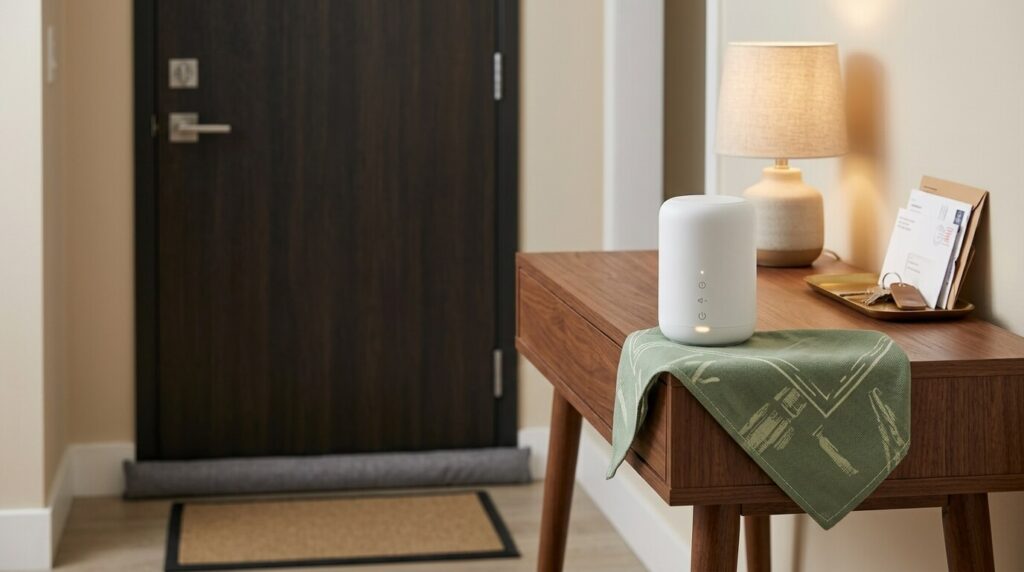
Move the bed, crate, or mat away from the door if possible. Add a fan, sound machine, or steady background noise. Use a baby gate or furniture layout to keep the dog from rushing the door. Reward the dog for hearing a sound and turning back to you.
If door activity also causes jumping or lunging in shared spaces, pair this with your dog elevator training routine so hallway movement becomes calmer overall.
2. Block Window Triggers Without Removing Joy
Window barking can become a daily job. The dog watches people, dogs, cars, delivery workers, and birds, then barks until the trigger leaves. From the dog’s view, barking worked.
Use privacy film, curtains, blinds, furniture placement, or timed window access. You do not have to remove every view forever. You do need to stop all-day trigger rehearsal. Give window time when your dog can disengage, not when they are already scanning and tense.
3. Teach a Quiet Cue When the Dog Is Not Barking
Many owners say “quiet” only while the dog is already over threshold. That is too late for learning. Teach quiet behavior when your dog is calm. Reward silence after a small sound, reward looking at you after a hallway noise, and reward settling on a mat.
Once the dog understands the pattern, you can use a calm cue during mild barking. Do not yell “quiet.” Yelling often sounds like joining the barking.
4. Add Enrichment Before Barking Starts
Some apartment barking is boredom in a louder costume. If your dog barks at you during work calls, barks at random sounds after a dull day, or barks before evening zoomies, add enrichment before the usual barking window.
Use a sniff walk, food puzzle, find-it game, chew, or short training session. If you are not sure whether boredom is part of the problem, read the signs apartment dog is bored guide. For a full no-yard routine, use the exercise dog in small apartment page.
5. Stop Rewarding Demand Barking
Demand barking happens when the dog barks to make you move, play, feed, open a door, or pay attention. The fix is not ignoring all needs. The fix is meeting needs proactively and refusing to let barking become the button that controls you.
If your dog barks for dinner, ask for a calm behavior before the bowl appears. If your dog barks for play, start play during quiet moments and pause when barking escalates. If your dog barks at your desk, schedule a short activity before your call starts.
6. Check for Separation Anxiety Before Using Alone-Time Fixes
Barking when alone is tricky. It might be boredom, hallway noise, or separation distress. Use video for at least one departure. Look for pacing, drooling, howling, scratching exits, ignoring food, or panic shortly after you leave.
If the dog is panicking, do not treat it as simple barking. Use the dog separation anxiety apartments guide and consider professional help. If the dog is bored but not panicking, enrichment and schedule changes may help.
7. Protect the Neighbor Relationship
Even while training, neighbor stress matters. If barking has already caused complaints, be proactive. Keep a bark log, document what you are changing, and avoid noisy training during late hours. A short polite note can help if you are actively working on the issue, but do not overpromise silence by a certain date.
Focus on measurable improvement: shorter barking episodes, faster recovery, fewer predictable triggers, and quieter high-risk times.
The 7-Day Barking Tracking Plan
Tracking helps you stop guessing. Use this simple plan for one week.
| Day | Task | Goal |
|---|---|---|
| Day 1 | Record barking times and triggers | Find the pattern |
| Day 2 | Move bed away from door | Reduce hallway intensity |
| Day 3 | Add background sound | Soften sudden noises |
| Day 4 | Reward check-ins after small sounds | Build calm response |
| Day 5 | Add enrichment before bark window | Prevent boredom barking |
| Day 6 | Video a short absence | Check for separation distress |
| Day 7 | Compare length and frequency | Keep what works |
Morning, Midday, and Evening Adjustments
Morning
Morning barking often comes from excitement, potty urgency, hallway traffic, or the owner leaving. Keep the routine predictable. Potty first, then food or enrichment, then a calm departure if you leave.
Midday
Midday barking may happen when delivery traffic increases or the dog has been inactive too long. A dog walker, sitter, lunch visit, or safe enrichment routine may help. If your dog is alone for long stretches, check how long can you leave a dog alone in an apartment.
Evening
Evening barking often comes from unused energy or overstimulation. Use sniffing, a calmer walk, low-impact training, and a wind-down routine. If barking leads into wild running, review the dog zoomies in apartment plan.
Apartment Barking Decision Table
Use this table when you are not sure which plan fits your dog. The sound of the bark matters less than the situation around it.
| Pattern | Likely Cause | Better Response |
|---|---|---|
| Barks once or twice at hallway noise, then stops | Normal alerting | Reward recovery and avoid overreacting |
| Barks repeatedly at every door sound | Sound sensitivity or door guarding | Move rest area, add sound buffer, reward check-ins |
| Barks while staring at you | Demand barking or unmet need | Meet needs earlier, reward quiet requests |
| Barks out the window for long periods | Visual trigger rehearsal | Limit window access and reinforce disengagement |
| Barks after you leave | Boredom, hallway noise, or separation distress | Use video before choosing the fix |
| Barks during play | Overarousal | Lower intensity and use calmer games |
Real Apartment Barking Examples
The Delivery Cart Barker
This dog is quiet most of the day but erupts when carts roll down the hallway. The sound is sudden, close, and easy to rehearse. Start by moving the dog away from the door during delivery windows. Add background sound. When a softer hallway sound happens, toss a treat before the barking starts or reward the dog for turning back to you.
Do not wait for the loudest cart and then try to train. Begin with easier sounds and build the skill gradually.
The Window Watcher
This dog spends the day on the sofa watching dogs, people, and cars. Barking becomes part entertainment and part alerting. The first fix is visual management. Use privacy film on the lower window, move the sofa, or schedule short supervised window sessions.
Then teach a disengage pattern: dog sees something, you say a soft cue, dog turns back, reward appears. If the dog cannot turn away, the window view is too intense.
The Work-Call Barker
This dog barks when the owner starts meetings. The trigger is not always noise outside. It may be boredom, attention, or frustration because the owner is suddenly unavailable. Add a pre-call routine: potty, five-minute sniff game, puzzle meal, and calm mat.
Do not give the best activity only after barking begins. That can teach the dog that barking starts the enrichment machine.
The Alone-Time Barker
This dog barks after the door closes. The owner hears about it from neighbors but does not know what happened. Video is essential here. If the dog eats, wanders, and barks at hallway noise occasionally, enrichment and sound management may help. If the dog howls, drools, scratches, or panics, treat it as separation distress.
Renter-Safe Product Criteria
You may use tools to support barking reduction, but avoid thinking of products as the whole solution. Choose renter-safe, dog-safe, behavior-friendly options.
- Sound buffer: A fan or white noise machine can soften hallway sounds.
- Window management: Privacy film or curtains can reduce visual triggers without damaging the rental.
- Food enrichment: Puzzle meals can prevent boredom barking when used before the problem window.
- Baby gates or pens: Barriers can keep the dog away from the front door without punishment.
- Camera or old phone recording: Video helps separate boredom from separation anxiety.
Be cautious with tools that punish barking without changing the cause. Suppressing noise can look successful short term while fear or frustration grows underneath.
30-Day Maintenance Plan
Once barking improves, keep the routine. Many owners stop too early. The dog gets better, the owner removes the management, and the old triggers return.
Week 1: Stabilize the Environment
Move the resting area, reduce door and window triggers, add background sound, and start the bark log. The goal is fewer rehearsals.
Week 2: Reinforce Calm Responses
Reward your dog for hearing small sounds and returning to you. Practice quiet cues during easy moments. Keep sessions short and successful.
Week 3: Add Realistic Distractions
Practice during slightly busier times, but do not jump straight to peak hallway chaos. If the dog fails, make the setup easier.
Week 4: Reduce Support Slowly
If barking has clearly improved, slowly reduce the extra support. Keep the bed location, routine, and enrichment that helped most. Do not remove everything at once.
What Success Looks Like
Success does not mean your dog never barks again. Dogs bark. In an apartment, success means the barking is less frequent, shorter, easier to interrupt, and less intense. Your dog hears a hallway sound and recovers. Your dog notices a window trigger and can turn away. Your dog can spend time alone without panic.
Measure progress by duration and recovery, not perfection. A dog who used to bark for five minutes and now barks twice is improving. A dog who used to patrol the door all day and now naps away from the door is improving.
Barking Fixes by Age and Dog Type
Puppies
Puppies bark because they are learning the world. They may bark from excitement, fear, frustration, potty urgency, or being overtired. Keep sessions short, reward quiet choices early, and do not expect adult self-control. If a puppy barks at night, check potty needs, sleep setup, hunger, and whether the puppy is overstimulated before bed.
Adolescent Dogs
Adolescent dogs often test patterns. A dog who was quiet as a puppy may suddenly bark at neighbors, dogs, or hallway movement. This is the stage to tighten routines: better walks, more sniffing, calm door practice, and less rehearsal at windows.
Adult Dogs
Adult barking is often predictable. The dog barks during delivery times, work calls, evening windows, or owner departures. Predictability is useful because you can place enrichment and training before the trigger.
Senior Dogs
Senior dogs may bark more because of hearing loss, vision changes, cognitive changes, pain, or disrupted sleep. Do not assume a senior dog is suddenly being difficult. If barking changes in an older dog, schedule a vet check and make the environment easier to navigate.
High-Alert Breeds
Some dogs were bred to notice and announce changes. That does not mean barking is hopeless, but it does mean you need consistent management. Give these dogs a job other than door patrol: mat work, scent games, training, and rewarded check-ins.
If Nothing Improves
If you have changed the setup for two to four weeks and nothing improves, step back and reassess. The trigger may be wrong, the timing may be off, or the barking may be driven by anxiety, pain, or a schedule problem.
Ask these questions:
- Did I identify the real trigger, or only the loudest moment?
- Am I rewarding calm before barking starts?
- Is the dog getting enough sniffing, movement, chewing, and rest?
- Does barking happen mainly when the dog is alone?
- Did the behavior start suddenly?
- Are neighbors, guests, or other dogs adding pressure?
If barking is intense, paired with aggression, or causing serious complaints, bring in help. Look for a qualified trainer or behavior professional who uses humane, reward-based methods. If there are sudden changes, panic signs, or possible pain, start with your veterinarian.
Neighbor Communication Template
If a neighbor has complained, keep your message short and practical. You might say: “Thank you for letting me know. I am working on a training plan and tracking the barking times. If you notice a specific time it is worst, that would help me narrow the trigger.”
Do not argue about whether the barking is “really that loud.” Do not promise instant silence. The goal is to show responsibility while you fix the routine. Specific timing from a neighbor can be useful because you may not hear the barking when you are away.
When Barking Is Not a Training Problem
Sometimes barking is a medical or emotional signal. Sudden barking in a normally quiet dog can be related to pain, hearing changes, vision changes, cognitive decline, urinary urgency, itching, digestive discomfort, or anxiety.
Call your veterinarian if barking is sudden, paired with restlessness at night, paired with appetite changes, linked to house soiling, or happening in an older dog. Training is easier and kinder when the dog is physically comfortable.
Common Mistakes That Make Barking Worse
Mistake 1: Yelling Over the Barking
Yelling can increase arousal and may sound like you are barking too. Use calm cues and change the setup.
Mistake 2: Letting the Dog Guard the Door All Day
If the dog spends hours monitoring the door, barking becomes a job. Move the rest area and reduce hallway rehearsal.
Mistake 3: Using Enrichment Too Late
A food puzzle after 20 minutes of barking is not prevention. Place enrichment before the predictable barking window.
Mistake 4: Treating Panic Like Disobedience
A panicking dog cannot simply obey their way out of fear. Separation anxiety and severe fear need a different plan.
Mistake 5: Expecting Silence Immediately
The realistic goal is shorter, less intense, easier-to-recover barking. Total silence is not a fair first benchmark for most dogs.

FAQ
How do I stop dog barking in apartment buildings?
Identify the trigger first, then reduce exposure, reward calm responses, teach a quiet cue during easy moments, add enrichment before predictable barking, and check for separation anxiety if barking happens when alone.
Why does my dog bark at hallway noises?
Hallway noises are close, sudden, and often invisible. Dogs may bark because they are alerting, worried, bored, or guarding the door. Move the dog away from the door and reward calm check-ins after small sounds.
Should I use a bark collar in an apartment?
Bark collars can suppress noise without fixing the cause, and punishment can increase fear or stress in some dogs. Start with trigger management, enrichment, and reward-based training. For severe barking, work with a qualified professional.
Can boredom cause apartment barking?
Yes. Bored dogs may bark because hallway sounds, windows, or owner attention become the main activity. Exercise, sniffing, food enrichment, and training can reduce boredom-related barking.
How do I know if barking is separation anxiety?
Use video. Signs include pacing, drooling, howling, scratching exits, ignoring food, panic soon after departure, or inability to settle while alone. If you see these signs, use a separation anxiety plan instead of basic barking fixes.
What should I tell neighbors if my dog is barking?
Keep it short and responsible. Let them know you are actively working on the issue, ask for specific timing if they are comfortable sharing it, and avoid promising instant silence. Then track your progress.
Next Step
Today, choose one barking trigger and change the setup before the barking starts. Move the bed away from the door, block the window view, add a sniff walk, or record a short absence. Do not try to fix every bark at once.
If the barking becomes shorter and easier to interrupt, keep building that plan. If the dog panics, cannot recover, or suddenly starts barking more than usual, look beyond ordinary training and get veterinary or professional behavior support.