Learning how to exercise dog in small apartment spaces is less about turning your living room into a gym and more about giving your dog the right kind of activity without bothering neighbors, damaging floors, or creating more excitement than you can handle.
Apartment dogs do not need a backyard to have a good life. They do need movement, sniffing, chewing, training, problem-solving, social contact, and rest. A dog who gets only quick potty breaks may become bored, barky, destructive, or wild at night. A dog who gets only frantic indoor play may become more overstimulated instead of calmer.
This guide gives you a practical no-yard exercise plan for small apartments: quiet games, safe indoor movement, sniff work, puzzle meals, tug rules, rainy-day options, and routines that protect downstairs neighbors.
Exercise Dog in Small Apartment: Quick Answer
To exercise dog in small apartment spaces, combine short outdoor sniff walks, quiet indoor scent games, tug with clear rules, trick training, puzzle meals, low-impact movement, and a calm wind-down routine. Avoid high-speed fetch on slippery floors, late-night jumping, and games that create barking. The best small-apartment exercise plan tires the brain and body without turning the home into a racetrack.
| Exercise Type | Best For | Apartment Caution |
|---|---|---|
| Sniff games | Mental work, calming, rainy days | Keep searches easy at first |
| Tug with rules | Physical outlet in small space | Avoid rough jumping and barking |
| Trick chains | Training, focus, impulse control | Use low-impact moves |
| Puzzle meals | Workday enrichment | Avoid frustration and guarding |
| Sniff walks | No-yard outdoor exercise | Do not rush every walk |
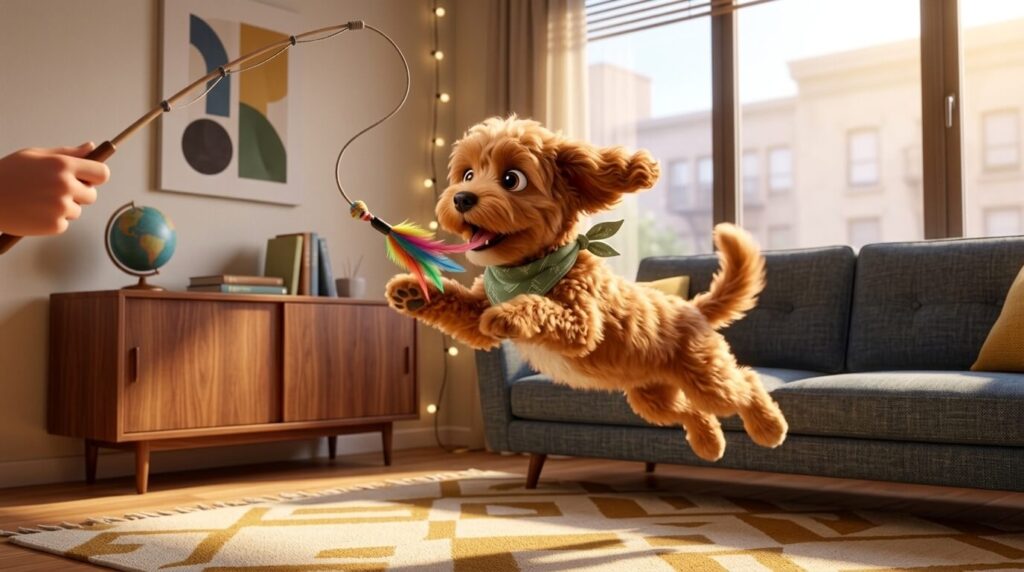
Table of Contents
Physical Exercise vs. Mental Exercise
Many apartment owners assume a tired dog needs more running. Sometimes that is true. Often, the dog needs better mental work. Sniffing, searching, chewing, training, and problem-solving can satisfy a dog without pounding the floor or creating noise complaints.
Physical exercise uses the body. Mental exercise uses the brain and senses. Apartment dogs need both. A fast sidewalk walk may move the legs but leave the nose and brain unsatisfied. A puzzle meal may work the brain but not replace outdoor movement. The best routine mixes small pieces throughout the day.
If your dog is already showing boredom signs, pair this page with the signs apartment dog is bored guide. If the main issue is wild running bursts, use the dog zoomies in apartment guide for the zoomies-specific plan.
The 7 Quiet Proven Games
1. Find-It Sniff Games
Find-it games are one of the best ways to exercise dog in small apartment rooms because they are quiet, low-impact, and mentally rich. Start by tossing one treat on the floor and saying “find it.” When your dog understands the cue, hide treats in easy spots around one room.
Keep the first sessions simple. A dog who gets frustrated may bark, scratch, or give up. You want steady sniffing, not frantic searching. Use part of the dog’s meal if calories matter.
2. Tug With Rules
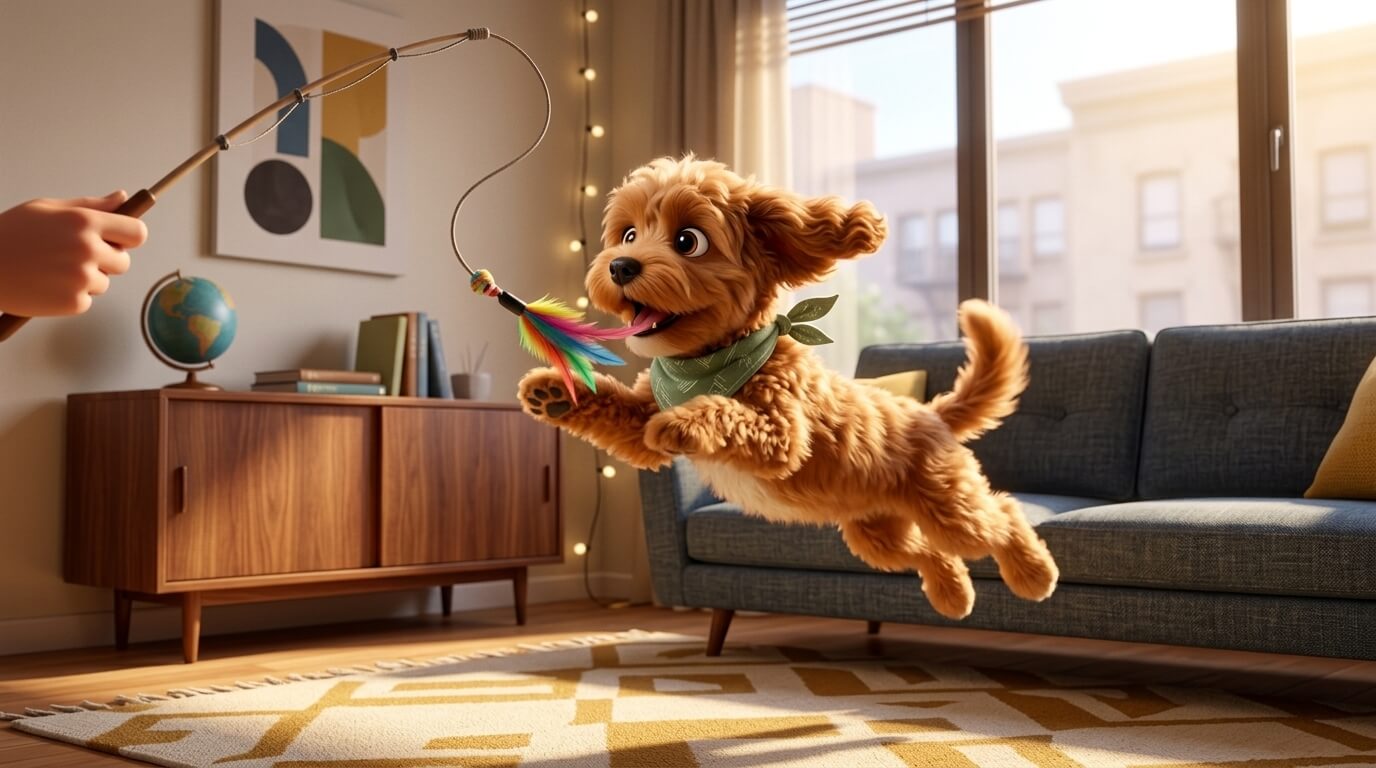
Tug can be apartment-friendly if it has rules. Use a soft toy, keep all four paws mostly on the floor, and teach start and stop cues. Good tug is not a wrestling match. It is a controlled game where the dog can use their body without sprinting through the apartment.
Practice “take it,” “drop,” and “all done.” Stop before the dog becomes too intense. If tug creates barking, jumping, or grabbing hands, make the session shorter and add calmer training between rounds.
3. Trick Training Chains
Trick chains give your dog a job. Combine simple cues such as sit, down, touch, spin, place, paw, and find it. Keep movements low-impact and appropriate for your dog’s age and body.
Five minutes of focused training can be more useful than 20 minutes of chaotic indoor play. Trick training also gives you practical apartment skills: go to bed, wait at the door, leave it, and settle.
4. Puzzle Meals
Instead of feeding every meal from a bowl, use slow feeders, towel rolls, scatter feeding on a washable mat, or simple food puzzles. Puzzle meals turn daily feeding into quiet work.
Make the puzzle easy enough that your dog succeeds. If your dog becomes frustrated, barks at the toy, or tries to destroy it, simplify. If your dog guards food toys, use management and read the dog resource guarding training guide before leaving high-value food items around.
5. Hallway-Free Recall Games
You do not need a hallway sprint to practice recall. Stand a few feet away, say your dog’s name, reward when they come, then toss a treat behind them and repeat. This creates back-and-forth movement without pounding the floor.
Use carpeted areas or rugs. Avoid late-night sessions if your dog runs heavily. Keep it short enough that the dog stays focused instead of escalating into zoomies.
6. Box and Object Searches
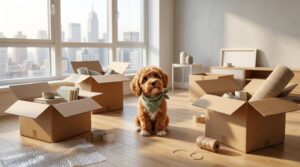
Use cardboard boxes, towels, or safe household objects to create a small search course. Place treats in easy locations and let the dog investigate. This is excellent for rainy days, heat waves, bad air days, and owners who cannot take a long walk every time.
Supervise dogs who chew cardboard or swallow paper. The game should be sniffing and searching, not shredding and eating.
7. The Bedtime Wind-Down Routine
Some dogs need exercise before bed, but the last activity should not be chaos. Try a potty walk, two minutes of sniffing, a small training sequence, water, and a calm chew or lick activity. This helps the dog shift from movement to rest.
If bedtime is your biggest struggle, use this page for daytime exercise and the how to tire out dog before bed guide for a full evening routine.
Apartment Exercise Planner
A good small-apartment routine does not need to be long. It needs to be placed at the right times. Many dogs do well with short activity blocks rather than one huge session.
| Time | Activity | Goal |
|---|---|---|
| Morning | Potty walk plus sniffing | Start the day settled |
| Midday | Puzzle meal or find-it game | Break up boredom |
| After work | Outdoor walk or tug with rules | Release energy before evening |
| Evening | Training, lick activity, calm mat | Prevent zoomies and barking |
Downstairs Neighbor Safety
Exercise in an apartment has a social cost if it is loud. Running, jumping, toy drops, barking, and furniture bumps travel through floors. You can still exercise your dog, but choose lower-impact games indoors and save heavier movement for outdoor spaces.
Use rugs, runners, and mats in play areas. Avoid fetch on hard floors. Keep tug low and controlled. Move noisy games away from late-night hours. If your dog barks during play, pause and switch to sniffing or training.
If barking is part of the exercise problem, treat it separately with the stop dog barking in apartment guide. Exercise helps many barking problems, but it does not replace barking-specific training.
Exercise Plans by Dog Type
Puppies
Puppies need short, gentle sessions, not forced endurance. Use potty trips, safe chewing, short training, socialization, and naps. Wild behavior may mean the puppy is overtired. Do not turn every puppy zoomie into more play.
Adolescent Dogs
Adolescent dogs often need more structure. Use sniff walks, tug rules, training chains, and food puzzles. This is the age when a lack of outlets can become barking, stealing, leash pulling, and evening chaos.
Adult Dogs
Adult dogs often do best with predictable routines. Give them morning sniffing, midday enrichment, and an after-work outlet. If they still seem restless, adjust the type of activity before simply adding more intensity.
Senior Dogs
Senior dogs still need enrichment, but movement should be gentle. Use slow sniff walks, easy food puzzles, soft surfaces, and comfortable rest. Sudden restlessness or exercise intolerance deserves a vet check.
Rain, Heat, Snow, and Bad Air Days
Apartment owners need backup plans because outdoor exercise is not always simple. Heat can be risky for flat-faced dogs. Ice can be unsafe for small or senior dogs. Smoke, pollution, and storms may shorten walks.
On bad outdoor days, use indoor sniff games, puzzle meals, trick training, low-impact tug, and short potty trips. Avoid trying to replace a full outdoor day with high-speed indoor running. That usually creates noise, slipping, and overarousal.
If your dog is alone for long stretches on weather-limited days, plan enrichment before the problem window. The how long can you leave a dog alone in an apartment guide can help you judge whether your schedule needs midday support.
The Overarousal Problem
Some exercise makes dogs wilder. If your dog barks, nips, grabs clothes, jumps, or cannot settle after indoor play, the activity may be too intense. More exercise is not always better. Better exercise is better.
Signs of overarousal include frantic biting, dilated pupils, ignoring known cues, hard barking, repeated jumping, and zoomies that become unsafe. Switch from high-energy games to sniffing, chewing, and calm mat work.
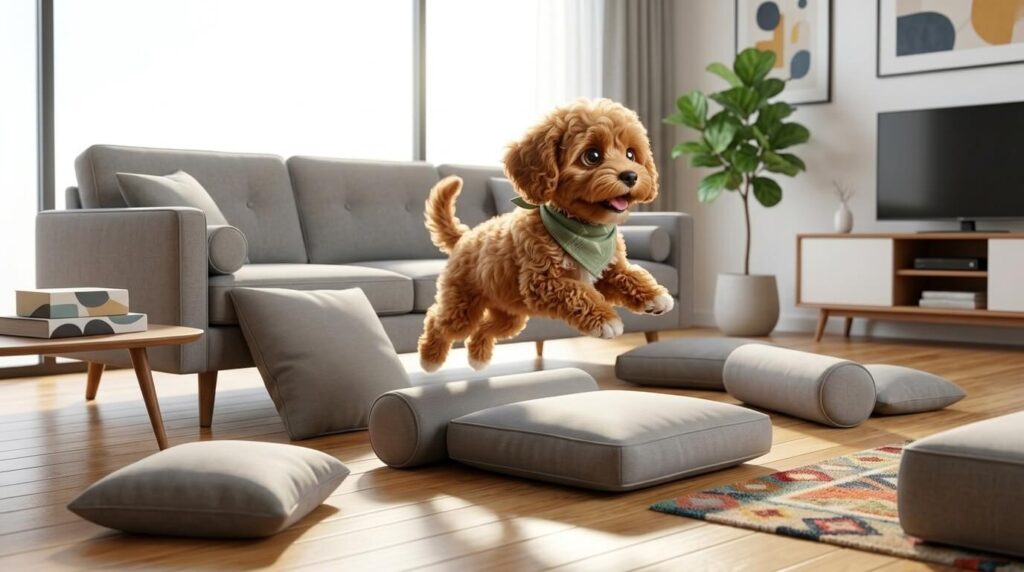
The 15-Minute Apartment Exercise Formula
If you feel overwhelmed, use a simple 15-minute formula: five minutes of body movement, five minutes of nose work, and five minutes of calm ending. This works especially well for busy owners who cannot create a perfect routine every day.
Minutes 1-5: Move the Body
Use a potty walk, controlled tug, low-impact recall, or a short training walk. Keep the movement appropriate for your dog. A puppy, senior dog, flat-faced dog, and young athletic dog should not all do the same intensity.
Minutes 6-10: Use the Nose
Move into sniffing or searching. Scatter a few treats, hide kibble under a towel fold, or let your dog sniff a quiet outdoor patch. Nose work helps many dogs shift from physical energy to focused effort.
Minutes 11-15: End Calmly
Finish with a mat cue, safe chew, lick activity, or relaxed petting if your dog enjoys it. The calm ending matters. Without it, some dogs finish exercise more excited than they started.
This formula is not the only routine your dog needs, but it is a reliable emergency plan for workdays, rain, heat, or days when life gets messy.
Floor Safety and Joint Protection
Small apartments often have slick floors. Dogs who sprint, twist, or jump on slippery surfaces may strain themselves. Use rugs or runners where your dog plays. Avoid indoor fetch that requires sudden stops. Be extra careful with long-backed dogs, large dogs, puppies, seniors, and dogs with previous injuries.
If your dog slips during normal movement, fix traction before adding exercise. Training cannot make a slippery floor safe.
Exercise Routines by Apartment Constraint
Every apartment has a different limitation. One owner has thin floors. Another has no elevator. Another has a reactive dog in the lobby. Choose exercises that fit your real constraint instead of copying a routine made for a different home.
If You Have Thin Floors
Avoid jumping, fetch, heavy running, and toy drops. Use sniff games, trick training, towel rolls, slow tug, and outdoor movement earlier in the day. Put rugs under any play area. If you hear the game through the floor, your neighbor probably does too.
If You Have No Safe Hallway
Do not rely on shared hallways for exercise. Hallways add neighbor conflict, leash frustration, and surprise dog encounters. Keep indoor games inside your unit and use outdoor walks for movement.
If Your Dog Pulls Outside
A pulling dog may get less exercise because every walk feels stressful. Work on shorter, calmer routes and use appropriate gear. If walks are hard to control, review your best dog harnesses for apartment dogs options and pair gear with training, not force.
If You Work Long Hours
Front-load the day with sniffing and leave a safe enrichment activity if your dog can use it calmly. Add a midday walker, sitter, daycare, or lunch visit if your dog cannot comfortably wait. Exercise cannot fix a schedule that leaves the dog distressed for too long.
If Your Dog Gets Too Excited Indoors
Skip tug and recall games temporarily. Use sniffing, licking, chewing, mat work, and slow training. Some dogs need to learn calm before they can handle active indoor games.
A Weekly Small-Apartment Exercise Schedule
| Day | Main Focus | Quiet Apartment Activity |
|---|---|---|
| Monday | Sniffing | Longer sniff walk plus find-it game |
| Tuesday | Training | Trick chain and place cue |
| Wednesday | Food work | Puzzle meal and towel roll |
| Thursday | Controlled play | Short tug rounds with drop cue |
| Friday | Decompression | Quiet route, sniffing, chew window |
| Weekend | Novelty | New walking route or safe outdoor outing |
How to Build Endurance Without a Yard
No-yard dogs can build fitness through consistent small pieces. You do not need one huge exercise session. In fact, many apartment dogs do better with several short, predictable blocks.
Start with your current baseline. If your dog gets two five-minute potty walks and nothing else, do not jump to an hour of activity overnight. Add five minutes of sniffing to one walk. Add one puzzle meal. Add one short training game. Watch sleep, appetite, soreness, and behavior.
Increase slowly. A dog who is pleasantly tired should settle, eat normally, move comfortably, and recover well. A dog who is limping, refusing walks, panting excessively, or acting frantic may be doing too much or the wrong kind of activity.
Signs You Exercised Too Much
Apartment owners often worry about too little exercise, but too much can also cause problems. Overexercise may show up as soreness, reluctance to walk, excessive panting, irritability, diarrhea from stress, limping, or wild behavior caused by overarousal.
Puppies, seniors, overweight dogs, flat-faced dogs, and dogs with orthopedic issues need extra caution. More is not always kinder. The goal is appropriate activity, not exhaustion.
If your dog seems worse after exercise, change the type before adding more. Replace high-impact indoor movement with sniffing, training, and decompression. If physical signs continue, contact your veterinarian.
A 30-Minute Rainy Day Plan
Rainy days are where many apartment routines fall apart. The dog gets a rushed potty break, the owner feels guilty, and the evening becomes barking, pacing, or zoomies. A backup plan prevents that spiral.
Minutes 1-5: Quick Potty and Sniff
Go outside if it is safe, even briefly. Let your dog sniff under an awning, near a tree, or in a protected area. If weather is unsafe, skip this and start indoors.
Minutes 6-12: Find-It Game
Hide a few treats around one room. Keep it easy enough that your dog keeps searching without barking or scratching furniture.
Minutes 13-18: Training Chain
Practice three easy cues in a row: touch, sit, place; or find it, touch, down. Reward calmly. Do not drill until your dog is frustrated.
Minutes 19-24: Food Puzzle or Towel Roll
Use part of a meal in a simple puzzle or towel roll. If your dog destroys puzzles, use scatter feeding on a washable mat instead.
Minutes 25-30: Calm Ending
Finish with a chew, lick activity, or mat rest. The calm ending tells the dog’s body that the session is complete.
How to Know the Routine Is Working
A good exercise routine should make apartment life quieter and easier. Look for practical signs: your dog settles faster, barks less at random sounds, steals fewer items, has shorter zoomies, sleeps more deeply, and recovers after walks instead of staying frantic.
Track the same behavior for two weeks. If your dog chewed the rug four times last week and once this week, the routine is helping. If your dog still paces every night, adjust timing. If your dog becomes more intense after each game, reduce the intensity and add more sniffing.
Exercise is not a one-time fix. It is a rhythm. Once you find the right rhythm for your apartment, your dog should not need constant entertainment every minute. They should be able to move, think, sniff, chew, and then rest.
Common Indoor Exercise Mistakes
Mistake 1: Playing Fetch on Slippery Floors
Fast fetch in a small apartment can create sliding, crashing, and downstairs noise. Choose lower-impact games indoors.
Mistake 2: Exercising Only When the Dog Is Already Wild
Prevention works better than reaction. Add activity before the usual problem window.
Mistake 3: Ignoring Sniffing
A walk without sniffing may not satisfy many dogs. Let the nose work when it is safe.
Mistake 4: Creating Barking During Games
If the game creates barking, it may not be apartment-friendly. Lower the intensity and reward quieter engagement.
Mistake 5: Skipping Rest
Dogs need rest after activity. A dog who never gets a calm ending may stay wound up.
FAQ
How do I exercise dog in small apartment spaces?
Use a mix of sniff walks, find-it games, controlled tug, trick training, puzzle meals, low-impact movement, and calm wind-down routines. Avoid loud, slippery, high-impact indoor games.
Can a dog get enough exercise without a yard?
Yes. Many dogs live well without yards when they get daily walks, sniffing, enrichment, training, and appropriate rest. A yard is convenient, but it does not replace an engaged routine.
What are quiet indoor exercises for dogs?
Quiet indoor exercises include find-it games, towel rolls, puzzle meals, low-impact trick training, touch cues, place training, and short tug rounds with rules.
Is indoor fetch bad in an apartment?
Indoor fetch can be risky if floors are slippery, space is tight, or neighbors hear running. If you play it, keep it slow, short, and on traction. For many apartments, scent games are safer.
How much exercise does an apartment dog need?
It depends on age, breed, health, and temperament. Most dogs need a combination of outdoor movement, sniffing, mental work, and rest. Watch behavior: destructive chewing, barking, zoomies, and restlessness may mean the routine needs adjustment.
What if my dog is still hyper after exercise?
Your dog may be overaroused, overtired, anxious, or missing mental enrichment. Switch from intense play to sniffing, chewing, and calm routines. If hyperactivity is sudden or extreme, ask your veterinarian.
Next Step
Choose one quiet exercise block today: a sniff walk, a find-it game, a puzzle meal, or controlled tug. Place it before your dog’s usual problem window, not after the dog is already barking, chewing, or zooming.
Then watch the result. If your dog settles faster, you are on the right track. If your dog becomes more frantic, reduce intensity and add calmer nose work. The best way to exercise dog in small apartment life is not to do more and more indoors. It is to use the right activity at the right time.