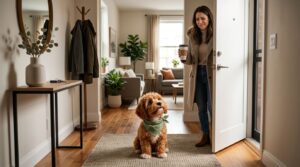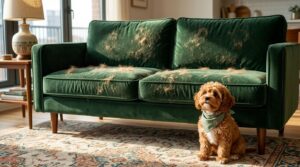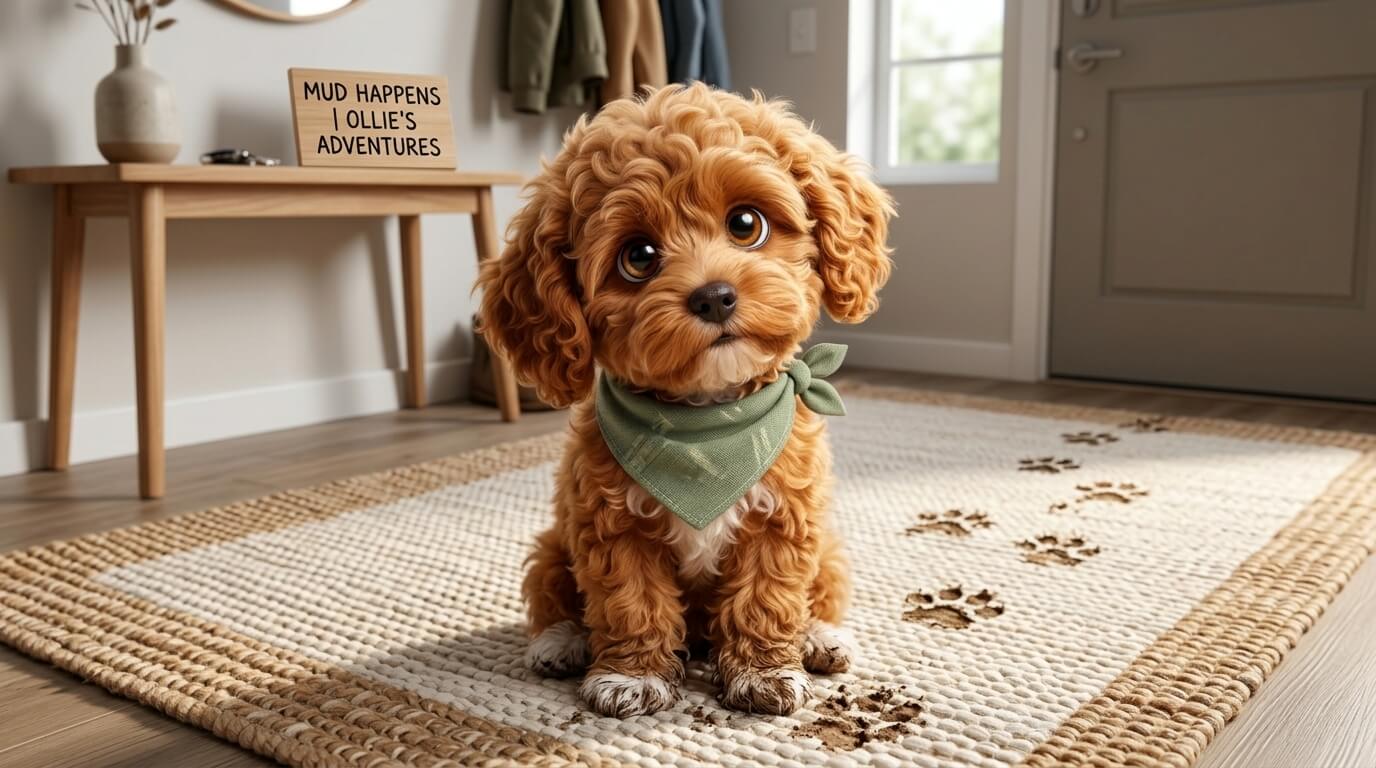
Last Tuesday, Ollie and I came back from a walk in the rain. He was thrilled. I was holding an umbrella, a coffee I had optimistically purchased two blocks earlier, and a dog who weighs eleven pounds but somehow generates the lateral force of a golden retriever when he shakes off water.
By the time I got his leash unclipped, there were muddy paw prints across the entryway rug, a water bowl splash pattern across the kitchen tile that defied physics, and nose smudges on the balcony glass door that he had absolutely made before we left and I was only noticing now.
For the first year of Ollie’s life, my strategy for managing all of this was panic cleaning forty minutes before anyone came over. If you genuinely want to maintain a clean apartment with dog chaos happening on a daily basis, I want to tell you that the panic model is exhausting, ineffective, and completely unnecessary once you replace it with a system.
How To Keep A Clean Apartment With Dog (Quick Answer)
To effectively clean apartment with dog hair, muddy paws, and nose smudges, you need a proactive daily maintenance system rather than reactive deep cleans. Set up a decontamination zone at your front door with a paw washer and towels, run a robot vacuum daily, wipe glass surfaces in under two minutes, and use only pet-safe enzymatic cleaners on all soft surfaces throughout the week.
The Entryway “Decontamination” Zone
This is the single highest-leverage change I made, and it cost less than $40 to set up.
The entryway is where outside comes inside. Every walk brings in sidewalk grime, rain, pollen, road salt in winter, and whatever Ollie stepped in that I would rather not identify. If you do not intercept it at the door, it travels on four small paws to every surface in your apartment within about ninety seconds.
My decontamination zone lives in a two-foot section of wall just inside my front door. It contains exactly:
- A portable paw washer — a silicone cup with soft interior bristles that you fill with an inch of water, insert each paw, and twist gently. Muddy paw prints eliminated before we even reach the rug
- A stack of old microfiber towels in a small basket — one for paws, one for the belly wipe on wet days, replaced weekly in the wash
- Pet-safe paw wipes for days when the full paw washer feels excessive
- A low hook at Ollie’s leash height so the leash goes directly on the hook and never gets dropped on the floor
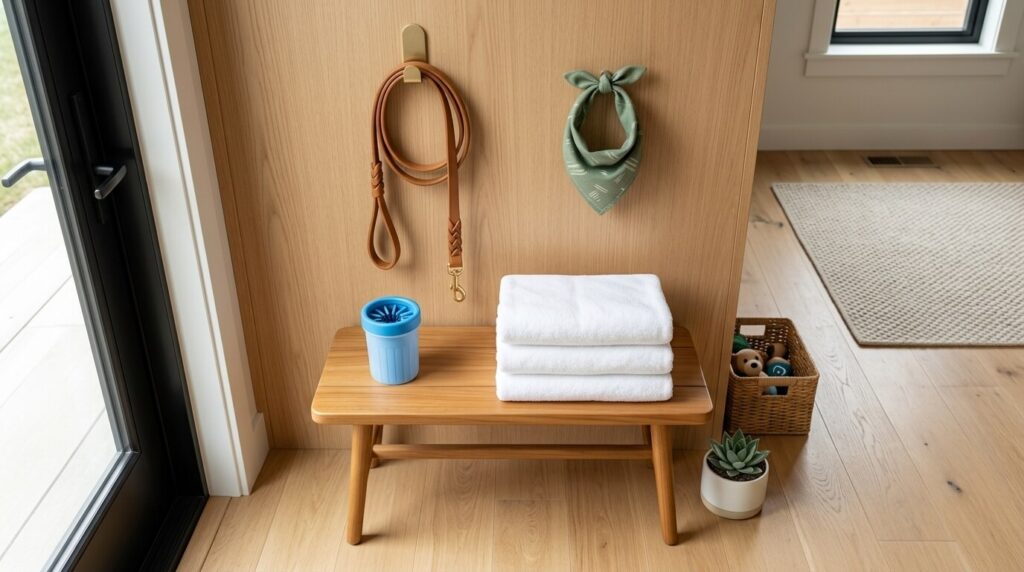
The full entry routine takes under two minutes and eliminates approximately 80% of the mess Ollie would otherwise distribute through the apartment. Two minutes at the door is worth forty minutes of mopping later.
The decontamination zone works because it removes friction. Everything you need is already there. You do not have to go find a towel while a wet dog runs to the sofa. You do not have to decide what to do — the system decides for you.
The 15-Minute Daily Sweep
I want to be honest about what “daily cleaning” actually looks like when it is working correctly: it should not feel like cleaning at all.
A well-designed daily maintenance routine takes fifteen minutes maximum when done consistently. It feels like tidying. The reason people abandon daily cleaning routines is that they try to do too much at once, burn out, skip three days, and then face a mess that genuinely does require forty minutes to address.
Here is the actual daily sweep I run every morning while my coffee brews:
The Robot Vacuum: Your Most Important Tool
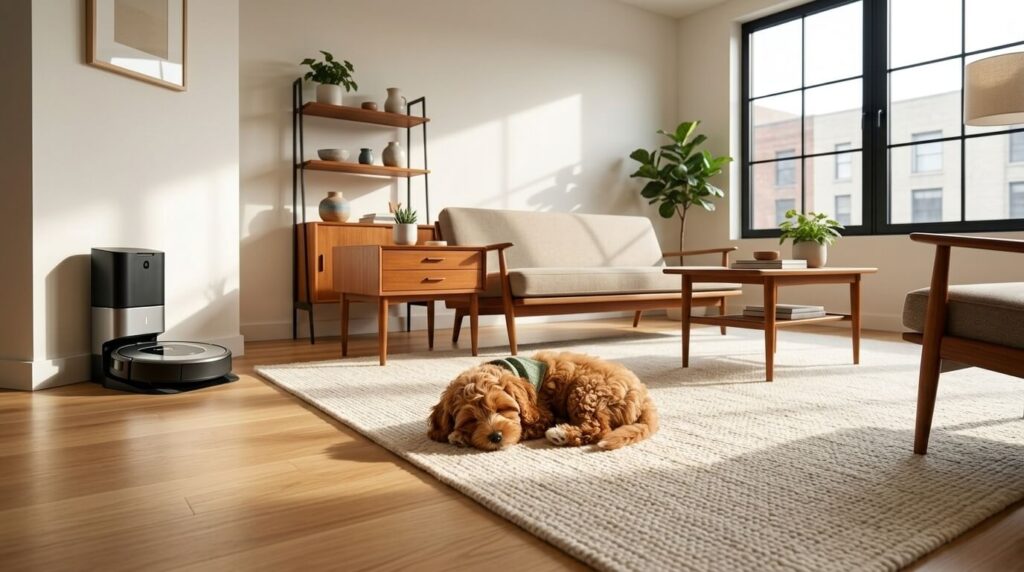
I run my robot vacuum every single morning on a scheduled automatic cycle. It runs while I shower. By the time I am dressed, it has handled the floors.
For a dog owner in an apartment, a robot vacuum is not a luxury — it is the tool that makes everything else manageable. Ollie’s shed fur, left on hardwood floors for even one day, drifts into corners, slides under furniture, and begins its journey onto every surface in the room. Daily collection prevents accumulation.
What to look for in a robot vacuum for dog owners:
- A rubber roller brush rather than bristle — fur wraps around bristles and clogs them constantly
- A tangle-free or self-cleaning brush head if possible
- A HEPA filter on the dustbin
- Wi-Fi scheduling so it runs automatically without you remembering to press anything
Empty the dustbin every day. This is not optional. A full dustbin on a robot vacuum dramatically reduces suction and deposits collected fur back onto the floor through exhaust.
Nose Smudges on Glass: The 90-Second Fix
Ollie has an enthusiastic relationship with my balcony glass door and the lower window panels in the living room. He presses his nose against them to watch the street. He breathes on them after walks. In the morning, the glass looks like abstract art.
My glass routine:
- Spray a small amount of plain white vinegar solution (50/50 vinegar and water) on a microfiber cloth — not directly on the glass
- Wipe in circular motions
- Buff dry with the dry side of the cloth
Done. Ninety seconds. The glass is genuinely streak-free, there are no chemical residues at nose height for Ollie to re-ingest, and vinegar is about thirty cents per bottle.
The Living Room Wipe-Down
Before you can mop the floors or wipe the sofa, you must first use specific hacks to get dog hair off everything — because deodorizing or cleaning a surface that is still full of embedded fur is addressing the wrong problem in the wrong order.
After the fur removal step, my daily living room routine is:
- Fluff and rotate sofa cushions — this extends the life of the upholstery and prevents permanent compression where Ollie sleeps
- Fold or rehang any throw blankets Ollie has rearranged during the night
- Wipe the coffee table with a damp microfiber cloth — paw prints on surfaces happen more than you expect
Weekly Deep Cleans (Floors, Toys & Bowls)
Daily maintenance keeps the apartment presentable. Weekly deep cleaning keeps it genuinely hygienic.
These are not long sessions. I block ninety minutes on Sunday mornings, put on a podcast, and move through the list systematically.
Floors
My apartment has hardwood throughout except for two area rugs. The weekly floor protocol:
For hardwood:
- Move furniture slightly to vacuum the edges and under the sofa — the robot vacuum cannot reach these zones effectively
- Mop with a diluted enzymatic cleaner solution — not a scented floor product, which only masks odor rather than eliminating it
- Dry thoroughly before Ollie walks on it, as wet floors spread dirty paw prints faster than dry ones
For area rugs:
- Use a rubber squeegee to pull embedded fur from the fibers before vacuuming — this step is non-negotiable and makes a visible difference immediately
- Vacuum thoroughly after the squeegee pass
- Rotate the rug 180 degrees monthly to ensure even wear
Food and Water Bowls
Dog bowls are one of the most overlooked hygiene points in pet ownership. A 2011 NSF International study ranked pet bowls as the fourth most germ-laden item in the average household.
Bowl cleaning protocol:
- Wash food bowls with hot soapy water after every meal — not just a rinse
- Wash water bowls daily; the biofilm that forms on the inner surface of a water bowl within 24 hours is the slippery film you can feel when you run your finger inside it
- Run stainless steel and ceramic bowls through the dishwasher weekly on a sanitize cycle
- Replace plastic bowls entirely — plastic scratches and harbors bacteria in the micro-abrasions that soap and water cannot reach
Dog Toys
Ollie’s toy basket gets a weekly audit and wash. Soft toys go in a mesh laundry bag and through the washing machine on hot. Rubber and rope toys get soaked in a diluted white vinegar solution for fifteen minutes, scrubbed, and air dried.
Discard any toy with visible mold, deep tears that could harbor bacteria, or loose parts that are becoming a choking hazard.
Soft Surfaces: The Odor Source
This weekly washing routine is the only permanent way to control dog odor apartment issues before they set into the fabric — because sebum, dander, and oral bacteria accumulate in fibers every single day Ollie is in contact with them.
Weekly soft surface washing list:
- Dog bed cover (always; the foam insert gets baking soda treatment)
- Any throw blankets in the living room
- Removable sofa cushion covers if your sofa has them
- Ollie’s sage green bandana — he wears it daily, it absorbs everything
Pet-Safe Cleaning Products (Toxins to Avoid)
This section matters as much as any cleaning technique because using the wrong product in an apartment with a dog is genuinely dangerous.
Dogs are exposed to cleaning product residues through three routes: licking treated surfaces, paw contact with floors followed by self-grooming, and inhalation of volatile compounds in poorly ventilated spaces. An apartment — especially a New York apartment where windows may be limited — concentrates these exposures significantly.
Cleaning products to avoid entirely around dogs:
- Pine-based cleaners (Pine-Sol and similar) — phenol compounds are toxic to dogs and cats
- Bleach-based sprays — even diluted bleach produces chlorine gas in enclosed spaces and causes respiratory irritation in dogs
- Ammonia-based glass cleaners — smell similar to urine to dogs, can trigger re-marking behavior, and cause respiratory irritation
- Formaldehyde-releasing cleaning agents — found in some floor polishes and furniture cleaners
- Any essential oil-infused cleaning products — lavender, tea tree, eucalyptus, and citrus oils are all problematic for dogs at varying concentrations
Products that are genuinely safe:
- White vinegar diluted 50/50 with water — effective on glass, tile, and hard surfaces; safe once dried
- Enzymatic cleaners formulated for pets — biodegradable, non-toxic, and actually eliminate odors rather than masking them
- Unscented castile soap — safe for general surface cleaning, rinses clean
- Baking soda — safe for use on soft surfaces, rugs, and dog beds as an odor absorber
Read labels carefully. “Natural” and “plant-based” are not regulated terms and do not guarantee safety for pets.
Managing the “Wet Dog” Rainy Days
Rainy days in New York require a protocol upgrade.
Ollie’s curly Cavapoo coat absorbs water like a small decorative sponge. He comes inside damp, he shakes, and the damp-dog smell intensifies within about ten minutes of being inside if I do not intervene.
The rainy day protocol:
- Full decontamination zone activation — paw washer for all four paws, belly wipe with a separate towel, and a thorough but gentle towel-dry of the coat starting from the back and working toward the head
- Do not let him shake on the sofa — intercept this by wrapping him in the towel immediately after entry, which contains the shake and the spray radius
- Run the HEPA purifier on high for thirty minutes after a wet walk — damp air carries more aerosolized dander and the elevated humidity accelerates odor compound release from fur
- Keep him off upholstered furniture until he is fully dry — a damp dog on a velvet sofa leaves a specific kind of smell that requires more than a weekly wash to address
On heavy rain days, I keep an extra absorbent bath sheet specifically for Ollie near the door. The microfiber towels in the regular stack are good for light days; on genuinely soaking walks, you need more towel.
A note on towel hygiene: Wet dog towels left in a pile develop mildew smell within hours. Have a dedicated small hamper or hook near the door where wet dog towels hang to dry before going into the laundry. A damp towel in a closed basket is a smell problem you do not need to add to the list.
The System Behind the Routine
What I have described above is not a collection of individual tips. It is a tiered maintenance system where each level prevents the next level from becoming necessary:
- At the door: prevents outdoor contamination from entering
- Daily sweep: prevents accumulation from becoming visible mess
- Weekly deep clean: prevents hygiene issues from developing in surfaces and objects
- Right products: prevents chemical harm while ensuring cleaning actually works
If you maintain clean apartment with dog habits at the daily level consistently, the weekly clean becomes genuinely easy. If you maintain the weekly level, you will almost never need emergency cleaning before guests. The system compounds in your favor.
FAQ
What floor cleaners are actually safe for dogs?
The safest options for dog owners are diluted white vinegar (50/50 with water), unscented castile soap solutions, and enzymatic cleaners specifically formulated for pet households. Avoid pine-based cleaners, bleach solutions, and any ammonia-based products. Always allow floors to dry completely before allowing your dog back onto the surface, regardless of the product used.
How do I maintain a perfectly clean apartment with dog hair shedding daily?
The answer is a robot vacuum on a daily automatic schedule combined with a rubber squeegee for area rugs used weekly. The robot vacuum handles daily floor fur before it accumulates and transfers to other surfaces. The squeegee pulls embedded fur from rug fibers that the vacuum cannot dislodge through suction alone. Together, these two tools eliminate the need for reactive heavy cleaning.
How often should I actually wash my dog’s bed?
The cover should be washed weekly without exception — this is the single highest-impact laundry habit for apartment odor control. The foam or fiberfill insert should receive a baking soda treatment monthly and be replaced entirely every twelve to eighteen months, as foam absorbs sebum and odor compounds at a structural level that washing cannot fully reverse. If the bed has no removable cover, replacing it with one that does is worth the cost immediately.
References
- Quinlan, R. (2011). Germiest places in the home: NSF International’s 2011 NSF household germ study. NSF International. https://www.nsf.org/consumer-resources/articles/germiest-places-home
- Khan, S. A., & McLean, M. K. (2012). Toxicology of frequently encountered nonsteroidal anti-inflammatory drugs in dogs and cats: The ASPCA Animal Poison Control Center experience. Veterinary Clinics of North America: Small Animal Practice, 42(2), 289–306. https://doi.org/10.1016/j.cvsm.2012.01.003
The rainy Tuesday that opened this article ended with Ollie fully dried, the paw prints gone, and the apartment smelling like nothing, which is exactly what I want it to smell like. He was in his dog bed by 8pm, bandana on, unbothered. I had mopped nothing in a panic. This is what the system feels like when it works.