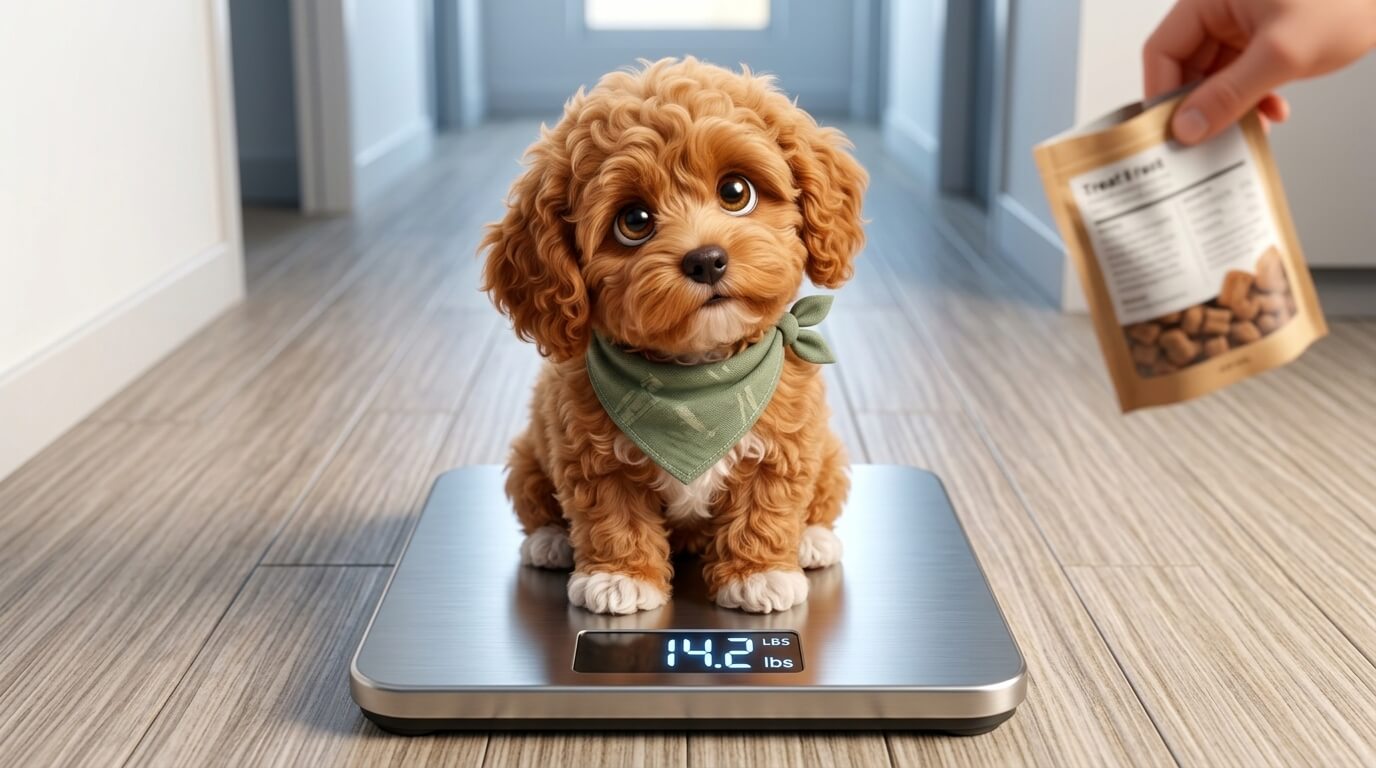
Is my dog overweight? Start with the ribs, waist, abdominal tuck, and a recent weight trend, but do not diagnose your dog from one photograph or a number on a bathroom scale. A long coat can hide the waist. A deep chest can change the side view. A senior dog may lose muscle while still carrying excess fat. Sudden abdominal enlargement may not be ordinary weight gain at all.
The useful home question is not “Does my dog look chunky?” It is “Do several body-condition clues point in the same direction, and has anything changed?” You can gather that evidence at home, then ask your veterinarian to confirm body condition, muscle condition, an appropriate target weight, and whether pain, medication, age, or disease changes the plan.
Apartment life does not automatically make a dog overweight. The quieter risks are routine-based: a treat at every elevator ride, kibble added to food puzzles without subtracting it from dinner, several household members rewarding the same behavior, shorter rainy-day walks, and using food as the default answer to barking or boredom. Those small extras are easy to miss because none looks like a second meal.

Table of Contents
Quick Answer: What Can You Check Today?
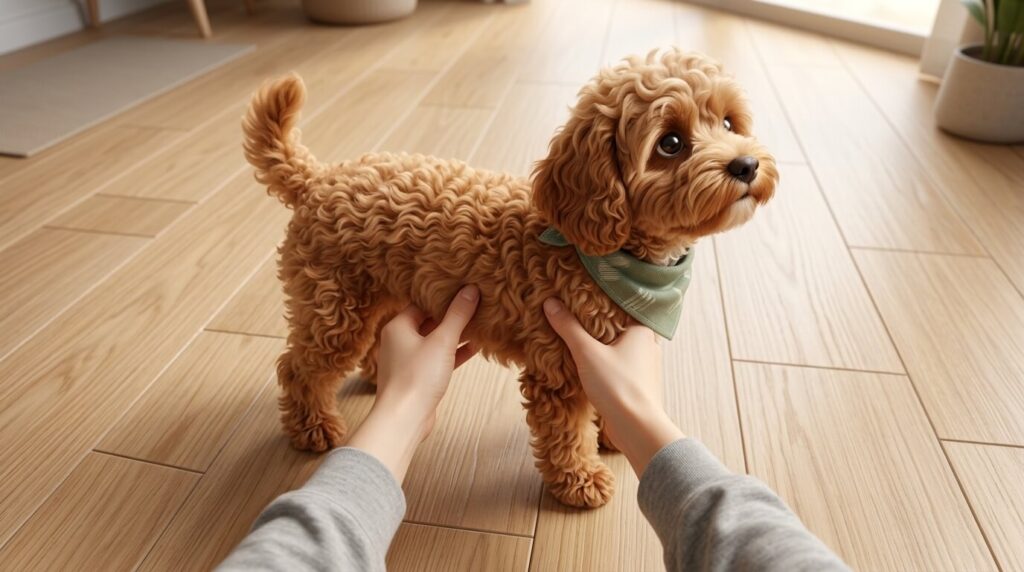
With your dog standing naturally, place both hands over the rib cage just behind the front legs. You should be able to feel individual ribs through a light covering without pressing hard. Look from above for a waist behind the ribs and from the side for an abdominal tuck. Compare these observations with the WSAVA body-condition chart, then record the result rather than relying on memory.
These checks are screening tools. Breed shape, coat, pregnancy, muscle loss, abdominal disease, and other conditions can alter appearance. Arrange a veterinary assessment if several signs suggest excess body fat, the change is recent, or your dog also has fatigue, stiffness, breathing changes, increased thirst, hair or skin changes, medication changes, or a swollen abdomen.
| Home observation | What it may suggest | Important limitation |
|---|---|---|
| Ribs are difficult to feel | Extra fat over the rib cage | Thick coat and handling technique can confuse the check |
| Waist is reduced from above | Higher body-condition score | Breed structure changes the normal outline |
| Little abdominal tuck from the side | Extra abdominal fat | Abdominal enlargement has other possible causes |
| Weight rises on repeat measurements | A real upward trend | Scales and weighing methods must be consistent |
| Activity changes | Pain, fitness, heat, illness, or excess weight | Movement alone cannot diagnose the cause |
The Seven Proven Home Checks
1. Feel the Ribs With Flat Fingers
Use the pads of your fingers and move gently across both sides of the rib cage. Do not poke between ribs or press until you find bone. In an ideal body condition, individual ribs are usually easy to feel beneath a light fat covering. If you must push through a thick, soft layer, that is a reason to check the other signs and schedule a professional assessment.
One common comparison uses the feel of your own hand: ribs under an appropriate covering may feel more like the bones beneath the back of the hand than the heavily padded base of the thumb. It is only a teaching aid, not a measurement. Your veterinarian’s hands and a standardized body-condition score are more useful.
Do the check when your dog is relaxed and standing. If touching the ribs causes pain, flinching, growling, or avoidance, stop. Painful handling is a veterinary concern, not a signal to press harder.
2. Look for a Waist From Above
Stand behind your dog’s shoulders and look down while the dog stands evenly on all four feet. In many dogs at a healthy condition, the body narrows behind the rib cage before widening toward the hips. A waist that has gradually become straight or rounded can support concern about weight gain.
Long hair can hide the outline. Part the coat and use your hands to trace the body rather than judging the fluffy silhouette. Compare the same dog over time instead of comparing a Pug, Greyhound, Corgi, and mixed breed to one universal shape.
Photographs are useful when they are consistent. Take one top-down image on the same non-slip floor, with the dog standing squarely, every few weeks. Do not angle the camera to make the waist look better or worse. The goal is a trend your veterinary team can interpret.
3. Check the Abdominal Tuck From the Side
From the side, many dogs have an underline that rises from the end of the rib cage toward the hind legs. When that tuck becomes less visible along with difficult-to-feel ribs and a reduced waist, excess body fat becomes more likely.
A rounded or enlarged abdomen is not always ordinary weight. Pregnancy, fluid, organ enlargement, hormonal disease, and other medical problems can change abdominal shape. Contact your veterinarian promptly if enlargement is sudden, asymmetric, painful, accompanied by retching, weakness, restlessness, pale gums, or breathing difficulty.
Do not use the side tuck alone for a dog with an unusual breed shape, a very deep chest, loose skin, or major muscle loss. It is one part of the picture.
4. Compare Body Condition and Muscle Condition Separately
Body-condition scoring estimates fat stores. Muscle-condition scoring looks for muscle loss, commonly over the spine, shoulder blades, skull, and pelvis. A dog can have excess body fat and still lose muscle, especially with age or illness. That is why a heavier scale number does not guarantee a strong body, and a senior dog’s diet should not be changed from appearance alone.
The AAHA nutrition and weight-management guidelines treat body weight, body-condition score, muscle-condition score, diet history, life stage, and medical factors as parts of a nutritional assessment. At home, note visible changes. Let the veterinary team assign and interpret the scores.
If the hips or spine look more prominent while the abdomen remains broad, do not start a casual weight-loss challenge. Arrange an examination. Preserving lean tissue matters, and the appropriate food and exercise plan depends on the cause.
5. Build a Real Weight Trend
A single measurement is less useful than repeat weights obtained under similar conditions. Veterinary clinic scales are appropriate for formal monitoring. For a small dog, a safe home method may be to weigh yourself, then weigh yourself holding the dog and calculate the difference, but human scales may be too imprecise for small changes. Never risk a fall or force a struggling dog onto a slippery scale.
Use the same scale when possible and record the date, weight, body-condition score, diet, and any medication or activity changes. “Up three pounds” means something very different for a 12-pound dog than for a 90-pound dog. Your veterinarian should set the target and monitoring interval.
Bring historical clinic weights to the discussion. A slow change hidden by a winter coat is often easier to see in the record than in daily life.
6. Audit Everything That Enters the Mouth
Before reducing food, record it. For three ordinary days, include the measured main diet, training treats, dental chews, pill pockets, table scraps, food puzzle contents, lick mats, toppers, and anything supplied by a walker, neighbor, roommate, or family member.
Apartment routines create predictable calorie leaks. A dog may receive a treat for entering the elevator, another for passing a neighbor, several during a work call, and a chew during dinner. Each use may be reasonable, but together they must fit the complete daily plan. When possible, reserve part of the measured daily food for training rather than filling the pouch from an uncounted second source.
Record exact product names and amounts. “One scoop” is not exact unless the scoop has been measured. A digital kitchen scale can be more consistent than a cup for dry food, but ask your veterinary team what daily amount is appropriate before changing it.
7. Treat Movement Changes as a Health Clue, Not Proof of Weight
A dog who slows down, avoids stairs, pants sooner, or stops jumping may be carrying excess weight, but pain, heat, heart or respiratory disease, medication effects, anxiety, and aging can produce similar changes. Do not respond by suddenly doubling exercise.
Notice the context. Is the dog slower only on hot afternoons? Stiff after sleep? Reluctant on slick lobby floors? Fine outdoors but unwilling to leave the apartment? A short video of walking, rising, and turning can help the veterinary team see what happens at home.
If your veterinarian clears gradual activity, use repeatable routines rather than exhausting weekend sessions. The evening activity guide for apartment dogs includes quiet options, but any exercise plan must be adjusted for age, health, weather, and current fitness.
Why Weight Gain Can Hide in Apartment Routines
The apartment itself is not the diagnosis. Plenty of apartment dogs maintain excellent condition, and many dogs with yards gain weight. The practical difference is that indoor life makes some patterns easy to repeat:
- The same short potty route replaces a longer exploratory walk.
- Food becomes the quickest quiet activity during meetings.
- Elevator and hallway training produces many small rewards.
- Rain, heat, snow, or muddy cleanup shorten outdoor time.
- Several people feed the dog without a shared record.
- A food puzzle is added after dinner rather than filled from the daily portion.
You do not need to remove all enrichment rewards. You need one accounting system. Put the day’s treat allowance in a labeled container each morning, or log rewards in a shared phone note. When it is empty, use praise, play, sniffing, access to a favorite resting place, or kibble already reserved from meals when appropriate.
If boredom drives constant feeding, build non-food parts into the schedule. Our guide to keeping a dog engaged while you work includes rotation, observation spots, rest, brief interaction, and enrichment ideas. Food-based activities still count toward the daily intake.
A Three-Day Food and Routine Record
Do not begin with a dramatic diet cut. Begin with evidence. Choose two typical weekdays and one weekend day. Record each item at the time it is given, not from memory at night.
| Record | Useful detail | Why it matters |
|---|---|---|
| Main food | Brand, formula, grams or measured amount | Shows the nutritional base |
| Treats and chews | Name, size, number, who gave them | Finds hidden extras |
| Food enrichment | What filled the puzzle or lick mat | Prevents double-counting as “activity” only |
| Activity | Duration, intensity, weather, response | Provides context without estimating calories burned |
| Behavior | Begging, barking, restlessness, sleep | Identifies why food was offered |
| Medication and health | Current medication or new symptoms | Gives the veterinarian important context |
Take photographs of package labels and feeding instructions. Bring the record to the appointment. Feeding guides are starting estimates, not individualized prescriptions, and calorie needs vary with life stage, neuter status, body composition, activity, environment, and medical condition.
If the current diet is unbalanced, simply feeding less of it can worsen nutritional gaps. If the diet is complete and balanced but not suitable for safe calorie restriction, the veterinarian may recommend a different food. Homemade weight-loss diets should be formulated with appropriate veterinary nutrition expertise.
What to Ask at the Veterinary Appointment
A useful appointment produces more than “feed less.” Ask the team to record the current weight, body-condition score, muscle-condition score, and an initial target. Discuss the complete diet history, treats, medication, mobility, stool, thirst, appetite, and recent changes.
Questions to bring:
- What body-condition and muscle-condition scores do you assign?
- Is the weight change consistent with excess fat, or are tests indicated?
- What food, daily amount, and treat allowance fit this dog?
- How should portions be measured?
- What activity is safe with this dog’s joints, heart, breathing, and current fitness?
- When should weight and body condition be rechecked?
- Which signs mean the plan should be reviewed sooner?
The VCA overview of obesity in dogs emphasizes veterinary guidance, consistent feeding, and repeat monitoring rather than an uncontrolled crash diet. Weight-loss speed should be evaluated by the veterinary team so the plan can be adjusted safely.
If taking your dog to the clinic is difficult, prepare the route, records, and handling plan rather than postponing the assessment. The apartment dog’s veterinary-visit checklist covers observations and questions to collect before an appointment.
Why the Veterinarian May Look Beyond Food and Exercise
Most weight gain still requires an honest review of intake and activity, but the examination helps determine whether another factor is involved. Age-related changes, reduced activity after pain or injury, reproductive status, certain medications, and medical conditions can alter appetite, movement, body composition, or energy needs. A rapidly enlarging abdomen can also be different from gradual accumulation of body fat.
Tell the veterinarian whether the change was gradual or sudden and whether you have noticed increased thirst or urination, a major appetite change, panting, weakness, skin or coat changes, stiffness, altered stool, coughing, or new reluctance to exercise. Bring a medication and supplement list. Do not stop prescribed medication because you suspect it contributed to weight gain; the prescribing veterinarian should decide whether an adjustment is appropriate.
The appointment may involve only history, examination, repeat weight, and condition scoring, or the veterinarian may recommend testing based on the dog’s age and signs. The purpose is not to search for an exotic explanation for every extra pound. It is to avoid treating a health change as a simple willpower problem.
This distinction is especially important for senior dogs. A broad middle can coexist with reduced muscle over the back and hindquarters. The scale may change very little while body composition and mobility worsen. That dog needs a plan built around nutrition, pain assessment, muscle preservation, and safe movement, not merely a smaller scoop.
Safe Changes While You Wait for Guidance
You can improve measurement without prescribing your own diet. Stop free-pouring food, record every extra, keep household members on one plan, and maintain ordinary activity that your dog already tolerates. Do not withhold water. Do not substitute an unbalanced collection of vegetables for a complete diet. Do not use human weight-loss products or supplements.
Do not suddenly intensify exercise for a dog who is very heavy, unfit, brachycephalic, stiff, elderly, or showing breathing or mobility problems. Ask the veterinarian first. Short, comfortable walks and gentle daily consistency are generally more useful for observation than a punishing hike, but the appropriate amount is individual.
For diet quality and feeding structure, use the apartment dog diet guide as background, not as a substitute for an individualized weight-loss prescription.
Three Apartment Scenarios That Commonly Confuse the Picture
The Tiny Dog Receiving “Tiny” Extras
A bite that looks trivial beside a human plate may be meaningful for a small dog’s daily intake. Count by product and amount, not by whether the piece looked small to you. Reserve measured food for training and coordinate everyone who rewards the dog.
The Senior Dog With a Broad Middle and Thinner Legs
This may involve excess fat plus muscle loss. Cutting food without assessing protein, disease, pain, and activity could make the situation worse. Ask for both body-condition and muscle-condition scoring.
The Active Dog Who Still Gains Weight
Running and playing do not rule out excess body fat. Review the entire intake and repeat weight trend. Also tell the veterinarian about appetite, thirst, medications, coat changes, and other symptoms rather than assuming more exercise is the only answer.
Common Mistakes to Avoid
Calling One Body Shape a Diagnosis
A missing waist is a clue. It is stronger when paired with rib covering, abdominal shape, repeat weight, and professional scoring.
Reducing the Current Food by an Arbitrary Percentage
The current food may not be appropriate for calorie restriction, and excessive reduction can compromise nutrient intake. Get a veterinary feeding plan.
Ignoring Treats Used for Training
Training calories still count. This does not make training wrong; it means rewards must be budgeted within the whole day.
Using Exercise to Compensate for Every Extra
Owners tend to overestimate calories burned, and sudden exercise can hurt an unfit or painful dog. Food measurement and safe movement belong in the same plan.
Judging the Owner or the Dog
Shame does not improve measurement. Treat weight as health information: observe, record, ask for help, and adjust the environment so the easier routine is also the healthier one.
Frequently Asked Questions
Is my dog overweight if I can still feel the ribs?
Possibly. The amount of pressure needed matters, and the ribs are only one part of body-condition scoring. Check the waist and abdominal tuck and ask your veterinarian to assign a score.
Can a long-haired dog look overweight?
Yes. Coat can hide both a waist and muscle loss. Use your hands carefully, examine consistent photographs with the coat parted, and rely on professional scoring rather than the fluffy outline.
Should I cut food immediately if my dog looks heavy?
Record the current intake and arrange veterinary guidance. Do not make an arbitrary large reduction, especially for a puppy, senior, dog with disease, or dog eating a homemade or otherwise unbalanced diet.
How often should my dog be weighed?
The interval depends on whether you are screening, actively managing weight, or monitoring another condition. Ask the veterinary team for a schedule and use the same reliable scale when possible.
Do food puzzles cause weight gain?
Not by themselves. The contents count. Fill the puzzle from the measured daily allowance or include its calories in the complete plan instead of treating it as free enrichment.
What if my dog begs after portions are measured?
Check that the feeding plan is appropriate with your veterinarian. Then look at routine: attention, predictable meals, rest, sniffing, play, and non-food interaction can reduce the habit of answering every request with food.
Can I tell ideal weight from a breed chart?
Breed ranges are broad and may not fit an individual dog’s frame, sex, muscle, or mixed ancestry. Your veterinarian should combine body condition, muscle condition, weight history, and health to set a target.
The Most Useful Answer
If several home checks make you ask “is my dog overweight,” you have enough reason to document the concern, not enough reason to invent a crash diet. Take consistent photos, complete a three-day food and treat record, collect recent weights, and book a veterinary assessment. That turns a vague worry into information a professional can use.
References
VCA Animal Hospitals: Obesity in Dogs
World Small Animal Veterinary Association: Body Condition Score Charts
AAHA: 2021 Nutrition and Weight Management Guidelines for Dogs and Cats